Kirjailija
Paul Knox
Kirjat ja teokset yhdessä paikassa: 16 kirjaa, julkaisuja vuosilta 2009–2026, suosituimpiin kuuluu Lost London. Vertaile teosten hintoja ja tarkista saatavuus suomalaisista kirjakaupoista.
16 kirjaa
Kirjojen julkaisuvuodet: 2009–2026.
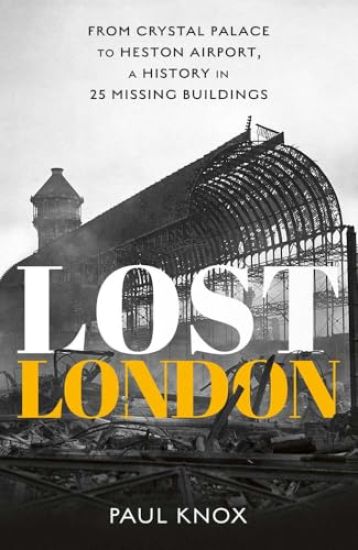
An engaging, beautifully illustrated history of London told through twenty-five lost buildings London has been rebuilt and reshaped perhaps more than any other city over its two-millennia history. From the construction of the Underground to slum clearance and the Blitz, buildings have long been damaged or demolished to pave way for the new. Today, demolition is big business, and around 3500 buildings are destroyed each year, most of which are social housing. Paul Knox traces the history of London from the Great Fire to the present day through twenty-five lost buildings. Knox explores surprising and unusual locations in the city’s history, like the Necropolis Station in Waterloo used by funeral parties traveling to a burial ground in Surrey. We see historic landmarks, like Christ Church Greyfriars and the Crystal Palace, as well as everyday places like the White Horse pub in Poplar and a housing estate in Hackney. This is a fascinating study of London’s restless landscape, showing how conservation has changed over 400 years.
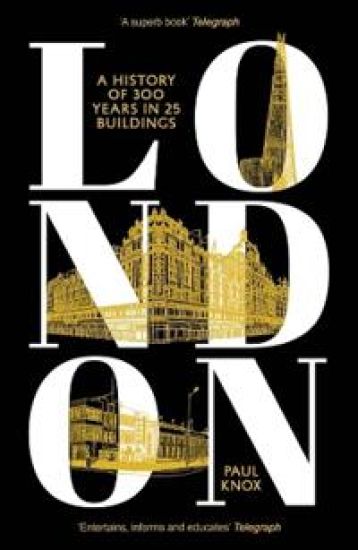
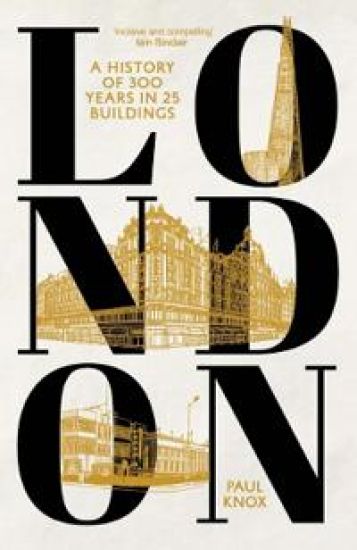
A lively new history of London told through twenty-five buildings, from iconic Georgian townhouses to the Shard A walk along any London street takes you past a wealth of seemingly ordinary buildings: an Edwardian church, modernist postwar council housing, stuccoed Italianate terraces, a Bauhaus-inspired library. But these buildings are not just functional. They are evidence of London’s rich and diverse history and have shaped people’s experiences, identities, and relationships. In this engaging study, Paul L. Knox traces the history of London from the Georgian era to the present day through twenty-five surviving buildings. Knox explores where people lived and worked, from grand Regency squares to Victorian workshops, and highlights the impact of migration, gentrification, and inequality. We see famous buildings, like Harrods and Abbey Road Studios, and everyday places like Rochelle Street School and Thamesmead. Each historical period has introduced new buildings, and old ones have been repurposed. As Knox shows, it is the living history of these buildings that makes up the vibrant, but exceptionally unequal, city of today.
A distinctly modern look at human geography. Described as "fresh, innovative, and intelligent," Human Geography: Places and Regions in Global Context is acclaimed for its global approach, conceptual rigor, engaging real-world applications, and outstanding visual program. Knox and Marston foster awareness of current issues and developing trends from a geographic perspective, and provide a solid foundation in the fundamentals of human geography. The authors integrate compelling local, regional, and global viewpoints to give meaning to people and places. By providing access to the latest ideas, concepts, and theories, the text deepens students' understanding of the interdependence of places and regions in a globalizing world. The Seventh Edition extends Knox/Marston's modern approach, integrating new technology as well as new visual and thematic features relevant to human geography today. For courses in Human Geography. Pearson eText is an easy-to-use digital textbook that you can purchase on your own or instructors can assign for their course. The mobile app lets you keep on learning, no matter where your day takes you -- even offline. You can also add highlights, bookmarks, and notes in your Pearson eText to study how you like. NOTE: This ISBN is for the Pearson eText access card. Pearson eText is a fully digital delivery of Pearson content. Before purchasing, check that you have the correct ISBN. To register for and use Pearson eText, you may also need a course invite link, which your instructor will provide. Follow the instructions provided on the access card to learn more.
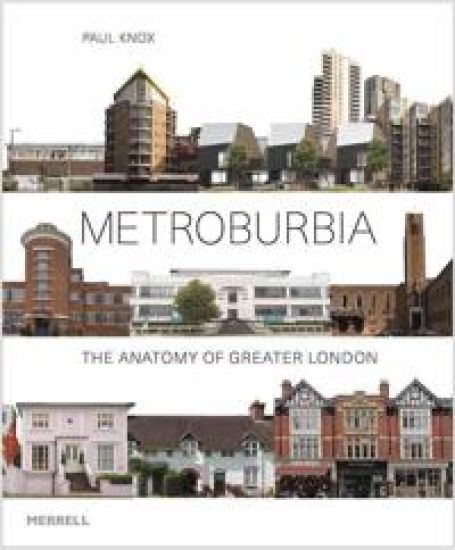
London's suburbs are home to many thousands of people who travel into the centre every day to work, but they also house many thousands who rarely find a reason to do so. They contain all the essential infrastructure for the city, too, including airports, offices, shopping centre, factories and warehouses. Outer London is therefore both metropolitan and suburban at the same time - it is Metroburbia. In this book Paul Knox examines the architectural history and development of London's suburbs, and celebrates their surprising variety and organized structure, refuting the common claim that they are monotonous or amorphous. The first chapter, The Foundations of Metroburbia, explains the foundation and development of Metroburbia and looks at how topography and geology influenced the siting of the villages that would become part of Greater London. The River Thames, of course, is one of London's most important and well-known structural elements, and in this chapter Knox examines how its meanders and bends have produced distinct patterns of settlement and development. He also describes in detail the seven distinctive sectors of London, which are (running clockwise from the west) the Thames Valley, Northwest London, North London, the Lea Valley, Northeast London, the Thames Estuary and South London. Finally, he looks at how early settlements, country estates and royal palaces shaped Metroburbia, and how the increase in roads and industry consolidated the development of what would become suburbia. Chapter 2, Pattern-book London, looks at Victorian and Edwardian suburbs - the first developments to be given that name. The building booms and their effect on employment in the city, and the difference in style and purpose between the various suburbs, are discussed, and Knox also examines the effects of immigration and industrialization on the city's housing requirements. He also describes the genesis of the parks, cemeteries and garden villages that now provide such valuable green space for Londoners, and the creation of the impressive industrial, civic and institutional buildings that are still striking parts of the city's infrastructure. Chapter 3, Inter-war Suburbia: Metro-Land and the Universal Plan, describes the acceleration of building projects between the wars and the beginning of the transition from Edwardian society to the modern welfare state. The term 'Metro-Land', introduced by the Metropolitan Railway Company in the early twentieth century, gives the chapter its title, and describes the expansion of residential London along the route of the Underground lines into Buckinghamshire. The effect of widespread car ownership is discussed, and the various housing styles - Stockbroker Tudor, Suburban Moderne, the mansion block, and so on - are described. The fourth chapter, Secular Reformation and Modernism, covers the thirty years from the end of the Second World War, during which time the welfare state brought about radical changes to life in London and the architecture of the city. Chapter 5, Counter-Reformation, describes the changes wrought on the country by the new neo-liberal agenda, as the welfare state was overtaken by a market-driven economy that fostered free-for-all development. By this time Metroburbia had spread outwards to incorporate Chelmsford, Southend-on-Sea, Maidstone, Guildford, Reading and Luton. This was an era of radical new infrastructure projects - from the rise of the suburban shopping centre to the construction of the new Thames Barrier - and huge increases in house prices. The regeneration of the Isle of Dogs into the Docklands commercial area is one of the most high-profile developments of the era, but infill house-building and small-scale environmental developments were also produced, and social housing regenerated. Finally, the last chapter, Megapolitan Futures, explores the various theories about the capital's future and conjectures about the shape of the city in the twenty-first century.

World Regions in Global Context
Sallie Marston; Paul Knox; Diana Liverman; Vincent Del Casino; Paul Robbins
Pearson
2017
nidottu
For courses in world regional geography. Conceptual Exploration of World Regions and the Myriad Issues Critical to Geography Today World Regions in Global Context presents a strong global sensibility and an emphasis on current events, with examples of interdependent development, spatial and social inequality, and questions of spatial justice. The authors maintain that regions are the outcomes of the twin forces of globalization and regionalization. Therefore, each regional chapter stresses the global systems of connection that drive unique regional processes, making regions different. By studying regions, students not only learn the critical elements of different places, but also come to understand the fundamental processes that drive change. The 6th Edition is a briefer, more visual text that still maintains its conceptual rigor by addressing today’s critical geographic themes, incorporating deeper focus on sustainability issues, new human stories from the regions, cutting-edge data visualizations and infographics, including a completely modernized cartography program, and much more. Also Available with Mastering Geography This title is also available with MasteringTM Geography--an online homework, tutorial, and assessment program designed to work with this text to engage students and improve results. Interactive, self-paced tutorials provide individualized coaching to help students stay on track. With a wide range of activities available, students can actively learn, understand, and retain even the most difficult concepts. Note: You are purchasing a standalone product; Mastering Geography does not come packaged with this content. Students, if interested in purchasing this title with Mastering Geography, ask your instructor for the correct package ISBN and Course ID. Instructors, contact your Pearson representative for more information. If you would like to purchase both the physical text and Mastering Geography, search for: 0134182723 / 9780134182728 World Regions in Global Context: Peoples, Places, and Environments Plus Mastering Geography with eText -- Access Card Package Package consists of: 0134183649 / 9780134183640 World Regions in Global Context: Peoples, Places, and Environments0134153669 / 9780134153667 Mastering Geography with Pearson eText -- ValuePack Access Card -- for World Regions in Global Context: Peoples, Places, and Environments World Regions in Global Context , 6th Edition is also available via Pearson eText, a simple-to-use, mobile, personalized reading experience that lets instructors connect with and motivate students — right in their eTextbook. Learn more.
Human Geography: Places and Regions in Global Context, Global Edition
Paul Knox; Sallie Marston
Pearson Education Limited
2015
pokkari
Halvin toimitettuna 116,20 €
For courses in Human Geography. A distinctly modern look at human geographyDescribed as "fresh, innovative, and intelligent," Human Geography: Places and Regions in Global Context is acclaimed for its global approach, conceptual rigor, engaging real-world applications, and outstanding visual program. Knox and Marston foster awareness of current issues and developing trends from a geographic perspective, and provide a solid foundation in the fundamentals of human geography. The authors integrate compelling local, regional, and global viewpoints to give meaning to people and places. By providing access to the latest ideas, concepts, and theories, the text deepens students' understanding of the interdependence of places and regions in a globalizing world. The Seventh Edition extends Knox/Marston's modern approach, integrating new technology as well as new visual and thematic features relevant to human geography today. MasteringGeography (TM) not included. Students, if MasteringGeography is a recommended/mandatory component of the course, please ask your instructor for the correct ISBN and course ID. MasteringGeography should only be purchased when required by an instructor. Instructors, contact your Pearson representative for more information. MasteringGeography is an online homework, tutorial, and assessment product designed to personalize learning and improve results. With a wide range of interactive, engaging, and assignable activities, students are encouraged to actively learn and retain tough course concepts.
The Geography of the World Economy provides an in-depth and stimulating introduction to the globalization of the world economy. The book offers a consideration of local, regional, national and global economic development over the long historical term. The theory and practice of economic and political geography provide a basis for understanding the interactions within and among the developed and developing countries of the world. Illustrated in color throughout, this new edition has been completely reworked and updated to take account of recent significant changes in the world economy. A new companion website also accompanies the book, with additional resources for each chapter including multiple choice and short essay questions and links to relevant websites. Figures and tables are also available for download located at www.routledge.com/cw/knoxThe text is signposted throughout with an glossary of key terms, and is richly illustrated with full-color maps, diagrams and illustrations. It is ideal for upper level university undergraduates and for post-graduates in a variety of specializations including geography, economics, political science, international relations and global studies.
World Regions in Global Context: Peoples, Places, and Environments
Sallie Marston; Paul Knox
PEARSON EDUCATION LIMITED
2013
pokkari
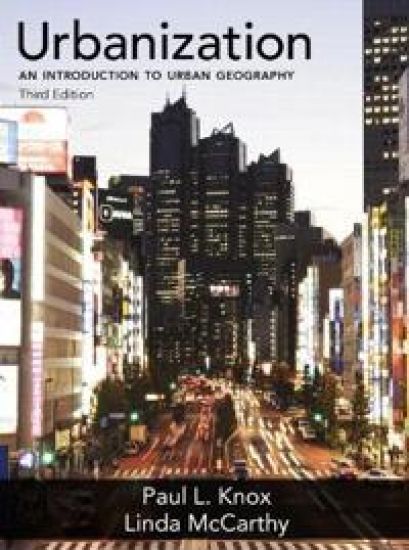
Urbanization: An Introduction to Urban Geography
Paul Knox; Linda McCarthy
PEARSON EDUCATION LIMITED
2013
pokkari
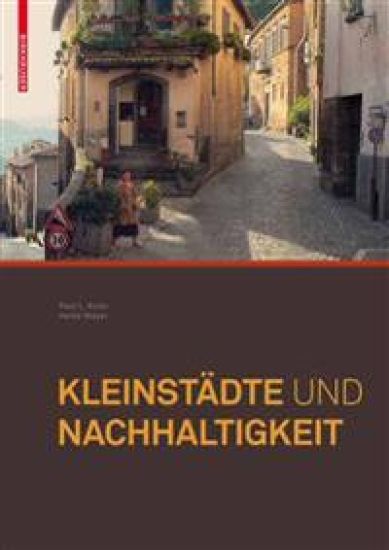
In an age where the globalization process is threatening the uniqueness and vitality of small towns, and where most urban planning discourse is directed at topics such as metropol-regions or mega-regions and world cities, the authors here emphasize the need to critically reflect on the potential of small towns. They illustrate how small towns can meet the challenge of a fast-paced, globalized world, and based on case studies, movements, programs, and strategies, present the local cultures that effectively and sustainably promote traditions and identities. Small towns often play a critical role in regional economies. When small towns focus on their specific characteristics and exploit their opportunities, they can become stable niches within regional, national, and global economies, and thus contribute significantly to shaping their future. The second edition is expanded to cover the intensive development of small towns in China and Korea. In addition, the authors examine the impact of the economic crisis on small towns and the recent development of the Slow City movement.
Urbanization: An Introduction to Urban Geography, Third Edition captures the changes in the nature and outcomes of urbanization processes for people, as well as the development of new ways of thinking about urban geography. Unraveling the interlocking processes of urbanization, Knox and McCarthy present a vivid and meaningful explanation of constantly changing urban geographies and urban life. This framework supports the discussion of recent changes while addressing much of the “traditional” subject matter of urban geography. The book’s dynamic approach also allows for integration of both theories and facts, where key concepts and theories are presented in relation to prior events and ideas–providing a coherent and comprehensive introduction to urban geography that offers a historical and process-oriented approach. With a U. S. focus that also offers global context and comparative international perspectives, the authors examine urban trends and their outcomes in both developed and less-developed countries to understand, analyze, and interpret the landscapes, economies, and communities of towns and cities around the world.
In an era in which the individuality and vitality of small towns are under threat from globalization, and city planning discussions tend to center on topics like metropolitan regions, megaregions, and global cities, the authors of this volume see a need to reflect critically on the potential of small towns. They show how small towns can meet the challenge of a fast-paced, globalized world, and they use case studies to introduce movements, programs, and strategies capable of effectively promoting local cultures, traditions, identities, and sustainability. Small towns often play critical roles in regional economic systems. When small towns focus on their specific characteristics and take advantage of their opportunities, they can become stable niches within regional, national, and global economies and take on an important role in shaping a sustainable future.