Kirjojen hintavertailu – 12 903 725 kirjaa ja 27 kauppaa

Kirjailija

Paul L. Wachtel

Kirjat ja teokset yhdessä paikassa: 12 kirjaa, julkaisuja vuosilta 1991–2023, suosituimpiin kuuluu Cyclical Psychodynamics and the Contextual Self. Vertaile teosten hintoja ja tarkista saatavuus suomalaisista kirjakaupoista.

12 kirjaa

Kirjojen julkaisuvuodet: 1991–2023.

Making Room for the Disavowed

Making Room for the Disavowed

Paul L. Wachtel

Guilford Publications
2023
nidottu
In this uniquely integrative book, Paul L. Wachtel describes powerful clinical strategies to make roomfor aspects of the self that were sidetracked in the course of development. Wachtel explores how early attachment experiences can lead people to turn away from certain thoughts and feelings, building a sense of self and ways of interacting on only a limited range of adaptive resources. His approach draws on psychodynamic, humanistic, systemic, and acceptance-centered cognitive-behavioral perspectives, as well as attention to the impact of race, class, and culture. Filled with rich case material, the book illuminates how a therapeutic approach anchored in the present can help heal the wounds of the past. See also Wachtel's Therapeutic Communication, Second Edition: Knowing What to Say When, as well as Mastering the Clinical Conversation: Language as Intervention, by Matthieu Villatte, Jennifer L. Villatte, and Steven C. Hayes.
Making Room for the Disavowed

Making Room for the Disavowed

Paul L. Wachtel

Guilford Publications
2023
sidottu
In this uniquely integrative book, Paul L. Wachtel describes powerful clinical strategies to make roomfor aspects of the self that were sidetracked in the course of development. Wachtel explores how early attachment experiences can lead people to turn away from certain thoughts and feelings, building a sense of self and ways of interacting on only a limited range of adaptive resources. His approach draws on psychodynamic, humanistic, systemic, and acceptance-centered cognitive-behavioral perspectives, as well as attention to the impact of race, class, and culture. Filled with rich case material, the book illuminates how a therapeutic approach anchored in the present can help heal the wounds of the past. See also Wachtel's Therapeutic Communication, Second Edition: Knowing What to Say When, as well as Mastering the Clinical Conversation: Language as Intervention, by Matthieu Villatte, Jennifer L. Villatte, and Steven C. Hayes.
Race in the Mind of America

Race in the Mind of America

Paul L. Wachtel

Routledge
2014
nidottu
Internationally recognized psychologist Paul L. Wachtel sheds new light on the psychological foundations of our nation's racial impasse and applies his pathbreaking "vicious circle" approach to help resolve it. This timely and fascinating analysis shows how the ways we attempt to cope with racial tensions and inequalities often lead to the perpetuation of our difficulties rather than their resolution. Understanding the ironies that characterize contemporary race relations is the first step toward extricating our nation from the vicious circle. Both controversial and healing, Race inthe Mind of America challenges the orthodoxies that shape black and white opinion and liberal and conservative policies while sensitively exploring the way the world looks to both sides and why it looks that way. Wachtel probes the daily experiences of blacks and whites, shedding new light on how individual experiences and larger social, historical and economic forces continually re-create each other. In illustrating how blacks and whites get caught in vicious circles that sustain the very behaviors and attitudes they wish would change, Wachtel also points toward the concrete solutions to our seemingly enduring dilemmas and shows how to move beyond the adversarial rhetoric that divides us.
Cyclical Psychodynamics and the Contextual Self
Cyclical Psychodynamics and the Contextual Self articulates in new ways the essential features and most recent extensions of Paul Wachtel's powerfully integrative theory of cyclical psychodynamics. Wachtel is widely regarded as the leading advocate for integrative thinking in personality theory and the theory and practice of psychotherapy. He is a contributor to cutting edge thought in the realm of relational psychoanalysis and to highlighting the ways in which the relational point of view provides especially fertile ground for integrating psychoanalytic insights with the ideas and methods of other theoretical and therapeutic orientations. In this book, Wachtel extends his integration of psychoanalytic, cognitive-behavioral, systemic, and experiential viewpoints to examine closely the nature of the inner world of subjectivity, its relation to the transactional world of daily life experiences, and the impact on both the larger social and cultural forces that both shape and are shaped by individual experience. Here, he discusses in a uniquely comprehensive fashiong the subtleties of the clinical interaction, the findings of systematic research, and the role of social, economic, and historical forces in our lives. The chapters in this book help to transcend the tunnel vision that can lead therapists of different orientations to ignore the important discoveries and innovations from competing approaches. Explicating the pervasive role of vicious circles and self-fulfilling prophecies in our lives, Cyclical Psychodynamics and the Contextual Self shows how deeply intertwined the subjective, the intersubjective, and the cultural realms are, and points to new pathways to therapeutic and social change. Both a theoretical tour de force and an immensely practical guide to clinical practice, this book will be essential reading for psychoanalysts, psychotherapists and students of human behavior of all backgrounds and theoretical orientations.

Cyclical Psychodynamics and the Contextual Self
Cyclical Psychodynamics and the Contextual Self articulates in new ways the essential features and most recent extensions of Paul Wachtel's powerfully integrative theory of cyclical psychodynamics. Wachtel is widely regarded as the leading advocate for integrative thinking in personality theory and the theory and practice of psychotherapy. He is a contributor to cutting edge thought in the realm of relational psychoanalysis and to highlighting the ways in which the relational point of view provides especially fertile ground for integrating psychoanalytic insights with the ideas and methods of other theoretical and therapeutic orientations. In this book, Wachtel extends his integration of psychoanalytic, cognitive-behavioral, systemic, and experiential viewpoints to examine closely the nature of the inner world of subjectivity, its relation to the transactional world of daily life experiences, and the impact on both the larger social and cultural forces that both shape and are shaped by individual experience. Here, he discusses in a uniquely comprehensive fashiong the subtleties of the clinical interaction, the findings of systematic research, and the role of social, economic, and historical forces in our lives. The chapters in this book help to transcend the tunnel vision that can lead therapists of different orientations to ignore the important discoveries and innovations from competing approaches. Explicating the pervasive role of vicious circles and self-fulfilling prophecies in our lives, Cyclical Psychodynamics and the Contextual Self shows how deeply intertwined the subjective, the intersubjective, and the cultural realms are, and points to new pathways to therapeutic and social change. Both a theoretical tour de force and an immensely practical guide to clinical practice, this book will be essential reading for psychoanalysts, psychotherapists and students of human behavior of all backgrounds and theoretical orientations.

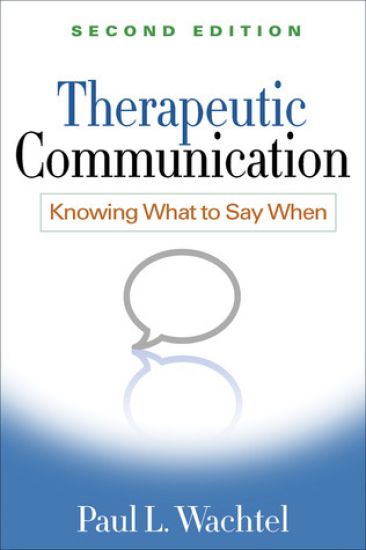
Therapeutic Communication, Second Edition

Therapeutic Communication, Second Edition

Paul L. Wachtel

Guilford Press
2013
nidottu

Halvin toimitettuna 52,80 €

A uniquely practical guide and widely adopted text, this book shows precisely what therapists can say at key moments to enhance the process of healing and change. Paul Wachtel explains why some communications in therapy are particularly effective, while others that address essentially the same content may actually be countertherapeutic. He offers clear and specific guidelines for how to ask questions and make comments in ways that facilitate collaborative exploration and promote change. Illustrated with vivid case examples, the book is grounded in an integrative theory that draws from features of psychodynamic, cognitive-behavioral, systemic, and experiential approaches. New to This Edition * Reflects nearly 20 years of advances in the field and refinements of the author's approach. *Broader audience: in addition to psychodynamic therapists, cognitive-behavioral therapists and others will find specific, user-friendly recommendations. *Chapter on key developments and convergences across different psychotherapeutic approaches. *Chapter on the therapeutic implications of attachment theory and research. See also Making Room for the Disavowed, which further develops Wachtel's integrative therapeutic approach, as well as Mastering the Clinical Conversation, by Matthieu Villatte, Jennifer L. Villatte, and Steven C. Hayes, which provides another vital perspective on language in psychotherapy.
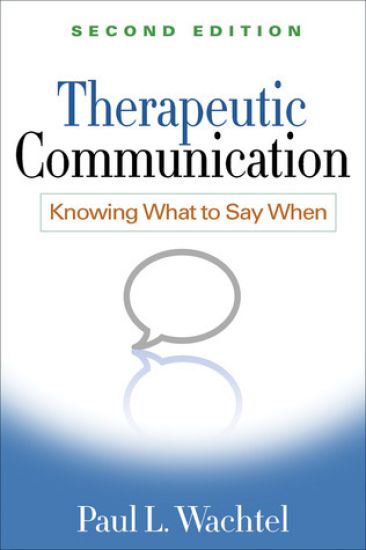
Therapeutic Communication, Second Edition

Therapeutic Communication, Second Edition

Paul L. Wachtel

Guilford Publications
2011
sidottu
A uniquely practical guide and widely adopted text, this book shows precisely what therapists can say at key moments to enhance the process of healing and change. Paul Wachtel explains why some communications in therapy are particularly effective, while others that address essentially the same content may actually be countertherapeutic. He offers clear and specific guidelines for how to ask questions and make comments in ways that facilitate collaborative exploration and promote change. Illustrated with vivid case examples, the book is grounded in an integrative theory that draws from features of psychodynamic, cognitive-behavioral, systemic, and experiential approaches. New to This Edition* Reflects nearly 20 years of advances in the field and refinements of the author's approach.*Broader audience: in addition to psychodynamic therapists, cognitive-behavioral therapists and others will find specific, user-friendly recommendations.*Chapter on key developments and convergences across different psychotherapeutic approaches.*Chapter on the therapeutic implications of attachment theory and research. See also Wachtel's Relational Theory and the Practice of Psychotherapy, which explores a new direction in psychoanalytic thought that can expand and deepen clinical practice.
Relational Theory and the Practice of Psychotherapy

Relational Theory and the Practice of Psychotherapy

Paul L. Wachtel

Guilford Publications
2010
nidottu
This important and innovative book explores a new direction in psychoanalytic thought that can expand and deepen clinical practice. Relational psychoanalysis diverges in key ways from the assumptions and practices that have traditionally characterized psychoanalysis. At the same time, it preserves, and even extends, the profound understanding of human experience and psychological conflict that has always been the strength of the psychoanalytic approach. Through probing theoretical analysis and illuminating examples, the book offers new and powerful ways to revitalize clinical practice. See also Wachtel's Therapeutic Communication, Second Edition: Knowing What to Say When, an integrative, practical guide for therapists of all orientations. Â
Relational Theory and the Practice of Psychotherapy

Relational Theory and the Practice of Psychotherapy

Paul L. Wachtel

Guilford Publications
2008
sidottu
This important and innovative book explores a new direction in psychoanalytic thought that can expand and deepen clinical practice. Relational psychoanalysis diverges in key ways from the assumptions and practices that have traditionally characterized psychoanalysis. At the same time, it preserves, and even extends, the profound understanding of human experience and psychological conflict that has always been the strength of the psychoanalytic approach. Through probing theoretical analysis and illuminating examples, the book offers new and powerful ways to revitalize clinical practice. See also Wachtel's Therapeutic Communication, Second Edition: Knowing What to Say When, an integrative, practical guide for therapists of all orientations.
Race in the Mind of America

Race in the Mind of America

Paul L. Wachtel

Routledge
1999
sidottu
Internationally recognized psychologist Paul L. Wachtel sheds new light on the psychological foundations of our nation's racial impasse and applies his pathbreaking "vicious circle" approach to help resolve it. This timely and fascinating analysis shows how the ways we attempt to cope with racial tensions and inequalities often lead to the perpetuation of our difficulties rather than their resolution. Understanding the ironies that characterize contemporary race relations is the first step toward extricating our nation from the vicious circle. Both controversial and healing, Race inthe Mind of America challenges the orthodoxies that shape black and white opinion and liberal and conservative policies while sensitively exploring the way the world looks to both sides and why it looks that way. Wachtel probes the daily experiences of blacks and whites, shedding new light on how individual experiences and larger social, historical and economic forces continually re-create each other. In illustrating how blacks and whites get caught in vicious circles that sustain the very behaviors and attitudes they wish would change, Wachtel also points toward the concrete solutions to our seemingly enduring dilemmas and shows how to move beyond the adversarial rhetoric that divides us.
Clinical Behavior Therapy, Expanded

Clinical Behavior Therapy, Expanded

Marvin R. Goldfried; Gerald C. Davison; Paul L. Wachtel

John Wiley Sons Inc
1994
nidottu
Critical Acclaim for Clinical Behavior Therapy "This book will be helpful not only to those who regard this [cognitive-behavior therapy] as their primary orientation, but to anyone who wants to be a complete therapist." --Allen Frances, MD Duke University Medical Center "This classic text.was a distinct favorite among the students enrolled in my clinical assessment and treatment courses. I hope the updated edition will be read by graduate students in clinical and counseling psychology, social workers, and all mental health professionals who wish to be truly effective therapists." --Arnold A. Lazarus, PhD Rutgers University ".particularly innovative and impressive. Their lucid description of cognitive variables. broadens the range of interventions available to the behavioral practitioner." --Sheldon Rose, PhD University of Wisconsin School of Social Work "A classic--updated. I recommend it not only for behavior therapists but for any clinical practitioner of any profession who is looking for procedures that work." --Joel Fischer, DSW University of Hawaii at Manoa