
Kirjailija
Paul Laurence Dunbar
Kirjat ja teokset yhdessä paikassa: 159 kirjaa, julkaisuja vuosilta 1993–2026, suosituimpiin kuuluu Lyrics of lowly life. By: Paul Laurence Dunbar and W.D. Howells. Vertaile teosten hintoja ja tarkista saatavuus suomalaisista kirjakaupoista.
159 kirjaa
Kirjojen julkaisuvuodet: 1993–2026.
The Negro Problem
Booker T. Washington; W. E. B. Du Bois; Paul Laurence Dunbar
Kessinger Pub
2007
pokkari
The Strength Of Gideon And Other Stories 1900
Paul Laurence Dunbar; E. W. (INT) Kemble
Kessinger Pub
2007
pokkari


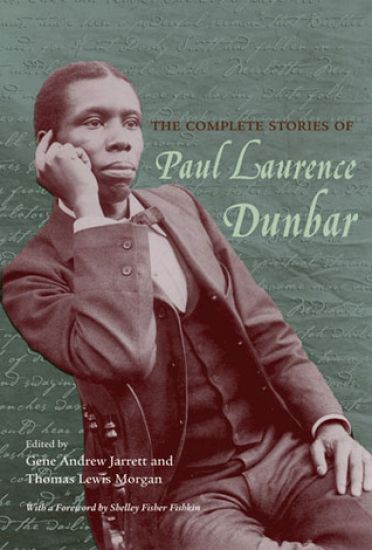
The Complete Stories of Paul Laurence Dunbar
Paul Laurence Dunbar
Ohio University Press
2005
sidottu
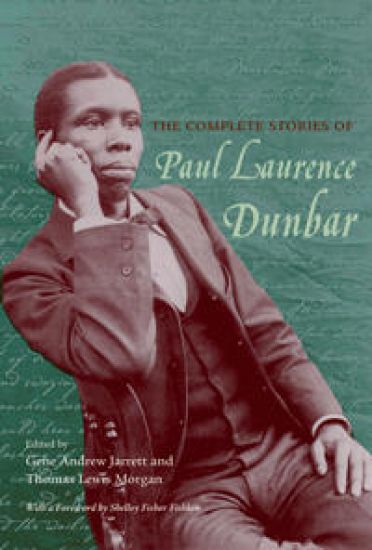
The son of former slaves, Paul Laurence Dunbar was one of the most prominent figures in American literature at the turn of the twentieth century. Thirty-three years old at the time of his death in 1906, he had published four novels, four collections of short stories, and fourteen books of poetry, as well as numerous songs, plays, and essays in newspapers and magazines around the world. In the century following his death, Dunbar slipped into relative obscurity, remembered mainly for his dialect poetry or as a footnote to other more canonical figures of the period. The Complete Stories of Paul Laurence Dunbar showcases his gifts as a writer of short fiction and provides key insights into the tensions and themes of Dunbar's literary achievement. The 104 stories written by Dunbar between 1890 and 1905 reveal Dunbar's attempts to maintain his artistic integrity while struggling with America's racist stereotypes. Making them available for the first time in one convenient, comprehensive, and definitive volume, The Complete Stories of Paul Laurence Dunbar illustrates the complexity of his literary life and legacy.
Paul Laurence Dunbar (1872-1906) overcame racism and poverty to become one of the best-loved writers in America. This original compilation includes Dunbar's compelling 1902 novel The Sport of the Gods, the story of two emancipated slaves and their son and daughter, whose lives fall apart when the father is falsely accused of theft. It also includes the most important selections of Dunbar's celebrated poetry, short stories, and nonfiction essays.
Paul Laurence Dunbar, the first African-American to gain national eminence as a poet, was born in 1872 in Dayton, Ohio. The son of former slaves, he was a prolific author, writing short stories, novels, librettos, plays, songs and essays. However, it was for his poetry that he became famous, using words and dialect to convey the life-experiences of everyday African-Americans. His work proved equally popular among white and colored readers of his day. He lived to the age of 33. This, the first expanded edition of his short fiction, includes not only all twenty of the original stories, but adds five additional poems, showcasing his full range as an artist.
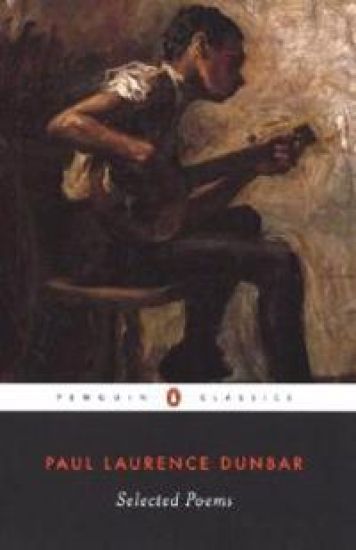
Dialect poems by one of the nineteenth century's most talented African American lyricists Paul Laurence Dunbar was "the most promising young colored man" in nineteenth-century America, according to Frederick Douglass, and subsequently one of the most controversial. His plantation lyrics, written while he was an elevator boy in Ohio, established Dunbar as the premier writer of dialect poetry and garnered him international recognition. More than a vernacular lyricist, Dunbar was also a master of classical poetic forms, who helped demonstrate to post-Civil War America that literary genius did not reside solely in artists of European descent. William Dean Howells called Dunbar's dialect poems "evidence of the essential unity of the human race, which does not think or feel black in one and white in another, but humanly in all." For more than seventy years, Penguin has been the leading publisher of classic literature in the English-speaking world. With more than 1,700 titles, Penguin Classics represents a global bookshelf of the best works throughout history and across genres and disciplines. Readers trust the series to provide authoritative texts enhanced by introductions and notes by distinguished scholars and contemporary authors, as well as up-to-date translations by award-winning translators.
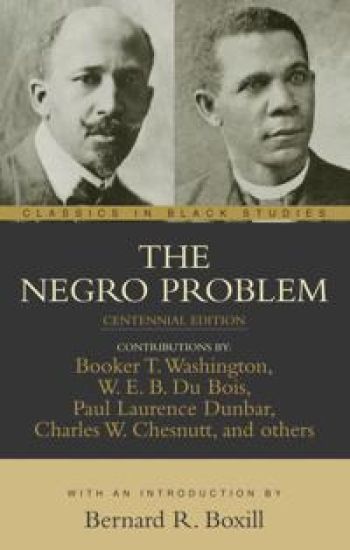
One hundred years ago, African Americans looked forward to the new twentieth century with mixed feelings of pride and discouragement. On the one hand, they could point to the tremendous progress many of them had made since the end of slavery under the dynamic leadership of Booker T. Washington, whose thriving vocational school, the Tuskegee Institute, was famous throughout the nation. Washington had become the confidant of powerful and influential white Americans, and in 1901 he even dined with President Theodore Roosevelt at the White House. But on the other hand, the majority of white Americans showed little willingness to accept blacks as equals, and in the South segregation was practically institutionalized through the recently enacted Jim Crow laws. It was at this uncertain time that this interesting collection of articles by leading African American citizens was published to address what was then commonly known as "the Negro problem." Looking back at this synopsis of African American affairs one can get a good sense of both the progress made and the problems yet to be overcome, some of which have still not been fully addressed. Predictably, the collection begins with a piece by Booker T. Washington on the value and purpose of stressing industrial education for black Americans. This is followed by a now-famous article by W. E. B. Du Bois called "The Talented Tenth," in which he argued for the cultivation of an elite corps of black intellectuals who would then work to uplift the African American masses. Though Du Bois later changed his approach, one can see in this article how different his philosophy was from Washington's, a difference that later led to a complete break between the two men. The other contributors are Charles W. Chesnutt, Wilford H. Smith, H. T. Kealing, Paul Laurence Dunbar, and T. Thomas Fortune, who discuss the disenfranchisement of blacks; the broader subject of the law and the rights of African Americans; real versus perceived characteristics of people of color; and outstanding representative black Americans, some famous, others little-known. The collection concludes with a sober assessment of "the Negro's place in American life." Issued in the centennial year of its original publication, this new edition of a valuable classic is complemented by an informative introduction by Bernard R. Boxill, professor of philosophy at the University of North Carolina, Chapel Hill.
Paul Laurence Dunbar, introduced to the American public by William Dean Howells, was the first native-born African American poet to achieve national and international fame. While there have been many valuable editions of his works over time, gaps have developed when manuscripts were lost or access to uncollected works became difficult. In His Own Voice brings together previously upublished and uncollected short stories, essays, and poems. This volume also establishes Dunbar's reputation as a dramatist who mastered standard English conventions and used dialect in musical comedy for ironic effects. In His Own Voice collects more than seventy-five works in six genres. Featured are the previously unpublished play Herrick and two one-act plays, largely ignored for a century, that demonstrate Dunbar's subversion of the minstrel tradition. This generous expansion of the canon also includes a short story never before published. Herbert Woodward Martin, renowned for his live portrayal of Dunbar, and Ronald Primeau provide a literary and historical context for this previously untreated material, firmly securing the reputation of an important American voice.
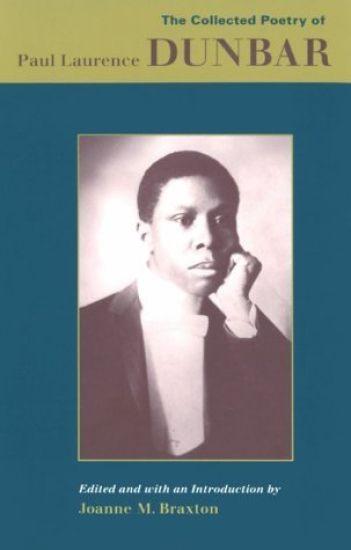
The Collected Poetry of Paul Laurence Dunbar
Paul Laurence Dunbar
University of Virginia Press
1993
nidottu
This edition of the collected poems of Paul Laurence Dunbar includes 60 poems not included in the previous - and now out of print - ""Complete Poems"". 16 of these were found in manuscript form. Paul Laurence Dunbar's work achieved wide recognition in the first part of this century. The author of six volumes of poetry, as well as novels, liberettos, songs and essays, he was nationally known and accepted by black and white readers alike. The poet's influence has been far-reaching, and reaction to him, at times, controversial. In addition to creating musical renditions of black folk language, both comic and serious, he wrote lyrical poetry in standard English verse, inspired by Shakespeare, Shelley, Keats, Tennyson and the American romantics. Critics in Dunbar's day, however, led by William Dean Howells, noted only his comic dialect poetry, dismissing the standard English poetry and ignoring the subtlety and depth of the dialect work. Disagreements about the significance and meaning of Dunbar's poetry have continued through succeeding generations.