Kirjojen hintavertailu – 12 903 735 kirjaa ja 27 kauppaa

Kirjailija

Paul Magdalino

Kirjat ja teokset yhdessä paikassa: 7 kirjaa, julkaisuja vuosilta 1992–2024, suosituimpiin kuuluu The Perception of the Past in 12th Century Europe. Vertaile teosten hintoja ja tarkista saatavuus suomalaisista kirjakaupoista.

7 kirjaa

Kirjojen julkaisuvuodet: 1992–2024.

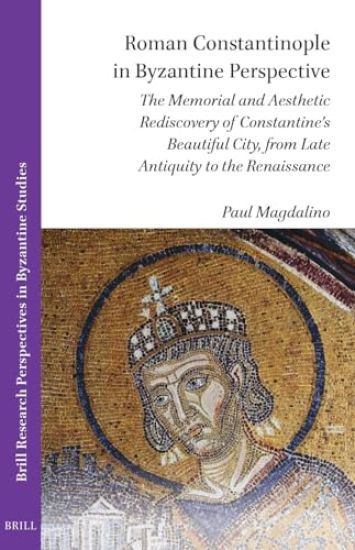
Roman Constantinople in Byzantine Perspective: The Memorial and Aesthetic Rediscovery of Constantine's Beautiful City, from Late Antiquity to the Rena
This book studies the research perspective in which the literary inhabitants of Late Antique and medieval Constantinople remembered its past and conceptualised its existence as a Greek city that was the political capital of a Christian Roman state. Initial reactions to Constantine's foundation noted its novel Christian orientation, but the memorial mode of writing about the city that developed from the sixth century recollected the traditional civic cultural heritage that Constantinople claimed both as the New Rome, and as the continuation of ancient Byzantion. This research culture increasingly became the preserve of the imperial bureaucracy, and focused on the city's sculptured monuments as bearers of eschatological meaning. Yet from the tenth century, writers progressively preferred to define the wonder and spectacle of Constantinople in the aesthetic mode of urban praise inherited from late antiquity, developing the notion of the city as a cosmic theatre of excellence.
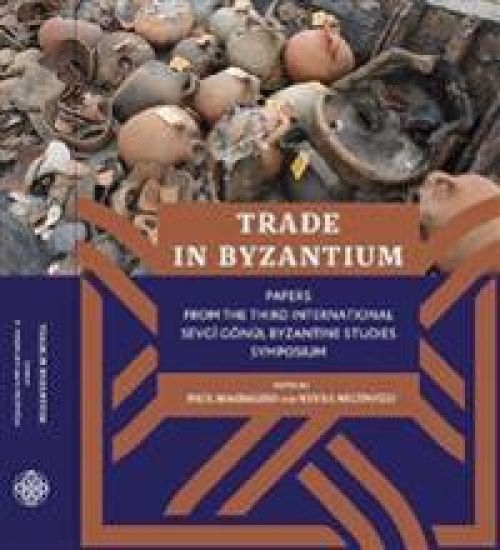
Trade in Byzantium – Papers from the Third International Sevgi Gönül Byzantine Studies Symposium
In the Byzantine Empire, Constantinople served not only as an administrative, military, and religious center, but also as one of trade and commerce. The city was selected as the new imperial capital due to its geographical advantages, its vast hinterland, its situation as an ideal vantage point for travel by land and sea, and its safe natural harbors, making it a perfect location for trade. Considering that medieval Anatolia, and especially Constantinople, was located at the center of a broad trade network and was a center of both production and consumption, trade is rightfully a continuing subject matter of Byzantine studies. In addition, since 2004, the Directorate of the Istanbul Archaeological Museums has carried out archaeological research in Üsküdar, Sirkeci, and Yenikapi, as part of the Marmaray and Metro projects. The excavations have revealed spectacular artifacts and new knowledge on Byzantine trade, ship-building technology, and ships and their cargo. In light of harbor excavation results and information accumulated from other ongoing research, it was the right time to re-evaluate trade in Byzantium. New findings and knowledge arising from the Yenikapi excavations, in particular, gave reason to revisit issues of trade in Byzantium again. The articles collected in this volume derive from papers presented at the Third International Sevgi Gönül Byzantine Studies Symposium on “Trade in Byzantium” held in Istanbul on 24–27 June 2013.
Studies on the History and Topography of Byzantine Constantinople
Constantinople originated in 330 A. D. as the last great urban foundation of the ancient world. When it was sacked by the Fourth Crusade in 1204 it was the greatest city of the European Middle Ages. Its transition from the one to the other was determined partly by its continuous function as an imperial capital, partly by the steady proliferation of churches, monasteries, and Christian philanthropic institutions, and partly by the widespread urban disruption and depopulation that affected what was left of the Roman Empire in the east from the sixth to the eighth centuries. The studies in the present volume examine aspects of this long and complex process as reflected in the topography, monuments, self-image and political status of medieval Constantinople. They include a revised English version of a monograph published in French ten years ago, nine reprinted articles, and two published here for the first time.
The Empire of Manuel I Komnenos, 1143–1180

The Empire of Manuel I Komnenos, 1143–1180

Paul Magdalino

Cambridge University Press
2002
pokkari
The reign of Manuel I (1143–1180) marked the high point of the revival of the Byzantine empire under the Comnenian dynasty. It was, however, followed by a rapid decline, leading to the sack of Constantinople by the Fourth Crusade in 1204. This book, the first devoted to Manuel’s reign for over eighty years, re-evaluates the emperor and his milieu in the light of recent scholarship. It shows that his foreign policy was a natural response to the western crusading movement and the expansionism of the German emperor Frederick Barbarossa. It also shows that what he ruled was more than the impoverished rump of a once great empire, or a society whose development had been arrested by a repressive regime. The twelfth century is presented here as a distinctive, creative phase in Byzantine history, when the empire maintained existing traditions and trends while adapting to a changing world.
Byzantium and the Modern Greek Identity

Byzantium and the Modern Greek Identity

David Ricks; Paul Magdalino

Ashgate Publishing Limited
1998
sidottu
Perhaps because of the fact that modern Greece is, through the Orthodox Church, inextricably linked with the Byzantine heritage, the precise meaning of this heritage, in its various aspects, has hitherto been surprisingly little discussed by scholars. This collection of specially commissioned essays aims to present an overview of some of the different, and often conflicting, tendencies manifested by modern Greek attitudes to Byzantium since the late eighteenth-century Enlightenment. The aim is to show just how formative views of Byzantium have been for modern Greek life and letters: for historiography and imaginative literature, on the one hand, and on the other, for language, law, and the definition of a culture. All Greek has been translated, and the volume is aimed at Byzantinists and Neohellenists alike.
The Empire of Manuel I Komnenos, 1143–1180

The Empire of Manuel I Komnenos, 1143–1180

Paul Magdalino

Cambridge University Press
1993
sidottu
The reign of Manuel I (1143–1180) marked the high point of the revival of the Byzantine empire under the Comnenian dynasty. It was, however, followed by a rapid decline, leading to the sack of Constantinople by the Fourth Crusade in 1204. This book, the first devoted to Manuel’s reign for over eighty years, re-evaluates the emperor and his milieu in the light of recent scholarship. It shows that his foreign policy was a natural response to the western crusading movement and the expansionism of the German emperor Frederick Barbarossa. It also shows that what he ruled was more than the impoverished rump of a once great empire, or a society whose development had been arrested by a repressive regime. The twelfth century is presented here as a distinctive, creative phase in Byzantine history, when the empire maintained existing traditions and trends while adapting to a changing world.
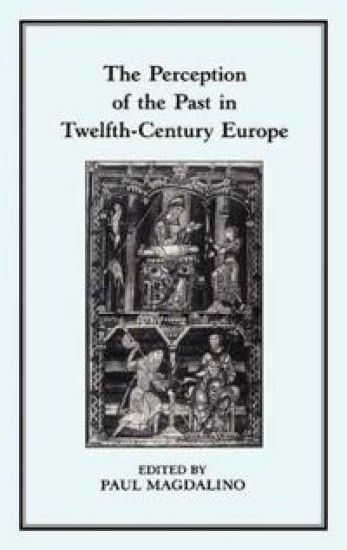
The Perception of the Past in 12th Century Europe

The Perception of the Past in 12th Century Europe

Paul Magdalino

BLOOMSBURY PUBLISHING PLC
1992
sidottu
The way people see the past tells us much about their present interests and about their sense of identity. This book examines both what men of the day knew about their past, and in particular about the Roman Empire, and shows how such knowledge was used to authenticate claims and attitudes. These original essays, by distinguished scholars, are wide-ranging both geographically, from Russia to Iberia, and in scope, dealing with legal, ecclesiastical, noble and scholarly attitudes.