Kirjailija
Paul March-Russell
Kirjat ja teokset yhdessä paikassa: 12 kirjaa, julkaisuja vuosilta 2009–2024, suosituimpiin kuuluu J. G. Ballard's "Crash". Vertaile teosten hintoja ja tarkista saatavuus suomalaisista kirjakaupoista.
12 kirjaa
Kirjojen julkaisuvuodet: 2009–2024.
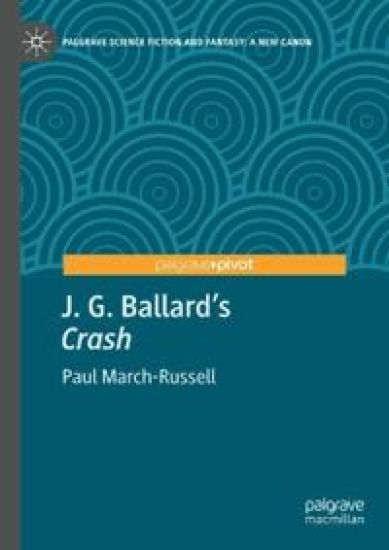
J. G. Ballard's Crash (1973) remains a byword for transgression in literature: declared 'too disgusting for words' upon publication. The basis for David Cronenberg's equally provocative film, Crash has been regarded variously as the apotheosis of New Wave science fiction, the ur-source for postmodernism, a transhumanist manifesto, and a pornographic masterpiece in the tradition of Sade and Bataille. This revisionist account, based on previously unexplored archive material, shatters the myths that have accrued around this tantalising work whilst also revealing why it continues to inspire writers, artists, musicians and filmmakers in the 21st century. The book vividly reconstructs how Ballard came to write Crash, the cultural landscape in which it was written, the effect of its reception, and the toll it took on its author. New perspectives reveal how Crash reworks surrealist anthropology, evolutionary theory, and pornographic imagery in order to expose a society addicted to the abuse of power, the silencing of others, and its own environmental destruction. As Ballard later admitted, he 'must have been mad' to write Crash.
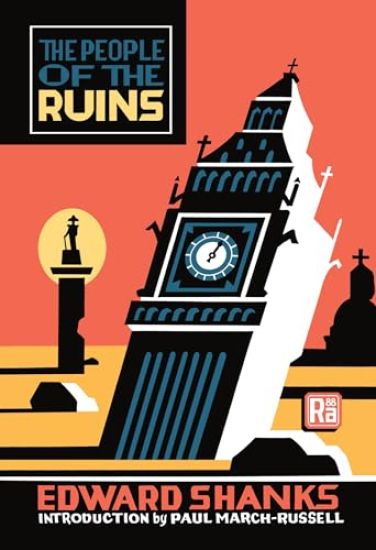
Trapped in a London laboratory during a worker uprising, a physicist and war veteran awakens 150 years later—on the eve of a new Dark Age! In The People of the Ruins, Edward Shanks imagines England in the not-so-distant future as a neomedieval society whose inhabitants have forgotten how to build or operate machinery. Jeremy Tuft is a physics instructor and former artillery officer who is cryogenically frozen in his laboratory only to emerge after a century and a half to a disquieting new era. Though at first Tuft is disconcerted by the failure of his own era’s smug doctrine of Progress, he eventually decides that he prefers the postcivilized life. But, when the northern English and Welsh tribes invade, Tuft must set about reinventing weapons of mass destruction. One of the most critically acclaimed and popular postwar stories of its day, The People of the Ruins captured a feeling that was common among those who had fought and survived the Great War: haunted by trauma and guilt, its protagonist feels out of time and out of place, unsure of what is real or unreal. Shanks implies in this seminal work, as Paul March-Russell explains in the book’s introduction, that the political system was already corrupt before the story began, and that Bolshevism and anarchism—and the resulting civil wars—merely accelerated the world’s inevitable decline. A satire of Wellsian techno-utopian novels, The People of the Ruins is a bold, entertaining, and moving postapocalyptic novel contemporary readers won’t soon forget. Edward Shanks (1892-1953) was an English author, poet, critic, and journalist. He was the editor of Granta just before serving in World War I and is perhaps best remembered today as a war poet. The People of the Ruins is his only science fiction novel.
New Woman Fiction, 1881-1899, Part III vol 7
Carolyn W de la L Oulton; Andrew King; Paul March-Russell
Routledge
2018
nidottu
The novels in this collection include one by a fierce opponent to the New Woman movement, as well as two from women whose work can be seen as archetypal New Woman fiction.
New Woman Fiction, 1881-1899, Part III vol 8
Carolyn W de la L Oulton; Andrew King; Paul March-Russell
Routledge
2017
nidottu
The novels in this collection include one by a fierce opponent to the New Woman movement, as well as two from women whose work can be seen as archetypal New Woman fiction.
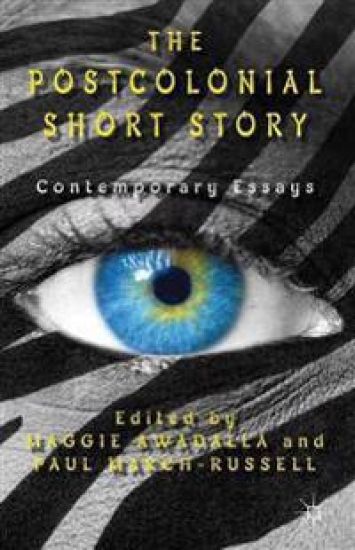
This book puts the short story at the heart of contemporary postcolonial studies and questions what postcolonial literary criticism may be. Focusing on short fiction between 1975 and today – the period in which critical theory came to determine postcolonial studies – it argues for a sophisticated critique exemplified by the ambiguity of the form.
The novels in this collection include one by a fierce opponent to the New Woman movement, as well as two from women whose work can be seen as archetypal New Woman fiction.
New Woman Fiction, 1881-1899, Part III vol 8
Carolyn W de la L Oulton; Andrew King; Paul March-Russell
Routledge
2011
sidottu
The novels in this collection include one by a fierce opponent to the New Woman movement, as well as two from women whose work can be seen as archetypal New Woman fiction.
New Woman Fiction, 1881-1899, Part III vol 7
Carolyn W de la L Oulton; Andrew King; Paul March-Russell
Routledge
2011
sidottu
The novels in this collection include one by a fierce opponent to the New Woman movement, as well as two from women whose work can be seen as archetypal New Woman fiction.
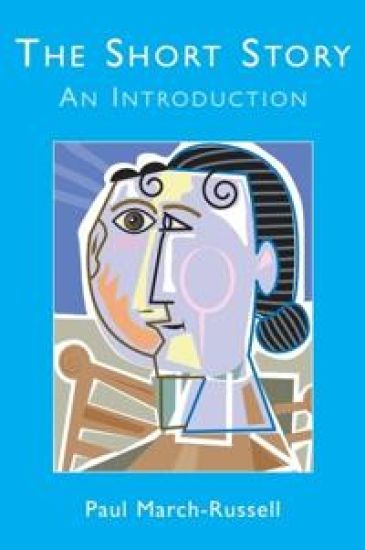
This new general introduction emphasises the importance of the short story to an understanding of modern fiction. In twenty succinct chapters, the study paints a complete portrait of the short story - its history, culture, aesthetics and economics. European innovators such as Chekhov, Flaubert and Kafka are compared to Irish, New Zealand and British practitioners such as Joyce, Mansfield and Carter as well as writers in the American tradition, from Hawthorne and Poe to Barthelme and Carver. Fresh attention is paid to experimental, postcolonial and popular fiction alongside developments in Anglo-American, Hispanic and European literature. Critical approaches to the short story are debated and reassessed, while discussion of the short story is related to contemporary critical theory. In what promises to be essential reading for students and academics, the study sets out to prove that the short story remains vital to the emerging culture of the twenty-first century. Key Features *A contemporary and theoretically informed survey *Comprehensive coverage of the short story from its folktale origins to the present day *Twenty clear topic-based chapters covering British, American and world fiction *Further reading in each chapter together with an extensive, up-to-date bibliography of primary and secondary works
In twenty succinct chapters, the study paints a complete portrait of the short story - its history, culture, aesthetics and economics. European innovators such as Chekhov, Flaubert and Kafka are compared to British practitioners such as Joyce, Mansfield and Carter as well as writers in the American tradition, from Hawthorne and Poe to Barthelme and Carver. For the first time attention is paid to experimental, postcolonial and popular fiction, while developments in Anglo-American, Hispanic and Arabic literature are also explored. Critical approaches to the short story are debated and reassessed, while discussion of the short story is related to contemporary critical theory. In what promises to be essential reading for students and academics, the study sets out to prove that the short story remains vital to the emerging culture of the twenty-first century. Key features include: first new survey for many years; comprehensive coverage of the short story from its folktale origins to the present day; twenty clear topic-based chapters covering British, American and world fiction; and, further reading in each chapter together with an extensive and up-to-date bibliography of primary and secondary works.