Kirjojen hintavertailu – 12 903 725 kirjaa ja 27 kauppaa

Kirjailija

Paul McPartlan

Kirjat ja teokset yhdessä paikassa: 3 kirjaa, julkaisuja vuosilta 2016–2025, suosituimpiin kuuluu A Service of Love. Vertaile teosten hintoja ja tarkista saatavuus suomalaisista kirjakaupoista.

3 kirjaa

Kirjojen julkaisuvuodet: 2016–2025.

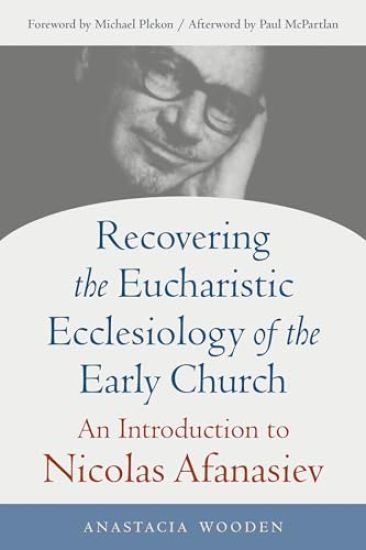
Recovering the Eucharistic Ecclesiology of the Early Church

Recovering the Eucharistic Ecclesiology of the Early Church

Anastacis Wooden; Michael Plekon; Paul McPartlan

THE CATHOLIC UNIVERSITY OF AMERICA PRESS
2025
sidottu
The first theologian who spoke of eucharistic ecclesiology was the Russian Orthodox church historian and canonist Nicholas Afanasiev (1893-1966). He claimed to have re-discovered and systematized the original ecclesiology of the early church, which he called "eucharistic." Since then, the eucharistic ecclesiology crossed confessional borders and shaped the theological discussion on the nature of the church. Many authors of different Christian confessions developed Afanasiev's basic intuition while proposing a variety of their own understandings of the "eucharistic nature" of the church: from Orthodox theologians like John Zizioulas and John Romanides to Catholic theologians like J.-M. Tillard and Joseph Ratzinger. Ironically, the details of Afanasiev's own ecclesiological system remain largely unknown. The aim of this book is to formulate a comprehensive view of Afanasiev's ecclesiological vision and of its significance for contemporary ecclesial life in two parts. It is Anastacia Wooden's conviction that the prevailing "stereotypical" view of Afanasiev's ecclesiology is suffering from misapprehension of his thought. Therefore, Part one addresses the issues that historically complicated understanding of Afanasiev's ecclesiology. It will provide historical, theological, and biographical context of Afanasiev's scholarship by presenting keys to understanding of his eucharistic ecclesiology. In the second part the book provides a synthesis of Afanasiev's total ecclesiological vision as well as systematic presentation of six specific ecclesiological issues. It demonstrates how Afanasiev's methodological assumption that ecclesiology can serve as a tool to make sense of the historical data on the life of the church led to his realization that the early church had an operative ecclesiology which placed the exercise of royal priesthood in the Eucharist as the starting point of the ecclesial structure. In each chapter of the second part, this book provides reflections on the contemporary relevance of Afanasiev's work. In the current crises of leadership in the Catholic Church (as well as other Christian churches) it may prevent the adoption of arbitrary forms of lay participation in the church governance by reminding church leaders that a theologically meaningful increase of lay participation should always be framed in terms of the increased participation of local churches.
The Splendor of the Church in Mary

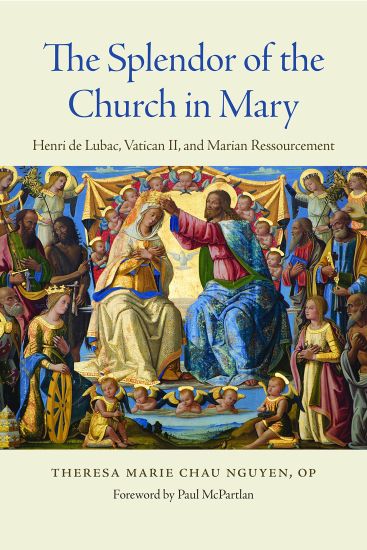
The Splendor of the Church in Mary

Theresa Marie Chau Nguyen; Paul McPartlan

THE CATHOLIC UNIVERSITY OF AMERICA PRESS
2023
sidottu
Henri de Lubac, SJ, (1896-1991) is one of the most renowned theologians of the twentieth century. Numerous studies have been undertaken to examine his many contributions to theology, but little attention has been paid to the specific topic of the relationship of the Blessed Virgin Mary and the Church in his writings. This was a topic that gave rise to contentious discussion at the Second Vatican Council, and although the Council fathers approved the integration of Marian doctrine into the Dogmatic Constitution on the Church, this synthesis of Mariology and ecclesiology has been largely neglected in theology today. The Splendor of the Church in Mary retrieves de Lubac's Marian ecclesiology and revives an understanding and appreciation of its enduring influence at the Vatican Council and beyond. The first part examines de Lubac's pre-conciliar works which evince a steady biblical and patristic ressourcement of Marian themes. It also explores his writings on Teilhard de Chardin's Eternal Feminine, Christian mysticism, and Amida Buddhism and discovers in them the essential building blocks of his Marian thought. The second part turns to the Second Vatican Council and post-conciliar developments. Rereading the debates and texts of Lumen Gentium through a Marian lens brings to light the extent of de Lubac's influence: Méditation sur l'Eglise (1953), his principal work on Mary and the Church, anticipated the structure and content of Lumen Gentium a decade before the Council. De Lubac's writings provided a theological compass for the Council fathers, and they continue to provide direction and orientation for ecclesiological discourse today. The Splendor of the Church in Mary culminates in a constructive analysis of one of the most pressing pastoral and ecclesiological questions of our times: the question of the relationship of the universal and particular churches. Directly engaging the crucial debate between then-Cardinal Ratzinger and Cardinal Kasper, it proposes that de Lubac's Mariology effectively offers a new perspective and a refreshing path forward. Attentive to the mystical identification of Mary and the Church, de Lubac's ressourcement has the potential to re-enchant and advance contemporary theology in new and significant ways.
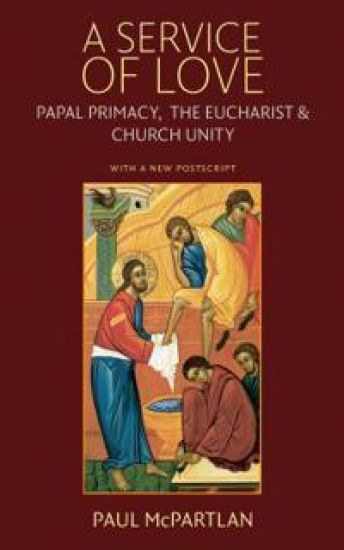
A Service of Love

A Service of Love

Paul McPartlan

The Catholic University of America Press
2016
nidottu
A crucial topic in Catholic-Orthodox ecumenical dialogue is the natureand exercise of universal primacy in the church. In 1995, Pope JohnPaul II expressed the hope that pastors and theologians of both churchesmight seek ways in which the papal ministry could accomplish ""aservice of love recognized by all concerned"" (Ut Unum Sint). In thisshort and penetrating study, Paul McPartlan, a member of the internationalRoman Catholic-Orthodox theological dialogue, presents aproposal, carefully argued both historically and theologically, for a primacyexercising a service of love in a reconciled church, West and East. McPartlan builds on the substantial foundation already laid in thedialogue for an understanding of the church in terms of the Eucharist. Eucharistic ecclesiology has been one of the most remarkable developmentsin the theological renewal of recent decades. Drawing particularlyon scriptural and patristic teaching, it offers a highly promising frameworkfor resolving this most sensitive and difficult of issues--recognizingthe bishop of Rome as the focal point and servant of the Eucharisticcommunion among bishops. Vatican II directed that those working forreconciliation between Catholics and Orthodox pay close attention to therelationships that pertained between the Eastern churches and the see ofRome before the split of 1054. McPartlan seeks to do just that, notably incorporatingthe teaching of the council on the role of the papacy to craft aproposal that may commend itself to Catholics and to Orthodox. ABOUT THE AUTHOR:Paul McPartlan is Carl J. Peter Professor of Systematic Theology and Ecumenismat the Catholic University of America. He is a member of the International TheologicalCommission and the Joint International Commission for Theological Dialoguebetween the Roman Catholic Church and the Orthodox Church. A contributor to therecently published Theology Today: Perspectives, Principles, and Criteria by theInternational Theological Commission, McPartlan also is the author of The EucharistMakes the Church: Henri de Lubac and John Zizioulas in Dialogue and Sacrament of Salvation: An Introduction to Eucharistic Ecclesiology.