Kirjojen hintavertailu – 12 903 724 kirjaa ja 27 kauppaa

Kirjailija

Paul Miller

Kirjat ja teokset yhdessä paikassa: 30 kirjaa, julkaisuja vuosilta 2006–2026, suosituimpiin kuuluu The Swimmer Body Formula. Vertaile teosten hintoja ja tarkista saatavuus suomalaisista kirjakaupoista.

30 kirjaa

Kirjojen julkaisuvuodet: 2006–2026.

Exploring School Leadership in England and the Caribbean
· What drives school leaders?· What do they do on a day to day basis?· What helps or constrains their decision-making?· What keeps them focused amidst challenges? Rather than applying theory to practice, Exploring School Leadership in England and the Caribbean draws on how school leaders practice and experience their own leadership. Paul Miller draws on case studies from Jamaica and England to explore what it means to be a school leader and explores a wide-range of issues, including accountability, performativity, inclusion and multiculturalism, technology, staffing and resourcing decisions. While no two school leaders will have identical experiences as a school leader, Paul Miller draws on the first-hand accounts of school leaders to show that regardless of school size, type and location there are a number of common experiences and themes. Miller acknowledges that the practice of school leadership is occurring in an uncertain economic environment, buoyed by a fast paced policy context where by targets linked to national economic development are the new normal. He concludes that school leadership is a continuous balancing act driven by and experienced through an “Economic-motor model” of schooling- which he proposes.

EMDR Therapy for Schizophrenia and Other Psychoses

EMDR Therapy for Schizophrenia and Other Psychoses

Paul Miller

Springer Publishing Co Inc
2015
nidottu

Halvin toimitettuna 85,60 €

"The book exudes an atmosphere of openness, curiosity, humanism, and growth instead of control... This book is recommended to every therapist interested in the turbulent history of controversies and paradigms surrounding schizophrenia/psychosis and trauma. Paul de Bont, Matty Geurink, PsycCRITIQUES"Dr. Paul Miller takes EMDR theory, research, and practice a major step forward with his new book. [He] explores the way both researchers and clinicians can successfully integrate EMDR theory and therapy into the current understanding and work with schizophrenia and other psychoses. I believe this volume will be a milestone in the development of EMDR." Udi Oren, PhD, President, EMDR Europe Association "The EMDR community has been waiting for Paul to publish this book! He has a tremendous reputation, nationally and internationally!" Uri Bergmann, PhD, Recent Past-President, EMDRIA Author, Neurobiological Foundations for EMDR Practice This groundbreaking resource is the first to apply EMDR therapy to individuals with schizophrenia and other psychotic disorders. Written by the recognized world leader in using EMDR therapy to treat psychoses, the book delivers state-of-the-art research on this topic. It demonstrates how EMDR therapy can be safely used to help individuals with schizophrenia and other psychoses by formulating these disorders within a trauma and dissociation model. The book describes ICoNN (Indicating Cognitions of Negative Networks), an easy-to-use modification to the standard EMDR therapy eight-phase model, and includes actual case studies to illustrate its use. These case studies of patients that have been successfully treated with EMDR therapy serve as valuable templates for clinicians regarding obtaining patient histories, examining mental states, case formulation, and treatment planning. Scripted materials provide additional guidance to therapists working with this client group. The book traces the evolution of the phenomenology of psychoses from Kraepelin's dementia praecox through to Kendler's substantial nosological contribution to the modern phenotype for schizophrenia. Using Kendler's criteria, it aids the clinician in identifying those clients most likely to benefit from EMDR therapy. The book demonstrates how to formulate cases within a trauma model to facilitate the strong therapeutic rapport needed when treating patients with psychoses. It describes the ICoNN model, which provides a semistructured method of formulating and treating complex cases, and underscores its value as a unifying model that facilitates research. Chapters reinforce the theoretical foundations of EMDR therapy through learning objectives and summaries covering historical, phenomenological, and clinical facets of EMDR therapy with psychotic patients. KEY FEATURES: Guides clinicians in the safe, proven use of EMDR therapy to treat psychoses Authored by a recognized world leader in EMDR therapy for treatment of psychoses Describes ICoNN, an easily understood adaptation to the standard 8-phase EMDR therapy model Summarizes the trauma and dissociation literature Provides case examples and scripted materials to guide the therapist
The Digital Renaissance of Work

The Digital Renaissance of Work

Paul Miller; Elizabeth Marsh

Routledge
2014
nidottu
The world of work is going through an unprecedented revival driven by new technologies. The Digital Renaissance of Work: Delivering Digital Workplaces Fit for the Future will take the reader on a journey into the emerging technology-led revival of work. A unique combination of thought leadership and technical know-how, this book will bring the reader up-to-date with the latest developments in the field, such as: freelancing the organisation/ work but no jobs, localisation/ work but not place, time travel and death of the weekend, trust, privacy and the quantified employee, leadership in the hyper connected organisation, beyond the office/ the mobile frontline, automation and the frontiers of work, as well as setting out how to lay down the roadmap for the digital workplace: the human centred digital workplace, making the business case, setting up the digital workplace programme, technology deployment, measuring the digital workplace. The book will draw on new case studies from major organisations with which Paul Miller is in regular discussion, such as: Accenture - aligning the digital and physical workplaces; Barclays - innovating in a regulated environment; Deutsche Post/ DHL - leading at the mobile frontline; Environment Agency - real time collaboration; IBM - pushing the digital workplace frontiers; IKEA - measuring the digital workplace; SAP - gamifying the enterprise. Paul Miller’s follow up to his critically acclaimed The Digital Workplace picks up the story to provide organisations with an understanding of the structural and organizational implications the emerging technology has for the workplace. His insights, backed by the considerable research of the Digital Workplace Forum, offer a lifeline to organizations needing to make better sense of a very uncertain future.
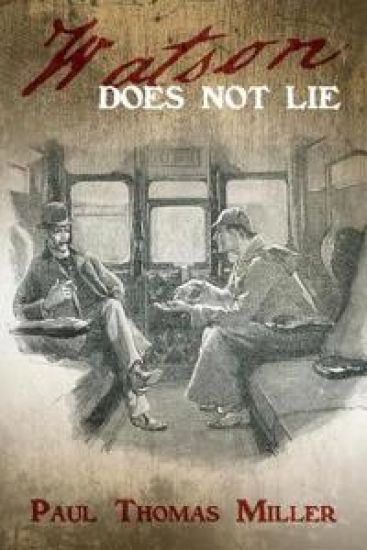
Watson Does Not Lie

Watson Does Not Lie

Paul Miller

Wildside Press
2014
pokkari

Halvin toimitettuna 24,40 €

"I was told the creation of a Holmesian Chronology is practically a rite of passage. I was told once you have managed to make sense of the sixty stories you emerge a rookie no more. I was told it is a task that improves you and your understanding of The Canon. "I'm not so sure...." Too many chronologists resorted to claiming either Watson lied, or could not read his own notes. Such ideas are scandalous. I wanted a chronology built upon the idea of Watson's words as facts. Since I could not find one, I created one." --Paul Thomas Miller
Pesticide Application Methods

Pesticide Application Methods

G. A. Matthews; Roy Bateman; Paul Miller

John Wiley Sons Inc
2014
sidottu
PESTICIDE APPLICATION METHODS Pesticide Application Methods is the standard work for all those involved in crop protection. This fully revised and expanded edition provides up-to-date information on the different types of application techniques and how they should be used to ensure efficient and effective pest control. The third edition of this excellent book was published more than 10 years ago, since when a number of important developments have taken place. Examples include changes to legislation both in the EU and USA concerning water quality. This has an impact on how spray is applied and, more particularly, how the sprayer is designed to minimise quantities that remain in the equipment when spraying is completed, and in addition inform how and when the sprayer is cleaned. Concern about spray drift has also continued and has led to more research on how to reduce the amount of spray that moves downwind from a treated area. Important new information on this topic is included within the new edition. Professor Graham Matthews has been joined by two new co-authors to increase the breadth and depth of coverage in this updated edition of Pesticide Application Methods. This important new edition is a commercially significant reference tool and will be of great use and interest to all those working in crop protection, including agricultural entomologists and plant pathologists, pesticide scientists, advisors and consultants, large-scale growers, agricultural and horticultural scientists, agrochemical industry personnel including those involved in equipment supply and product formulation. Libraries in government and commercial research establishments, universities and agricultural colleges where agricultural and biological sciences are studied and taught should have multiple copies of this definitive book on their shelves.