Kirjojen hintavertailu – 12 859 824 kirjaa ja 27 kauppaa

Kirjailija

Paul Muldoon

Kirjat ja teokset yhdessä paikassa: 40 kirjaa, julkaisuja vuosilta 1992–2026, suosituimpiin kuuluu Liberties Journal of Culture and Politics. Vertaile teosten hintoja ja tarkista saatavuus suomalaisista kirjakaupoista.

40 kirjaa

Kirjojen julkaisuvuodet: 1992–2026.

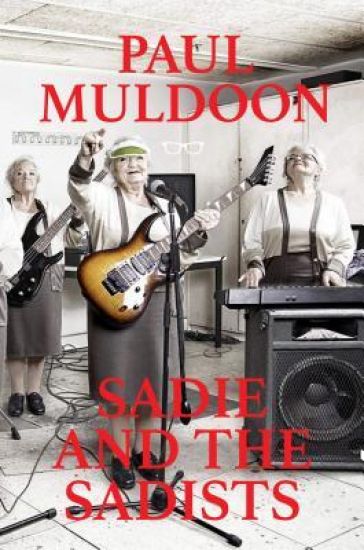
Sadie and the Sadists: Song Lyrics

Sadie and the Sadists: Song Lyrics

Paul Muldoon

Eyewear Publishing
2017
nidottu
This particular pamphlet is beautifully designed, printed on high-stock paper, with a proper spine, and an ultra-cool cover. It features 19 song lyrics - zany, witty, brilliant, sometimes startling - by the master poet, songs played by his band, Rogue Oliphant.
Selected Poems 1968–2014

Selected Poems 1968–2014

Paul Muldoon

Faber Faber
2017
nidottu

Halvin toimitettuna 25,60 €

Selected Poems 1968-2014 offers forty-five years of work drawn from twelve individual collections by a poet who 'began as a prodigy and has gone on to become a virtuoso' (Michael Hofmann). Hailed by Seamus Heaney as 'one of the era's true originals', Muldoon seems determined to escape definition yet this volume, chosen by the poet himself, serves as an indispensable introduction to his trademark combination of intellectual high jinx and emotional honesty. Among his many honours are the Pulitzer Prize for Poetry and the Shakespeare Prize 'for contributions from English-speaking Europe to the European inheritance.'
Why Brownlee Left

Why Brownlee Left

Paul Muldoon

Faber Faber
2017
nidottu
Why Brownlee Left, a Poetry Book Society Choice and winner of the Geoffrey Faber Memorial Prize, confirmed Paul Muldoon's reputation as the most inventive voice of his generation when it was first published in 1980. The key figure in the poet's third collection is the enigmatic Brownlee; strong-willed and wayward, past shaky, future hazy, present whereabouts uncertain. There are many new departures here, but Why Brownlee Left also explores with increasing authority themes already apparent in New Weather (1973) and Mules (1977). It culminates in a retelling of 'Immram Mael Duin', a strange voyage of self-discovery by the poet's legendary ancestor.
One Thousand Things Worth Knowing

One Thousand Things Worth Knowing

Paul Muldoon

Faber Faber
2016
nidottu
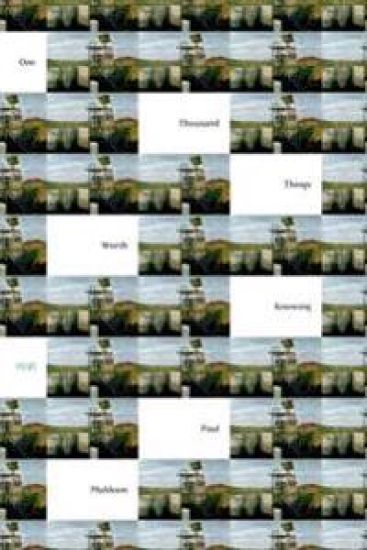
Paul Muldoon's new book, his twelfth collection of poems, is wide-ranging in its subject matter yet is everywhere concerned with watchfulness. Heedful, hard won, head-turning, heartfelt, these poems attempt to bring scrutiny to bear on everything, including scrutiny itself. One Thousand Things Worth Knowing confirms Nick Laird's assessment, in the New York Review of Books, that Paul Muldoon is 'the most formally ambitious and technically innovative of modern poets, [who] writes poems like no one else.'
One Thousand Things Worth Knowing

One Thousand Things Worth Knowing

Paul Muldoon

Farrar, Strauss Giroux-3pl
2016
nidottu
Another wild, expansive collection from the eternally surprising Pulitzer Prize-winning poetSmuggling diesel; Ben-Hur (the movie, yes, but also Lew Wallace's original book, and Seosamh Mac Grianna's Gaelic translation); a real trip to Havana; an imaginary trip to the Ch teau d'If: Paul Muldoon's newest collection of poems, his twelfth, is exceptionally wide-ranging in its subject matter--as we've come to expect from this master of self-reinvention. He can be somber or quick-witted--often within the same poem: The mournful refrain of "Cuthbert and the Otters" is "I cannot thole the thought of Seamus Heaney dead," but that doesn't stop Muldoon from quipping that the ancient Danes "are already dyeing everything beige / In anticipation, perhaps, of the carpet and mustard factories." If this masterful, multifarious collection does have a theme, it is watchfulness. "War is to wealth as performance is to appraisal," he warns in "Recalculating." And "Source is to leak as Ireland is to debt." Heedful, hard-won, head-turning, heartfelt, these poems attempt to bring scrutiny to bear on everything, including scrutiny itself. One Thousand Things Worth Knowing confirms Nick Laird's assessment, in The New York Review of Books, that Muldoon is "the most formally ambitious and technically innovative of modern poets," an experimenter and craftsman who "writes poems like no one else."
The Love Letters of Percy French

The Love Letters of Percy French

Alan Tongue; Paul Muldoon

The Lilliput Press Ltd
2015
sidottu
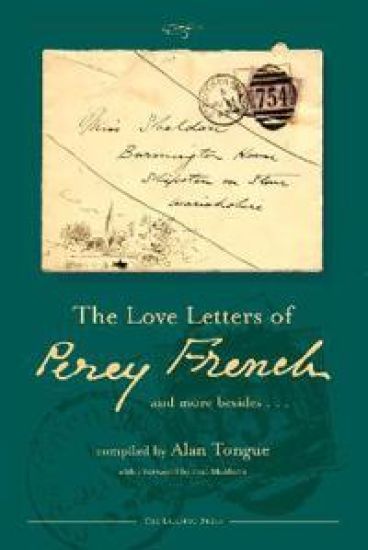
Revealed for the first time here is the correspondence that Percy French, one of Ireland’s most influential songwriters, wrote to his fiancée and second wife-to-be, Ettie Sheldon, between May 1892 and January 1894, together with copious memorabilia of the period including several of the early French watercolours, theatre programmes, original ink sketches and portraits, and covers from the Irish Cyclist magazine of which French was editor. The letters, written over a period of two years, give a fascinating account of French’s attempts to further his career in writing and painting. With his inimitable humour he describes his travels and his various collaborations. As with Tongue’s previous book, the pages are arranged chronologically, with careful curation of relevant watercolours, archival photographs, programmes, articles and other memorabilia illuminating the text. This collection of letters was left to Alan Tongue by Ettie French, eldest daughter of the marriage, upon her death.
Songs and Sonnets

Songs and Sonnets

Paul Muldoon

Enitharmon Press
2012
nidottu
Paul Muldoon has been interested in writing for music for at least twenty years, over which time he has collaborated with composers as various as Mark-Anthony Turnage, Warren Zevon, and Wayside Shrines, the Princeton-based musical collective of which he is a founder member. Songs and Sonnets brings together poems and lyrics from a writer who has been described by The Irish Times as 'a force of nature.'
En hare på Aldergrove

En hare på Aldergrove

Paul Muldoon

Ellerströms förlag
2012
nidottu
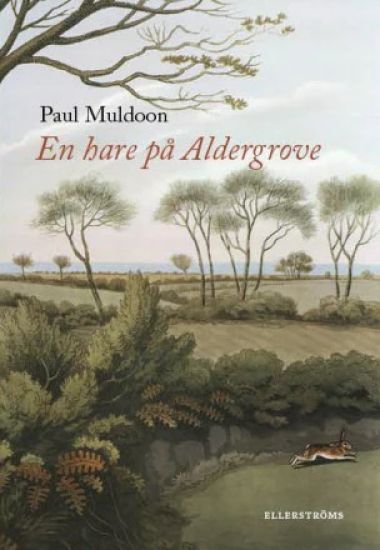
”Jag hade alltid förutsatt”, hör jag ännu honom säga, ”att repliken går över i piken och sporren går över i sidan och utan fast adress går över i lösaktig och Svarta grisens dike går över i spargrisen och Ham går över i Jafet och avsikten går över i sikten och Cristal går över i crystal meth varvid syftet på något sätt övergår i medlet och skiljegräns går över i schibbolet och tamburin går över i timbre och quidditas går över i quid pro quo och – detta vet jag att du gillar – grenväg går över i gränsväg.” Ur Otillåten väg Paul Muldoon föddes 1951 i Nordirland. Efter studier vid Queen’s University, Belfast, arbetade han vid BBC i Belfast innan han 1987 flyttade till USA, där han sedan länge undervisar vid Princeton. Han har hittills utgivit elva diktsamlingar och två stora ­essäsamlingar samt flera opera­libretti och över­sättningsvolymer. 1999–2004 var han Professor of Poetry vid Oxford. Muldoon har av Times Literary Supplement kallats ”den viktigaste engelsk­språkige poeten som fötts efter andra världskriget”. En hare på Aldergrove är ett brett och representativt urval ur Muldoons samtliga volymer i översättning av Lars-Håkan Svensson.
Maggot

Maggot

Paul Muldoon

Farrar, Straus and Giroux
2011
nidottu
Of Plan B, which included several of the poems in Maggot, Robert McCrum recently said in the London Observer that "Paul Muldoon, who has done so much to reimagine the poet's task, has surpassed himself with his latest collection." In his eleventh full-length book, Muldoon reminds us that he is a traditional poet who is steadfastly at odds with tradition. If the poetic sequence is the main mode of Maggot, it certainly isn't your father's poetic sequence. Taking as a starting point W. B. Yeats's remark that the only fit topics for a serious mood are "sex and the dead," Muldoon finds unexpected ways of thinking and feeling about what it means to come to terms with the early twenty-first century. It's no accident that the centerpiece of Maggot is an outlandish meditation on a failed poem that draws on the vocabulary of entomological forensics. The last series of linked lyrics, meanwhile, takes as its subject the urge to memorialize the scenes of fatal automobile accidents. The extravagant linkage of rot and the erotic is at the heart of not only the title sequence but also many of the round songs that characterize Maggot, and has led Angela Leighton, writing in The Times Literary Supplement, to see these new poems as giving readers "a thrilling, wild, fairground ride, with few let-ups for the squeamish."
Maggot

Maggot

Paul Muldoon

Faber Faber
2011
nidottu
In his eleventh full-length collection, Paul Muldoon reminds us that he is a traditional poet who is steadfastly at odds with tradition. If the poetic sequence is the main mode of Maggot, it certainly isn't your father's poetic sequence. Taking as a starting point W. B. Yeats's remark that the only fit topics for a serious mood are 'sex and the dead', Muldoon finds unexpected ways of thinking and feeling about what it means to come to terms with the early twenty-first century. It's no accident that the centerpiece of Maggot is an outlandish meditation on a failed poem that draws on the vocabulary of entomological forensics. The last series of linked lyrics, meanwhile, takes as its 'subject' the urge to memorialize the scenes of fatal car accidents. The extravagant linkage of rot and the erotic is at the heart of not only the title-sequence but many of the round-songs that characterize Maggot and has led Angela Leighton, writing in the TLS, to see these new poems (on their earlier appearance in Plan B, an interim volume which included several of the poems in Maggot) as giving readers 'a thrilling, wild, fairground ride, with few let-ups for the squeamish.'
Våpenkvile

Våpenkvile

Paul Muldoon

Solum
2009
sidottu
Boka presenterer eit utval frå alle Muldoons diktsamlingar, seks til no. Her er både korte og lengre dikt representerte med blant anna eit utdrag av forfattarens hovudverk "Madoc". I sine dikt kombinerer Muldoon ofte kunnskap med humor, og dikta har temaer som den politiske situasjonen i heimlandet Irland, Vestens kulturhistorie, Cuba-krisa eller gresk historie og mytologi.
The End of the Poem

The End of the Poem

Paul Muldoon

Faber Faber
2009
pokkari
The End of the Poem contains the fifteen lectures delivered by Paul Muldoon as Oxford Professor of Poetry, from 1999 to 2004. Rather than individual and discrete performances, these lectures form a dazzling set of variations around the sustained theme of 'the end of the poem'. Each lecture explores a different sense of an ending: whether a poem can ever be a free-standing structure, read and written in isolation from other poems; whether a poem's line-endings are forms of closure (and where this might leave the poem in prose); whether the poem is completed only with the reader's act of understanding; whether revision brings a poem nearer to its ideal ending (when does a poet know when a poem has come to an end?); what is the right true end of poetry, and is the end of the poem the beginning of criticism, including an Arnoldian 'criticism of life'?
The End of the Poem

The End of the Poem

Paul Muldoon

Farrar, Strauss Giroux-3pl
2007
nidottu
In The End of the Poem, Paul Muldoon dazzlingly explores a diverse group of poems, from Yeats's "All Souls' Night" to Stevie Smith's "I Remember" to Fernando Pessoa's "Autopsychography." Muldoon reminds us that the word "poem" comes, via French, from the Latin and Greek: "a thing made or created." He asks: Can a poem ever be a free-standing structure, or must it always interface with the whole of its author's bibliography--and biography? Muldoon explores the boundlessness created by influence, what Robert Frost meant when he insisted that "the way to read a poem in prose or verse is in the light of all the other poems ever written." Finally, Muldoon returns to the most fruitful, and fraught, aspect of the phrase "the end of the poem" the interpretation that centers on the "aim" or "function" of a poem, and the question of whether or not the end of the poem is the beginning of criticism. Irreverent and deeply learned, The End of the Poem is a vigorous approach to looking at poetry anew.
Horse Latitudes: Poems

Horse Latitudes: Poems

Paul Muldoon

Farrar, Straus and Giroux
2007
nidottu
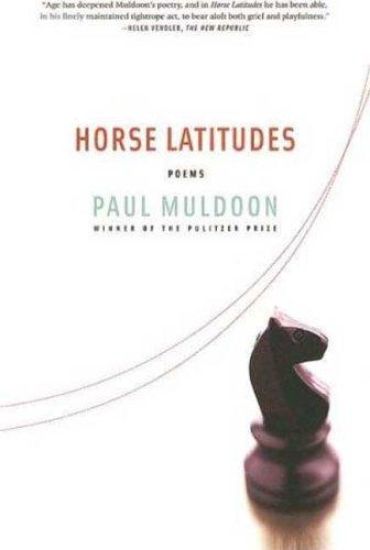
The title of Horse Latitudes, Paul Muldoon's tenth collection of poetry, refers to those areas thirty degrees north and south of the equator where sailing ships tend to be becalmed, where stasis (if not stagnation) is the order of the day. From Bosworth Field to Beijing, the Boyne to Bull Run, from a series of text messages to the nineteenth-century Irish poet Thomas Moore to an elegy for Warren Zevon, and from post-Agreement Ireland to George W. Bush's America, this book presents us with fields of battle and fields of debate, in which we often seem to have come to a standstill but in which language that has been debased may yet be restruck and made current to our predicament. Horse Latitudes is a triumphant collection by one of the most esteemed poets of our time.
Moy Sand and Gravel

Moy Sand and Gravel

Paul Muldoon

Farrar, Straus and Giroux
2004
nidottu
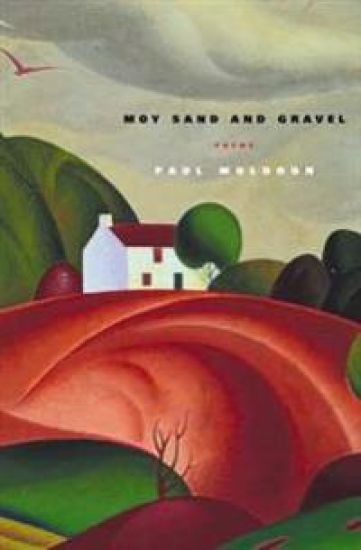
The author's ninth collection of poems takes the reader on a richly evocative tour of Ireland, with glimpses of Bessie Smith, Marilyn Monroe, Queen Elizabeth I, William Butler Yeats, and Sitting Bull, to name just a few. Reprint.
Moy Sand and Gravel

Moy Sand and Gravel

Paul Muldoon

Faber Faber
2004
nidottu
WINNER OF THE PULITZER PRIZE FOR POETRY 2003Paul Muldoon's ninth collection of poems, his first since Hay (1998), finds him working a rich vein that extends from the rivery, apple-heavy County Armagh of the 1950s, where he was brought up, to suburban New Jersey, on the banks of a canal dug by Irish navvies, where he now lives. Grounded, glistening, as gritty as they are graceful, these poems seem capable of taking in almost anything, and anybody, be it a Tuareg glimpsed on the Irish border, Bessie Smith, Marilyn Monroe, Queen Elizabeth I, a hunted hare, William Tell, William Butler Yeats, Sitting Bull, Ted Hughes, an otter, a fox, Mr and Mrs Stanley Joscelyne, an unearthed pit pony, a loaf of bread, an outhouse, a killdeer, Oscar Wilde, or a flock of redknots. At the heart of the book is an elegy for a miscarried child, and that elegiac tone predominates, particularly in the elegant remaking of Yeats's 'A Prayer for My Daughter' with which the book concludes, where a welter of traffic signs and slogans, along with the spirits of admen, hardware storekeepers, flim-flammers, fixers and other forebears, are borne along by a hurricane-swollen canal, and private grief coincides with some of the gravest matter of our age.

Poems 1968-1998

Poems 1968-1998

Paul Muldoon

Farrar, Straus and Giroux
2002
nidottu
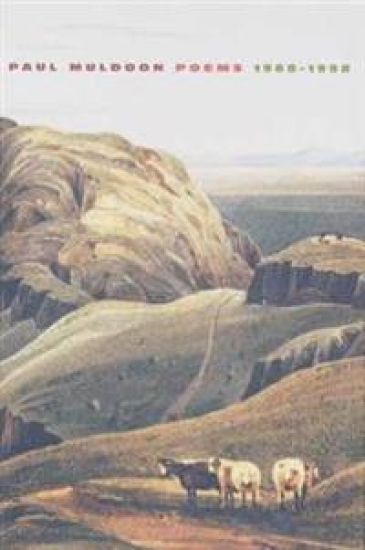
"Ireland" The Volkswagen parked in the gap, But gently ticking over. You wonder if it's lovers And not men hurrying back Across two fields and a river. Sven Birkerts has said, "It is not usual for a poet of Muldoon's years to have . . . an oeuvre disclosing significant shifts and evolutions. But Muldoon, more than most, is an artist in high flight from self-repetition and the deadening business of living up to created expectations." The body of work in Poems 1968-1998 -- a comprehensive gathering of Paul Muldoon's eight volumes -- finds a great poet reinventing himself at every turn. Muldoon's career thus far shows us a fascinatingly mutable climate in which each freshening period brings -- as his first collection was predictively titled -- new weather."
Hay: Poems

Hay: Poems

Paul Muldoon

Farrar, Straus and Giroux
1999
nidottu
My heart is heavy. For I saw Fionnuala, "The Gem of the Roe," "The Flower of Sweet Strabane,"when a girl reached down into a freezer binto bring up my double scoop of vanilla.-"White Shoulders" Seamus Heaney has called his colleague Paul Muldoon "one of the era's true originals." While Muldoon's previous book, The Annals of Chile, was poetry at an extreme of wordplay and formal complexity, Hay is made up of shorter, clearer lyric poems, retaining all of Muldoon's characteristic combination of wit and profundity but appealing to the reader in new and delightful ways. His eighth book, it is also his most inviting-full of joy in language, fascination with popular culture, and enthusiasm for the writing of poetry itself. This is the first of his books to really capture the effect of America on his poetic sensibility, which is like a magnet for impressions and the miscellany of the culture.
The Annals of Chile

The Annals of Chile

Paul Muldoon

Farrar, Straus and Giroux
1995
nidottu
Winner of the T. S. Eliot Prize, The Annals of Chile confirms Paul Muldoon's stature as one of the most talented poets of his generation. The heart of the book is the long poem "Yarrow," in which Muldoon's powers of insight and wordplay and surprising association are on exuberant display: evoking the 1960s, the poet conjures up a boundless historical present peopled at once by Davy Crockett and Tristan Tzara and Wild Bill Hickok, by Maud Gonne and Michael Jackson, all bought swifly and vividly to life by his fantastical imagination. The collection also contains a group of shorter poems, including "The Birth," a delicate lyric which celebrates the arrival of a baby girl; "Incantata," a deeply felt elegy to a former lover; a Muldoon's inspired adaptation of an episode from Ovid's Metamorphoses.
Madoc: A Mystery

Madoc: A Mystery

Paul Muldoon

Farrar, Straus and Giroux
1992
nidottu
Subtitled A Mystery, this verse narrative collects several poems concerning the so-called "Pantisocracy" (meaning a state ruled equally by all), a utopian scheme devised and later abandoned by the 18th-century poet-philosophers Samuel Taylor Coleridge and Robert Southey. What if they had indeed set up such an ideal community on the banks of the Susquehanna? That is the crux of this book's long and fascinating title poem, which depicts events via the mind's eye of one of Southey's reputed descendants. The poems in this book also focus more directly on the legend of Madoc himself, the Welsh prince who some believe came to America 300 years before Columbus and sired a line of Welsh-speaking Indians.