Kirjojen hintavertailu – 12 867 350 kirjaa ja 27 kauppaa

Kirjailija

Paul Nieuwenhuis

Kirjat ja teokset yhdessä paikassa: 3 kirjaa, julkaisuja vuosilta 2014–2021, suosituimpiin kuuluu Sustainable Consumption, Production and Supply Chain Management. Vertaile teosten hintoja ja tarkista saatavuus suomalaisista kirjakaupoista.

3 kirjaa

Kirjojen julkaisuvuodet: 2014–2021.

Sustainable Consumption, Production and Supply Chain Management

Sustainable Consumption, Production and Supply Chain Management

Paul Nieuwenhuis; Daniel Newman; Anne Touboulic

Edward Elgar Publishing Ltd
2021
sidottu
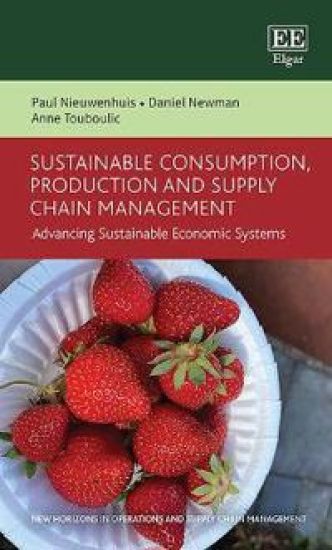
This incisive book integrates the academic fields of sustainable production and consumption (SCP) and sustainable supply chain management (SSCM) as a framework for challenging the current economic paradigm and addressing the significant ecological and environmental problems faced by the contemporary business world. Outlining the growth and progress of consumption in the developed world, initial chapters explore the numerous problems that have emerged from the current mode of consuming resources, and how we might engage in more sustainable consumption practices. The book goes on to address the historical development of mass production and the ecological damage caused by an unsustainable linkage between mass consumption and mass production. Considering the future of the supply web, it illustrates how SSCM can play a leading role in the transition towards a more sustainable economic system if it is able to address contemporary ecological concerns more effectively. This insightful and optimistic platform for ecological supply chain management is a rousing call to arms for business and management scholars hoping to propose innovative methods of improving the sustainability of consumption, production and supply webs. It will also benefit the work of business practitioners and entrepreneurs looking to engage in more sustainable business operations.
Sustainable Automobility

Sustainable Automobility

Paul Nieuwenhuis

Edward Elgar Publishing Ltd
2015
nidottu
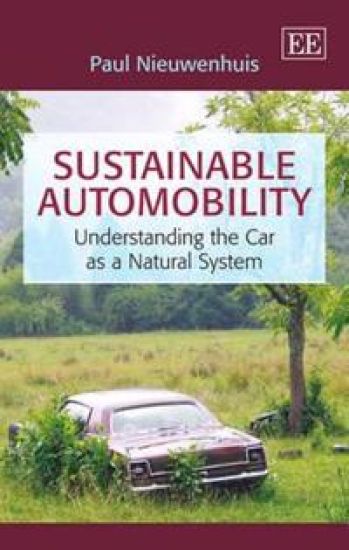
If we are part of nature, then so is everything we make. This unique book explores this notion using the example of the car, how it is made and used and especially how we relate to it, with a view to creating a more sustainable automobility. We have been trying to make cars cleaner and more efficient, but has this really made them more sustainable? This book argues, within the context of sustainable consumption and production, that we should see the car as a natural system, subject to natural laws and processes. As part of this new perspective we need to change our attitude to cars, building more durable relationships and co-evolving with them. Revolutionary, perhaps; but if we get it right, this approach will allow us to enjoy motoring - albeit in modified form - into the future. The book draws on a range of disciplines, including industrial ecology, engineering, philosophy, anthropology, consumer psychology and object-oriented ontology, as well as providing industry examples to support its innovative case. This ground-breaking book will be of interest to academics of sustainability, socio-technical transition, management of change, engineering, biomimicry and business. It will also be of interest to automotive consultancies and those working in the car and oil industries. Paul Nieuwenhuis' innovative suggestions will certainly be of interest to government workers in industry, business and the environment, as well as various environmental NGOs.
Sustainable Automobility

Sustainable Automobility

Paul Nieuwenhuis

Edward Elgar Publishing Ltd
2014
sidottu
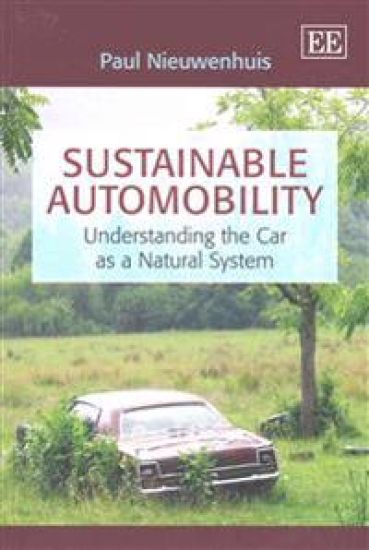
If we are part of nature, then so is everything we make. This unique book explores this notion using the example of the car, how it is made and used and especially how we relate to it, with a view to creating a more sustainable automobility. We have been trying to make cars cleaner and more efficient, but has this really made them more sustainable? This book argues, within the context of sustainable consumption and production, that we should see the car as a natural system, subject to natural laws and processes. As part of this new perspective we need to change our attitude to cars, building more durable relationships and co-evolving with them. Revolutionary, perhaps; but if we get it right, this approach will allow us to enjoy motoring - albeit in modified form - into the future. The book draws on a range of disciplines, including industrial ecology, engineering, philosophy, anthropology, consumer psychology and object-oriented ontology, as well as providing industry examples to support its innovative case. This ground-breaking book will be of interest to academics of sustainability, socio-technical transition, management of change, engineering, biomimicry and business. It will also be of interest to automotive consultancies and those working in the car and oil industries. Paul Nieuwenhuis' innovative suggestions will certainly be of interest to government workers in industry, business and the environment, as well as various environmental NGOs.