Kirjojen hintavertailu – 12 859 819 kirjaa ja 27 kauppaa

Kirjailija

Paul North

Kirjat ja teokset yhdessä paikassa: 8 kirjaa, julkaisuja vuosilta 2011–2026, suosituimpiin kuuluu The Prison-House of Language. Vertaile teosten hintoja ja tarkista saatavuus suomalaisista kirjakaupoista.

8 kirjaa

Kirjojen julkaisuvuodet: 2011–2026.

The Prison-House of Language

The Prison-House of Language

Fredric Jameson; Caleb Smith; Paul North

PRINCETON UNIVERSITY PRESS
2026
pokkari
A groundbreaking critical introduction to Structuralism and Russian Formalism by the acclaimed literary theorist In The Prison-House of Language, Fredric Jameson, one of the most important literary and cultural critics of the twentieth and twenty-first centuries, provides a thorough historical and philosophical introduction to Structuralism and Russian Formalism. Combining a survey of these influential critical movements and a critique of their methodology, Jameson lays bare their presuppositions, questioning whether the methods of Saussurean linguistics can adequately capture the concrete realities of time and history. The result is a unique and thought-provoking confrontation of two major strands of modern thought and a central work in the development of Jameson’s monumental critical project.
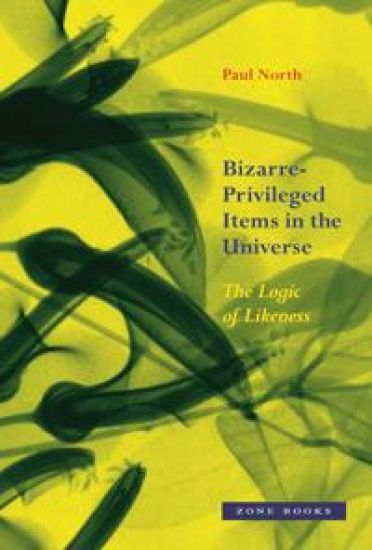
Bizarre–Privileged Items in the Universe – The Logic of Likeness
An imaginative new theory of likeness that ranges widely across history and subjects, from physics and evolution to psychology, language, and artA butterfly is like another butterfly. A butterfly is also like a leaf and at the same time like a paper airplane, an owl's face, a scholar flying from book to book. The most disparate things approach one another in a butterfly, the sort of dense nodule of likeness that Roger Caillois once proposed calling a "bizarre-privileged item." In response, critical theorist Paul North proposes a spiritual exercise: imagine a universe made up solely of likenesses. There are no things, only traits acting according to the law of series, here and there a thick overlap that appears "bizarre." Centuries of thought have fixated on the concept of difference. This book offers a theory that begins from likeness, where, at any instant, a vast array of series proliferates and remote regions come into contact. Bizarre-Privileged Items in the Universe follows likenesses as they traverse physics and the physical universe; evolution and evolutionary theory; psychology and the psyche; sociality, language, and art. Divergent sources from an eccentric history help give shape to a new trans-science, "homeotics."
Safe and Sound.

Safe and Sound.

Paul North; Lydia So

Australian Self Publishing Group
2020
sidottu
Safe and Sound.: A story about a little girl who overcomes fear. A delightful story of a young girl who, with the help of her parents, clinicians and pet cat, learns to overcome fear and embrace life. Based on the acclaimed scientific work of Dr Stephen Porges, (arguably the world's leading neuroscientist), this book provides a model by which parents and teachers can help children navigate the challenges of life, in a helpful, scientifically valid and trauma informed way
Safe and Sound.

Safe and Sound.

Paul North; Lydia So

Inspiring Publishers
2020
pokkari
A delightful story of a young girl who, with the help of her parents, clinicians and pet cat, learns to overcome fear and embrace life. Based on the acclaimed scientific work of Dr Stephen Porges, (arguably the world's leading neuroscientist), this book provides a model by which parents and teachers can help children navigate the challenges of life, in a helpful, scientifically valid and trauma informed way
The Yield

The Yield

Paul North

Stanford University Press
2015
sidottu
The Yield is a once-in-a-generation reinterpretation of the oeuvre of Franz Kafka. At the same time, it is a powerful new entry in the debates about the supposed secularity of the modern age. Kafka is one of the most admired writers of the last century, but this book presents us with a Kafka few will recognize. It does so through a fine-grained analysis of the three hundred "thoughts" the writer penned near the end of World War I, when he had just been diagnosed with tuberculosis. Since they were discovered after Kafka's death, the meaning of the so-called "Zürau aphorisms" has been open to debate. Paul North's elucidation of what amounts to Kafka's only theoretical work shows them to contain solutions to problems Europe has faced throughout modernity. Kafka offers responses to phenomena of violence, discrimination, political repression, misunderstanding, ethnic hatred, fantasies of technological progress, and the subjugation of the worker, among other problems. Reflecting on secular modernity and the theological ideas that continue to determine it, he critiques the ideas of sin, suffering, the messiah, paradise, truth, the power of art, good will, and knowledge. Kafka's controversial alternative to the bad state of affairs in his day? Rather than fight it, give in. Developing some of Kafka's arguments, The Yield describes the ways that Kafka envisions we can be good by "yielding" to our situation instead of striving for something better.
The Yield

The Yield

Paul North

Stanford University Press
2015
pokkari
The Yield is a once-in-a-generation reinterpretation of the oeuvre of Franz Kafka. At the same time, it is a powerful new entry in the debates about the supposed secularity of the modern age. Kafka is one of the most admired writers of the last century, but this book presents us with a Kafka few will recognize. It does so through a fine-grained analysis of the three hundred "thoughts" the writer penned near the end of World War I, when he had just been diagnosed with tuberculosis. Since they were discovered after Kafka's death, the meaning of the so-called "Zürau aphorisms" has been open to debate. Paul North's elucidation of what amounts to Kafka's only theoretical work shows them to contain solutions to problems Europe has faced throughout modernity. Kafka offers responses to phenomena of violence, discrimination, political repression, misunderstanding, ethnic hatred, fantasies of technological progress, and the subjugation of the worker, among other problems. Reflecting on secular modernity and the theological ideas that continue to determine it, he critiques the ideas of sin, suffering, the messiah, paradise, truth, the power of art, good will, and knowledge. Kafka's controversial alternative to the bad state of affairs in his day? Rather than fight it, give in. Developing some of Kafka's arguments, The Yield describes the ways that Kafka envisions we can be good by "yielding" to our situation instead of striving for something better.
The Problem of Distraction

The Problem of Distraction

Paul North

Stanford University Press
2012
pokkari
We live in an age of distraction. Contemporary analyses of culture, politics, techno-science, and psychology insist on this. They often suggest remedies for it, or ways to capitalize on it. Yet they almost never investigate the meaning and history of distraction itself. This book corrects this lack of attention. It inquires into the effects of distraction, defined not as the opposite of attention, but as truly discontinuous intellect. Human being has to be reconceived, according to this argument, not as quintessentially thought-bearing, but as subject to repeated, causeless blackouts of mind. The Problem of Distraction presents the first genealogy of the concept from Aristotle to the largely forgotten, early twentieth-century efforts by Kafka, Heidegger, and Benjamin to revolutionize the humanities by means of distraction. Further, the book makes the case that our present troubles cannot be solved by recovering or enhancing attention. Not-always-thinking beings are beset by radical breaks in their experience, but in this way they are also receptive to what has not and cannot yet be called experience.
The Problem of Distraction

The Problem of Distraction

Paul North

Stanford University Press
2011
sidottu
We live in an age of distraction. Contemporary analyses of culture, politics, techno-science, and psychology insist on this. They often suggest remedies for it, or ways to capitalize on it. Yet they almost never investigate the meaning and history of distraction itself. This book corrects this lack of attention. It inquires into the effects of distraction, defined not as the opposite of attention, but as truly discontinuous intellect. Human being has to be reconceived, according to this argument, not as quintessentially thought-bearing, but as subject to repeated, causeless blackouts of mind. The Problem of Distraction presents the first genealogy of the concept from Aristotle to the largely forgotten, early twentieth-century efforts by Kafka, Heidegger, and Benjamin to revolutionize the humanities by means of distraction. Further, the book makes the case that our present troubles cannot be solved by recovering or enhancing attention. Not-always-thinking beings are beset by radical breaks in their experience, but in this way they are also receptive to what has not and cannot yet be called experience.