Kirjojen hintavertailu – 12 903 725 kirjaa ja 27 kauppaa

Kirjailija

Paul O'Connor

Kirjat ja teokset yhdessä paikassa: 15 kirjaa, julkaisuja vuosilta 2008–2026, suosituimpiin kuuluu The Essential Handbook of Healthcare Simulation. Vertaile teosten hintoja ja tarkista saatavuus suomalaisista kirjakaupoista.

Nimi esiintyy myös muodoissa: Paul O’Connor

15 kirjaa

Kirjojen julkaisuvuodet: 2008–2026.

The Essential Handbook of Healthcare Simulation

The Essential Handbook of Healthcare Simulation

Paul O'Connor; Angela O’Dea; Dara Byrne

TAYLOR FRANCIS LTD
2023
nidottu
Healthcare simulation is the modern way to educate healthcare providers to achieve high performance and to improve patient safety. It encompasses mannikin based training for teamwork and nontechnical skills, task trainers for procedural skills, simulated participants for communication skills, and virtual/augmented reality simulation. Based on an award-winning postgraduate course, this text provides the background knowledge required to: run a healthcare simulation centre; use simulation for training and education; and support simulation-based quality improvement and research activities.*Presents a focused and highly practical approach to course material *Offers a detailed guide for anyone who uses healthcare simulation for education, quality improvement, or research *Shows a practical focus for teaching, quality improvement, and research

The Essential Handbook of Healthcare Simulation

The Essential Handbook of Healthcare Simulation

Paul O'Connor; Angela O’Dea; Dara Byrne

TAYLOR FRANCIS LTD
2023
sidottu
Healthcare simulation is the modern way to educate healthcare providers to achieve high performance and to improve patient safety. It encompasses mannikin based training for teamwork and nontechnical skills, task trainers for procedural skills, simulated participants for communication skills, and virtual/augmented reality simulation. Based on an award-winning postgraduate course, this text provides the background knowledge required to: run a healthcare simulation centre; use simulation for training and education; and support simulation-based quality improvement and research activities.*Presents a focused and highly practical approach to course material *Offers a detailed guide for anyone who uses healthcare simulation for education, quality improvement, or research *Shows a practical focus for teaching, quality improvement, and research
Technocracy

Technocracy

Paul O'Connor

TAYLOR FRANCIS LTD
2026
nidottu
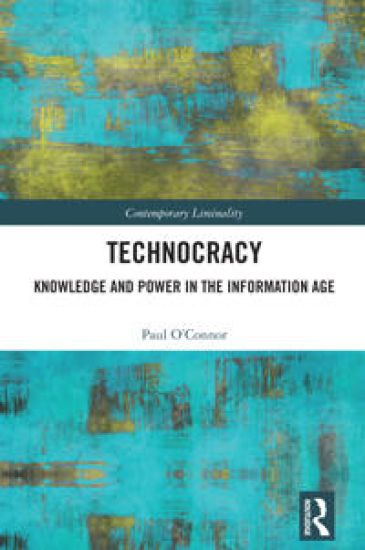
In what is routinely described as a ‘knowledge society’, this book argues that contemporary knowledge is systematically filtered and distorted by the requirements of the bureaucratic-managerial organisations that constitute the structural core of hypermodernity. As knowledge becomes increasingly politicised, almost every ‘fact’ with which we are presented serves an agenda. This book traces the historical and conceptual foundations of ‘governmental knowledge’. It examines how problematisation, mediation, informationalisation, and substitution translate human life into abstract representations that can be managed, manipulated, and retrojected back onto social reality. The proliferation of experts and managerial intermediaries institutionalises these processes across domains as diverse as public health, education, corporate management, and everyday digital interactions. It argues that, far from being neutral, expert knowledge instrumentalises liminality and subordinates social life and individual conduct to the algorithmic logic of managerialism. Technocracy thus systematically filters out the dimensions of meaning, participation, and embodied existence, constructing a ‘second reality’ that blinds us to whole ranges of human experience. A compelling study of the politics of knowledge, Technocracy: Knowledge and Power in the Information Age sheds light on the way a certain type of knowledge is used to lay claim to authority, status and resources, and how the endless expansion of such knowledge reshapes society. It will therefore appeal to scholars of sociology, anthropology and social theory with interests in the sociology of knowledge.
Technocracy

Technocracy

Paul O'Connor

TAYLOR FRANCIS LTD
2026
sidottu
In what is routinely described as a ‘knowledge society’, this book argues that contemporary knowledge is systematically filtered and distorted by the requirements of the bureaucratic-managerial organisations that constitute the structural core of hypermodernity. As knowledge becomes increasingly politicised, almost every ‘fact’ with which we are presented serves an agenda. This book traces the historical and conceptual foundations of ‘governmental knowledge’. It examines how problematisation, mediation, informationalisation, and substitution translate human life into abstract representations that can be managed, manipulated, and retrojected back onto social reality. The proliferation of experts and managerial intermediaries institutionalises these processes across domains as diverse as public health, education, corporate management, and everyday digital interactions. It argues that, far from being neutral, expert knowledge instrumentalises liminality and subordinates social life and individual conduct to the algorithmic logic of managerialism. Technocracy thus systematically filters out the dimensions of meaning, participation, and embodied existence, constructing a ‘second reality’ that blinds us to whole ranges of human experience. A compelling study of the politics of knowledge, Technocracy: Knowledge and Power in the Information Age sheds light on the way a certain type of knowledge is used to lay claim to authority, status and resources, and how the endless expansion of such knowledge reshapes society. It will therefore appeal to scholars of sociology, anthropology and social theory with interests in the sociology of knowledge.
Safety at the Sharp End

Safety at the Sharp End

Rhona Flin; Tom Reader; Paul O'Connor

TAYLOR FRANCIS LTD
2025
nidottu

Halvin toimitettuna 74,90 €

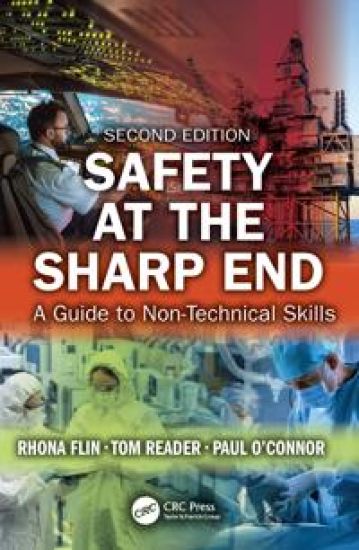
Many 21st-century operations are characterised by teams of workers dealing with significant risks and complex technology, in competitive, commercially driven environments. Informed managers have realised the necessity of understanding the human dimension of their operations if they hope to improve production and safety performance. These include the cognitive and social non-technical skills required for efficient and safe operations, often termed Crew Resource Management (CRM) skills. This book is a general guide to the theory and practice of non-technical skills (NTS) for safety. Now fully updated in this new edition, Safety at the Sharp End. A Guide to Non-Technical Skills considers the growth of interest in Crew Resource Management (CRM) approaches to identifying, training and assessing CRM/NTS skills. It covers the identification, training and evaluation of NTS and has been written for use by individuals who are studying or training these skills in CRM and other safety or human factors courses. It outlines the underlying principles, as well as practical techniques and advice and has been revised to cover the latest developments by drawing on a wider sample of work settings where an NTS approach is being adopted. A full literature review is offered, and the authors have drawn upon an international network of contacts across industry, military and healthcare occupations and academic sources to deliver current practice and emerging issues. The reader will develop a thorough understanding of the theory and practice of non-technical skills for safety from this title. This book is an ideal read for professionals and those practicing or studying human factors or industrial safety programs. Its appeal will extend to those in safety-critical industries including healthcare, aviation, transport, logistics, mining and industrial hygiene. Delivers a comprehensive and accessible guide on non-technical skills (NTS) for practitionersFocusses on the latest scientific evidence for each skill category written in an accessible mannerExplains the application of an NTS approach across a wide range of occupationsCovers the authors’ extensive research and experience of collaborating with practitioners across a range of higher risk work settings resulting in practical examples throughout the textDetails a good range of sources provided for further reading and additional information
Safety at the Sharp End

Safety at the Sharp End

Rhona Flin; Tom Reader; Paul O'Connor

TAYLOR FRANCIS LTD
2025
sidottu

Halvin toimitettuna 216,80 €

Many 21st-century operations are characterised by teams of workers dealing with significant risks and complex technology, in competitive, commercially driven environments. Informed managers have realised the necessity of understanding the human dimension of their operations if they hope to improve production and safety performance. These include the cognitive and social non-technical skills required for efficient and safe operations, often termed Crew Resource Management (CRM) skills. This book is a general guide to the theory and practice of non-technical skills (NTS) for safety. Now fully updated in this new edition, Safety at the Sharp End. A Guide to Non-Technical Skills considers the growth of interest in Crew Resource Management (CRM) approaches to identifying, training and assessing CRM/NTS skills. It covers the identification, training and evaluation of NTS and has been written for use by individuals who are studying or training these skills in CRM and other safety or human factors courses. It outlines the underlying principles, as well as practical techniques and advice and has been revised to cover the latest developments by drawing on a wider sample of work settings where an NTS approach is being adopted. A full literature review is offered, and the authors have drawn upon an international network of contacts across industry, military and healthcare occupations and academic sources to deliver current practice and emerging issues. The reader will develop a thorough understanding of the theory and practice of non-technical skills for safety from this title. This book is an ideal read for professionals and those practicing or studying human factors or industrial safety programs. Its appeal will extend to those in safety-critical industries including healthcare, aviation, transport, logistics, mining and industrial hygiene. Delivers a comprehensive and accessible guide on non-technical skills (NTS) for practitionersFocusses on the latest scientific evidence for each skill category written in an accessible mannerExplains the application of an NTS approach across a wide range of occupationsCovers the authors’ extensive research and experience of collaborating with practitioners across a range of higher risk work settings resulting in practical examples throughout the textDetails a good range of sources provided for further reading and additional information
Skateboarding and Religion

Skateboarding and Religion

Paul O'Connor

Springer Nature Switzerland AG
2020
nidottu
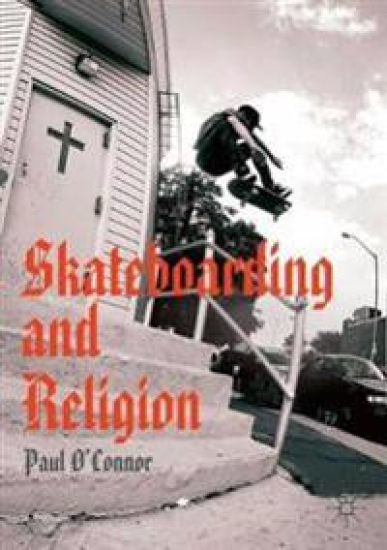
This book explores the ways in which religion is observed, performed, and organised in skateboard culture. Drawing on scholarship from the sociology of religion and the cultural politics of lifestyle sports, this work combines ethnographic research with media analysis to argue that the rituals of skateboarding provide participants with a rich cultural canvas for emotional and spiritual engagement. Paul O’Connor contends that religious identification in skateboarding is set to increase as participants pursue ways to both control and engage meaningfully with an activity that has become an increasingly mainstream and institutionalised sport. Religion is explored through the themes of myth, celebrity, iconography, pilgrimage, evangelism, cults, and self-help.
Skateboarding and Religion

Skateboarding and Religion

Paul O'Connor

Springer Nature Switzerland AG
2019
sidottu
This book explores the ways in which religion is observed, performed, and organised in skateboard culture. Drawing on scholarship from the sociology of religion and the cultural politics of lifestyle sports, this work combines ethnographic research with media analysis to argue that the rituals of skateboarding provide participants with a rich cultural canvas for emotional and spiritual engagement. Paul O’Connor contends that religious identification in skateboarding is set to increase as participants pursue ways to both control and engage meaningfully with an activity that has become an increasingly mainstream and institutionalised sport. Religion is explored through the themes of myth, celebrity, iconography, pilgrimage, evangelism, cults, and self-help.
Home: The Foundations of Belonging

Home: The Foundations of Belonging

Paul O'Connor

Routledge
2019
nidottu
Questions of home and belonging have never been more topical. Populist politicians in both Europe and America play on anxieties over globalisation by promising to reconstitute the national home, through cutting immigration and ‘taking back control’. Increasing numbers of young people are unable to afford home-ownership, a trend with implications for the future shape of families and communities. The dominant conceptualisations of home in the twentieth century – the nation-state and the suburban nuclear household – are in crisis, yet they continue to shape our personal and political aspirations. Home: The Foundations of Belonging puts these issues into context by drawing on a range of disciplines to offer a deep anthropological and historical perspective on home. Beginning with a vision of modernity as characterised by both spiralling liminality and an ongoing quest for belonging, it plumbs the archaic roots of Western civilisation and assembles a wide body of comparative anthropological evidence to illuminate the foundations of a sense of home. Home is theorised as a stable centre around which we organise both everyday routines and perspectives on reality, bringing order to a chaotic world and overcoming liminality. Constituted by a set of ongoing processes which concentrate and embody meaning in intimate relationships, everyday rituals and familiar places, a shared home becomes the foundation for community and society. The Foundations of Belonging thus elevates ‘home’ to the position of a foundational sociological and anthropological concept at a moment when the crisis of globalisation has opened the way to a revaluation of the local.
Home: The Foundations of Belonging

Home: The Foundations of Belonging

Paul O'Connor

Routledge
2017
sidottu
Questions of home and belonging have never been more topical. Populist politicians in both Europe and America play on anxieties over globalisation by promising to reconstitute the national home, through cutting immigration and ‘taking back control’. Increasing numbers of young people are unable to afford home-ownership, a trend with implications for the future shape of families and communities. The dominant conceptualisations of home in the twentieth century – the nation-state and the suburban nuclear household – are in crisis, yet they continue to shape our personal and political aspirations. Home: The Foundations of Belonging puts these issues into context by drawing on a range of disciplines to offer a deep anthropological and historical perspective on home. Beginning with a vision of modernity as characterised by both spiralling liminality and an ongoing quest for belonging, it plumbs the archaic roots of Western civilisation and assembles a wide body of comparative anthropological evidence to illuminate the foundations of a sense of home. Home is theorised as a stable centre around which we organise both everyday routines and perspectives on reality, bringing order to a chaotic world and overcoming liminality. Constituted by a set of ongoing processes which concentrate and embody meaning in intimate relationships, everyday rituals and familiar places, a shared home becomes the foundation for community and society. The Foundations of Belonging thus elevates ‘home’ to the position of a foundational sociological and anthropological concept at a moment when the crisis of globalisation has opened the way to a revaluation of the local.
Islam in Hong Kong

Islam in Hong Kong

Paul O’Connor

Hong Kong University Press
2012
pokkari
More than a quarter of a million Muslims live and work in Hong Kong. Among them are descendants of families who have been in the city for generations, recent immigrants from around the world, and growing numbers of migrant workers. Islam in Hong Kong explores the lives of Muslims as ethnic and religious minorities in this unique postcolonial Chinese city. Drawing on interviews with Muslims of different origins, O'Connor builds a detailed picture of daily life through topical chapters on language, space, religious education, daily prayers, maintaining a halal diet in a Chinese environment, racism, and other subjects. Although the picture that emerges is complex and ambiguous, one striking conclusion is that Muslims in Hong Kong generally find acceptance as a community and do not consider themselves to be victimised because of their religion.
Islam in Hong Kong

Islam in Hong Kong

Paul O’connor

Hong Kong University Press
2012
sidottu
More than a quarter of a million Muslims live and work in Hong Kong. Among them are descendants of families who have been in the city for generations, recent immigrants from around the world, and growing numbers of migrant workers. Islam in Hong Kong explores the lives of Muslims as ethnic and religious minorities in this unique postcolonial Chinese city. Drawing on interviews with Muslims of different origins, O'Connor builds a detailed picture of daily life through topical chapters on language, space, religious education, daily prayers, maintaining a halal diet in a Chinese environment, racism, and other subjects. Although the picture that emerges is complex and ambiguous, one striking conclusion is that Muslims in Hong Kong generally find acceptance as a community and do not consider themselves to be victimised because of their religion.
Safety at the Sharp End

Safety at the Sharp End

Rhona Flin; Paul O'Connor

Ashgate Publishing Limited
2008
nidottu

Halvin toimitettuna 54,30 €

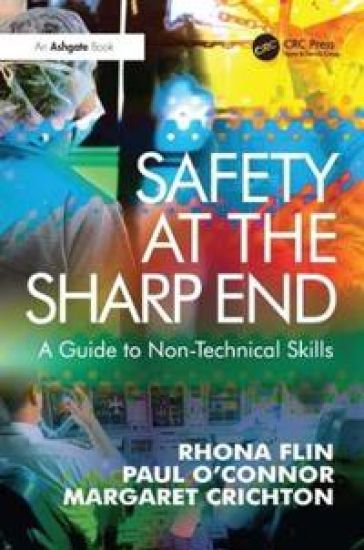
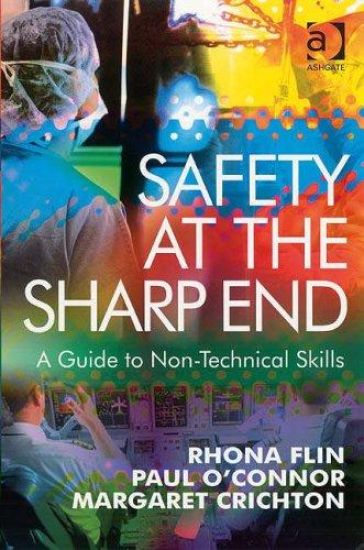
Many 21st century operations are characterised by teams of workers dealing with significant risks and complex technology, in competitive, commercially-driven environments. Informed managers in such sectors have realised the necessity of understanding the human dimension to their operations if they hope to improve production and safety performance. While organisational safety culture is a key determinant of workplace safety, it is also essential to focus on the non-technical skills of the system operators based at the 'sharp end' of the organisation. These skills are the cognitive and social skills required for efficient and safe operations, often termed Crew Resource Management (CRM) skills. In industries such as civil aviation, it has long been appreciated that the majority of accidents could have been prevented if better non-technical skills had been demonstrated by personnel operating and maintaining the system. As a result, the aviation industry has pioneered the development of CRM training. Many other organisations are now introducing non-technical skills training, most notably within the healthcare sector. Safety at the Sharp End is a general guide to the theory and practice of non-technical skills for safety. It covers the identification, training and evaluation of non-technical skills and has been written for use by individuals who are studying or training these skills on CRM and other safety or human factors courses. The material is also suitable for undergraduate and post-experience students studying human factors or industrial safety programmes.
Safety at the Sharp End

Safety at the Sharp End

Rhona Flin; Paul O'Connor

Ashgate Publishing Limited
2008
sidottu
Many 21st century operations are characterised by teams of workers dealing with significant risks and complex technology, in competitive, commercially-driven environments. Informed managers in such sectors have realised the necessity of understanding the human dimension to their operations if they hope to improve production and safety performance. While organisational safety culture is a key determinant of workplace safety, it is also essential to focus on the non-technical skills of the system operators based at the 'sharp end' of the organisation. These skills are the cognitive and social skills required for efficient and safe operations, often termed Crew Resource Management (CRM) skills. In industries such as civil aviation, it has long been appreciated that the majority of accidents could have been prevented if better non-technical skills had been demonstrated by personnel operating and maintaining the system. As a result, the aviation industry has pioneered the development of CRM training. Many other organisations are now introducing non-technical skills training, most notably within the healthcare sector. Safety at the Sharp End is a general guide to the theory and practice of non-technical skills for safety. It covers the identification, training and evaluation of non-technical skills and has been written for use by individuals who are studying or training these skills on CRM and other safety or human factors courses. The material is also suitable for undergraduate and post-experience students studying human factors or industrial safety programmes.