Kirjojen hintavertailu – 12 903 724 kirjaa ja 27 kauppaa
Kirjailija
Paul Oskar Kristeller
Kirjat ja teokset yhdessä paikassa: 13 kirjaa, julkaisuja vuosilta 1964–2020, suosituimpiin kuuluu Der Italienische Humanismus Und Seine Bedeutung. Vertaile teosten hintoja ja tarkista saatavuus suomalaisista kirjakaupoista.
""The Renaissance Philosophy of Man"" by Ernest Cassier is a comprehensive exploration of the philosophical ideas of six key figures in the Renaissance era: Francesco Petrarca, Lorenzo Valla, Marsilio Ficino, Giovanni Pico della Mirandola, Pietro Pomponazzi, and Juan Luis Vives. The book delves into their views on human nature, ethics, religion, and politics, and how they contributed to the development of Renaissance humanism. Cassier analyzes the influence of classical philosophy on their work and the impact of their ideas on subsequent philosophical thought. This book is an essential resource for anyone interested in the intellectual history of the Renaissance and the development of humanist thought. This is a new release of the original 1948 edition. This scarce antiquarian book is a facsimile reprint of the old original and may contain some imperfections such as library marks and notations. Because we believe this work is culturally important, we have made it available as part of our commitment for protecting, preserving, and promoting the world's literature in affordable, high quality, modern editions, that are true to their original work.
""Studies on Renaissance Humanism During the Last Twenty Years: The Renaissance V9, 1962"" by Paul Oskar Kristeller is a scholarly work that explores the development of humanism during the Renaissance period. The book is part of a larger series called ""The Renaissance"" and focuses specifically on the advancements made in the field of humanism during the last two decades of the Renaissance. Kristeller's book is based on his extensive research and analysis of primary sources, including letters, treatises, and other written works from the Renaissance period. He examines the ideas and philosophies of key humanist thinkers, such as Petrarch, Erasmus, and Pico della Mirandola, and their impact on the intellectual and cultural landscape of the time. Throughout the book, Kristeller emphasizes the importance of humanism in shaping the Renaissance and its legacy. He argues that humanism was not just a literary movement, but a broader cultural and intellectual movement that had a profound influence on the development of modern society. Overall, ""Studies on Renaissance Humanism During the Last Twenty Years: The Renaissance V9, 1962"" is a valuable resource for scholars and students of Renaissance history, literature, and philosophy. It provides a comprehensive overview of the key ideas and figures of Renaissance humanism and offers insights into the broader cultural and intellectual context of the time. This scarce antiquarian book is a facsimile reprint of the old original and may contain some imperfections such as library marks and notations. Because we believe this work is culturally important, we have made it available as part of our commitment for protecting, preserving, and promoting the world's literature in affordable, high quality, modern editions, that are true to their original work.
Kairos nr 2: Varför räknas måleriet och skulpturen, arkitekturen, musiken och poesin till de »sköna« konsterna? Och vilken betydelse har detta haft för för hur vi uppfattar vad som är konst och vad som inte är konst? I Kairos nr 2 redogör den amerikanske teoretikern P. O. Kristeller för hur en av de viktigaste förutsättningarna för det moderna konstbegreppet växer fram genom en tämligen långsam och vindlande process. Kristeller beskriver hur detta system håller på att lösas upp i den både konstnärliga och teoretiska praktiken. Idag ser vi att hans försiktiga profetia har slagit in på ett sätt som även har konsekvenser för bl. a. undervisningen på våra konsthögskolor, för att inte tala om debatten på kultursidorna. Skriftserien Kairos används som kurslitteratur vid högskolor och universitet och genom nytryckningar säkerställer vi att den alltid finns tillgänglig. Serien, som kommer att omfatta 14 nummer 2008 (under våren 2008 kommer Kairos nr 13, Koreografier och under hösten Kairos nr 14, Ljudkonst), varav två dubbelvolymer, säljs hos välsorterade bokhandlare, i museishoppar och genom nätbokhandeln.
This volume treats a fascinating but much neglected period in the history of ancient philosophy between the third and first centuries BC. "Greek Philosophers of the Hellenistic Age" is based on primary sources: the Greek and Latin writings of the philosophers and the fragments, paraphrases, and testimonies from their lost works. The eight chapters discuss: Epicurus; Zeno, the founder of the Stoic school and his successor, Cleanthes; Pyrrho, the founder of Skepticism and Arcesilaus, the philosopher who introduced it to the Platonic Academy; Chrysippus, the third head of the Stoic school and its most important representative; Carneades and Philo of Larissa, second and third representatives of Skepticism in the Platonic Academy, respectively; Panaetius, the first leader of Middle Stoicism; Posidonius, the second leader of Middle Stoicism; and Antiochus of Ascalon, the head of the Academy who led it back from Skepticism and prepared Middle Platonism, which paved the way for Neoplatonism.
This study charts the continuing influence of medieval scholastic thought in Renaissance civilization. In the three essays, Paul Oskar Kristellar illustrates the way medieval ideas and issues remained active in Renaissance philosophy, theology, literature and in education, both secular and religious. In his first essay, Kristeller explains the conflicts in various Renaissance literatures - between rigorous scholastic writings and eloquent humanist ones, between texts written in Latin and those in the vernacular - by appealing to a notion of literary genre which aligns different types of text with distinct audiences. The second essay considers the influence of St Thomas Aquinas during the Italian Renaissance, showing that he was widely read and respected by major humanists, and contributed to the debates over the distinction between philosophy and theology and the relative importance of the intellect and the will. The final essay suggests that monks and friars play a more important role in Renaissance thought than is usually realized. They made monastic libraries available to humanist scholars, and actively engaged in the intellectual disputes of their time.
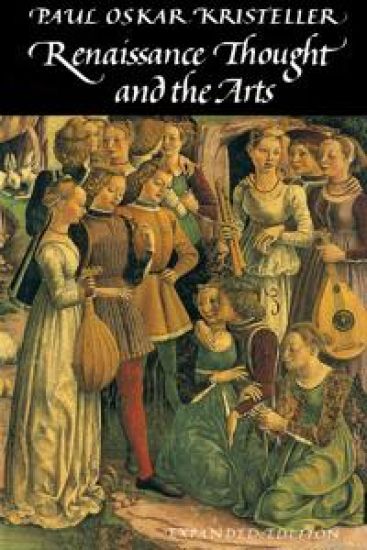
Written by an eminent authority on the Renaissance, these classic essays deal not only with Paul Kristeller's specialty, Renaissance humanism and philosophy, but also with Renaissance theories of art. The focus of the collection is on topics such as humanist learning, humanist moral thought, the diffusion of humanism, Platonism, music and learning during the early Renaissance, and the modern system of arts in relation to the Renaissance. For this volume the author has written a new preface, a new essay, and an afterword.
Renaissance Thought and Its Sources presents the fruits of an extraordinary lifetime of scholarship: a systematic account of major themes in Renaissance philosophy, theology, science, and literature, show in their several settings. Here, in some of Paul Oskar Kristeller's most comprehensive and ambitious writings, is an exploration of the distinctive trends and concepts of the Renaissance, grounded in detailed historical investigation. All of these fourteen essays were originally delivered as lectures. Part One identifies the classical sources of Renaissance thought and exposes its essential physiognomy, indicating its humanist, Aristotelian, and Platonist traditions. The next two parts present Renaissance thought in the historical context of the Latin and Greek Middle Ages. Part Four offers a thematic study of Renaissance thought, examining its characteristic conceptions of man's dignity, destiny, and grasp of truth. Part Five forms a summary from the perspective of a central theme of Renaissance intellectual life and of the entire Western tradition: the relation of language to thought and the seemingly insoluble contest between our literary and philosophical traditions. The reader of "Renaissance Thought and its Sources" enjoys the results of meticulous study in a concise yet comprehensive format. Throughout, Kristeller achieves a graceful blending of sever historical scholarship and adherence to humane values that the editor calls "nearly a lost art in our times."
Italian Renaissance thought has been gaining ever-increasing recognition as seminal to the thought of the whole Renaissance period, affecting in many subtle ways the development and understanding of artistic, literary, scientific, and religious movements. The importance, then, of this detailed and careful survey of Italy's leading Renaissance philosophers and the intricate philosophical problems of the time can scarcely be exaggerated. Based upon the 1961 Arensberg Lectures, given at Stanford University, this collection of essays offers a genuinely unified interpretation of Italian Renaissance thought by describing and evaluating the philosophies of eight pivotal figures: Petrarch, Valla, Ficino, Pico, Pomponazzi, Telesio, Patrizi, and Bruno. The essays not only discuss the life, writings, and main ideas of these eight thinkers, but also establish through a connective text, the place each of them occupies in the general intellectual development of the Italian Renaissance.