Kirjojen hintavertailu – 12 859 828 kirjaa ja 27 kauppaa

Kirjailija

Paul Pagliano

Kirjat ja teokset yhdessä paikassa: 6 kirjaa, julkaisuja vuosilta 1999–2017, suosituimpiin kuuluu Using a Multisensory Environment. Vertaile teosten hintoja ja tarkista saatavuus suomalaisista kirjakaupoista.

6 kirjaa

Kirjojen julkaisuvuodet: 1999–2017.

Multisensory Environments

Multisensory Environments

Paul Pagliano

CRC Press
2017
sidottu
First published in 1999. This book is written in four parts. Part I 'Foundations', starts with Chapter 1 'What is a multisensory environment?' and provides a general introduction to the field. The MSE can be different things to different people. It can describe an actual space, or the impact that space has on an individual. Furthermore, it can be for adults or children, for recreation, leisure, therapy or education. Part II 'Design and construction' explores the what, who, why and how of the open-minded, Part III 'Curriculum development' begins with Chapter 8 'Curriculum development in the MSE. The final section, Part IV 'Future developments', consists of two chapters. The goal of Chapter 11 'Conducting research in the MSE' is to demystify research and thereby encourage all members of the transdisciplinary team to become actively involved in MSE related research; Chapter 12 'Where are we going?', the MSE is re-examined to identify possible ways this development could contribute to the increased pluralities that will constitute education in the twenty-first century.
Using a Multisensory Environment

Using a Multisensory Environment

Paul Pagliano

CRC Press
2016
sidottu
This book provides teachers and therapists with a user-friendly bank of practical ideas and suggestions to use in the MSE for pupils with profound and multiple learning difficulties. These include equipment and resources that can be used to engineer the environment to promote particular outcomes; a set of photocopiable, fast, easy to complete observation and assessment forms; a selection of practical strategies and methods that can be used in the MSE; and ideas to help teachers integrate environment, assessment and instruction to maximize individual programs.
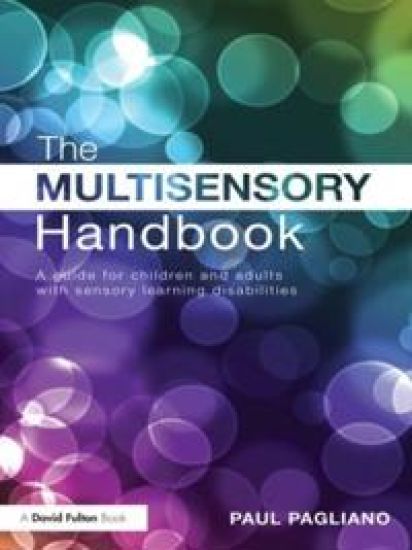
The Multisensory Handbook

The Multisensory Handbook

Paul Pagliano

Routledge
2012
nidottu
Do you support a child or adult with sensory perceptual issues or cognitive impairment? For people with challenging sensory and cognitive conditions, everyday life can become so unpredictable and chaotic that over time, lack of engagement can often lead to a state of learned helplessness. In this insightful text, Paul Pagliano shows how ‘learned helplessness’ can be transformed into learned optimism through multisensory stimulation, and explains how a programme of support can be designed and modulated to match the person’s needs, interests and abilities. Full of practical, easy to use multisensory assessment tools and intervention strategies, this book will help: foster a feeling of ease with the environment the child or adult experience pleasure and happiness kick-start their desire to explore encourage improved learning, social well-being and quality of life. The author offers an abundance of exciting multisensory stimulation ideas that can be applied to communication, play, leisure and recreation, therapy and education. Practical resources also show how to monitor and review applications to ensure they are being used in the most effective and enjoyable ways possible. Informed by an astute, up-to-date, comprehensive overview of research and theory, The Multisensory Handbook will appeal to primary professionals from a wide range of disciplines including education, health and social care.
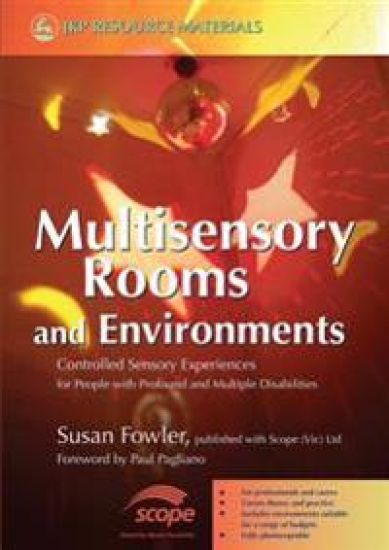
Multisensory Rooms and Environments

Multisensory Rooms and Environments

Susan Fowler; Paul Pagliano

Jessica Kingsley Publishers
2008
pokkari

Halvin toimitettuna 56,80 €

This unique, fully photocopiable resource offers guidance and materials to aid those developing multisensory environments - artificially engineered spaces that encourage relaxation, social skills and learning by stimulating the five senses. Particularly useful for those working with people with multiple disabilities, this resource explains the theory underlying multisensory environments, describes the different types, and outlines the practicalities of planning, setting up and equipping a multisensory space. The resource also features useful checklists and tools for creating multisensory experiences in both designed and everyday settings, such as the kitchen, bathroom, garden or beach. Multisensory Environments is published using photocopy-friendly lay-flat binding and is an essential tool for any professional working with individuals with multiple disabilities. It is the perfect complement to Sensory Stimulation: Sensory-Focused Activities for People with Physical and Multiple Disabilities, also authored by Susan Fowler and published by Jessica Kingsley Publishers.
Using a Multisensory Environment

Using a Multisensory Environment

Paul Pagliano

David Fulton Publishers Ltd
2001
nidottu
This book provides teachers and therapists with a user-friendly bank of practical ideas and suggestions to use in the MSE for pupils with profound and multiple learning difficulties. These include equipment and resources that can be used to engineer the environment to promote particular outcomes; a set of photocopiable, fast, easy to complete observation and assessment forms; a selection of practical strategies and methods that can be used in the MSE; and ideas to help teachers integrate environment, assessment and instruction to maximize individual programs.
Multisensory Environments

Multisensory Environments

Paul Pagliano

David Fulton Publishers Ltd
1999
nidottu
First published in 1999. This book is written in four parts. Part I 'Foundations', starts with Chapter 1 'What is a multisensory environment?' and provides a general introduction to the field. The MSE can be different things to different people. It can describe an actual space, or the impact that space has on an individual. Furthermore, it can be for adults or children, for recreation, leisure, therapy or education. Part II 'Design and construction' explores the what, who, why and how of the open-minded, Part III 'Curriculum development' begins with Chapter 8 'Curriculum development in the MSE. The final section, Part IV 'Future developments', consists of two chapters. The goal of Chapter 11 'Conducting research in the MSE' is to demystify research and thereby encourage all members of the transdisciplinary team to become actively involved in MSE related research; Chapter 12 'Where are we going?', the MSE is re-examined to identify possible ways this development could contribute to the increased pluralities that will constitute education in the twenty-first century.