Kirjojen hintavertailu – 12 867 301 kirjaa ja 27 kauppaa

Kirjailija

Paul R. Spiring

Kirjat ja teokset yhdessä paikassa: 8 kirjaa, julkaisuja vuosilta 2008–2024, suosituimpiin kuuluu Tras las Huellas de Arthur Conan Doyle. Vertaile teosten hintoja ja tarkista saatavuus suomalaisista kirjakaupoista.

Nimi esiintyy myös muodoissa: Paul R Spiring

8 kirjaa

Kirjojen julkaisuvuodet: 2008–2024.

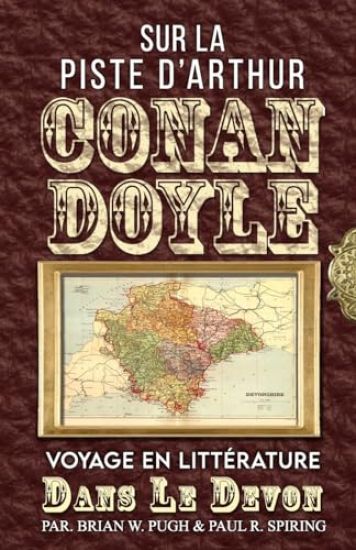
Sur La Piste D'Arthur Conan Doyle

Sur La Piste D'Arthur Conan Doyle

Brian W Pugh; Paul R Spiring

MX PUBLISHING
2024
pokkari
Arthur Conan Doyle a men une existence particuli rement riche et passionnante, le type de vie qu'on attribue un v ritable excentrique, ce qu'il n' tait pas. Il tait toutefois plein de ressources, courageux, intelligent, d vou et ouvert d'esprit. De nombreuses biographies ont t crites et vous pensez peut- tre que les moindres aspects de sa vie ont t couverts. Il semble pourtant que de nouvelles informations soient sans cesse mises jour, comme le prouve cet ouvrage. Le nom Arthur Conan Doyle a longtemps t clips par l'une de ses plus c l bres cr ations, Sherlock Holmes. Lorsque vous voquez Dartmoor, probablement neuf personnes interrog es sur dix pensent la plus grande aventure de Sherlock Holmes, The Hound of the Baskervilles, mais d'une fa on g n rale, les liens de Conan Doyle avec Dartmoor et le comt du Devon d passent largement cette oeuvre. Le premier cabinet dans lequel il travaille apr s avoir obtenu son dipl me de m decin se trouve Plymouth. Il s'agit assur ment d'un engagement de courte dur e mais le docteur Conan Doyle retourne dans le comt de nombreuses occasions. De nature active, il effectue toujours ces visites dans un objectif qui vont au-del du simple repos, comme vous pourrez le constater. La vie de deux autres hommes est inextricablement li e aux exp riences de Conan Doyle dans le Devon. George Turnavine Budd, qui fait de lui son associ dans le cabinet de Plymouth, et Bertram Fletcher Robinson, qui joue un r le essentiel dans la conception et l' bauche de The Hound of the Baskervilles. Le pr sent ouvrage se penche de fa on approfondie sur ces contributions. Des guides pour romantiques souhaitant suivre la piste de Sherlock Holmes existent d j . Je me r jouis d'accueillir ce livre qui se concentre plut t sur le cr ateur du d tective, et qui plus est r dig conjointement par un scientifique et un sp cialiste de Conan Doyle. Roger Johnson, diteur: The Sherlock Holmes Journal
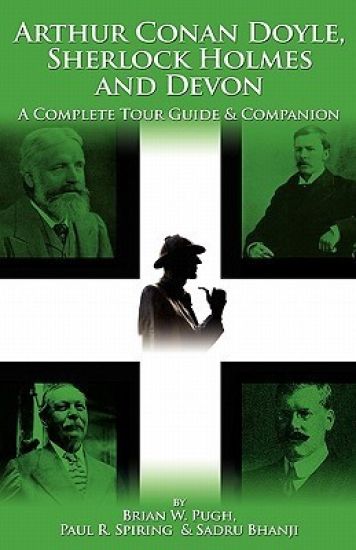
Arthur Conan Doyle, Sherlock Holmes and Devon: A Complete Tour Guide and Companion

Arthur Conan Doyle, Sherlock Holmes and Devon: A Complete Tour Guide and Companion

Brian W. Pugh; Paul R. Spiring; Sadru Bhanji

MX Publishing
2010
pokkari
The definitive tour guide for anyone looking to retrace the steps, physically or virtually, of Arthur Conan Doyle during his time in Devon and see the places that inspired the Sherlock Holmes stories. The book features a comprehensive tour map with GPS co-ordinates for around thirty key sites. Arthur Conan Doyle is best remembered for writing sixty tales that feature his legendary detective, Sherlock Holmes. Between 1882 and 1923, Doyle visited Devon on no fewer than ten occasions and he resided there for some four months in total. During 1882, Dr. George Turnavine Budd employed Doyle as a junior physician at his surgery in West Devon. Their partnership was dissolved after just seven weeks and Doyle was compelled to turn increasingly to writing in order to supplement his income. During 1891 and 1892, George Newnes elevated Sherlock Holmes to stardom via the pages of his Strand Magazine. He then used some of the ensuing profits to build a summer home in North Devon. In July 1900, Doyle befriended a young journalist called Bertram Fletcher Robinson from South Devon. This friendship inspired Doyle to resurrect Holmes for his highly successful supreme adventure, The Hound of the Baskervilles. Once again, Newnes used some of the resulting profits to fund civic improvements in North Devon. These links are further explored within Arthur Conan Doyle, Sherlock Holmes and Devon - A Complete Tour Guide and Companion.
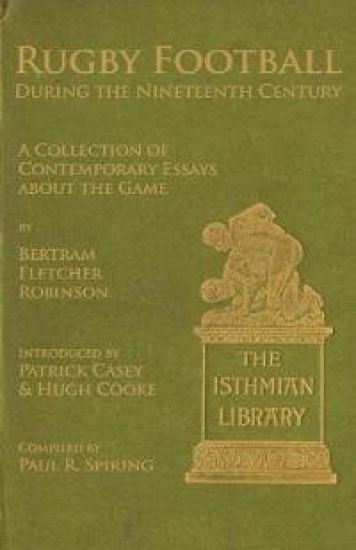
Rugby Football During the Nineteenth Century

Rugby Football During the Nineteenth Century

Paul R. Spiring; Patrick Casey; Hugh Cooke

MX Publishing
2010
pokkari
Rugby Football was the first volume in the successful nine-part series on Sports and Pastimes that was written for the Isthmian Library between 1896 and 1901. It was also one of the first rugby books to be written after members of the Rugby Football Union became bitterly divided over a proposal to pay match expenses to players. During 1896, the R. F. U. split and two new rugby codes were born; the strictly amateur code of Rugby Union and the more professionally inclined code of Rugby League. Bertram Fletcher Robinson was a supporter of amateurism in sport and he felt that the time was ripe to chart the birth of Rugby Union as a distinct branch of Rugby Football. During the 1890s, The Times newspaper described Fletcher Robinson as a household name within rugby circles . Robinson played as a Forward alongside many international players for both the Cambridge University Rugby Football Club 1st XV and the Combined Oxford & Cambridge University Rugby Football Club XV. According to his obituary in the Daily Express newspaper, he would have been capped for England but for an accident. Hence he was well qualified to write an anecdotal account of the origin of Rugby Union. Rugby Football details the laws, training techniques and tactics that were specific to Rugby Union during its nascent period. It also reviews the development of Rugby Union in British educational institutions and as a global international sport. Rugby Football includes contributions from several other historical rugby figures: Frank Mitchell (Cambridge University & England), Richard Henry Burdon Cattell (Oxford University, Blackheath, Moseley, Barbarians, Midland Counties & England), Charles James Nicol Fleming (Oxford University & Scotland), Gregor MacGregor (Cambridge University, Barbarians & Scotland) and Henry Barrington Tristram (Oxford University & England).
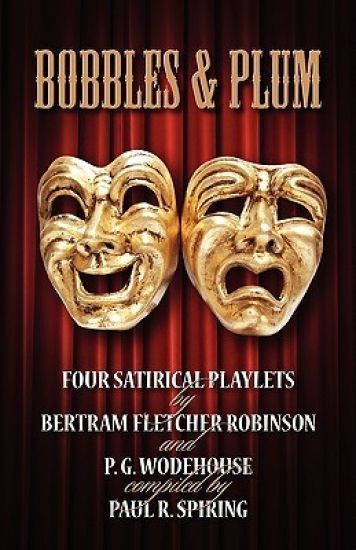
Bobbles and Plum

Bobbles and Plum

Paul R. Spiring

MX Publishing
2009
pokkari
Between 1904 and 1907, two young journalists called Bertram Fletcher Robinson ('Bobbles') and PG Wodehouse ('Plum') co-authored four satirical playlets together - each is a lampooning review of the previous year's news. These works were originally published in the "Daily Express", "Vanity Fair" and "The World". Robinson (1870-1907) had previously assisted Arthur Conan Doyle with "The Hound of the Baskervilles" (1901) and also enjoyed some success with his own fictional detective, Addington Peace (1904-1905). Later, Wodehouse (1881-1975) would achieve worldwide acclaim for his series of stories and books that feature both Reginald Jeeves and Bertram Wilberforce Wooster (1915-1974). Now all four Robinson/Wodehouse playlets are reavailable for the first time in this aptly named anthology, "Bobbles & Plum". This book provides the reader with a fascinating glimpse into the evolving mind of two of the finest young humorists of their generation.
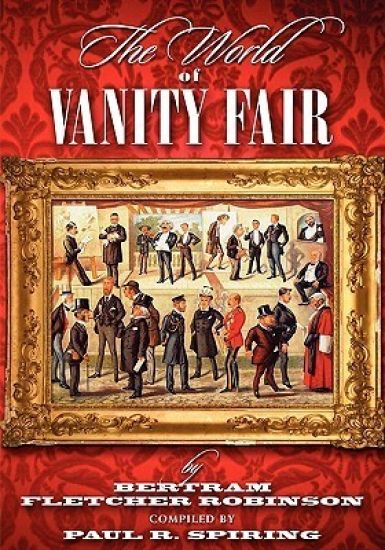
The World of "Vanity Fair" by Bertram Fletcher Robinson
During 1868, Thomas Gibson Bowles founded an influential British periodical entitled "Vanity Fair". It was published weekly and included both serial fiction and articles on fashion, current affairs, theatre, books and social events. Bowles also used "Vanity Fair" to expose what he perceived to be the contemporary vanities of Victorian high-society. This led him to introduce cartoon caricatures of famous people, drawn by artists such as Ape (Carlo Pellegrini, 1838-1889) and most famously, Spy (Leslie Ward, 1851-1922). Each cartoon was accompanied by a short, entertaining and often cutting biography. It has been suggested that Bowles scribed over two-thousand biographies during the forty-six years that "Vanity Fair" was in existence (1868-1914) under the pseudonym of Jehu Junior (named partially after a Biblical King who vanquished his enemies with extreme vigour). This is improbable, as Bowles sold the magazine during 1889 and thereafter became an extremely active Politician. It is far more probable that many of the Jehu Juniors were written by subsequent editors that included Bertram Fletcher Robinson. Bertram Fletcher Robinson edited "Vanity Fair" between 1904 and 1907. During his editorship, he began advertising widely and also swapped publishing house from Arthur Evans to Harmsworth. These actions coupled with the recruitment of writers such as PG Wodehouse saw an increase in the readership of "Vanity Fair". Between December 1905 and February 1907, Robinson also had a series of fifteen articles entitled "Chronicles in Cartoon" published in "The Windsor Magazine". Within these articles, Robinson reviews the most prominent caricatures and accompanying Jehu Juniors to appear in "Vanity Fair" between 1868 and 1907. Collectively, these articles provide a fascinating insight into every aspect of late Victorian-life and they will interest both collectors of the famous caricatures and historians. During January 1907, Bertram Fletcher Robinson died aged just 36 years. His untimely death occurred just two months after he relinquished the editorship of "Vanity Fair" and just one month before the conclusion of his serialization, "Chronicles in Cartoon". It is very likely that had he lived, he would have sought to have the fifteen items that were published in "The Windsor Magazine" compiled and republished in book form. Moreover, it is probable that he would have considered this work to be his magnum opus given that he was a graduate of History from Cambridge University. This book affords Robinson that posthumous opportunity.
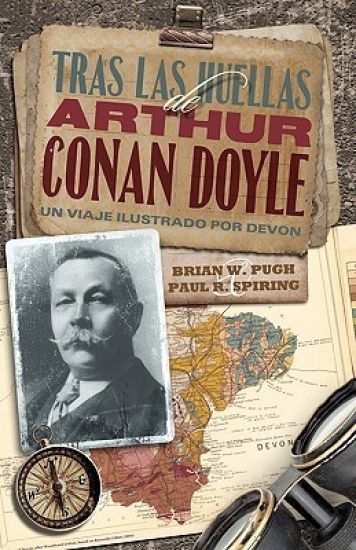
Tras las Huellas de Arthur Conan Doyle

Tras las Huellas de Arthur Conan Doyle

Paul R. Spiring; Brian W. Pugh

MX Publishing
2008
pokkari
Tras las huellas de Arthur Conan Doyle. Un Viaje Ilustrado por Devon. The Spanish translation from the original English. Between 1882 and 1923, Conan Doyle, the creator of the legendary character of Sherlock Holmes, visited Devon on no fewer than ten separate occasions and resided for no less than four months in total. This book sets these visits within the wider context of Conan Doyles life and works.