Kirjojen hintavertailu – 12 859 818 kirjaa ja 27 kauppaa

Kirjailija

Paul Rabinow

Kirjat ja teokset yhdessä paikassa: 27 kirjaa, julkaisuja vuosilta 1983–2019, suosituimpiin kuuluu Michel Foucault. Vertaile teosten hintoja ja tarkista saatavuus suomalaisista kirjakaupoista.

27 kirjaa

Kirjojen julkaisuvuodet: 1983–2019.

The Essential Foucault

The Essential Foucault

Michel Foucault; Paul Rabinow; Nikolas S. Rose

The New Press
2003
pokkari

Halvin toimitettuna 29,40 €

The essential one-volume collection of Michel Foucault’s letters, lectures, and interviews, tracing the evolution of the eminent and groundbreaking philosopher’s thought throughout his life“A rare opportunity to see how a great and original mind produces its work as well as itself at the same time. . . . Foucault’s work . . . leaves no reader untouched or unchanged.” —Edward Said, The New York Times Book ReviewFew philosophers have had as significant an impact on contemporary thought as Michel Foucault. His complete uncollected writings, under the title Dits et écrits, were published in French in 1994; this was followed by a three-volume series from The New Press that brought the most important of these works—courses, articles, and personal letters, many of them translated into English for the first time—to American readers. Here, the renowned Foucault scholars Paul Rabinow and Nikolas Rose have collected the best pieces from the three-volume set into a one-volume anthology in which Foucault’s dazzling intellect and gift for language are on full display. The Essential Foucault, which features a provocative introduction by Rabinow and Rose, is certain to become the standard text for all those interested in a comprehensive overview of Foucault’s thought.

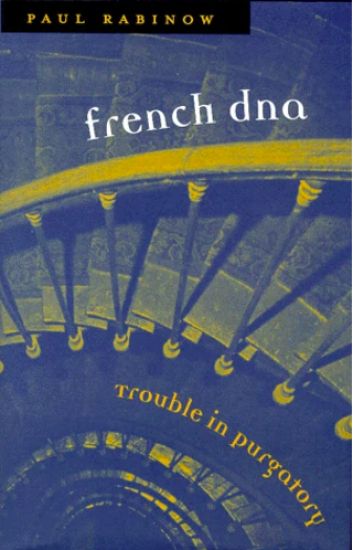
French DNA

French DNA

Paul Rabinow

University of Chicago Press
2002
nidottu
In 1993, an American biotechnology company and a French genetics lab developed a collaborative research plan to search for diabetes genes. But just as the project was to begin, the French government called it to a halt, barring the laboratory from sharing something never previously thought of as a commodity unto itself: French DNA.
French DNA

French DNA

Paul Rabinow

University of Chicago Press
1999
sidottu
Is there such a thing as "French DNA"? Can a country be said to have its own genetic material? When that country is France, as Paul Rabinow discovered, the answer to both questions is "yes". In a story that involves nations, commerce, patients and genetics, Rabinow seeks to uncover the tangled relations and conceptions that govern modern medical research. In 1993, an American biotechnology company, Millennium Pharmaceuticals, and France's genetics lab, the Centre d'Etude du Polymorphisme Humaine (CEPH), developed plans for a collaborative effort to discover diabetes genes. The results of this collaboration could have been medically significant and financially lucrative. The two companies had agreed that CEPH would supply Millennium with a store of genetic material collected from a large number of French families, and Millennium would supply funding and expertise in new technologies to accelerate the identification of the genes, terms to which the French government had agreed. But in early 1994, just as the collaboration was to begin, the French government called a halt to the deal. The government explained that the CEPH could not be permitted to give the Americans that most precious of substances - never before named in such a manner - French DNA.
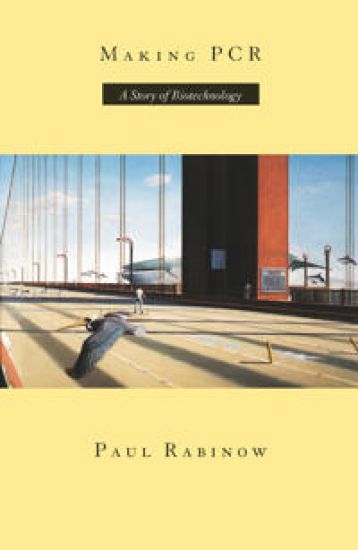
Making PCR

Making PCR

Paul Rabinow

University of Chicago Press
1997
nidottu
This is a behind-the-scenes account of the invention of one of the most significant biotechnological discoveries in our time - the polymerase chain reaction. Transforming the practice and potential of molecular biology, PCR extends scientists' ability to identify and manipulate genetic materials and accurately reproduces millions of copies of a given segment in a short period of time. It makes abundant what was once scarce - the genetic material required for experimentation. This study explores the culture of biotechnology as it emerged at Cetus Corporation during the 1980s and focuses on its distinctive configuration of scientific, technical, social, economic, political, and legal elements, each of which had its own separate trajectory over the preceding decade. The book contains interviews with the cast of characters who made PCR, including Kary Mullin, the maverick who received the Nobel prize for "discovering" it, as well as the team of young scientists and the company's business leaders. This book shows how a contingently-assembled practice emerged, composed of distinctive subjects, the site where they worked, and the object they invented.
Essays on the Anthropology of Reason

Essays on the Anthropology of Reason

Paul Rabinow

Princeton University Press
1996
pokkari
This collection of essays explains and encourages new reflection on Paul Rabinow's pioneering project to anthropologize the West. His goal is to exoticize the Western constitution of reality, emphasize those domains most taken for granted as universal, and show how their claims to truth are linked to particular social practices, hence becoming effective social forces. He has recently begun to focus on the core of Western rationality, in particular the practices of molecular biology as they apply to our understanding of human nature. This book moves in new directions by posing questions about how scientific practice can be understood in terms of ethics as well as in terms of power. The topics include how French socialist urban planning in the 1930s engineered the transition from city planning to life planning; how the discursive and nondiscursive practices of the Human Genome Project and biotechnology have refigured life, labor, and language; and how a debate over patenting cell lines and over the dignity of life required secular courts to invoke medieval notions of the sacred. Building on an ethnographic study of the invention of the polymerase chain reaction--which enables the rapid production of specific sequences of DNA in millions of copies Rabinow, in the final essay, reflects in dialogue with biochemist Tom White on the place of science in modernity, on science as a vocation, and on the differences between the human and natural sciences.
French Modern

French Modern

Paul Rabinow

University of Chicago Press
1995
nidottu
In this study of space and power and knowledge in France from the 1830s through the 1930s, Rabinow uses the tools of anthropology, philosophy, and cultural criticism to examine how social environment was perceived and described. Ranging from epidemiology to the layout of colonial cities, he shows how modernity was revealed in urban planning, architecture, health and welfare administration, and social legislation.
Rethinking The Subject

Rethinking The Subject

Paul Rabinow; James Faubion

Westview Press Inc
1995
pokkari
Since the early 1970s, European thinkers have departed notably from their predecessors in order to pursue analytical programs more thoroughly their own. Rethinking the Subject brings together in one volume some of the most influential writings of Foucault, Habermas, Bourdieu, Pizzorno, Macfarlane, and other authors whose ideas have had a worldwide influence in recent social history. The anthology is testament to the central importance of three contemporary themes, each familiar to earlier thinkers but never definitively formulated or resolved. The first two concern the nature and modalities of power and legitimacy in society. The third, and most fundamental, deals with the nature and modalities of the "self" or "subject." These themes owe their special contemporary relevance to an array of events,from the collapse of colonialism to the birth of test-tube babies. James Faubion's introduction traces the historical context of these influential events and themes. It also traces the lineaments of a still inchoate intellectual movement, of which the writers included in this anthology are the vanguard.