Kirjojen hintavertailu – 12 859 819 kirjaa ja 27 kauppaa

Kirjailija

Paul Radin

Kirjat ja teokset yhdessä paikassa: 45 kirjaa, julkaisuja vuosilta 1970–2025, suosituimpiin kuuluu The Earth Before History; Man's Origin and the Origin of Life. Vertaile teosten hintoja ja tarkista saatavuus suomalaisista kirjakaupoista.

45 kirjaa

Kirjojen julkaisuvuodet: 1970–2025.

The Peyote Cult

The Peyote Cult

Paul Radin

Left of Brain Books
2025
pokkari
Written during a pivotal period of cultural transition, this seminal ethnographic study offers one of the earliest and most detailed accounts of the Peyote ceremony among Native American communities. Drawing on first-hand testimonies from the Winnebago (Ho-Chunk) people, Paul Radin documents how the ritual combined Indigenous spirituality with Christian influences to create a powerful expression of faith, healing, and resilience. Set against the backdrop of early 20th-century cultural upheaval, the book traces the ceremonial use of the Peyote cactus as both a sacred sacrament and a symbol of continuity amid colonial pressure. Through Radin's meticulous observations, readers gain insight into a religious movement that not only survived but flourished as the Native American Church-preserving its profound spiritual and communal significance for generations to come.

The House with the Mezzanine and Other Stories
The ritual and significance of the Winnebago medicine dance, a classical and rare book that has been considered essential throughout human history, so that this work is never forgotten, we at Alpha Editions have made efforts in its preservation by republishing this book in a modern format for present and future generations. This whole book has been reformatted, retyped and designed. These books are not made of scanned copies of their original work and hence the text is clear and readable.
Autobiography of a Winnebago Indian

Autobiography of a Winnebago Indian

Paul Radin

Delhi Open Books
2021
nidottu
A truly fascinating ethno-biography of an Indian man from the Winnebago tribe. Split into two parts and heavily footnoted. Part One deals with the life of the man as he is growing up in his tribe. He recalls the trouble he got into; his experiences with peyote; his conversion; his time in prison and much more. Part Two contain the teachings of his father and include advice on things like medicine; fasting; marriage and relatives. Originally published in 1920; this is an extraordinarily interesting and honest read.
Culture of the Winnebago: as Described by Themselves
This work has been selected by scholars as being culturally important and is part of the knowledge base of civilization as we know it. This work is in the public domain in the United States of America, and possibly other nations. Within the United States, you may freely copy and distribute this work, as no entity (individual or corporate) has a copyright on the body of the work. Scholars believe, and we concur, that this work is important enough to be preserved, reproduced, and made generally available to the public. To ensure a quality reading experience, this work has been proofread and republished using a format that seamlessly blends the original graphical elements with text in an easy-to-read typeface. We appreciate your support of the preservation process, and thank you for being an important part of keeping this knowledge alive and relevant.
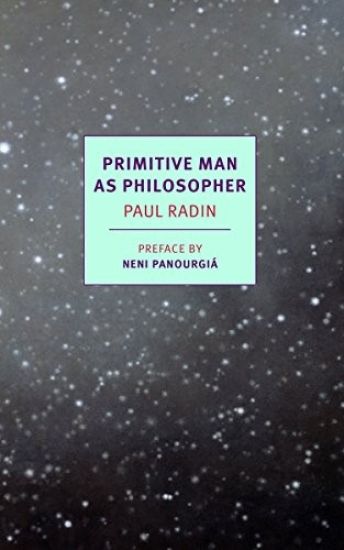
Primitive Man As Philosopher

Primitive Man As Philosopher

Neni Panourgia; Paul Radin

NYRB Classics
2017
nidottu
Anthropology is a science whose most significant discoveries have come when it has taken its bearings from literature, and what makes Paul Radin's Primitive Man as Philosopher a seminal piece of anthropological inquiry is that it is also a book of enduring wonder. Writing in the 1920s, when anthropology was still young, Radin set out to show that "primitive" cultures are as intellectually sophisticated and venturesome as any of their "civilized" counterparts. The basic questions about the structure of the natural world, the nature of right and wrong, and the meaning of life and death, as well as basic methods of considering the truth or falsehood of the answers those questions give rise to, are, Radin argues, recognizably consistent across the whole range of human societies. He rejects both the romantic myth of the noble savage and the rationalist dismissal of the primitive mind as essentially undeveloped, averring that the anthropologist and the anthropologist's subject meet on the same philosophical ground, and only when that is acknowledged can anthropology begin in earnest. The argument is clearly and forcibly made in pages that also contain an extraordinary collection of poems, proverbs, myths, and tales from a host of different cultures, making Primitive Man as Philosopher not only a lasting contribution to the discipline of anthropology but a unique, rich, and fascinating anthology, one that both illuminates and enlarges our imagination of the human.