Kirjojen hintavertailu – 12 859 824 kirjaa ja 27 kauppaa

Kirjailija

Paul Rogers

Kirjat ja teokset yhdessä paikassa: 38 kirjaa, julkaisuja vuosilta 2000–2025, suosituimpiin kuuluu Emotional Freedom Techniques and Tapping for Beginners. Vertaile teosten hintoja ja tarkista saatavuus suomalaisista kirjakaupoista.

38 kirjaa

Kirjojen julkaisuvuodet: 2000–2025.

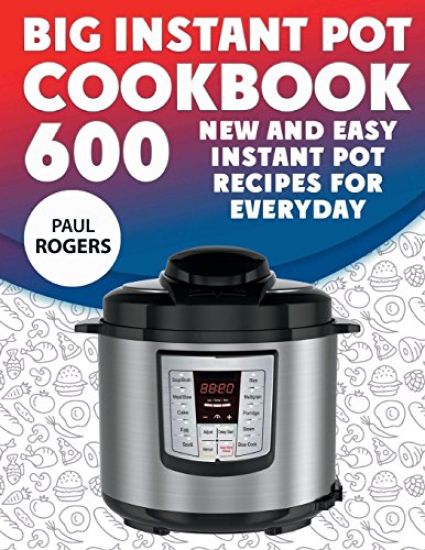
The Big Instant Pot Cookbook: 600 New and Easy Instant Pot Recipes for Everyday

The Big Instant Pot Cookbook: 600 New and Easy Instant Pot Recipes for Everyday

Paul Rogers

Createspace Independent Publishing Platform
2018
nidottu
Start cooking instantly Everything you need to know to Make the Best of your Instant Pot and to cook any meal is already in this book This book features: 600 Easy and Simple Recipes for Any Level Clear and Easy step by step directions through entire cooking process Simple ingredients - easy to found in any local store Cooking time, preparation time Servings and portions Nutritional information Inside this book you will find 10 different chapters that cover everything you may wish to cook with your Instant Pot featuring 600 different tasty and delicious recipes: Breakfast Lunch Side dishes Main Dishes Snacks and Appetizers Fish and Seafood Poultry Meat Vegetable meals Desserts Get your copy now
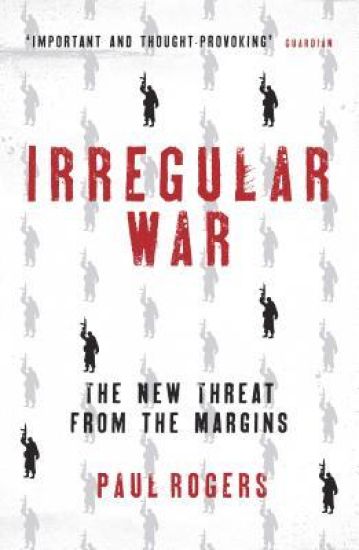
Irregular War

Irregular War

Paul Rogers

I.B. Tauris
2017
nidottu
The world has changed. Rather than a clash of civilisations, the West now faces revolts from the margins, driven by widening economic divisions, rising global elites and dangerous environmental constraints. The emergence of global terrorist movements such as ISIS is indicative of a growing threat for which traditional military responses are simply not fit for purpose. At a time when the world adjusts to new international leadership - from Trump in the US to Macron in France - and as the balance of power starts to shift away from the West, this updated edition of Paul Rogers' acclaimed book looks at the new challenges facing global security, and how we might start to address them.
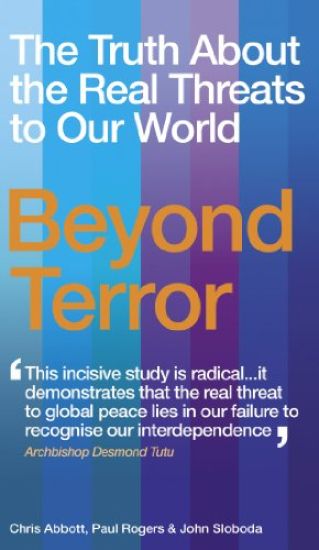
Beyond Terror

Beyond Terror

Chris Abbott; John Sloboda; Paul Rogers

Rider Co
2017
pokkari
Is international terrorism really the single greatest threat to world security? Since the 9/11 attacks, many Western governments assume terrorism to be the greatest threat we face. In response, their dangerous policies attempt to maintain control and keep the status quo by using overwhelming military force. This important book shows why this approach has been such a failure, and how it distracts us from other, much greater, threats of climate change, competition over resources, marginalisation of the majority of the world and global militarisation. Unless urgent, coordinated action is taken in the next 5-10 years on all these issues it will be almost imossible to avoid the earth becoming a highly unstable place by the middle years of this century. Beyond Terror offers an alternative path for politicians, journalists and concerned citizens alike.
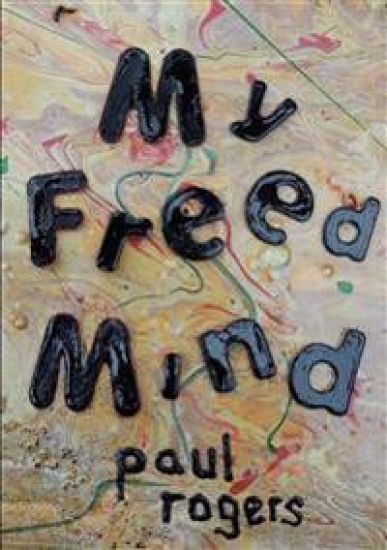
My Freed Mind

My Freed Mind

PAUL ROGERS

Lulu.com
2015
nidottu
The poems are my attempt to rationalise my thoughts and feelings. Subjects range from war to observations on life in general. The poems are interspersed with photographs of sculpture which I created to reflect the words.
Name That Movie

Name That Movie

Paul Rogers

Chronicle Books
2012
sidottu

Halvin toimitettuna 18,70 €

Every classic film features iconic images that are unforgettable to movie lovers, from the house on the hill fromPSYCHO toPULP FICTION's the Big Kahuna burger to the giant dinosaur sculptures ofPEE-WEE'S BIG ADVENTURE. InNAME THAT MOVIE, celebrated illustrator Paul Rogers tests our visual knowledge of the world of cinema, highlighting both obscure and instantly recognizable references to 100 classic films, from the golden age of cinema to the blockbusters of today. The rules of the game are simple: each film gets six line drawings, delivered in sequence, and-here's the clincher-no movie stars. Complete with answer key and index, this elegant gift book will delight cinephiles who will see their favorite films in a whole new light.
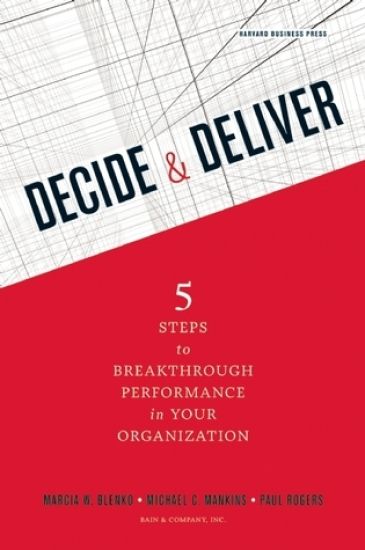
Decide and Deliver

Decide and Deliver

Marcia Blenko; Michael C. Mankins; Paul Rogers

Harvard Business Review Press
2010
sidottu

Halvin toimitettuna 32,80 €

Dithering. Decisions that turn out wrong. Decisions that people sabotage or don't know how to implement. If your company's experiencing these problems, it's not alone. Most organizations don't know how to make and execute good decisions. And they're paying a high price--as profitability and competitiveness erode. It doesn't have to be this way. In Decide and Deliver, the authors draw on Bain & Company's extensive research to present a five-step process for improving your firm's decision effectiveness: 1. Assess your decision effectiveness--and how your organization affects it. 2. Identify your critical decisions. 3. Set individual critical decisions up for success. 4. Ensure that your company enables and reinforces great decision making and execution. 5. Embed the changes in everyday practice. Master this process, and you see immediate results: people across your organization collaborate to make crucial decisions better and faster than your rivals. And they execute them flawlessly-fueling unprecedented financial performance. Filled with powerful hands-on tools and detailed examples from companies as varied as Ford Motor Company, British American Tobacco, Telstra, Lafarge, and ABB UK, Decide and Deliver helps you make decision management a potent competitive weapon in your company.
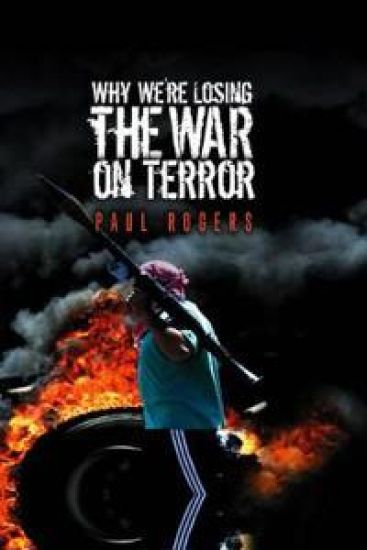
Why We're Losing the War on Terror

Why We're Losing the War on Terror

Paul Rogers

Polity Press
2007
sidottu
The war on terror is a lost cause. As the war heads towards its second decade, American security policy is in disarray – the Iraq War is a disaster, Afghanistan is deeply insecure and the al-Qaida movement remains as potent as ever with new generations of leaders coming to the fore. Well over 100,000 civilians have died in Iraq and Afghanistan, many tens of thousands have been detained without trial, and torture, prisoner abuse and rendition have sullied the reputation of the United States and its coalition partners. Why We’re Losing the War on Terror examines the reasons for the failure, focusing on American political and military attitudes, the impact of 9/11, the fallacy of a New American Century, the role of oil and, above all, the consummate failure to go beyond a narrow western view of the world. More significantly, it argues that the disaster of the war may have a huge if unexpected bonus. Its very failure will make it possible to completely re-think western attitudes to global security, moving towards a sustainable policy that will be much more effective in addressing the real threats to global security – the widening socio-economic divide and climate change.
Why We're Losing the War on Terror

Why We're Losing the War on Terror

Paul Rogers

Polity Press
2007
nidottu
The war on terror is a lost cause. American security policy is in disarray - the Iraq War is a disaster, Afghanistan is deeply insecure and the al-Qaida movement remains as potent as ever with new generations of leaders coming to the fore. This title examines the reasons for the failure.
The Political Road to War with Iraq

The Political Road to War with Iraq

Nick Ritchie; Paul Rogers

Routledge
2007
nidottu
This volume explores in close detail the events and factors leading up to the second Gulf War in 2003 and considers whether war with Iraq was inevitable. Nick Ritchie and Paul Rogers argue that after the election of George W. Bush, conflict between Iraq and the United States was probable, and that after 9/11 it became virtually inevitable. They begin by setting the story of Iraq, Bush and 9/11 within the broader context of the importance of the Persian Gulf to enduring US national security interests and go on to examine the intense politicking that surrounded the conflict and still reverberates today. The authors examine US policy towards Iraq at the end of the Clinton administration, the opposition in Congress and Washington’s conservative think tanks to Clinton’s strategy of containment, and the evolution of Iraq policy during the first eight months of the Bush presidency and the growing pressure for regime change. They also explore the immediate focus on Iraq after the attacks of September 11 that marked a watershed in US national security policy and chart the construction of the case against Iraq through 2002 and the administration’s determination to end Saddam Hussein’s regime at all costs. The Political Road to War with Iraq will be of great interest to all students and scholars of US foreign policy, war and peace studies and international relations.
Global Security and the War on Terror
As the ‘War on Terror’ evolves into the ‘Long War’ against Islamo-fascism, it demands an enduring commitment to ensuring the security of the United States and its allies. This policy is based on the requirement to maintain control in a fractured and unpredictable global environment, while paying little attention to the underlying issues that lead to insecurity. It is an approach that is manifestly failing, as the continuing problems in Afghanistan and Iraq demonstrate. Moreover, ‘control’ implies the maintenance of a global order that focuses on power remaining in the hands of a transnational elite community, principally focused on North America and Western Europe, but extending worldwide. This elite largely ignores socio-economic divisions and environmental constraints, and sees continuing stability as being best achieved by the maintenance of the status quo, using force when necessary. This collection of essays by Professor Paul Rogers argues that this post-Cold War security paradigm is fundamentally misguided and unsustainable. It concludes with two new essays on the need for a new conception of global security rooted in justice and emancipation. Global Security and the War on Terror will be essential reading for students and scholars of security studies, the Cold War, international relations and development studies.
Into the Long War

Into the Long War

Paul Rogers

Pluto Press
2006
sidottu
Iraq stands on the edge of civil war. As sectarian killings escalate, and troops become more deeply entrenched, is there any prospect of an exit strategy? Into the Long War examines events in Iraq since May 2005 and how they impact on other countries including Afghanistan, Iran and the wider Middle East. Bringing together the extensive analysis of the renowned Oxford Research Group, the book charts a tumultuous period in the conflict, including a wider international perspective on the terrorist attacks in London and Sharm al Sheik, and an assessment of how US public opinion has changed as the war drags on. Rogers offers a clear and compelling account of an invasion that was meant to take a matter of weeks - and that now threatens to engulf an entire region for many years to come.
The Political Road to War with Iraq

The Political Road to War with Iraq

Nick Ritchie; Paul Rogers

Routledge
2006
sidottu
This volume explores in close detail the events and factors leading up to the second Gulf War in 2003 and considers whether war with Iraq was inevitable. Nick Ritchie and Paul Rogers argue that after the election of George W. Bush, conflict between Iraq and the United States was probable, and that after 9/11 it became virtually inevitable. They begin by setting the story of Iraq, Bush and 9/11 within the broader context of the importance of the Persian Gulf to enduring US national security interests and go on to examine the intense politicking that surrounded the conflict and still reverberates today. The authors examine US policy towards Iraq at the end of the Clinton administration, the opposition in Congress and Washington’s conservative think tanks to Clinton’s strategy of containment, and the evolution of Iraq policy during the first eight months of the Bush presidency and the growing pressure for regime change. They also explore the immediate focus on Iraq after the attacks of September 11 that marked a watershed in US national security policy and chart the construction of the case against Iraq through 2002 and the administration’s determination to end Saddam Hussein’s regime at all costs. The Political Road to War with Iraq will be of great interest to all students and scholars of US foreign policy, war and peace studies and international relations.
A War Too Far

A War Too Far

Paul Rogers

Pluto Press
2006
sidottu
There are few today who can claim that the US occupation of Iraq has been a success, for either side. A War Too Far takes this on by looking back on the many unanswered questions about the invasion itself. What was the real reason for the Iraq War? Did George Bush ever have a strategy to confront al-Qaida in one arena? How does the invasion alter Iraq's relationship with Iran? And what does this mean for the future? Examining the delicate balance of power in Iraq, this book explores the options for a US exit strategy, and how the invasion affects America's relationship with Iran. Paul Rogers explores: • The neo-conservative vision of a US-dominated Middle East • The oil link – Iraq's significance in energy geopolitics • Links with Israel – the development of close military co-operation between the US and Israeli military • The growing possibility of a war on Iran and its potential repercussions
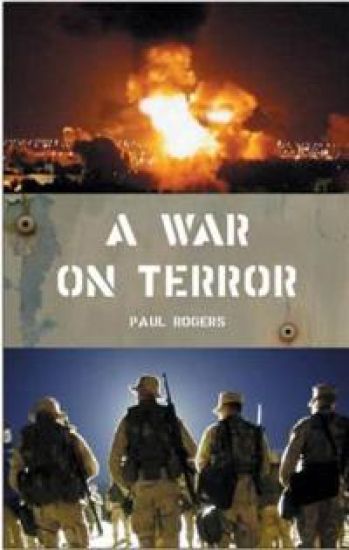
A War on Terror

A War on Terror

Paul Rogers

Pluto Press
2004
pokkari
Radically assessing George W. Bush's security policy, the impact it has had on world security and the grave implications that it holds for future peace, not only in the Middle East but throughout the world come to light. Moving from the war in Afghanistan and its aftermath to the Israeli/Palestinian conflict, the continuing development of al-Qaida and its associates through to the war on Iraq, Rogers presents a uniquely cogent analysis of these rapid and traumatic events. In a world in which the US and other states of the Atlantic community are increasingly speaking a different language to that of the majority of the world, Paul Rogers offers a vital critical assessment of the language of dominance and control as 'the New American Century' unfolds. For the US, in particular, the post-9/11 world is one in which it is essential to maintain firm control of international security, extending to pre-emptive military action. In this book, Rogers demonstrates how futile, mistaken and deeply counter-productive that belief is, and points the way to more effective routes to a more just and secure world.
Toybreaker

Toybreaker

Paul Rogers

Penguin Random House Children's UK
2000
pokkari
Throughout the town, toys are being broken - teddies' eyes are going missing, puppets' strings are tangled, and the finger of blame seems to point at Jamie.