Kirjojen hintavertailu – 12 903 724 kirjaa ja 27 kauppaa

Kirjailija

Paul S. Appelbaum

Kirjat ja teokset yhdessä paikassa: 8 kirjaa, julkaisuja vuosilta 1987–2019, suosituimpiin kuuluu Informed Consent. Vertaile teosten hintoja ja tarkista saatavuus suomalaisista kirjakaupoista.

8 kirjaa

Kirjojen julkaisuvuodet: 1987–2019.

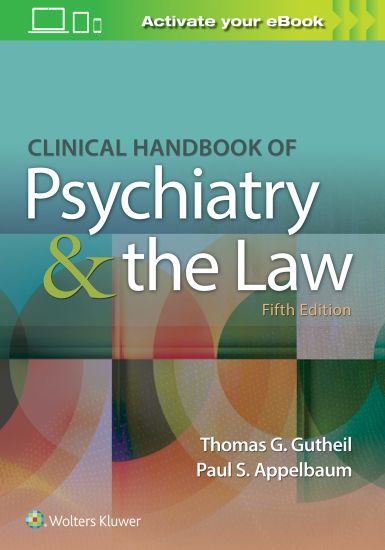
Clinical Handbook of Psychiatry and the Law

Clinical Handbook of Psychiatry and the Law

Thomas G. Gutheil; Paul S. Appelbaum

Lippincott Williams and Wilkins
2019
sidottu
Selected as a Doody's Core Title for 2025! Written by two renowned leaders in the field, the much-anticipated fifth edition of Clinical Handbook of Psychiatry and the Law offers mental health professionals authoritative guidance on how today’s law affects clinical practice. Each chapter in this award-winning reference presents case examples of legal issues often seen in day-to-day practice; clearly explains the governing legal rules, their rationale, and their clinical impact; and offers concrete action guides to navigating clinicolegal dilemmas. It’s a must-have resource for anyone in the mental health field who needs an easy-to-read, practical handbook addressing both longstanding legal/ethical issues and crucial recent developments in the field. Addresses recent developments including the impact of electronic health records on privacy and liability risks, new technologies, prescription drug monitoring programs, risk management in integrated care, the practitioner’s role in assessing suitability for gun ownership, and more. Reflects timely issues such as changing attitudes toward seclusion and restraint, new medications for psychiatric disorders and the role of informed consent, and increased liability and scrutiny of expert witnesses. Presents real-world case examples using an engaging, easy-to-read writing style, and includes unique action guides in each chapter that specify practical approaches to clinicolegal dilemmas. A useful study aid to help prepare for the forensic psychiatry sections of specialty board examinations. Enrich Your eBook Reading ExperienceRead directly on your preferred device(s), such as computer, tablet, or smartphone. Easily convert to audiobook, powering your content with natural language text-to-speech.

Applied Ethics in Mental Health Care

Applied Ethics in Mental Health Care

Paul S. Appelbaum

MIT Press
2013
pokkari
Discussions of key ethical dilemmas in mental health care, including consent, trauma and violence, addiction, confidentiality, and therapeutic boundaries. This book discusses some of the most critical ethical issues in mental health care today, including the moral dimensions of addiction, patient autonomy and compulsory treatment, privacy and confidentiality, and the definition of mental illness itself. Although debates over these issues are ongoing, there are few comprehensive resources for addressing such dilemmas in the practice of psychology, psychiatry, social work, and other behavioral and mental health care professions. This book meets that need, providing foundational background for undergraduate, graduate, and professional courses. Topics include central questions such as evolving views of the morality and pathology of deviant behavior; patient competence and the decision to refuse treatment; recognizing and treating people who have suffered trauma; addiction as illness; the therapist's responsibility to report dangerousness despite patient confidentiality; and boundaries for the therapist's interaction with patients outside of therapy, whether in the form of tennis games, gift-giving, or social media contact. For the most part the selections address contemporary issues in contemporary terms, but the book also offers a few historic or classic essays, including Thomas S. Szasz's controversial 1971 article "The Ethics of Addiction." ContributorsLaura Weiss Roberts, Frederic G. Reamer, Charles P. O'Brien, and Thomas McLellan
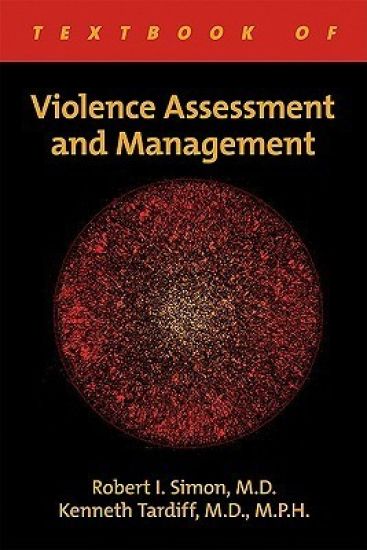
Textbook of Violence Assessment and Management

Textbook of Violence Assessment and Management

Paul S. Appelbaum

American Psychiatric Association Publishing
2008
sidottu
Evaluating and treating patients with violent ideations and behaviors can be frustrating, anxiety-provoking, and even dangerous, as errors in judgment can lead to disastrous consequences. Fortunately, there is the Textbook of Violence Assessment and Management, the first and only comprehensive textbook on assessing the potentially violent patient for mental health clinicians on the front lines of patient care. Uniquely qualified to produce this comprehensive volume, the editors have assembled a distinguished roster of contributors who, in 28 practical chapters, combine evidence-based medicine with expert opinion to address the topic of patient violence in all its diversity of presentation and expression. Dr. Simon is Director of the Program in Psychiatry and Law at Georgetown University School of Medicine, as well as the author or co-author of more than two dozen books. Dr. Tardiff, Professor of Psychiatry and Public Health at the Payne Whitney Clinic, The New York Hospital—Cornell Medical Center, is the author of The Concise Guide to Assessment and Management of Violent Patients, an introduction to aggression management now in its second edition. Violence is both endemic to our society and epidemic in our age. Skilled assessment and management of violence is therefore critical for mental health professionals involved in patient care. The Textbook of Violence Assessment and Management includes many features designed to instruct and support these clinicians. For example: • It is the first comprehensive textbook to take the mental health professional from evaluation and assessment to treatment and management of patients who are or may become violent. • The 28 chapters address the diversity of clinical settings, patient demographics, psychopathology and treatment modalities, making this work useful as both a textbook and a reference that clinicians can consult as needed for particular cases.• End-of-chapter "Key Points" highlight the most important concepts and conclusions, allowing students to review and consolidate their learning and practicing professionals to locate critical information quickly.• Clinical case examples abound, providing rich and nuanced perspectives on patient behavior, evaluation and management.• The textbook includes a separate chapter on evaluating patients from different cultures, a competency that becomes more crucial as patient populations become more diverse. Increasing numbers of veterans are diagnosed with PTSD and traumatic brain injury. Campus tragedies such as Virginia Tech are fresh in our collective memory. This text is both timely and necessary—not just for mental health professionals and their patients, but for the families and communities whose safety depends upon competent professional judgment.
Informed Consent

Informed Consent

Jessica W. Berg; Paul S. Appelbaum; Charles W. Lidz; Lisa S. Parker

Oxford University Press Inc
2001
sidottu
Informed consent - as an ethical ideal and legal doctrine - has been the source of much concern to clinicians. Drawing on a diverse set of backgrounds and two decades of research in clinical settings, the authors - a lawyer, a physician, a social scientist, and a philosopher - help clinicians understand and cope with their legal obligations and show how the proper handling of informed consent can improve , rather than impede, patient care. Following a concise review of the ethical and legal foundations of informed consent, they provide detailed, practical suggestions for incorporating informed consent into clinical practice. This completely revised and updated edition discusses how to handle informed consent in all phases of the updated edition discusses how to handle informed consent in all phases of the doctor-patient relationship, use of consent forms, patients' refusals of treatment, and consent to research. It comments on recent laws and national policy, and addresses cutting edge issues such as fulfilling physician obligations under managed care. This clear and succinct book contains a weath of information that will not only help clinicians meet the legal requirements of informed consent and understand its ethical underpinnings, but also enhance their ability to deal with their patients more effectively. It will be of value to all those working in areas where issues of informed consent are likely to arise, including medicine, biomedical research, mental health care, nursing, dentistry, biomedical ethics, and law.
Rethinking Risk Assessment

Rethinking Risk Assessment

John Monahan; Henry J. Steadman; Eric Silver; Paul S. Appelbaum; Pamela Clark Robbins; Edward P. Mulvey; Loren H. Roth; Thomas Grisso; Steven Banks

Oxford University Press Inc
2001
sidottu
Rethinking Risk Assessment tells the story of a pioneering investigation that challenges preconceptions about the frequency and nature of violence among persons with mental disorders, and suggests an innovative approach to predicting its occurrence.
Assessing Competence to Consent to Treatment

Assessing Competence to Consent to Treatment

Thomas Grisso; Paul S. Appelbaum

Oxford University Press Inc
1998
sidottu
One of the most challenging tasks facing clinicians today is the assessment of patients' capacities to consent to treatment. The protection of a patient's right to decide, as well as the protection of incompetent patients from the potential harm of the decisions they might make, rests largely on clinicians' abilities to judge patients' capacities to decide what treatment they will receive. Confusing laws and complex ethical questions surrounding competence to consent to treatment have made the process of competence assessment intimidating for many clinicians. Health professionals - physicians, medical students nad residents, nurses, and mental health practitioners - have long needed a consice guidebook that translates the issue for practice. This is what this book accomplishes. The aurthors describe the place of competence in the doctrine of informed consent and show how assessments of competence to consent to treatment can be structured by using a specific set of general medical and psychiatric treatment settings, explain how the assessment should be conducted, and offer a structured interview method to assist the task. They also explore the often difficult process of making the judgement about competence and desire what to do when patients' capacities are limited.
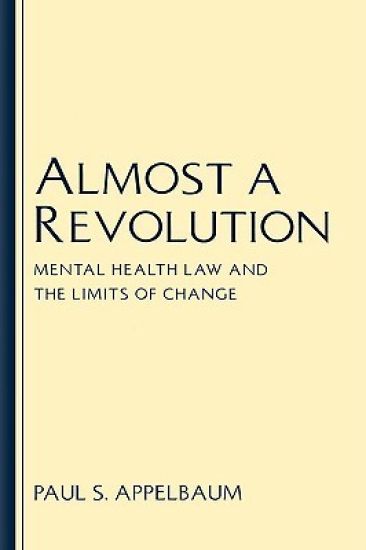
Almost a Revolution

Almost a Revolution

Paul S. Appelbaum

Oxford University Press Inc
1994
sidottu
The major mental health reforms of the last generation in the U. S. A. have given rise to much discussion and often heated debate; but have they actually produced any real changes? This book is the first overview of this controversial subject - and the author's appraisal of the consequences of these reforms is surprising. Changes which were originally aimed at making it more difficult to hospitalize and treat people with mental illness, and easier to punish them, have actually resulted in far less change than was predicted or intended. This stimulating book argues that, when the law contradicted commonsense ideas of how to deal with the mentally ill, it was bent or ignored, whether by judges, medical professionals, or family members.
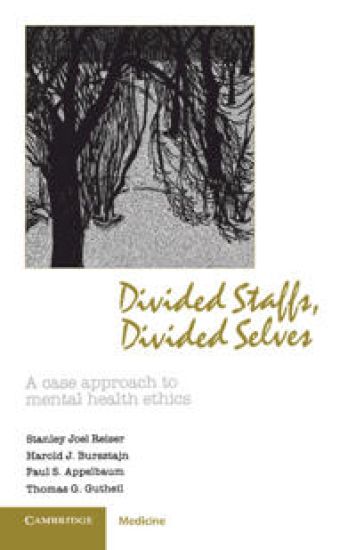
Divided Staffs, Divided Selves

Divided Staffs, Divided Selves

Stanley Joel Reiser; Harold J. Bursztajn; Paul S. Appelbaum; Thomas G. Gutheil

Cambridge University Press
1987
pokkari
Ethical decision making in the context of conflicting values takes on a fresh immediacy when the self itself is in conflict. Divided Staffs, Divided Selves: A Case Approach to Mental Health Ethics brings the immediacy of a clinical case conference to a wide range of students and clinicians. The book provides both clinical case material and a method for engaging in a dialogue choices in the mental health care field. The essays that introduce the volume place the ethical problems of treating mentally ill people in the context of the health care ethics movement and traditions of ethical decision making. The individual cases arise from clinical and consultative experiences. This case material will serve as the basis for learning and reflection by clinicians in interaction with their colleagues, and it also will be especially valuable to students studying ethical concepts who do not have access to real-life cases or problems.