Kirjojen hintavertailu – 12 859 828 kirjaa ja 27 kauppaa

Kirjailija

Paul S. Fiddes

Kirjat ja teokset yhdessä paikassa: 24 kirjaa, julkaisuja vuosilta 1989–2026, suosituimpiin kuuluu Baptists and the Communion of Saints. Vertaile teosten hintoja ja tarkista saatavuus suomalaisista kirjakaupoista.

Nimi esiintyy myös muodoissa: Paul S Fiddes

24 kirjaa

Kirjojen julkaisuvuodet: 1989–2026.

God, Struggle, and Suffering in the Evolution of Life

God, Struggle, and Suffering in the Evolution of Life

Christopher Southgate; Paul S. Fiddes; Michael Lloyd; Neil Messer; Bethany Sollereder; Mark R. Wynn

BLOOMSBURY PUBLISHING PLC
2025
sidottu

Halvin toimitettuna 82,40 €

This open access book stems from a unique set of conversations between six scholars concerned with the theological problem of suffering in the non-human world over millions of years. How is the confession of the Christian God compatible with all the struggle, violence and suffering to which the Darwinian world testifies? This work identifies key fault lines in this rapidly growing debate - over the questions of resistance to the divine will in the non-human creation in particular. Is the picture of the biological world we derive from the sciences indicative of a profound resistance, distorting the character of creation? If so, what is the origin and character of this resistance? Or is it unnecessary to postulate such resistance before the evolution of human beings and their sin? Or is an intermediate position, in which some specific characteristics hint at resistance, the most coherent approach? Six leading academic press on this question in a way that illustrates the quality of the conversation we have been able to achieve in our colloquia. As such it also provides a model for how theology can be done collaboratively, respecting diversity of positions and using that diversity to advance the frontiers of debate. The eBook editions of this book are available open access under a CC BY-NC-ND 4.0 license on bloomsburycollections.com. Open Access was funded by the University of Exeter, Baylor University, and Wycliffe Hall, Oxford.
Charles Williams and C. S. Lewis

Charles Williams and C. S. Lewis

Paul S. Fiddes

Oxford University Press
2021
sidottu
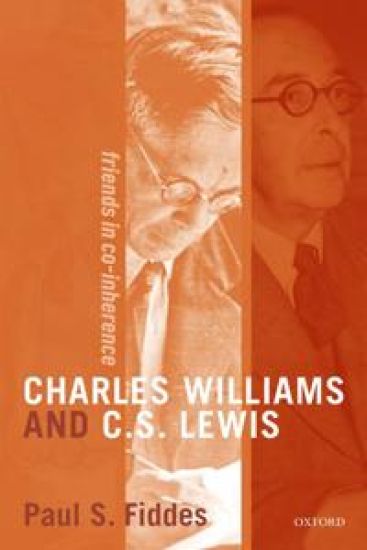
This study of the literary relationship between Charles Williams and C. S. Lewis during the years 1936-1945 focuses on the theme of 'co-inherence' at the centre of their friendship. The idea of 'co-inherence' has long been recognized as an important contribution of Williams to theology, and had significant influence on the thought of Lewis. This account of the two writers' conviction that human persons 'inhere' or 'dwell' both in each other and in the triune God reveals many inter-relationships between their writings that would otherwise be missed. It also shows up profound differences between their world-views, and a gradual, though incomplete, convergence onto common ground. Exploring the idea of co-inherence throws light on the fictional worlds they created, as well as on their treatment (whether together or separately) of a wide range of theological and literary subjects: the Arthurian tradition, the poetry of William Blake and Thomas Traherne, the theology of Karl Barth, the nature of human and divine love, and the doctrine of the Trinity. This study draws for the first time on transcriptions of Williams' lectures from 1932 to 1939, tracing more clearly the development and use of the idea of co-inherence in his thought than has been possible before. Finally, an account of the use of the word 'co-inherence' in English-speaking theology suggests that the differences that existed between Lewis and Williams, especially on the place of analogy and participation in human experience of God, might be resolved by a theology of co-inherence in the Trinity.
Seeing the World and Knowing God

Seeing the World and Knowing God

Paul S. Fiddes

Oxford University Press
2014
nidottu
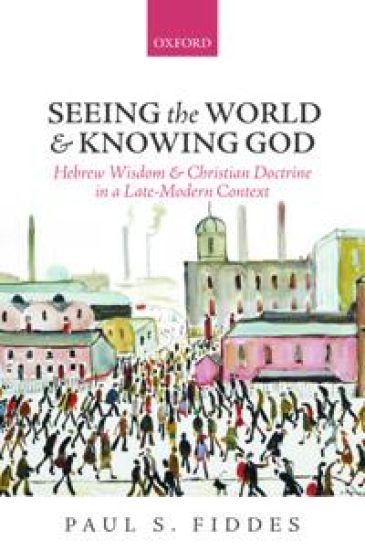
This book aims to create a Christian theology of wisdom for the present day, in discussion with two sets of conversation-partners. The first are writers of the 'wisdom literature' in ancient Israel and the Jewish community in Alexandria. Here, special attention is given to the biblical books of Proverbs, Job, and Ecclesiastes. The second conversation-partners are philosophers and thinkers of the late-modern age, among them Jacques Derrida, Emmanuel Levinas, Julia Kristeva, Paul Ricoeur, and Hannah Arendt. In the late-modern period there has been a reaction against an inherited conception of the conscious and rational self as mastering and even subjugating the world around, and there has been an attempt to overcome the consequent split between the subject and objects of observation. Paul S. Fiddes enters into dialogue with these late-modern concerns about the relation between the self and the world, proposing that the wisdom which is indicated by the ancient Hebraic concept of ?okmah integrates a 'practical wisdom' of handling daily experience with the kind of wisdom which is 'attunement' to the world and ultimately to God as creator and sustainer of all. Fiddes brings detailed exegesis of texts from the ancient wisdom literature into interaction with an account of the subject in late-modern thought, in order to form a theology in which seeing the world is knowing a God whose transcendent reality is always immanent in the signs and bodies of the world. He thus argues that participation in a triune, relational God shapes a wisdom that addresses problems of a dominating self, and opens the human person to others.
Seeing the World and Knowing God

Seeing the World and Knowing God

Paul S. Fiddes

Oxford University Press
2013
sidottu
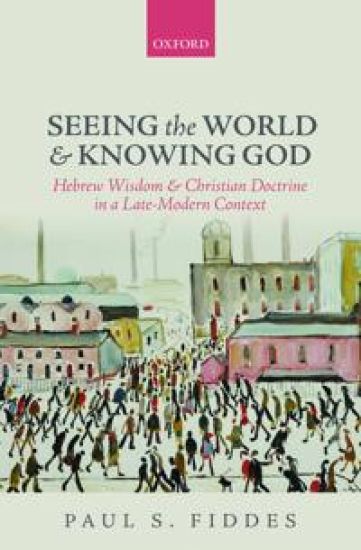
This book aims to create a Christian theology of wisdom for the present day, in discussion with two sets of conversation-partners. The first are writers of the 'wisdom literature' in ancient Israel and the Jewish community in Alexandria. Here, special attention is given to the biblical books of Proverbs, Job and Ecclesiastes. The second conversation-partners are philosophers and thinkers of the late-modern age, among them Jacques Derrida, Emmanuel Levinas, Julia Kristeva, Paul Ricoeur and Hannah Arendt. In the late-modern period there has been a reaction against an inherited conception of the conscious and rational self as mastering and even subjugating the world around, and there has been an attempt to overcome the consequent split between the subject and objects of observation. Paul S. Fiddes enters into dialogue with these late-modern concerns about the relation between the self and the world, proposing that the wisdom which is indicated by the ancient Hebraic concept of ?okmah integrates a 'practical wisdom' of handling daily experience with the kind of wisdom which is 'attunement' to the world and ultimately to God as creator and sustainer of all. Fiddes brings detailed exegesis of texts from the ancient wisdom literature into interaction with an account of the subject in late-modern thought, in order to form a theology in which seeing the world is knowing a God whose transcendent reality is always immanent in the signs and bodies of the world. He thus argues that participation in a triune, relational God shapes a wisdom that addresses problems of a dominating self, and opens the human person to others.