Kirjojen hintavertailu – 12 903 735 kirjaa ja 27 kauppaa
Kirjailija
Paul S. Martin
Kirjat ja teokset yhdessä paikassa: 5 kirjaa, julkaisuja vuosilta 2007–2021, suosituimpiin kuuluu Anasazi Painted Pottery In Field Museum Of Natural History (Volume 5). Vertaile teosten hintoja ja tarkista saatavuus suomalaisista kirjakaupoista.
This book has been considered by academicians and scholars of great significance and value to literature. This forms a part of the knowledge base for future generations. So that the book is never forgotten we have represented this book in a print format as the same form as it was originally first published. Hence any marks or annotations seen are left intentionally to preserve its true nature.
Pollen analysis as an approach to understanding the Southwestern environment, its history, and in some respects its possible future. Dr. Martin's study is an example of geochronology functioning as a strong interdisciplinary link among archaeologists, biogeographers, geologists, paleoclimatologists and ecologists.
Saipan: The Ethnology Of A War Devastated Island is a book written by Alexander Spoehr. The book provides a comprehensive account of the ethnology of Saipan, an island in the Mariana Islands that was heavily affected by World War II. The author examines the island's history, culture, and society before and after the war, and how the islanders coped with the devastation caused by the conflict. The book also includes detailed descriptions of the island's geography, climate, flora, and fauna. Spoehr's work is based on extensive fieldwork and interviews with the island's inhabitants, and provides a unique perspective on the impact of war on a small island community. This book is a valuable resource for historians, anthropologists, and anyone interested in the social and cultural effects of war. Fieldiana Anthropology: A Continuation Of The Anthropological Series Of Field Museum Of Natural History, V41. This scarce antiquarian book is a facsimile reprint of the old original and may contain some imperfections such as library marks and notations. Because we believe this work is culturally important, we have made it available as part of our commitment for protecting, preserving, and promoting the world's literature in affordable, high quality, modern editions, that are true to their original work.
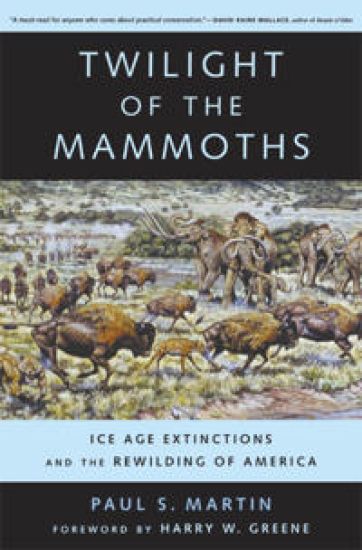
As recently as 11,000 years ago - 'near time' to geologists - mammoths, mastodons, gomphotheres, ground sloths, giant armadillos, native camels and horses, the dire wolf, and many other large mammals roamed North America. In what has become one of science's greatest riddles, these large animals vanished in North and South America around the time humans arrived at the end of the last great ice age. Part paleontological adventure and part memoir, "Twilight of the Mammoths" presents in detail internationally renowned paleoecologist Paul Martin's widely discussed and debated 'overkill' hypothesis to explain these mysterious megafauna extinctions. Taking us from Rampart Cave in the Grand Canyon, where he finds himself 'chest deep in sloth dung', to other important fossil sites in Arizona and Chile, Martin's engaging book, written for a wide audience, uncovers our rich evolutionary legacy and shows why he has come to believe that the earliest Americans literally hunted these animals to death. As he discusses the discoveries that brought him to this hypothesis, Martin relates many colorful stories and gives a rich overview of the field of paleontology as well as his own fascinating career. He explores the ramifications of the overkill hypothesis for similar extinctions worldwide and examines other explanations for the extinctions, including climate change. Martin's visionary thinking about our missing megafauna offers inspiration and a challenge for today's conservation efforts as he speculates on what we might do to remedy this situation - both in our thinking about what is 'natural' and in the natural world itself.