Kirjailija
Paul S. Sutter
Kirjat ja teokset yhdessä paikassa: 58 kirjaa, julkaisuja vuosilta 2005–2026, suosituimpiin kuuluu The Takeover. Vertaile teosten hintoja ja tarkista saatavuus suomalaisista kirjakaupoista.
58 kirjaa
Kirjojen julkaisuvuodet: 2005–2026.
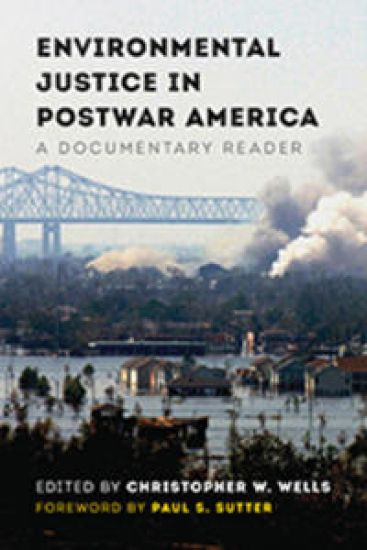
In the decades after World War II, the American economy entered a period of prolonged growth that created unprecedented affluence—but these developments came at the cost of a host of new environmental problems. Unsurprisingly, a disproportionate number of them, such as pollution-emitting factories, waste-handling facilities, and big infrastructure projects, ended up in communities dominated by people of color. Constrained by long-standing practices of segregation that limited their housing and employment options, people of color bore an unequal share of postwar America's environmental burdens. This reader collects a wide range of primary source documents on the rise and evolution of the environmental justice movement. The documents show how environmentalists in the 1970s recognized the unequal environmental burdens that people of color and low-income Americans had to bear, yet failed to take meaningful action to resolve them. Instead, activism by the affected communities themselves spurred the environmental justice movement of the 1980s and early 1990s. By the turn of the twenty-first century, environmental justice had become increasingly mainstream, and issues like climate justice, food justice, and green-collar jobs had taken their places alongside the protection of wilderness as "environmental" issues. Environmental Justice in Postwar America is a powerful tool for introducing students to the US environmental justice movement and the sometimes tense relationship between environmentalism and social justice. For more information, visit the editor's website: http://cwwells.net/PostwarEJ
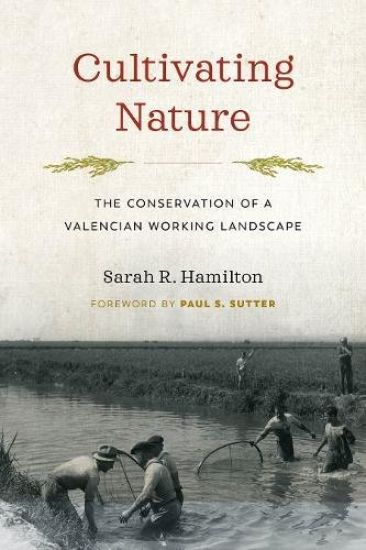
Winner of the 2019 Turku Book Award from the European Society for Environmental HistoryThe Albufera Natural Park, an area ten kilometers south of Valencia that is widely regarded as the birthplace of paella, has long been prized by residents and visitors alike. Since the twentieth century, the disparate visions of city dwellers, farmers, fishermen, scientists, politicians, and tourists have made this working landscape a site of ongoing conflict over environmental conservation in Europe, the future of Spain, and Valencian identity. In Cultivating Nature, Sarah Hamilton explores the Albufera's contested lands and waters, which have supported and been transformed by human activity for a millennium, in order to understand regional, national, and global social histories. She argues that efforts to preserve biological and cultural diversity must incorporate the interests of those who live within heavily modified and long-exploited ecosystems such as the Albufera de Valencia. Shifting between local struggles and global debates, this fascinating environmental history reveals how Franco's dictatorship, Spain's integration with Europe, and the crisis in European agriculture have shaped the Albufera, its users, and its inhabitants.
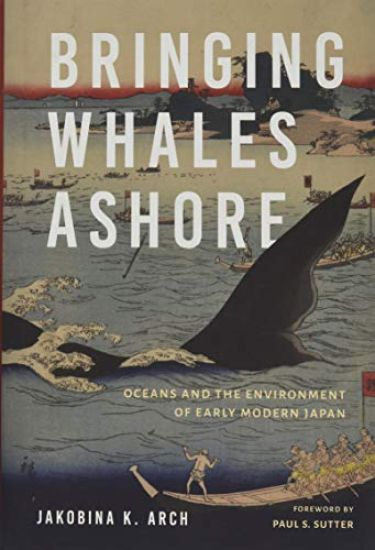
Japan today defends its controversial whaling expeditions by invoking tradition—but what was the historical reality? In examining the techniques and impacts of whaling during the Tokugawa period (1603–1868), Jakobina Arch shows that the organized, shore-based whaling that first developed during these years bore little resemblance to modern Japanese whaling. Drawing on a wide range of sources, from whaling ledgers to recipe books and gravestones for fetal whales, she traces how the images of whales and by-products of commercial whaling were woven into the lives of people throughout Japan. Economically, Pacific Ocean resources were central in supporting the expanding Tokugawa state. In this vivid and nuanced study of how the Japanese people brought whales ashore during the Tokugawa period, Arch makes important contributions to both environmental and Japanese history by connecting Japanese whaling to marine environmental history in the Pacific, including the devastating impact of American whaling in the nineteenth century.
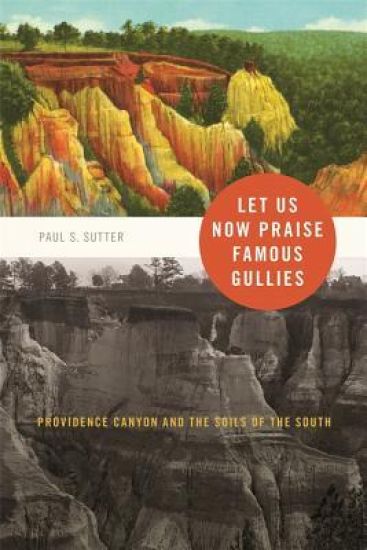
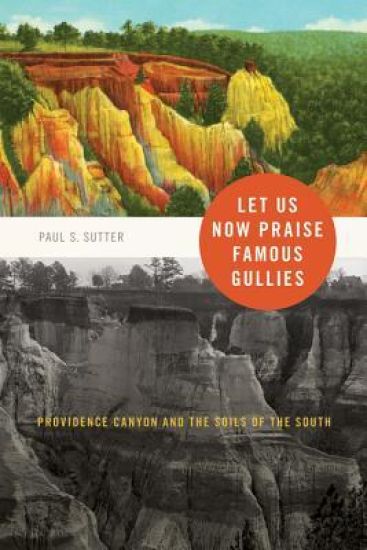
Providence Canyon State Park, also known as Georgia’s “Little Grand Canyon,” preserves a network of massive erosion gullies allegedly caused by poor farming practices during the nineteenth century. It is a park that protects the scenic results of an environmental disaster. While little known today, Providence Canyon enjoyed a modicum of fame in the 1930s. During that decade, local boosters attempted to have Providence Canyon protected as a national park, insisting that it was natural. At the same time, national and international soil experts and other environmental reformers used Providence Canyon as the apotheosis of human, and particularly southern, land abuse. Let Us Now Praise Famous Gullies uses the unlikely story of Providence Canyon—and the 1930s contest over its origins and meaning—to recount the larger history of dramatic human-induced soil erosion across the South and to highlight the role that the region and its erosive agricultural history played in the rise of soil science and soil conservation in America. More than that, though, the book is a meditation on the ways in which our persistent mental habit of separating nature from culture has stunted our ability to appreciate places like Providence Canyon and to understand the larger history of American conservation.
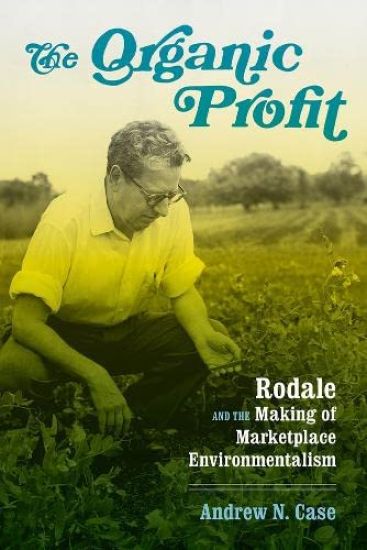
From green-lifestyle mavens who endorse products on social media to natural health activists sponsored by organic food companies, the marketplace for advice about how to live life naturally is better stocked than ever. Where did the curious idea of buying one's way to sustainability come from? In no small part, as Andrew Case shows, the answer lies in the story of entrepreneur and reformer J. I. Rodale, his son Robert Rodale, and their company, the Rodale Press. These pioneers of organic gardening were also pioneers in cultivating a niche for natural health products in the 1950s, organizing the emerging marketplace for organic foods in the 1960s, and publishing an endless supply of advice books on diet and health in the process. Rodale's marketplace environmentalism brought environmentally minded consumers together and taught Americans how to grow food, eat, and live in more environmentally friendly ways. Yet the marketplace has proved more effective at addressing individual health concerns than creating public health interventions. It is as liable to champion untested and ineffectual health supplements as it is to challenge the indiscriminant use of dangerous pesticides. For anyone trying to make sense of the complex tensions between business profits and the desire for environmental reform, The Organic Profit is essential reading.
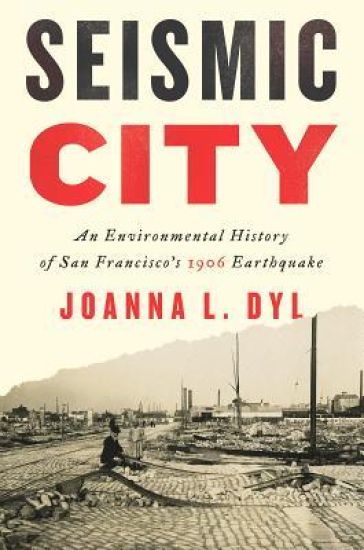
On April 18, 1906, a 7.8-magnitude earthquake shook the San Francisco region, igniting fires that burned half the city. The disaster in all its elements — earthquake, fires, and recovery — profoundly disrupted the urban order and challenged San Francisco's perceived permanence. The crisis temporarily broke down spatial divisions of class and race and highlighted the contested terrain of urban nature in an era of widespread class conflict, simmering ethnic tensions, and controversial reform efforts. From a proposal to expel Chinatown from the city center to a vision of San Francisco paved with concrete in the name of sanitation, the process of reconstruction involved reenvisioning the places of both people and nature. In their zeal to restore their city, San Franciscans downplayed the role of the earthquake and persisted in choosing patterns of development that exacerbated risk. In this close study of the 1906 San Francisco earthquake, Joanna L. Dyl examines the decades leading up to the catastrophic event and the city's recovery from it. Combining urban environmental history and disaster studies, Seismic City demonstrates how the crisis and subsequent rebuilding reflect the dynamic interplay of natural and human influences that have shaped San Francisco.
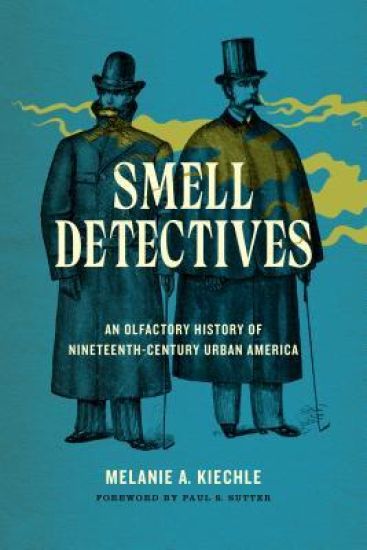
What did nineteenth-century cities smell like? And how did odors matter in the formation of a modern environmental consciousness? Smell Detectives follows the nineteenth-century Americans who used their noses to make sense of the sanitary challenges caused by rapid urban and industrial growth. Melanie Kiechle examines nuisance complaints, medical writings, domestic advice, and myriad discussions of what constituted fresh air, and argues that nineteenth-century city dwellers, anxious about the air they breathed, attempted to create healthier cities by detecting and then mitigating the most menacing odors. Medical theories in the nineteenth century assumed that foul odors caused disease and that overcrowded cities—filled with new and stronger stinks—were synonymous with disease and danger. But the sources of offending odors proved difficult to pinpoint. The creation of city health boards introduced new conflicts between complaining citizens and the officials in charge of the air. Smell Detectives looks at the relationship between the construction of scientific expertise, on the one hand, and "common sense"—the olfactory experiences of common people—on the other. Although the rise of germ theory revolutionized medical knowledge and ultimately undid this form of sensory knowing, Smell Detectives recovers how city residents used their sense of smell and their health concerns about foul odors to understand, adjust to, and fight against urban environmental changes.
This collection pulls together key documents from the scientific and political history of climate change, including congressional testimony, scientific papers, newspaper editorials, court cases, and international declarations. Far more than just a compendium of source materials, the book uses these documents as a way to think about history, while at the same time using history as a way to approach the politics of climate change from a new perspective. Making Climate Change History provides the necessary background to give readers the opportunity to pose critical questions and create plausible answers to help them understand climate change in its historical context; it also illustrates the relevance of history to building effective strategies for dealing with the climatic challenges of the future.
Nuclear Reactions explores the nuclear consensus that emerged in post–World War II America, characterized by widespread support for a diplomatic and military strategy based on nuclear weapons and a vision of economic growth that welcomed nuclear energy both for the generation of electricity and for other peaceful and industrial uses. Unease about the environmental consequences of nuclear energy and weapons development became apparent by the early 1960s and led to the first challenges to that consensus. The documents in this collection address issues such as the arms race, "mutually assured destruction," the emergence of ecosystems ecology and the environmental movement, nuclear protests, and climate change. They raise questions about how nuclear energy shaped—and continues to shape—the contours of postwar American life. These questions provide a useful lens through which to understand the social, economic, and environmental tradeoffs embedded within American choices about the use and management of nuclear energy.
Defending Giants
Darren Frederick Speece; Paul S. Sutter
University of Washington Press
2016
sidottu
Giant redwoods are American icons, paragons of grandeur, exceptionalism, and endurance. They are also symbols of conflict and negotiation, remnants of environmental battles over the limits of industrialization, profiteering, and globalization. Since the middle of the nineteenth century, logging operations have eaten away at the redwood forest, particularly areas covered by ancient giant redwoods. Today, such trees occupy a mere 120,000 acres. Their existence is testimony to the efforts of activists to rescue some of these giants from destruction. Very few conservation battles have endured longer or with more violence than on the North Coast of California, behind what locals call the Redwood Curtain. Defending Giants explores the long history of the Redwood Wars, focusing on the ways rural Americans fought for control over both North Coast society and its forests. Activists defended these trees not only because the redwood forest had dwindled in size, but also because, by the late twentieth century, the local economy was increasingly dominated by multinational corporations. The resulting conflict—the Redwood Wars—pitted workers and environmental activists against the rising tide of globalization and industrial logging in a complex war over endangered species, sustainable forestry, and, of course, the fate of the last ancient redwoods. Activists perched in trees and filed lawsuits, while the timber industry, led by Pacific Lumber, fought the lawsuits and used their power to halt reform efforts. Ultimately, the Clinton administration sidestepped Congress and the courts to negotiate an innovative compromise. In the process, the Redwood Wars transformed American environmental politics by shifting the balance of power away from Congress and into the hands of the executive branch.
The City Is More Than Human
Frederick L. Brown; Paul S. Sutter
University of Washington Press
2016
sidottu
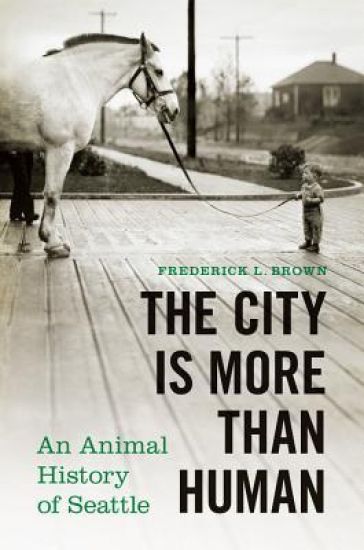
Winner of the 2017 Virginia Marie Folkins Award, Association of King County Historical Organizations (AKCHO)Winner of the 2017 Hal K. Rothman Book Prize, Western History AssociationSeattle would not exist without animals. Animals have played a vital role in shaping the city from its founding amid existing indigenous towns in the mid-nineteenth century to the livestock-friendly town of the late nineteenth century to the pet-friendly, livestock-averse modern city. When newcomers first arrived in the 1850s, they hastened to assemble the familiar cohort of cattle, horses, pigs, chickens, and other animals that defined European agriculture. This, in turn, contributed to the dispossession of the Native residents of the area. However, just as various animals were used to create a Euro-American city, the elimination of these same animals from Seattle was key to the creation of the new middle-class neighborhoods of the twentieth century. As dogs and cats came to symbolize home and family, Seattleites' relationship with livestock became distant and exploitative, demonstrating the deep social contradictions that characterize the modern American metropolis. Throughout Seattle's history, people have sorted animals into categories and into places as a way of asserting power over animals, other people, and property. In The City Is More Than Human, Frederick Brown explores the dynamic, troubled relationship humans have with animals. In so doing he challenges us to acknowledge the role of animals of all sorts in the making and remaking of cities.
Providence Canyon State Park, also known as Georgia’s “Little Grand Canyon,” preserves a network of massive erosion gullies allegedly caused by poor farming practices during the nineteenth century. It is a park that protects the scenic results of an environmental disaster. While little known today, Providence Canyon enjoyed a modicum of fame in the 1930s. During that decade, local boosters attempted to have Providence Canyon protected as a national park, insisting that it was natural. At the same time, national and international soil experts and other environmental reformers used Providence Canyon as the apotheosis of human, and particularly southern, land abuse. Let Us Now Praise Famous Gullies uses the unlikely story of Providence Canyon—and the 1930s contest over its origins and meaning—to recount the larger history of dramatic human-induced soil erosion across the South and to highlight the role that the region and its erosive agricultural history played in the rise of soil science and soil conservation in America. More than that, though, the book is a meditation on the ways in which our persistent mental habit of separating nature from culture has stunted our ability to appreciate places like Providence Canyon and to understand the larger history of American conservation.
Remaking Wormsloe Plantation
Drew A. Swanson; Paul S. Sutter
University of Georgia Press
2014
pokkari
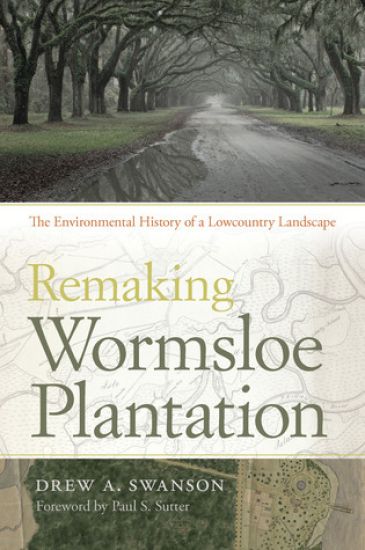
Why do we preserve certain landscapes while developing others without restraint? Drew A. Swanson’s in-depth look at Wormsloe plantation, located on the salt marshes outside of Savannah, Georgia, explores that question while revealing the broad historical forces that have shaped the lowcountry South. Wormsloe is one of the most historic and ecologically significant stretches of the Georgia coast. It has remained in the hands of one family from 1736, when Georgia’s Trustees granted it to Noble Jones, through the 1970s, when much of Wormsloe was ceded to Georgia for the creation of a state historic site. It has served as a guard post against aggression from Spanish Florida; a node in an emerging cotton economy connected to far-flung places like Lancashire and India; a retreat for pleasure and leisure; and a carefully maintained historic site and green space. Like many lowcountry places, Wormsloe is inextricably tied to regional, national, and global environments and is the product of transatlantic exchanges. Swanson argues that while visitors to Wormsloe value what they perceive to be an “authentic,” undisturbed place, this landscape is actually the product of aggressive management over generations. He also finds that Wormsloe is an ideal place to get at hidden stories, such as African American environmental and agricultural knowledge, conceptions of health and disease, the relationship between manual labor and views of nature, and the ties between historic preservation and natural resource conservation. Remaking Wormsloe Plantation connects this distinct Georgia place to the broader world, adding depth and nuance to the understanding of our own conceptions of nature and history.
The Art of Managing Longleaf
Albert G. Way; Leon Neel; Paul S. Sutter
University of Georgia Press
2012
pokkari
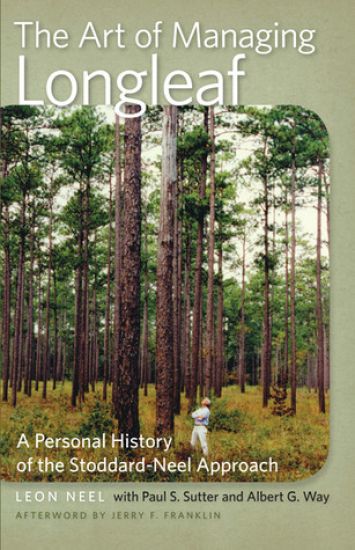
Greenwood Plantation in the Red Hills region of southwest Georgia includes a rare one-thousand-acre stand of old-growth longleaf pine woodlands, a remnant of an ecosystem that once covered close to ninety million acres across the Southeast. The Art of Managing Longleaf documents the sometimes controversial management system that not only has protected Greenwood’s “Big Woods” but also has been practiced on a substantial acreage of the remnant longleaf pine woodlands in the Red Hills and other parts of the Coastal Plain. Often described as an art informed by science, the Stoddard-Neel Approach combines frequent prescribed burning, highly selective logging, a commitment to a particular woodland aesthetic, intimate knowledge of the ecosystem and its processes, and other strategies to manage the longleaf pine ecosystem in a sustainable way. The namesakes of this method are Herbert Stoddard (who developed it) and his colleague and successor, Leon Neel (who has refined it). In addition to presenting a detailed, illustrated outline of the Stoddard-Neel Approach, the book—based on an extensive oral history project undertaken by Paul S. Sutter and Albert G. Way, with Neel as its major subject—discusses Neel’s deep familial and cultural roots in the Red Hills; his years of work with Stoddard; and the formation and early years of the Tall Timbers Research Station, which Stoddard and Neel helped found in the pinelands near Tallahassee, Florida, in 1958. In their introduction, environmental historians Sutter and Way provide an overview of the longleaf ecosystem’s natural and human history, and in his afterword, forest ecologist Jerry F. Franklin affirms the value of the Stoddard-Neel Approach.
Pharsalia, a plantation located in piedmont Virginia at the foot of the Blue Ridge Mountains, is one of the best-documented sites of its kind. Drawing on the exceptionally rich trove of papers left behind by the Massie family, Pharsalia's owners, this case study demonstrates how white southern planters paradoxically relied on capitalistic methods even as they pursued an ideal of agrarian independence. Lynn A. Nelson also shows how the contradictions between these ends and means would later manifest themselves in the southern conservation movement. Nelson follows the fortunes of Pharsalia's owners, telling how Virginia's traditional extensive agriculture contributed to the soil's erosion and exhaustion. Subsequent attempts to balance independence and sustainability through a complex system of crop rotation and resource recycling ultimately gave way to an intensive, slave-based form of agricultural capitalism. Pharsalia could not support the Massies' aristocratic ambitions, and it was eventually parceled up and sold off by family members. The farm's story embodies several fundamentals of modern U. S. environmental thought. Southerners' nineteenth-century quest for financial and ecological independence provided the background for conservationists' attempts to save family farming. At the same time, farmers' failure to achieve independence while maximizing profits and crop yields drove them to seek government aid and regulation. These became some of the hallmarks of conservation efforts in the New Deal and beyond.
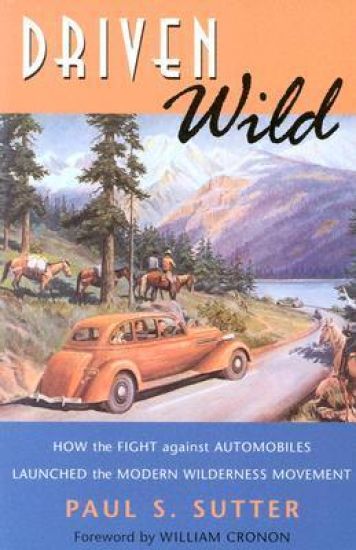
In its infancy, the movement to protect wilderness areas in the United States was motivated less by perceived threats from industrial and agricultural activities than by concern over the impacts of automobile owners seeking recreational opportunities in wild areas. Countless commercial and government purveyors vigorously promoted the mystique of travel to breathtakingly scenic places, and roads and highways were built to facilitate such travel. By the early 1930s, New Deal public works programs brought these trends to a startling crescendo. The dilemma faced by stewards of the nation's public lands was how to protect the wild qualities of those places while accommodating, and often encouraging, automobile-based tourism. By 1935, the founders of the Wilderness Society had become convinced of the impossibility of doing both. In Driven Wild, Paul Sutter traces the intellectual and cultural roots of the modern wilderness movement from about 1910 through the 1930s, with tightly drawn portraits of four Wilderness Society founders--Aldo Leopold, Robert Sterling Yard, Benton MacKaye, and Bob Marshall. Each man brought a different background and perspective to the advocacy for wilderness preservation, yet each was spurred by a fear of what growing numbers of automobiles, aggressive road building, and the meteoric increase in Americans turning to nature for their leisure would do to the country's wild places. As Sutter discovered, the founders of the Wilderness Society were "driven wild"--pushed by a rapidly changing country to construct a new preservationist ideal. Sutter demonstrates that the birth of the movement to protect wilderness areas reflected a growing belief among an important group of conservationists that the modern forces of capitalism, industrialism, urbanism, and mass consumer culture were gradually eroding not just the ecology of North America, but crucial American values as well. For them, wilderness stood for something deeply sacred that was in danger of being lost, so that the movement to protect it was about saving not just wild nature, but ourselves as well.