
Kirjojen hintavertailu – 12 859 829 kirjaa ja 27 kauppaa

Kirjailija

Paul Shield

Kirjat ja teokset yhdessä paikassa: 2 kirjaa, julkaisuja vuosilta 2014–2019, suosituimpiin kuuluu Family Mobility. Vertaile teosten hintoja ja tarkista saatavuus suomalaisista kirjakaupoista.

2 kirjaa

Kirjojen julkaisuvuodet: 2014–2019.

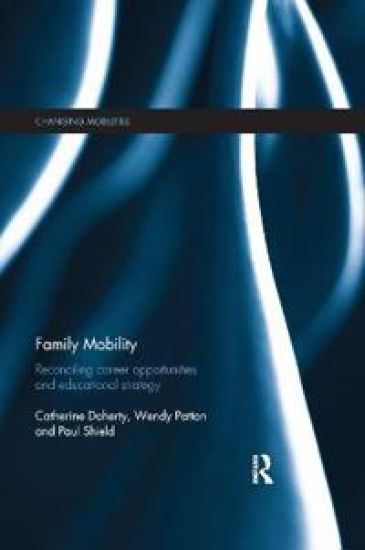
Family Mobility

Family Mobility

Catherine Doherty; Wendy Patton; Paul Shield

Routledge
2019
nidottu
Family mobility decisions reveal much about how the public and private realms of social life interact and change. This sociological study explores how contemporary families reconcile individual members’ career and education projects within the family unit over time and space, and unpacks the intersubjective constraints on workforce mobility. This Australian mixed methods study sampled Defence Force families and middle class professional families to illustrate how families’ educational projects are necessarily and deeply implicated in issues of workforce mobility and immobility, in complex ways. Defence families move frequently, often absorbing the stresses of moving through ‘viscous’ institutions as private troubles. In contrast, the selective mobility of middle class professional families and their ‘no go zones’ contribute to the public issue of poorly serviced rural communities. Families with different social, material and vocational resources at their disposal are shown to reflexively weigh the benefits and risks associated with moving differently. The book also explore how priorities shift as children move through educational phases. The families’ narratives offer empirical windows on larger social processes, such as the mobility imperative, the gender imbalance in the family’s intersubjective bargains, labour market credentialism, the social construction of place, and the family’s role in the reproduction of class structure.
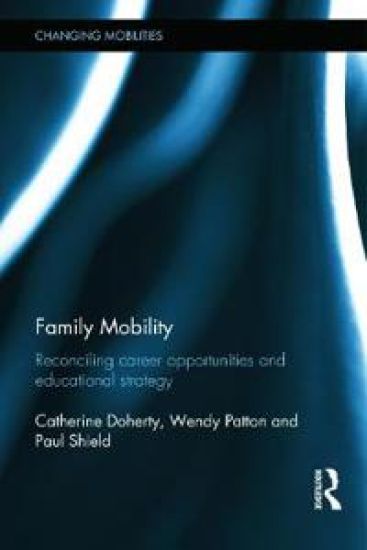
Family Mobility

Family Mobility

Catherine Doherty; Wendy Patton; Paul Shield

Routledge
2014
sidottu
Family mobility decisions reveal much about how the public and private realms of social life interact and change. This sociological study explores how contemporary families reconcile individual members’ career and education projects within the family unit over time and space, and unpacks the intersubjective constraints on workforce mobility. This Australian mixed methods study sampled Defence Force families and middle class professional families to illustrate how families’ educational projects are necessarily and deeply implicated in issues of workforce mobility and immobility, in complex ways. Defence families move frequently, often absorbing the stresses of moving through ‘viscous’ institutions as private troubles. In contrast, the selective mobility of middle class professional families and their ‘no go zones’ contribute to the public issue of poorly serviced rural communities. Families with different social, material and vocational resources at their disposal are shown to reflexively weigh the benefits and risks associated with moving differently. The book also explore how priorities shift as children move through educational phases. The families’ narratives offer empirical windows on larger social processes, such as the mobility imperative, the gender imbalance in the family’s intersubjective bargains, labour market credentialism, the social construction of place, and the family’s role in the reproduction of class structure.