Kirjojen hintavertailu – 12 859 819 kirjaa ja 27 kauppaa

Kirjailija

Paul Simpson

Kirjat ja teokset yhdessä paikassa: 38 kirjaa, julkaisuja vuosilta 1993–2026, suosituimpiin kuuluu Who Invented the Bicycle Kick?. Vertaile teosten hintoja ja tarkista saatavuus suomalaisista kirjakaupoista.

38 kirjaa

Kirjojen julkaisuvuodet: 1993–2026.

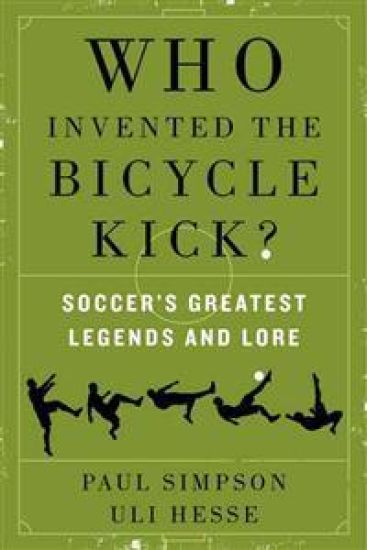
Who Invented the Bicycle Kick?

Who Invented the Bicycle Kick?

Paul Simpson; Uli Hesse

William Morrow Company
2014
nidottu
"Chock-full of nifty tidbits about the game we love." -- New York TimesDiscover the ultimate collection of soccer's greatest lore and legends, illustrated with 100 black-and-white photos, by two of the world's most knowledgeable soccer journalists. Uli Hesse and editor Paul Simpson bring together the sublime feats, legendary personalities, neglected heroes, bizarre twists of fate, and fascinating mysteries that have shaped the world's most popular game, including: Who invented the bicycle kick? Why does a football match last 90 minutes? Who scored the fastest goal ever? Which match produced the largest number of red cards? Why are seven dead cats buried under a stadium in Argentina? Which country was banned from the World Cup after refusing to play in shoes? Providing answers to more than 100 questions, Hesse and Simpson explore the beautiful game as never before, shedding new light on legends such as Pele, Maradona, Messi, Beckham, Ronaldo, and Rooney, and uncovering lost histories of international clubs like Manchester United, Chelsea, Aston Villa, Real Madrid, Bayern Munich, and more. Challenging conventional wisdom, and destroying a few urban myths, Who Invented the Bicycle Kick? is a must for every soccer lover.

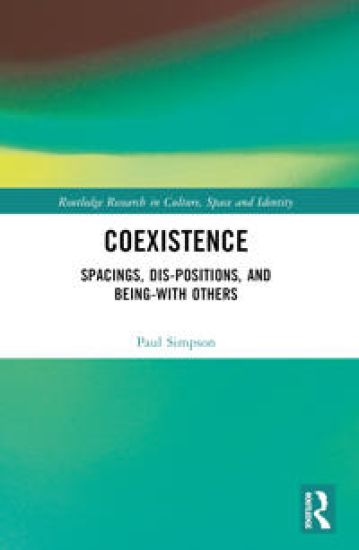
Coexistence

Coexistence

Paul Simpson

TAYLOR FRANCIS LTD
2026
nidottu
This book aims to develop an account of living together with difference which recognises the tension that we are inescapably with others – both human and non-human – but at the same time are always differing from and with those with whom we find ourselves. A concern for coexistence and questions over how we might live together have been raised and approached from a host of conceptual starting points in recent times, including via calls for a rethinking of communism today, the articulation of forms of ‘cosmopolitics’ or ‘pluralism’, the re-figuring of understandings of ecology as dark or feminist, amongst others. This book responds to such questions of coexistence by developing what it calls a ‘co-existential analytic’. In doing so, this book introduces a range of post-phenomenological thought which offers means for thinking about such questions of living together with difference. The thought of Emanuel Levinas on the face of the other, Jean-Luc Nancy on being as being-with, Roberto Esposito on the munis, and Michel Henry on pathic auto-affection are introduced and critically reflected upon in terms of what they offer for thinking about such coexistence. Alongside these conceptual starting points, a series of encounters - with cinema, everyday life, politics, and literature - are used to animate and illustration the discussion. Ultimately, the book argues for a ‘spacing’ of subjectivities with that world and those encountered within it. This book is intended primarily for researchers and postgraduate students interested in questions of identity, difference, and subjectivity. It will be of interest to those in the fields of social and cultural geography, sociology, social theory, and cultural studies.
Stylistics

Stylistics

Paul Simpson

TAYLOR FRANCIS LTD
2025
sidottu

Halvin toimitettuna 240,40 €

Written in a clear and accessible style, Stylistics, Third Edition is a comprehensive resource which covers all the major theories, concepts and methods required for the investigation of language in literature. From metre to metaphor, dialogue to discourse, the main topics are introduced and fully elaborated, as are the key research paradigms of this important and exciting field of study. Stylistics is richly illustrated with many examples from literary texts, including writing from the established literary canon alongside more contemporary work in poetry, prose and drama. Each of the book’s twelve chapters contains clearly framed suggestions for practical work and is accompanied by an original reading on the relevant topic by a world-renowned scholar. This exciting new third edition builds on the strengths of the first and second by adding fresh exercises and worked examples. It captures the major developments in stylistics, from earlier work that draws on syntax, semantics and phonology, to more recent approaches such as corpus, cognitive and multimodal approaches to the study of style. The accompanying online materials feature, amongst other things, useful links, worked examples and a strand on style and humour. This third edition brings in more texts from contemporary women writers and from writing in more diverse ‘Englishes’. In addition to the classic essays in stylistics contained in previous editions, this edition includes three new Section D readings to reflect more recent innovations in the field. Written by an experienced teacher and researcher, this accessible textbook is an essential resource for all students of English language, linguistics and literature.
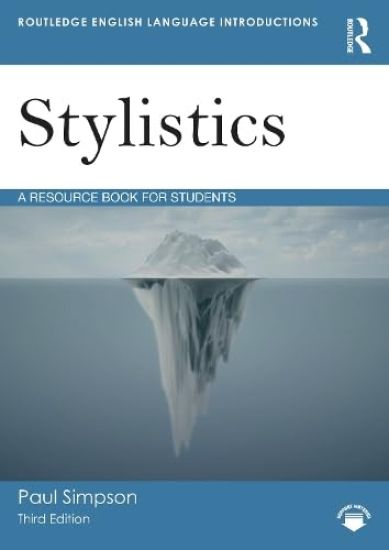
Stylistics

Stylistics

Paul Simpson

TAYLOR FRANCIS LTD
2025
nidottu

Halvin toimitettuna 64,60 €

Written in a clear and accessible style, Stylistics, Third Edition is a comprehensive resource which covers all the major theories, concepts and methods required for the investigation of language in literature. From metre to metaphor, dialogue to discourse, the main topics are introduced and fully elaborated, as are the key research paradigms of this important and exciting field of study. Stylistics is richly illustrated with many examples from literary texts, including writing from the established literary canon alongside more contemporary work in poetry, prose and drama. Each of the book’s twelve chapters contains clearly framed suggestions for practical work and is accompanied by an original reading on the relevant topic by a world-renowned scholar. This exciting new third edition builds on the strengths of the first and second by adding fresh exercises and worked examples. It captures the major developments in stylistics, from earlier work that draws on syntax, semantics and phonology, to more recent approaches such as corpus, cognitive and multimodal approaches to the study of style. The accompanying online materials feature, amongst other things, useful links, worked examples and a strand on style and humour. This third edition brings in more texts from contemporary women writers and from writing in more diverse ‘Englishes’. In addition to the classic essays in stylistics contained in previous editions, this edition includes three new Section D readings to reflect more recent innovations in the field. Written by an experienced teacher and researcher, this accessible textbook is an essential resource for all students of English language, linguistics and literature.
Ffion

Ffion

Paul Simpson

Independently Published
2025
Nidottu
Tervetuloa Pohjoismaiden suurimpaan verkkokirjakauppaan! Adlibris kannattaa sananvapautta, ja haluamme edistää kirjallisuuden ja tiedon saatavuutta.
Ffion

Ffion

Paul Simpson

Independently Published
2025
Nidottu
Tervetuloa Pohjoismaiden suurimpaan verkkokirjakauppaan! Adlibris kannattaa sananvapautta, ja haluamme edistää kirjallisuuden ja tiedon saatavuutta.
Violet

Violet

Paul Simpson

Independently Published
2025
Nidottu
Etsitkö jännitystä, uusia näkökulmia tai rentouttavaa lukuelämystä? Tutustu kirjakategorioihimme ja löydä seuraava suosikkikirjasi.
Coexistence

Coexistence

Paul Simpson

TAYLOR FRANCIS LTD
2024
sidottu
This book aims to develop an account of living together with difference which recognises the tension that we are inescapably with others – both human and non-human – but at the same time are always differing from and with those with whom we find ourselves. A concern for coexistence and questions over how we might live together have been raised and approached from a host of conceptual starting points in recent times, including via calls for a rethinking of communism today, the articulation of forms of ‘cosmopolitics’ or ‘pluralism’, the re-figuring of understandings of ecology as dark or feminist, amongst others. This book responds to such questions of coexistence by developing what it calls a ‘co-existential analytic’. In doing so, this book introduces a range of post-phenomenological thought which offers means for thinking about such questions of living together with difference. The thought of Emanuel Levinas on the face of the other, Jean-Luc Nancy on being as being-with, Roberto Esposito on the munis, and Michel Henry on pathic auto-affection are introduced and critically reflected upon in terms of what they offer for thinking about such coexistence. Alongside these conceptual starting points, a series of encounters - with cinema, everyday life, politics, and literature - are used to animate and illustration the discussion. Ultimately, the book argues for a ‘spacing’ of subjectivities with that world and those encountered within it. This book is intended primarily for researchers and postgraduate students interested in questions of identity, difference, and subjectivity. It will be of interest to those in the fields of social and cultural geography, sociology, social theory, and cultural studies.
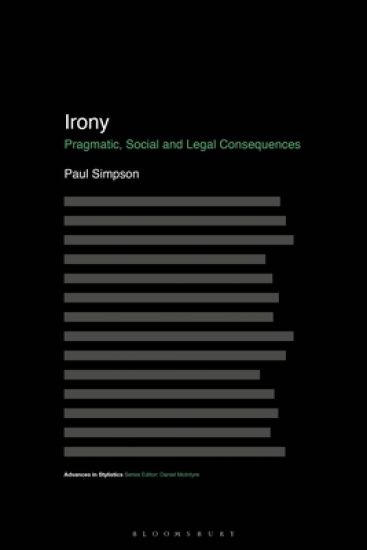
Irony

Irony

Paul Simpson

BLOOMSBURY PUBLISHING PLC
2024
sidottu
Underpinning many common types of discourse, such as humour, sarcasm, politeness and satire, irony forms a crucial part of our everyday social interactions. But how well do we really understand its use, effects and consequences? In this book, Paul Simpson develops a comprehensive stylistic-pragmatic framework for understanding the concept of irony and the way it functions in written and spoken language, across different social and cultural contexts. From the Guardian’s ‘victory for irony’ against Elton John to the tweet that sparked the Twitter Joke Trial, he showcases examples from the real world of language and communication to build an accessible model of irony, grounded in actual discursive events and their social and legal material outcomes. While we often consider irony to simply mean the opposite of what was said, Simpson reveals the full range of its theoretical complexities and nuances, shedding light on conferred irony, ironic belief and situational irony to uncover the true pragmatic meaning of everyday ironic utterances.
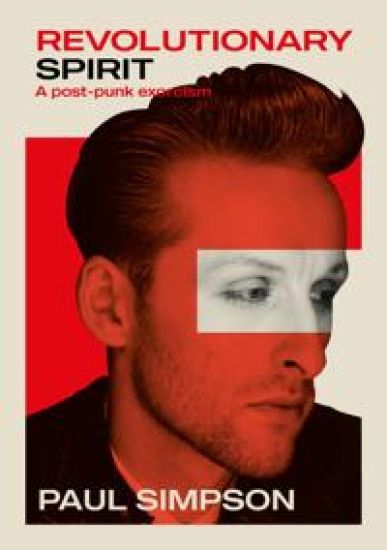
Revolutionary Spirit

Revolutionary Spirit

Paul Simpson

OUTLINE PRESS LTD
2023
nidottu
Part memoir, part social history, Revolutionary Spirit is the poignant, often hilarious story of a cult Liverpool musician s scenic route to fame and artistic validation. If Morrissey was the Oscar Wilde of the 1980s indie scene, Simpson was its William Blake, a self-destructive genius so lost in mystical visions of a new arcadia that he couldn t meet the rent. Simpson s career begins alongside fellow Liverpool luminaries Julian Cope, Ian McCulloch, Bill Drummond, Ian Broudie, Will Sergeant, Pete Wylie, Pete Burns, and Pete de Freitas at the infamous Eric s club, where, in 1976, he finds himself at the birth of the city s second great musical explosion. Along the way, he co-founds and christens the neo-psychedelic pop group The Teardrop Explodes, shares a flat with a teenage Courtney Love, and forms The Wild Swans, the indie band of choice for literary-minded teens in the early 1980s, who burn bright and brief, in the process recording one of the all-time great cult hit singles, Revolutionary Spirit . Marriage, fatherhood, and tropical illness follow, interspersed with artistic collaborations with Bill Drummond and members of The Brian Jonestown Massacre, among others. Following an onstage reunion with Cope at the Royal Festival Hall, Simpson discovers that seven thousand miles away, in the Philippines, he is considered a musical god. Presidential suites, armed guards, police escorts . . . you couldn t make it up, and, incredibly, he doesn t need to. Revolutionary Spirit marks the arrival of an original literary voice. It is the story of a musician driven by an unerring belief that artistic integrity will bring its own rewards, and an elliptical elegy to the ways it does.
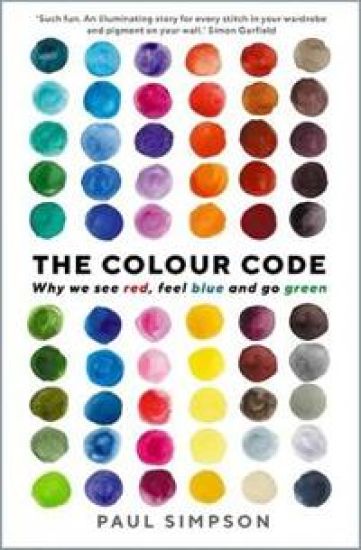
The Colour Code

The Colour Code

Paul Simpson

Profile Books Ltd
2021
nidottu
How is The Colour Code different to other books on colour? Well, the short answer is that it is a whole lot more fun - not least because it is extensively illustrated. We don't just get a story about Mummy Brown (the pigment made from Egyptian mummies), we see a painting created with pigments from the remains of French kings. We are reminded of the blue/gold dress that swept Twitter, view paintings by Mondrian (red ones sell for higher prices) and Van Eyck (he invented an enduring green), and inspect the red soles of Louboutin shoes. We see what lumps of Indian yellow look like, while reading what they are made of (strained cow's urine). We get to see the latest most vibrant pigment - YinMn Blue - and have a real estate agent's tour of Frank Sinatra's ranch (he was obsessed by orange). We see William Morris's arsenic-inflected wallpapers and hear about whether wallpaper killed Napoleon. We encounter the pink pussy hats worn on the Women's March and Elvis's pink jackets from Lansky's in Memphis, take in a history of the black dress from Audrey Hepburn to Princess Diana and a rare black chicken (even its eggs are black) from Indonesia. Featuring a cast of actors, artists, chemists, composers, dentists, dictators, fashion designers, film-makers, gods, musicians, mystics, physicists, poets, quacks, tigers and tycoons, The Colour Code will change the way we all perceive the spectrum - and see the world.
The Wrecks of HM Frigates Assurance (1753) & Pomone (1811)

The Wrecks of HM Frigates Assurance (1753) & Pomone (1811)

John Bingeman; Paul Simpson; David Tomalin

Oxbow Books
2021
sidottu
With the thought of treasure, Isle of Wight islander, Derek Williams researched ancient local wreck records. Top of his extensive wreck list was the 40-gun frigate Assurance lost in 1753 while returning from Jamaica with Governor Trelawny on board, whose story possibly inspired Robert Louis Stevenson to write Treasure Island. Derek’s first dive at the western point of the Isle of Wight called “The Needles” put him on top of cannons, various wreckage and Spanish-American “Pieces of Eight”, all scattered at the foot of the rock face. He reported this astonishing discovery to the authorities which resulted in the site being designated the 6th British historic protected wreck site. When the authorities decided that further professional help was needed, author and diver John Bingeman supplied his Portsmouth Royal Naval diving team, and together with David Tomalin, County Archaeologist, developed the full potential of this important site. Over the next nine years John Bingeman’s team conducted annual visits to excavate the site; they successfully recovered 3,471 artefacts including cannon weighing 1½ tons. Some of these cannon post-dated the Assurance, leading to the identification of a second 38-gun frigate, the Pomone, lost in 1811. Her Captain, Robert Barrie’s extensive correspondence was discovered by Paul Simpson to have been archived by Duke University, North Carolina. It features Pomone’s continuous actions during the French Napoleonic wars, followed by his appointment to the 74-gun Dragon when he saw action in Chesapeake Bay during the 1812-15 war with the USA. Returning to North America as Senior Naval Officer Canada, Commodore Barrie made quite a name for himself improving the political relationship between the USA and Canada; he is remembered by the Canadian City named Barrie. Previously un-researched archaeological finds are featured, including the development of rigging blocks, gunlocks, military buttons and ship’s chain pumps, all superbly illustrated, as well as the results of research into numerous other artefacts of the period. Appendices contain the transcripts of the two ship’s court martials and make fascinating reading. Captains seem to be blameless while their navigating officers are held responsible even going to prison. Perhaps not surprising when tried by fellow Captains!
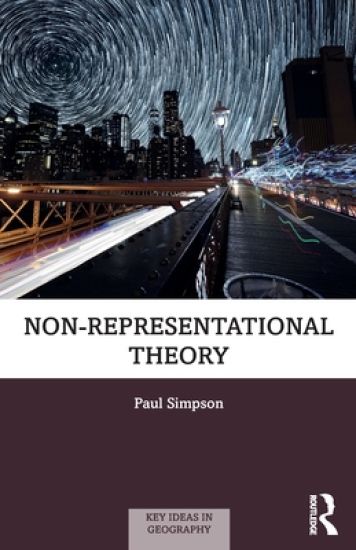
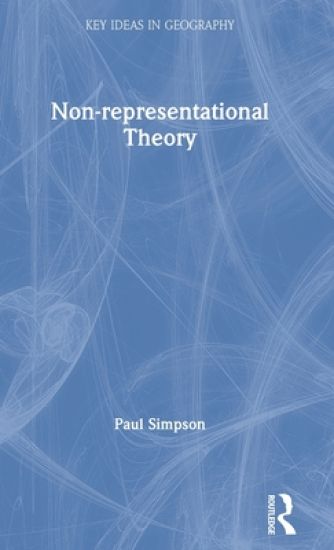
Non-representational Theory

Non-representational Theory

Paul Simpson

Routledge
2020
nidottu
Non-representational Theory explores a range of ideas which have recently engaged geographers and have led to the development of an alternative approach to the conception, practice, and production of geographic knowledge. Non-representational Theory refers to a key body of work that has emerged in geography over the past two and a half decades that emphasizes the importance of practice, embodiment, materiality, and process to the ongoing formation of social life. This title offers the first sole-authored, accessible introduction to this work and its impact on geography. Without being prescriptive the text provides a general explanation of what Non-representational Theory is. This includes discussion of the disciplinary context it emerged from, the key ideas and themes that characterise work associated with Non-representational Theory, and the theoretical points of reference that inspires it. The book then explores a series of conjunctions of ‘Non-representational Theory and...’, taking an area of geographic enquiry and exploring the impact Non-representational Theory has had on how it is researched and understood. This includes the relationships between Non-representational Theory and Practice, Affect, Materiality, Landscape, Performance, and Methods. Critiques of Non-representational Theory are also broached, including reflections on issues on identity, power, and difference. The text draws together the work of a range of established and emerging scholars working on the development of non-representational theories, allowing scholars from geography and other disciplines to access and assess the animating potential of such work. This volume is essential reading for undergraduates and post-graduate students interested in the social, cultural, and political geographies of everyday living.
Non-representational Theory

Non-representational Theory

Paul Simpson

Routledge
2020
sidottu
Non-representational Theory explores a range of ideas which have recently engaged geographers and have led to the development of an alternative approach to the conception, practice, and production of geographic knowledge. Non-representational Theory refers to a key body of work that has emerged in geography over the past two and a half decades that emphasizes the importance of practice, embodiment, materiality, and process to the ongoing formation of social life. This title offers the first sole-authored, accessible introduction to this work and its impact on geography. Without being prescriptive the text provides a general explanation of what Non-representational Theory is. This includes discussion of the disciplinary context it emerged from, the key ideas and themes that characterise work associated with Non-representational Theory, and the theoretical points of reference that inspires it. The book then explores a series of conjunctions of ‘Non-representational Theory and...’, taking an area of geographic enquiry and exploring the impact Non-representational Theory has had on how it is researched and understood. This includes the relationships between Non-representational Theory and Practice, Affect, Materiality, Landscape, Performance, and Methods. Critiques of Non-representational Theory are also broached, including reflections on issues on identity, power, and difference. The text draws together the work of a range of established and emerging scholars working on the development of non-representational theories, allowing scholars from geography and other disciplines to access and assess the animating potential of such work. This volume is essential reading for undergraduates and post-graduate students interested in the social, cultural, and political geographies of everyday living.
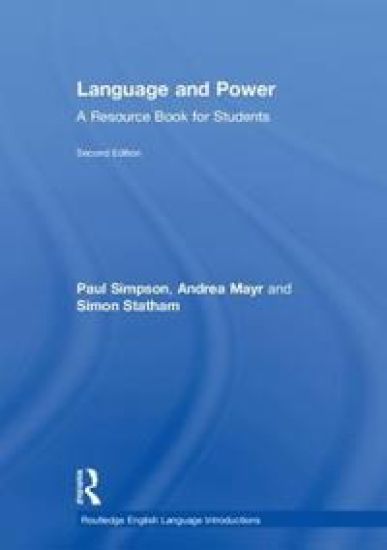
Language and Power

Language and Power

Paul Simpson; Andrea Mayr; Simon Statham

Routledge
2018
sidottu
Routledge English Language Introductions cover core areas of language study and are one-stop resources for students. Assuming no prior knowledge, books in the series offer an accessible overview of the subject, with activities, study questions, sample analyses, commentaries and key readings – all in the same volume. The innovative and flexible ‘two-dimensional’ structure is built around four sections – introduction, development, exploration and extension – which offer self-contained stages for study. Each topic can also be read across these sections, enabling the reader to build gradually on the knowledge gained. Language and Power, Second Edition has been completely revised and updated and includes:a comprehensive survey of the ways in which language intersects and connects with the social, cultural and political aspects of power;an introduction to the history of the field, covering all the major approaches, theoretical concepts and methods of analysis in this important and developing area of academic study;coverage of all the ‘traditional’ topics, such as race, gender and institutional power, but also newer topics such as the discourse of post-truth, and the power of social media;readings from works by seminal figures in the field, such as Robin Lakoff, Deborah Cameron and Teun van Dijk;real texts and examples throughout, including advertisements from cosmetics companies; newspaper articles and headlines; websites and internet media; and spoken dialogues such as political and presidential speeches;a supporting companion website that aims to challenge students at a more advanced level and which features extra reading, exercises, follow-up activities, and suggestions for further work. Language and Power will be essential reading for students studying English language or linguistics.
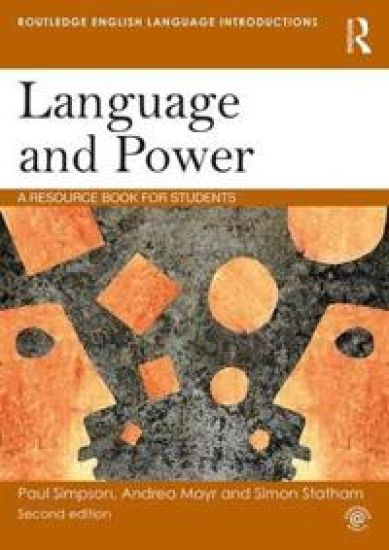
Language and Power

Language and Power

Paul Simpson; Andrea Mayr; Simon Statham

Routledge
2018
nidottu
Routledge English Language Introductions cover core areas of language study and are one-stop resources for students. Assuming no prior knowledge, books in the series offer an accessible overview of the subject, with activities, study questions, sample analyses, commentaries and key readings – all in the same volume. The innovative and flexible ‘two-dimensional’ structure is built around four sections – introduction, development, exploration and extension – which offer self-contained stages for study. Each topic can also be read across these sections, enabling the reader to build gradually on the knowledge gained. Language and Power, Second Edition has been completely revised and updated and includes:a comprehensive survey of the ways in which language intersects and connects with the social, cultural and political aspects of power;an introduction to the history of the field, covering all the major approaches, theoretical concepts and methods of analysis in this important and developing area of academic study;coverage of all the ‘traditional’ topics, such as race, gender and institutional power, but also newer topics such as the discourse of post-truth, and the power of social media;readings from works by seminal figures in the field, such as Robin Lakoff, Deborah Cameron and Teun van Dijk;real texts and examples throughout, including advertisements from cosmetics companies; newspaper articles and headlines; websites and internet media; and spoken dialogues such as political and presidential speeches;a supporting companion website that aims to challenge students at a more advanced level and which features extra reading, exercises, follow-up activities, and suggestions for further work. Language and Power will be essential reading for students studying English language or linguistics.