Kirjojen hintavertailu – 12 859 824 kirjaa ja 27 kauppaa

Kirjailija

Paul Stephenson

Kirjat ja teokset yhdessä paikassa: 39 kirjaa, julkaisuja vuosilta 2000–2027, suosituimpiin kuuluu Apex. Vertaile teosten hintoja ja tarkista saatavuus suomalaisista kirjakaupoista.

39 kirjaa

Kirjojen julkaisuvuodet: 2000–2027.

Sleepwalk City

Sleepwalk City

Paul Stephenson

Hollow Stone Press
2024
pokkari
Surviving the end of the world was just the beginning. Now the battle for control has begun. On a flight back to her family, Lydia is too busy trying to ignore the annoying passenger next to her to notice the sky filling with lights. Three months later she is alone in a desolate world, moving from one town to the next, trying to survive. When she enters the ruined city of York, she finds more than she bargained for. Ex-student turned revolutionary hero Tom, grieving and broken, has passed the last three months trying to keep himself and his people together. Now he will have to protect them from a new government force, hellbent on rebuilding at a cost too terrible to comprehend. Jen and Mira, reeling from their encounter with a homicidal maniac, flee into the wilds to escape. Soon they find themselves running from a very different enemy. Ex-detective Burnett, separated from his friends by chance, sees himself drawn into an investigation that will take him to the heart of the fight against this new government. Sleepwalk City is the pulse-quickening sequel to the bestselling British apocalyptic horror Blood on the Motorway. If you love edge-of-the-seat action, end-of-the-world tension, and characters you'll be rooting for with every turn of the page, you'll love the second instalment in Paul Stephenson's thrilling trilogy. Buy Sleepwalk City today to find out who will prevail in the battle for humanity's future.

Blood on the Motorway

Blood on the Motorway

Paul Stephenson

Hollow Stone Press
2024
pokkari
An apocalyptic storm. A killer on the loose. The battle for humanity's survival starts here. Tom is a layabout ex-student waiting for his life to start or the power to get cut off, whichever comes first. Jen works two jobs, hates both, and most days is too hungover to deal with either. Detective Burnett is trying to work out who the hell turned his sleepy Yorkshire village into a murder town. When the skies fill with a mysterious storm, each of them wakes to find streets filled with dead. The world they knew has gone, and their old lives with it. Tom finds himself at the mercy of a deranged soldier, Jen has to flee the fires burning her city to the ground, and Burnett must track down a killer who sees the apocalypse as an opportunity for more mayhem. If they can't band together, the fate of what remains of humanity hangs in the balance. Blood on the Motorway is the first in the British apocalyptic horror trilogy readers have called "gripping from the first page''. If you love edge-of-the-seat action, end-of-the-world tension, and characters you'll be rooting for with every turn of the page, you'll love the first instalment in Paul Stephenson's apocalyptic trilogy. Pick up Blood on the Motorway today to start the epic journey of murder at the world's end.
New Rome: The Empire in the East

New Rome: The Empire in the East

Paul Stephenson

Belknap Press
2023
nidottu
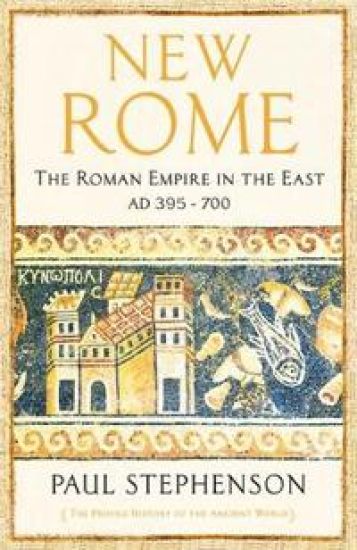
A Times of London Book of the Year Longlisted for the Runciman Award "The most compelling fusion yet of narrative history with the recent findings of environmental research and scientific data. It will change the way we understand key events and transformations in the Eastern Empire."--Anthony Kaldellis, author of Romanland " A] major contribution... Brings the world of New Rome alive with exceptional learning and a magnificent openness to modern scientific methods that breathe life into conventional narratives of political and social history."--Peter Brown, New York Review of Books "A sweeping survey of the disintegration of the western Roman empire and the emergence of Byzantium... This impressive chronicle offers an eye-opening perspective on a period of dramatic change."--Publishers Weekly Long before Rome fell to the Ostrogoths in 476 AD, a new city had risen to take its place as the beating heart of the empire, the glittering Constantinople, known as New Rome. In this strikingly original account of the collapse of the Western Roman Empire and emergence of Byzantium, Paul Stephenson offers a new interpretation of the forces that coalesced--dynastic, religious, climactic--to shift the center of power to the east. His novel, scientifically minded interpretation of antiquity's end presents evidence found not only in parchments and personalities, but also in ice cores and DNA. From 395 to 700 AD, the empire in the east was subjected to a series of invasions and pandemics, confronting natural disasters and outbreaks in pathogens previously unknown to the empire's densely populated, unsanitary cities. Politics, war, and religious strife sparked by the rise of Islam drove the transformation of Eastern Rome, but they do not tell the whole story. Deftly braiding the political history of the empire together with its material, environmental, and epidemiological history, New Rome offers a surprising new explanation of why Rome fell and how the Eastern Empire became Byzantium.
Hard Drive

Hard Drive

Paul Stephenson

CARCANET PRESS LTD
2023
nidottu
Shortlisted for the Polari Book Prize 2024. Shortlisted for the Gay Poetry Lammy Award 2024. When his partner suddenly died, life changed utterly for Paul Stephenson. Hard Drive is the outcome of his revisiting a world he thought he knew, but which had been upended. In poems that are affectionate, self-examining, sometimes funny and often surprised by grief in the oddest corners, the poet takes us through rooms, routines, and rituals of bereavement, the memory of love, a shared life and separation. A noted formalist, with a flair for experiment, pattern and the use of constraints, Stephenson has written a remarkable first book, moving and, despite everything, a hopeful record of a gay relationship. It is also a landmark elegy collection.
New Rome

New Rome

Paul Stephenson

Profile Books Ltd
2022
sidottu
A TIMES HISTORY BOOK OF THE YEAR 'Conventional histories of the last days of the Roman Empire will no longer suffice after you read this book.' Averil Cameron, author of Byzantine Matters 'Fascinating ... illuminating ... Stephenson examines ordinary life, painting a vivid and intriguing picture.' The Times 'Brings the world of New Rome alive with exceptional learning and a magnificent openness to modern scientific methods that breathe life into conventional narratives of political and social history.' The New York Review of Books Long before Rome fell to the Ostrogoths in AD 476, a new city had risen to take its place as the beating heart of a late antique empire, the glittering Constantinople: New Rome. In this magisterial work, Professor Paul Stephenson charts the centuries surrounding this epic shift of power. He traces the cultural, social and political forces that led to the empire being ruled from a city straddling Europe and Asia, placing all into a rich natural and environmental context informed by the latest scientific research. Blending narrative with analysis, he shows how the city and empire of New Rome survived countless attacks and the rise of Islam. By the end, the wide world of linked cities had changed into a world founded on new ideas about government and God, art and war, and the very future of a Christian empire: Byzantium.
The Tenth: 7 Steps to Taking Back Control of Your Money and Being a Faithful Steward
Have you ever noticed how it always seems to be the "season for giving"? Giving to the church for stewardship; giving gifts for Christmas; giving thanks on Thanksgiving; giving presents for birthdays, anniversaries, showers, and all those other "special" occasions. With all this giving, did you ever wonder where the money tree is so you could afford all this giving? This quick read book offers some suggestions and commentary on how we look at giving and ways to make it affordable.
The Serpent Column

The Serpent Column

Paul Stephenson

Oxford University Press Inc
2016
sidottu
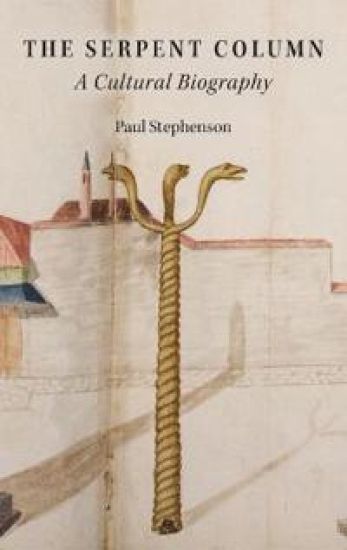
The Serpent Column, a bronze sculpture that has stood in Delphi and Constantinople, today Istanbul, is a Greek representation of the Near Eastern primordial combat myth: it is Typhon, a dragon defeated by Zeus, and also Python slain by Apollo. The column was created after the Battle of Plataia (479BC), where the sky was dominated by serpentine constellations and by the spiralling tails of the Milky Way. It was erected as a votive for Apollo and as a monument to the victory of the united Greek poleis over the Persians. It is as a victory monument that the column was transplanted to Constantinople and erected in the hippodrome. The column remained a monument to cosmic victory through centuries, but also took on other meanings. Through the Byzantine centuries these interpretation were fundamentally Christian, drawing upon serpentine imagery in Scripture, patristic and homiletic writings. When Byzantines saw the monument they reflected upon this multivalent serpentine symbolism, but also the fact that it was a bronze column. For these observers, it evoked the Temple's brazen pillars, Moses' brazen serpent, the serpentine tempter of Genesis (Satan), and the beast of Revelation. The column was inserted into Christian sacred history, symbolizing creation and the end times. The most enduring interpretation of the column, which is unrelated to religion, and therefore survived the Ottoman capture of the city, is as a talisman against snakes and snake-bites. It is this tale that was told by travellers to Constantinople throughout the Middle Ages, and it is this story that is told to tourists today who visit Istanbul. In this book, Paul Stephenson twists together multiple strands to relate the cultural biography of a unique monument.
Construction Planning

Construction Planning

David Neale; Richard H Neale; Paul Stephenson

ICE Publishing
2016
nidottu
Construction Planning, 2nd Edition is a thorough guide to the use of planning techniques, key concepts and the latest developments in the field of project planning. It explores the construction planning process in the digital age by taking a closer look at the most effective principles and practice, including the latest technological developments to support the successful delivery of projects. This well-illustrated book provides students, and those needing a foundation in this specific aspect of project management with clear, straightforward and concise explanations of the processes and techniques required for the effective planning and control of construction projects. Construction Planning, 2nd Edition: describes the principal planning techniques - bar charts, network analysis, line-of-balance and linear programmes - that make up the ‘planners’ toolbox’explains the practical application of these techniquesprovides guidance on techniques for scheduling and controlling resourcesuses both manual and computer methods of analysis to demonstrate how these techniques can be used for planning, monitoring and controlling the construction works and the resources involved • explores international and UK case studies in detail, providing worked
Management Systems for Construction

Management Systems for Construction

Alan Griffith; Paul Stephenson; Paul Watson

Routledge
2016
sidottu
The book provides a concise focussed guide to the main management areas that are essential to the success of modern construction projects. The concepts, principles and applications in the seven main management areas that are essential to the success of construction projects are presented. It links in with The CIOB's Education Framework is recommended reading for The CIOB.
Constantine

Constantine

Paul Stephenson

Quercus Publishing
2011
pokkari
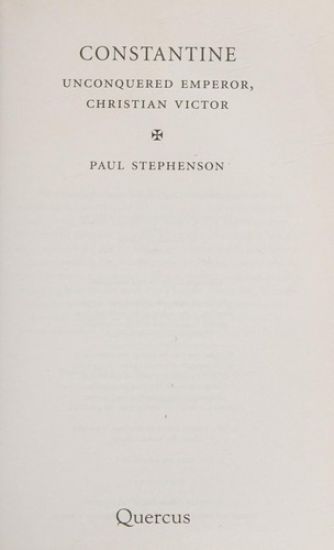
Constantine is a masterly survey of the life and enduring legacy of the greatest and most unjustly ignored of the later Roman emperors - from a richly gifted young British historian. In 312, Constantine - one of four Roman emperors ruling a divided empire - marched on Rome to establish his sole control of its western half. Having claimed the imperial capital for himself, he then converted to Christianity and led its emergence from the shadows, its adherents no longer persecuted. Constantine founded Constantinople on the site of the ancient trading colony of Byzantium, a new Christian capital set apart from Rome's pagan past. Thereafter the Christian Roman Empire endured in the East as Byzantium, while Rome itself fell to the barbarian hordes in AD 476. Paul Stephenson offers a nuanced and deeply satisfying account of a man whose cultural and spiritual renewal of the Roman Empire gave birth to the historically crucial idea of a unified Christian Europe. In Constantine, a seminal figure in the political and cultural history of the West has at last found the biographer he deserves.
The Legend of Basil the Bulgar-Slayer

The Legend of Basil the Bulgar-Slayer

Paul Stephenson

Cambridge University Press
2010
pokkari
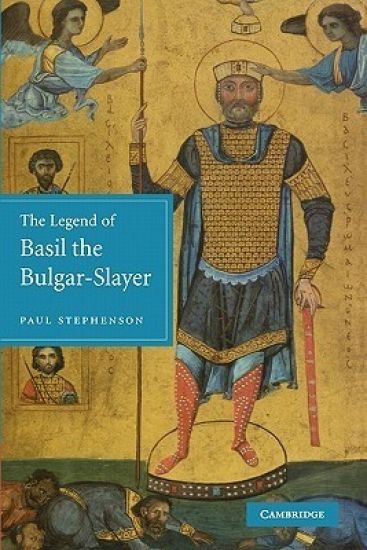
The reign of Basil II (976–1025), the longest of any Byzantine emperor, has long been considered as a 'golden age', in which his greatest achievement was the annexation of Bulgaria. This, we have been told, was achieved through a long and bloody war of attrition which won Basil the grisly epithet Voulgartoktonos, 'the Bulgar-slayer'. In this 2003 study Paul Stephenson argues that neither of these beliefs is true. Instead, Basil fought far more sporadically in the Balkans and his reputation as 'Bulgar-slayer' was created only a century and a half later. Thereafter the 'Bulgar-slayer' was periodically to play a galvanizing role for the Byzantines, returning to centre-stage as Greeks struggled to establish a modern nation state. As Byzantium was embraced as the Greek past by scholars and politicians, the 'Bulgar-slayer' became an icon in the struggle for Macedonia (1904–1908) and the Balkan Wars (1912–1913).
Analyzing the European Union Policy Process

Analyzing the European Union Policy Process

Esther Versluis; Mendeltje van Keulen; Paul Stephenson

Red Globe Press
2010
sidottu
Readers are provided with a practical insight into how to analyze policies and policy-making in the EU. Using case studies to deepen readers' understanding, this book examines the various stages of the policy process - from the moment the issue reaches the agenda through to drafting, implementation and evaluation.
Analyzing the European Union Policy Process

Analyzing the European Union Policy Process

Esther Versluis; Mendeltje van Keulen; Paul Stephenson

Red Globe Press
2010
nidottu
Readers are provided with a practical insight into how to analyze policies and policy-making in the EU. Using case studies to deepen readers' understanding, this book examines the various stages of the policy process - from the moment the issue reaches the agenda through to drafting, implementation and evaluation.
Byzantium's Balkan Frontier

Byzantium's Balkan Frontier

Paul Stephenson

Cambridge University Press
2006
pokkari
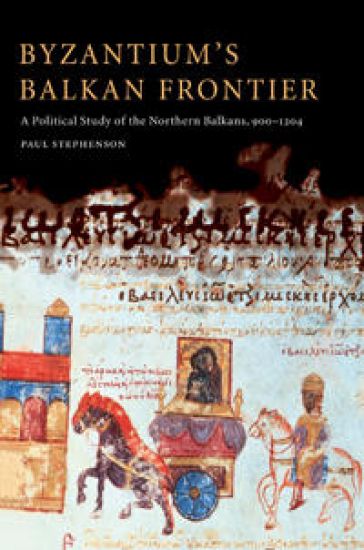
Byzantium's Balkan Frontier is the first narrative history in English of the northern Balkans in the tenth to twelfth centuries. Where previous histories have been concerned principally with the medieval history of distinct and autonomous Balkan nations, this study regards Byzantine political authority as a unifying factor in the various lands which formed the empire's frontier in the north and west. It takes as its central concern Byzantine relations with all Slavic and non-Slavic peoples - including the Serbs, Croats, Bulgarians and Hungarians - in and beyond the Balkan Peninsula, and explores in detail imperial responses, first to the migrations of nomadic peoples, and subsequently to the expansion of Latin Christendom. It also examines the changing conception of the frontier in Byzantine thought and literature through the middle Byzantine period.
Byzantium's Balkan Frontier

Byzantium's Balkan Frontier

Paul Stephenson

Cambridge University Press
2000
sidottu
Byzantium’s Balkan Frontier is the first narrative history in English of the northern Balkans in the tenth to twelfth centuries. Where previous histories have been concerned principally with the medieval history of distinct and autonomous Balkan nations, this study regards Byzantine political authority as a unifying factor in the various lands which formed the empire’s frontier in the north and west. It takes as its central concern Byzantine relations with all Slavic and non-Slavic peoples - including the Serbs, Croats, Bulgarians and Hungarians - in and beyond the Balkan Peninsula, and explores in detail imperial responses, first to the migrations of nomadic peoples, and subsequently to the expansion of Latin Christendom. It also examines the changing conception of the frontier in Byzantine thought and literature through the middle Byzantine period.
Management Systems for Construction

Management Systems for Construction

Alan Griffith; Paul Stephenson; Paul Watson

Longman
2000
nidottu
The book provides a concise focussed guide to the main management areas that are essential to the success of modern construction projects. The concepts, principles and applications in the seven main management areas that are essential to the success of construction projects are presented. It links in with The CIOB's Education Framework is recommended reading for The CIOB.