Kirjojen hintavertailu – 12 903 725 kirjaa ja 27 kauppaa

Kirjailija

Paul Strangio

Kirjat ja teokset yhdessä paikassa: 6 kirjaa, julkaisuja vuosilta 2002–2026, suosituimpiin kuuluu The Alchemy of Leadership. Vertaile teosten hintoja ja tarkista saatavuus suomalaisista kirjakaupoista.

6 kirjaa

Kirjojen julkaisuvuodet: 2002–2026.

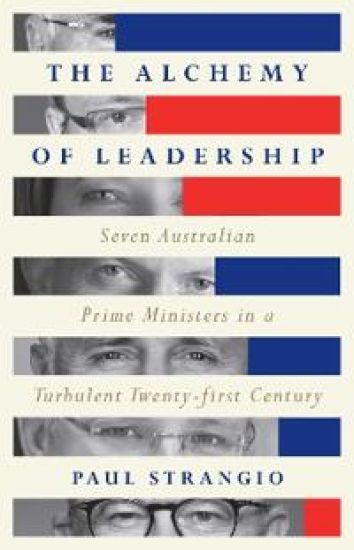
The Alchemy of Leadership

The Alchemy of Leadership

Paul Strangio

MELBOURNE UNIVERSITY PRESS
2026
nidottu
For most of the twenty-first century, Australia's national politics has been characterised by tumult and disruption: seven prime ministers; stagnation in key policy areas; dwindling support for the established parties; insurgencies on the left and right flanks; and declining public trust in government and the democratic system itself. The flux is occurring in the context of a global democratic winter, exemplified by the rise of strongman populists who foment and feed on public grievance. It is an era in which the power of leaders to make and unmake the world is vividly on display. Understanding those who govern us is an urgent task. In The Alchemy of Leadership, Paul Strangio examines the formative experiences, personality traits, world views and leadership styles of prime ministers of the last quarter century. How much of the instability of the period has been due to these individual office holders? Why has political leadership been so confounding? Strangio's study reveals how a homegrown version of conservative populism was smuggled into mainstream politics from the beginning of the century, which had a catalytic effect on both major parties. The 2025 federal election represented a watershed in the repudiation of that kind of politics. The centre held - Australia's mostly unremarked democratic exceptionalism emerged resilient. Yet brave and judicious leadership will be vital if the country is to continue as a safe harbour when democracy is besieged globally.
The Pivot of Power

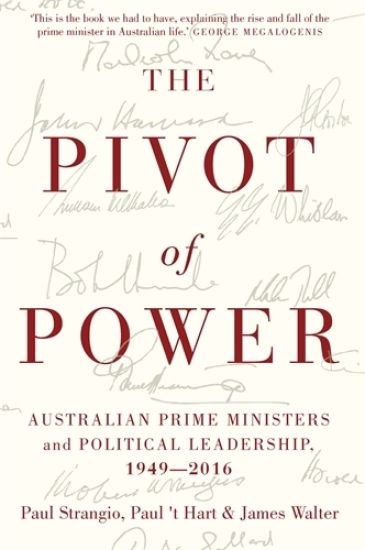
The Pivot of Power

Paul Strangio; Paul 't Hart; James Walter

The Miegunyah Press
2017
sidottu
The prime ministership remains the main prize in Australian politics, but it is a precarious one. Leadership turnover in recent years has seen more prime ministers rise and fall than at any time since the decade after federation. What explains this volatility? The Pivot of Power is the second volume in a unique blend of collective biography and institutional history that shows the skills, limitations and passions of incumbents are only part of the story. The ways in which prime ministers thrive and fail are influenced by the resources at their command, the evolving nature of the parties they lead, the daunting public expectations they face under a relentless media gaze, and the challenges that history throws at them. Recent changes in these areas have had a destabilising effect and made the role of prime minister more onerous than ever. After decades of strong national leadership, the office has rarely seemed quite so confounding as it does for its contemporary holders. The Pivot of Power explains how this has come about. And its rich account of prime-ministerial fortune since the mid-twentieth century yields historical lessons for overcoming the current malaise.
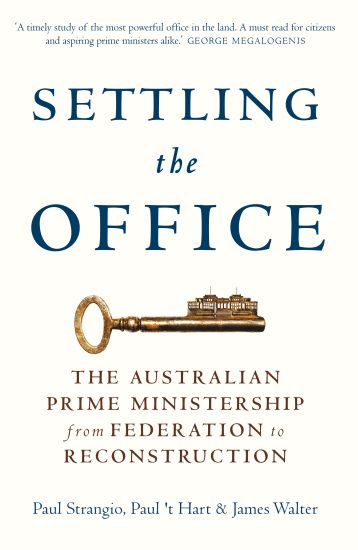
Settling the Office

Settling the Office

Paul Strangio; Paul 't Hart; James Walter

The Miegunyah Press
2016
sidottu
The prime ministership is indisputably the most closely observed and keenly contested office in Australia. How did it grow to become the pivot of national political power? Settling the Office chronicles the development of the prime ministership from its rudimentary early days following Federation through to the powerful, institutionalised prime-ministerial leadership of the postwar era.
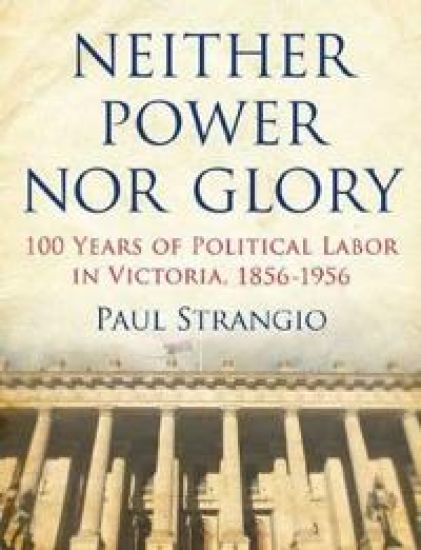
Neither Power Nor Glory

Neither Power Nor Glory

Paul Strangio

Melbourne University Press
2012
pokkari
When Frank Hardy published Power Without Glory, his notorious novel about corruption and venality in the Victorian Labor Party, it quickly came to be seen as a true account of the party. Until now, there has been no authoritative chronicle of the struggles of political Labor in Victoria, from its origins in the mid-nineteenth century through to the calamitous split of the 1950s. By conventional measures these were fallow years. Ensnared by the colony’s powerful liberal protectionist tradition in the late nineteenth century, Victorian Labor then found itself hindered by a grossly unfair electoral system and the lack of a constituency outside Melbourne’s industrial suburbs. But exile from government also meant that the party developed its own distinctive traditions and culture. It was a unique and intriguing species among the state Labor parties. Meticulously researched and elegantly written, Neither Power Nor Glory fills an important gap in Australian political history and our understanding of the Labor Party. It is also a timely antidote to nostalgia about Labor’s past. In Victoria at least, that past was anything but golden.
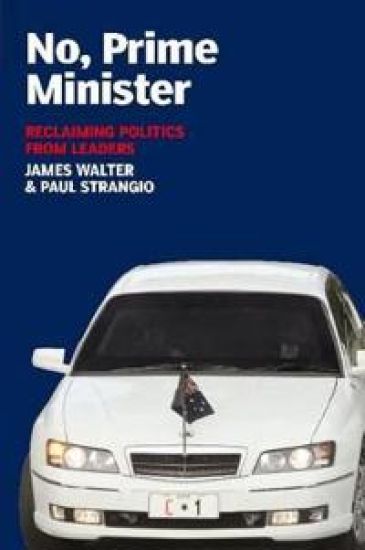
No, Prime Minister

No, Prime Minister

Paul Strangio; James Walter

NewSouth Publishing
2007
nidottu
Leadership has become the principal lingua franca of politics. Prime ministers now occupy the centre of the nations political universe. But what are the causes and implications of the sharpening of prime ministerial power? Is untrammelled leadership consistent with democracy? And how is it related to the growing incumbency advantages enjoyed by governments? In this important appraisal of recent Australian political life, James Walter and Paul Strangio analyse the performances of five prime ministers (Whitlam, Fraser, Hawke, Keating and Howard) against the background of institutional changes to the political system that have been in train over the past three decades. The authors also look forward, to ask whether a new prime minister, such as Kevin Rudd, would reverse these trends, and to suggest ways to counter the detrimental vogue for leadership-centric politics.
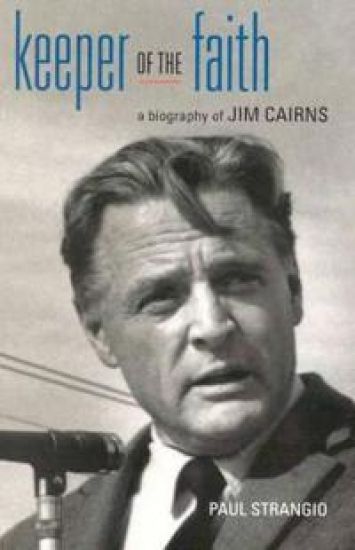
Keeper of the Faith

Keeper of the Faith

Paul Strangio

Melbourne University Press
2002
sidottu
Jim Cairns, former Deputy Prime Minister of Australia, is a familiar sight around the markets of Melbourne, seated at a card table stacked with copies of his latest book. It's an unlikely occupation for a man who was once the major thinker and driving force behind the ideals and policies of Australia's most reformist government. In this mature and sophisticated biography, Paul Strangio reveals a consistent thread running through the apparent contradictions of Cairns's career. He explains how a policeman turned into a counter-culture guru; how an opponent of capitalism became Minister for Trade; how a devoted husband could feel 'a kind of love' for Juni Morosi. In this highly readable and carefully researched book, Strangio argues that Cairns' contributions to public life have been seriously understimated. Drawing on a rich range of archival and oral sources, and recounting many fascinating anecdotes, this is a masterly portrait of one of those rare people who never stop in their quest for truth.