Kirjojen hintavertailu – 12 903 725 kirjaa ja 27 kauppaa

Kirjailija

Paul 't Hart

Kirjat ja teokset yhdessä paikassa: 13 kirjaa, julkaisuja vuosilta 1996–2026, suosituimpiin kuuluu Understanding Public Leadership. Vertaile teosten hintoja ja tarkista saatavuus suomalaisista kirjakaupoista.

Nimi esiintyy myös muodoissa: Paul T Hart, Paul ‘t Hart

13 kirjaa

Kirjojen julkaisuvuodet: 1996–2026.

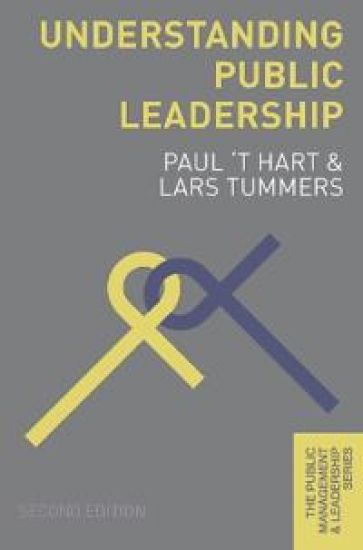
Understanding Public Leadership

Understanding Public Leadership

Paul 't Hart; Lars Tummers

Red Globe Press
2019
nidottu

Halvin toimitettuna 46,50 €

A new edition of a popular textbook that provides a systematic and up-to-date introduction to the different approaches to understanding leadership in the public sector. This text draws together a wide range of enduring and cutting-edge scholarship to provide a clear and concise overview of the area. Written by two of the field’s leading experts, it uses real-world case studies to unpack the dilemmas and complexities facing leaders in contemporary democracies. Now streamlined to further help students navigate this widely debated area, this is the ideal text for undergraduate and postgraduate modules on leadership on public administration and management courses. Moreover, with its balance between theory and applicability it is also a valuable resource for training courses for public sector professionals. New to this Edition:- Streamlined chapter structures and improved pedagogical features that are even more useful for students- A new co-author bringing added insights from organizational science and quantitative methodologies- Revised to address the most up-to-date developments in thinking about leadership in the 21st century
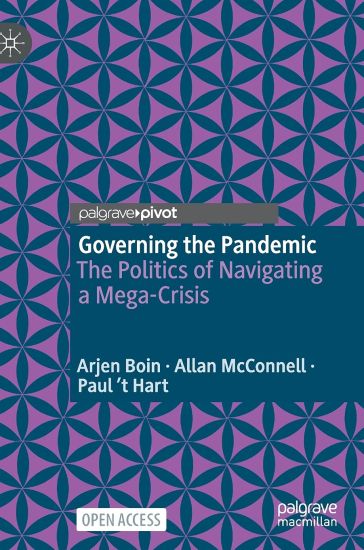
Governing the Pandemic

Governing the Pandemic

Arjen Boin; Allan McConnell; Paul 't Hart

Springer Nature Switzerland AG
2021
sidottu
This open access book offers unique insights into how governments and governing systems, particularly in advanced economies, have responded to the immense challenges of managing the coronavirus pandemic and the ensuing disease COVID-19. Written by three eminent scholars in the field of the politics and policy of crisis management, it offers a unique ‘bird’s eye’ view of the immense logistical and political challenges of addressing a worst-case scenario that would prove the ultimate stress test for societies, governments, governing institutions and political leaders. It examines how governments and governing systems have (i) made sense of emerging transboundary threats that have spilled across health, economic, political and social systems (ii) mobilised systems of governance and often fearful and sceptical citizens (iii) crafted narratives amid high uncertainty about the virus and its impact and (iv) are working towards closure and a return to ‘normal’ when things can never quite bethe same again. The book also offers the building blocks of pathways to future resilience. Succeeding and failing in all these realms is tied in with governance structures, experts, trust, leadership capabilities and political ideologies. The book appeals to anyone seeking to understand ‘what’s going on?’, but particularly academics and students across multiple disciplines, journalists, public officials, politicians, non-governmental organisations and citizen groups.
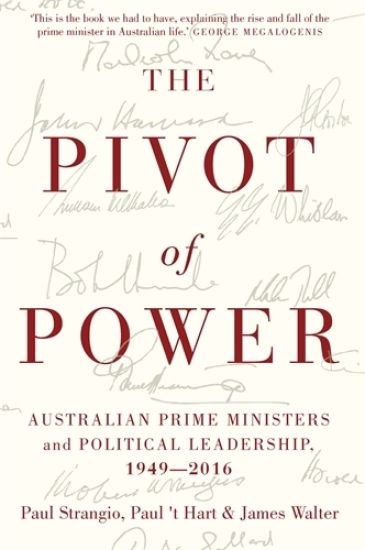
The Pivot of Power

The Pivot of Power

Paul Strangio; Paul 't Hart; James Walter

The Miegunyah Press
2017
sidottu
The prime ministership remains the main prize in Australian politics, but it is a precarious one. Leadership turnover in recent years has seen more prime ministers rise and fall than at any time since the decade after federation. What explains this volatility? The Pivot of Power is the second volume in a unique blend of collective biography and institutional history that shows the skills, limitations and passions of incumbents are only part of the story. The ways in which prime ministers thrive and fail are influenced by the resources at their command, the evolving nature of the parties they lead, the daunting public expectations they face under a relentless media gaze, and the challenges that history throws at them. Recent changes in these areas have had a destabilising effect and made the role of prime minister more onerous than ever. After decades of strong national leadership, the office has rarely seemed quite so confounding as it does for its contemporary holders. The Pivot of Power explains how this has come about. And its rich account of prime-ministerial fortune since the mid-twentieth century yields historical lessons for overcoming the current malaise.
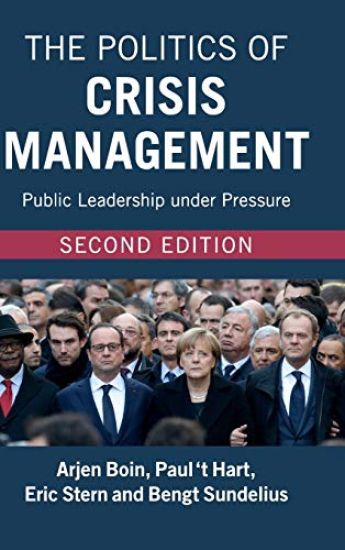
The Politics of Crisis Management

The Politics of Crisis Management

Boin Arjen; Paul ‘t Hart; Stern Eric; Sundelius Bengt

Cambridge University Press
2016
sidottu
Crisis management has become a defining feature of contemporary governance. In times of crisis, communities and members of organizations expect their leaders to minimize the impact, while critics and bureaucratic competitors make use of social media to blame incumbent rulers and their policies. In this extreme environment, policymakers must somehow establish a sense of normality, and foster collective learning from the crisis experience. In the new edition of this uniquely comprehensive analysis, the authors examine how strategic leaders deal with the challenges they face, the political risks and opportunities they encounter, the pitfalls they must avoid, and the paths towards reform they may pursue. The book is grounded in decades of collaborative, cross-national and multidisciplinary case study research and has been updated to include new insights and examples from the last decade. This is an original and important contribution from experts in public policy and international security.
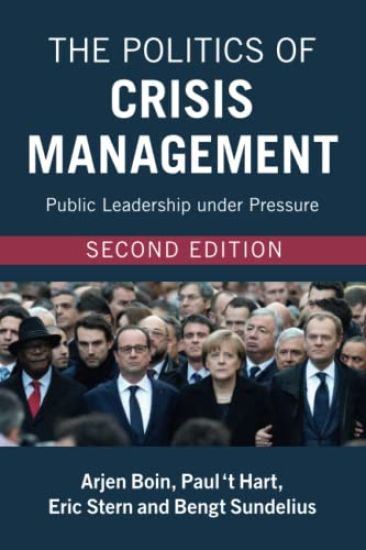
The Politics of Crisis Management

The Politics of Crisis Management

Boin Arjen; Paul ‘t Hart; Stern Eric; Sundelius Bengt

Cambridge University Press
2016
pokkari

Halvin toimitettuna 35,20 €

Crisis management has become a defining feature of contemporary governance. In times of crisis, communities and members of organizations expect their leaders to minimize the impact, while critics and bureaucratic competitors make use of social media to blame incumbent rulers and their policies. In this extreme environment, policymakers must somehow establish a sense of normality, and foster collective learning from the crisis experience. In the new edition of this uniquely comprehensive analysis, the authors examine how strategic leaders deal with the challenges they face, the political risks and opportunities they encounter, the pitfalls they must avoid, and the paths towards reform they may pursue. The book is grounded in decades of collaborative, cross-national and multidisciplinary case study research and has been updated to include new insights and examples from the last decade. This is an original and important contribution from experts in public policy and international security.
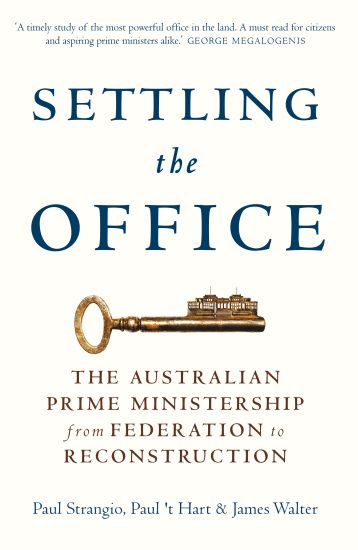
Settling the Office

Settling the Office

Paul Strangio; Paul 't Hart; James Walter

The Miegunyah Press
2016
sidottu
The prime ministership is indisputably the most closely observed and keenly contested office in Australia. How did it grow to become the pivot of national political power? Settling the Office chronicles the development of the prime ministership from its rudimentary early days following Federation through to the powerful, institutionalised prime-ministerial leadership of the postwar era.
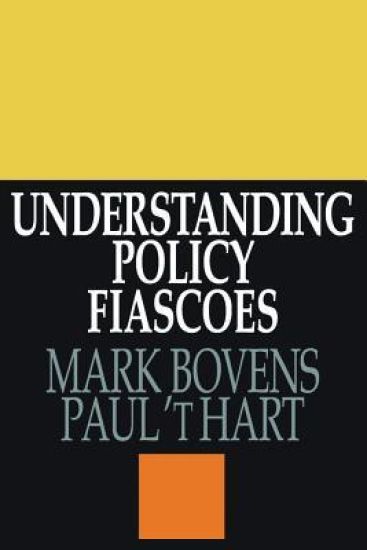
Understanding Policy Fiascoes

Understanding Policy Fiascoes

Paul 't Hart

Transaction Publishers
1998
nidottu
A crisis of governance is widespread in western societies. Public administration is caught in a web of personal and organizational inter-dependencies that require continuous awareness and readjustment on the part of its practitioners. Understanding Policy Fiascoes applies policy analysis to come to terms with policy fiascoes, with a full appreciation of its limits. Despite the fact that policy failures may seem universal, they are in fact better understood as social, political and academic constructions. Bovens and 'tHart trace how and why certain episodes of public policymaking become labeled as "fiascoes." They highlight the analytical and political biases that shape our judgments of policy outcomes and the performance of policymakers and institutions. When put in their proper historical, institutional, and policymaking perspective, many policy fiascoes could easily have turned out quite differently. The authors show that the fact that these policy episodes unfolded as they did does not mean that they were inevitable. Careful analysis indicates that a whole series of variables, if not always manageable, can, through careful configurations of decisions, alter the course and outcomes of policies and programs, as well as the post-hoc judgments made about them. In examining public policymaking, certain questions arise: If public policymaking has failed so miserably, what does this tell us about the state of policy analysis? While policymakers are facing a crisis of legitimacy, policy analysis have been forced to reconsider the validity o their knowledge claims and the extent of their impact on the practice of policymaking. Understanding Policy Fiascoes will provide social scientists, policymakers, and political scientists with compelling perspectives on old problems and a path-breaking way to handle new problems.
Beyond Groupthink

Beyond Groupthink

Paul 't Hart

The University of Michigan Press
1997
nidottu
Strategic issues and crises in foreign policy are usually managed by relatively small groups of elite policymakers and their closest advisors. Since the pioneering work of Irving Janis in the early 1970s, we have known that the interplay between the members of these groups can have a profound and, indeed, at times a pernicious influence on the content and quality of foreign policy decisions. Janis argued that "groupthink," a term he used to describe a tendency for extreme concurrence-seeking in decision-making groups, was a major cause of a number of U. S. foreign policy fiascoes. And yet not all small groups suffer from groupthink; in fact many high-level bodies are handicapped by an inability to achieve consensus at all. Beyond Groupthink builds upon and extends Janis's legacy. The contributors develop a richer understanding of group dynamics by drawing on alternate views of small-group dynamics. The relevant literature is reviewed and the different perspectives are explored in detailed case studies. The contributors link the group process to the broader organizational and political context of the policy process and stress the need to develop a multi-level understanding of the collegial policy-making process, combining the insights drawn from micro-level theories with those derived from study of broader political phenomena. The contributors include Alexander George, Sally Riggs Fuller, Paul D. Hoyt, Ramon J. Aldag, Max V. Metselaar, Bertjan Verbeek, J. Thomas Preston, Jean A. Garrison, and Yaacov Y. I. Vertzberger. This book should appeal to political scienctists and international relations specialists, as well as researchers in social psychology, public administration, and management interested in group decision-making processes. Paul 't Hart is Associate Professor, Department of Public Administration, Leiden University and Scientific Director of of the Leiden-Rotterdam Crisis Research Center. Eric Stern is Professor of Political Science at Stockholm University. Bengt Sundelius is Professor of Political Science at Stockholm University.
Understanding Policy Fiascoes

Understanding Policy Fiascoes

Paul 't Hart

Transaction Publishers
1996
sidottu
A crisis of governance is widespread in western societies. Public administration is caught in a web of personal and organizational inter-dependencies that require continuous awareness and readjustment on the part of its practitioners. Understanding Policy Fiascoes applies policy analysis to come to terms with policy fiascoes, with a full appreciation of its limits. Despite the fact that policy failures may seem universal, they are in fact better understood as social, political and academic constructions. Bovens and 'tHart trace how and why certain episodes of public policymaking become labeled as "fiascoes." They highlight the analytical and political biases that shape our judgments of policy outcomes and the performance of policymakers and institutions. When put in their proper historical, institutional, and policymaking perspective, many policy fiascoes could easily have turned out quite differently. The authors show that the fact that these policy episodes unfolded as they did does not mean that they were inevitable. Careful analysis indicates that a whole series of variables, if not always manageable, can, through careful configurations of decisions, alter the course and outcomes of policies and programs, as well as the post-hoc judgments made about them. In examining public policymaking, certain questions arise: If public policymaking has failed so miserably, what does this tell us about the state of policy analysis? While policymakers are facing a crisis of legitimacy, policy analysis have been forced to reconsider the validity o their knowledge claims and the extent of their impact on the practice of policymaking. Understanding Policy Fiascoes will provide social scientists, policymakers, and political scientists with compelling perspectives on old problems and a path-breaking way to handle new problems.