Kirjojen hintavertailu – 12 859 826 kirjaa ja 27 kauppaa

Kirjailija

Paul T. Jaeger

Kirjat ja teokset yhdessä paikassa: 14 kirjaa, julkaisuja vuosilta 2002–2027, suosituimpiin kuuluu Digital Literacy and Digital Inclusion. Vertaile teosten hintoja ja tarkista saatavuus suomalaisista kirjakaupoista.

14 kirjaa

Kirjojen julkaisuvuodet: 2002–2027.

Digital Literacy and Digital Inclusion

Digital Literacy and Digital Inclusion

Kim M. Thompson; Paul T. Jaeger; Natalie Greene Taylor; Mega Subramaniam; John Carlo Bertot

Rowman Littlefield Publishers
2014
sidottu
Digital Literacy and Digital Inclusion: Information Policy and the Public Library examines the interrelationships between digital literacy, digital inclusion, and public policy, emphasizing the impacts of these policy decisions on the ability of individuals and communities to successfully participate in the information society. This book is the first detailed consideration of digital literacy and digital inclusion as policy problems and as core issues in information policy and libraries. The unique features of this book include ·drawing together the key themes and findings from the discourse on digital literacy and digital inclusion widely spread among many fields; ·analyzing digital literacy and digital inclusion as policy issues, both being driven and regulated by policy; ·building on a wealth of original research conducted by the authors using different quantitative and qualitative data collection approaches on four different continents when analyzing these issues, providing unique examples, case studies, and perspectives; ·using information behavior theory to provide important insights about these issues at individual, community, and political levels; ·providing recommendations to inform practice in libraries and help libraries to frame their advocacy for public policies that support literacy and inclusion; and ·providing policy recommendations to improve the creation and implementation of policy instruments that promote digital literacy and digital inclusion. The authors of this book have been involved in this research for many years, and their experience provides a broad view across the literature, inherent problems, and national perspectives. This breadth allows this book to offer comprehensive policy recommendations, solutions, and best practices for an area that is fragmented in discourse, practice, and policy.

Digital Accessibility Compliance

Digital Accessibility Compliance

Paul T. Jaeger

BLOOMSBURY PUBLISHING PLC
2027
sidottu
This guide and reference book helps librarians understand and implement new digital accessibility guidelines issued recently in both the United States and the European Union in relation to digital materials, events, education, and licensing. It also covers the relevant guidelines in the UK. The United States (US) government recently issued new guidelines for Title II of the Americans with Disabilities Act (ADA) that greatly expand requirements for digital accessibility for websites, apps, and other digital content, for education activities with online components, and events with online components. These guidelines apply to all local, state, and federal government entities, as well as other entities accepting federal funds. As such, they apply to all public libraries, public school libraries, public community college libraries, public university libraries, and many libraries at private educational institutions receiving federal funds. At the same time, the European Union (EU) has passed a comprehensive European Accessibility Act with parallel digital accessibility goals and similar requirements that will apply to EU libraries. Many libraries have historically been among the strongest supporters of disabled people in their communities, taking the lead in adopting new accessible formats and assistive hardware and software among the public sector, while also working to make general products and materials accessible. Nevertheless, these new guidelines will mean working to make existing things accessible in line with the new requirements and ensuring every newly designed, developed, or purchased item, service, or program complies with the regulations going forward. In a concise and understandable manner, this book describes the importance of accessibility; designing for accessibility; unique challenges of accessibility; the historical relationships between libraries and disability; existing accessibility guidelines; the new guidelines for both the US and the EU and existing guidelines in the UK; best practices for digital content, events, and educational activities under the new guidelines; the impacts of the new guidelines on purchasing and licensing; key resources; and ways to incorporate the new guidelines into making the library an inclusive and welcoming space for disabled community members.
Digital Accessibility Compliance

Digital Accessibility Compliance

Paul T. Jaeger

BLOOMSBURY PUBLISHING PLC
2027
nidottu
This guide and reference book helps librarians understand and implement new digital accessibility guidelines issued recently in both the United States and the European Union in relation to digital materials, events, education, and licensing. It also covers the relevant guidelines in the UK. The United States (US) government recently issued new guidelines for Title II of the Americans with Disabilities Act (ADA) that greatly expand requirements for digital accessibility for websites, apps, and other digital content, for education activities with online components, and events with online components. These guidelines apply to all local, state, and federal government entities, as well as other entities accepting federal funds. As such, they apply to all public libraries, public school libraries, public community college libraries, public university libraries, and many libraries at private educational institutions receiving federal funds. At the same time, the European Union (EU) has passed a comprehensive European Accessibility Act with parallel digital accessibility goals and similar requirements that will apply to EU libraries. Many libraries have historically been among the strongest supporters of disabled people in their communities, taking the lead in adopting new accessible formats and assistive hardware and software among the public sector, while also working to make general products and materials accessible. Nevertheless, these new guidelines will mean working to make existing things accessible in line with the new requirements and ensuring every newly designed, developed, or purchased item, service, or program complies with the regulations going forward. In a concise and understandable manner, this book describes the importance of accessibility; designing for accessibility; unique challenges of accessibility; the historical relationships between libraries and disability; existing accessibility guidelines; the new guidelines for both the US and the EU and existing guidelines in the UK; best practices for digital content, events, and educational activities under the new guidelines; the impacts of the new guidelines on purchasing and licensing; key resources; and ways to incorporate the new guidelines into making the library an inclusive and welcoming space for disabled community members.
Book Bans, Disinformation, and Cultural Erasure

Book Bans, Disinformation, and Cultural Erasure

Paul T. Jaeger

BLOOMSBURY PUBLISHING PLC
2026
sidottu
This book shows how today’s waves of book bans and disinformation campaigns intentionally drive the cultural erasure of marginalized communities—and what we can do to stop them. Across schools, libraries, and museums—in the United States and elsewhere—the coordinated onslaught of efforts to remove books and roll back diversity initiatives are reshaping public life. While both these methods of cultural control have been widely used for centuries, their nefarious role as part of a larger effort has been overlooked. This book connects the dots between censorship, disinformation, and cultural erasure and explores the sturdiness of democracy in a period of enormous political upheaval. Blending research with real-world examples across time and place, it offers practical ways to push back on this alarming movement—through advocacy strategies, direct actions, educational activities, research initiatives, and legal and policy changes. When we understand these threats as interconnected, we are better able to combat them. This perspective empowers educators, cultural heritage professionals, and supporters of democratic institutions to defend the spaces where knowledge is shared and preserved.
Foundations of Information Law

Foundations of Information Law

Paul T. Jaeger; Jonathan Lazar; Ursula Gorham; Natalie Greene Taylor

Association of College Research Libraries
2023
nidottu
Learning the basic concepts of information law and the many legal concepts that come into play in the field of librarianship can seem like an overwhelming endeavor. Drawing upon the authors’ unique backgrounds in both law and librarianship, this text is designed to empower readers to understand, rather than be intimidated by, the law. It melds essential context, salient examples of best practices, and stimulating discussions to illuminate numerous key legal and social issues directly related to the information professions. Helping readers better understand the role of law in their work, this primer discusses information law as part of a continuum of interrelated issues rather than an assortment of discrete topics; examines information law in the context of different types of libraries; delves into the manifold legal issues raised when interacting with patrons and communities, from intellectual freedom topics like censorship and public activities in the library to the legal issues surrounding materials and information access; elucidates operational and management legal issues, including library security, interacting with law enforcement, advocacy, lobbying, funding, human resources, and liability; promotes literacy of the law, its structures, and its terminology as a professional skill; gives readers the tools to find and understand different sources of legal authority and demonstrates how to interpret them when they conflict; and explores information law as a national and cross-national issue.
Foundations of Information Literacy

Foundations of Information Literacy

Natalie Greene Taylor; Paul T. Jaeger

Association of College Research Libraries
2020
pokkari
It's not hyperbole to conclude that in today's world, information literacy is essential for survival and success; and also that, if left unchecked, the social consequences of widespread misinformation and information illiteracy will only continue to grow more dire. Thus its study must be at the core of every LIS education. While many books have been written on information literacy, this text is the first to examine information literacy from a cross-national, cross-cultural, and cross-institutional perspective. The ideal resource for introducing students to this important subject, in this book the authors also explore key related issues such as technology, public policy, human rights, community engagement, and advocacy. Drawing upon both the latest research and best practices, they address information literacy in ways relevant for all types of libraries, providing both the broader context and a range of applied strategies and programs for promoting and teaching information literacy.
Foundations of Information Policy

Foundations of Information Policy

Paul T. Jaeger; Natalie Greene Taylor

AMERICAN LIBRARY ASSOCIATION
2019
nidottu
The first of its kind, this important new text provides a much-needed introduction to the myriad information policy issues that impact information professionals, information institutions, and the patrons and communities served by those institutions. In this key textbook for LIS students and reference text for practitioners, noted scholars Jaeger and Taylor: draw from current, authoritative sources to familiarize readers with the history of information policy, discuss the broader societal issues shaped by policy, including access to infrastructure, digital literacy and inclusion, accessibility, and security, elucidate the specific laws, regulations, and policies that impact information, including net neutrality, filtering, privacy, openness, and much more, use case studies from a range of institutions to examine the issues, bolstered by discussion questions that encourage readers to delve more deeply, explore the intersections of information policy with human rights, civil rights, and professional ethics, and prepare readers to turn their growing understanding of information policy into action, through activism, advocacy, and education.
Libraries, Human Rights, and Social Justice

Libraries, Human Rights, and Social Justice

Paul T. Jaeger; Natalie Greene Taylor; Ursula Gorham

Rowman Littlefield
2015
sidottu
Libraries, Human Rights, and Social Justice: Enabling Access and Promoting Inclusion examines the interrelationships between digital literacy, digital inclusion, and public policy, emphasizing the impacts of these policy decisions on the ability of individuals and communities to successfully participate in the information society. It is the first large-scale consideration of digital literacy and digital inclusion as policy problems and provides policy recommendations to promote digital literacy and digital inclusion. This book is intended to help librarians better understand and articulate their roles in promoting human rights and social justice, as well as to educate policymakers, government officials, professionals in other fields, and researchers in other disciplines about the contributions of libraries to human rights and social justice. It explores the intersections of information, human rights, and social justice from a range of perspectives and addresses the differing roles of library institutions (public, school, academic, and special libraries), library professionals, professional organizations, governments, and library patrons. Discussion focuses on the practical side of human rights and avoids most of the philosophical discussions of the term. Similarly, this book emphasizes the practical nature of social justice and the social and societal structures that foster equality. Related issues of digital literacy and digital inclusion are considered as essential to providing information in human rights and social justice contexts. Digital literacy, the ability to use the Internet to meet information, combines with access to the Internet in order to successfully apply the skills of digital literacy is discussed under the topic of digital inclusion. These topics are discussed through legal, policy, social, cultural, and economic lenses. Issues are examined both in terms of efforts to support equity in communities as a whole and the efforts intended to promote equity in specific disadvantaged or marginalized populations, such as the homeless, immigrants, people with disabilities, and the socioeconomically disadvantaged. Many examples of the issues discussed are drawn from the original research that the authors have conducted. The ideas and suggestions in this book should help members of the library community understand where their roles related to human rights and social justice originate, how they fit within the broader policy context, how to improve their related services and practices, and how to advocate for better support of these roles. The authors of this book have been involved in this research for many years and this breadth allows the book to offer comprehensive policy recommendations, solutions, and best practices for an area that is currently extremely fragmented. The writing is at a level to make it useful to undergraduate and postgraduate students, researchers, and policy makers.
Information Worlds

Information Worlds

Paul T. Jaeger; Gary Burnett

Routledge
2014
nidottu
The authors present a multi-level theory of "Information Worlds" to investigate the ways in which information creates the social worlds of people. Building upon the foundational works of Library and Information Studies (LIS) scholar and theorist Elfreda Chatman and philosopher Jurgen Habermas, as well as from theory and research from a wide range of other fields, the theory of information worlds can serve as a theoretical driver both in LIS studies and across other disciplines that study information issues, enriching and expanding our understanding of the multi-layered role of information in society. Testing their theory through application to a variety of real-world issues, Burnett and Jaeger tackle the topics of libraries and information provision, the value assigned to information by differing social groups, information access and exchange, international information policies, the role of information in democracy, and technological change. Information Worlds provides a framework for empirical investigations into the fascinating and very real social dimensions of information.
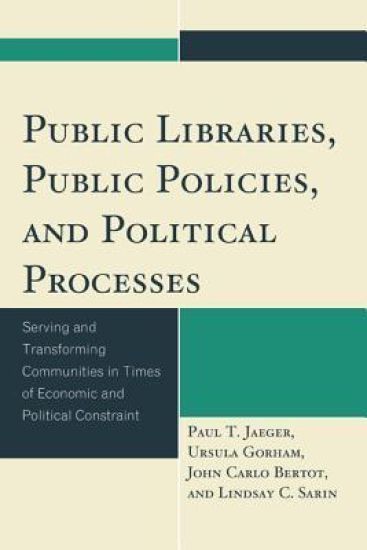
Public Libraries, Public Policies, and Political Processes

Public Libraries, Public Policies, and Political Processes

Paul T. Jaeger; Ursula Gorham; John Carlo Bertot; Lindsay C. Sarin

Rowman Littlefield
2014
nidottu
Drawing on two decades of original research conducted by the authors, as well as existing research about the intersection of public policy, political discourse, and public libraries, this book seeks to understand the origins and implications of the current standing of public libraries in public policy and political discourse. It both explains the complex current circumstances and offers strategies for effectively creating a better future for public libraries. The main message is that there is a pressing need for public librarians and other supporters of public libraries to be: 1. Aware of the political process and its implications for libraries; 2. Attuned to the interrelationships between policy and politics; and 3. Engaged in the policy process to articulate the need for policies that support public libraries. The style is both scholarly and accessible to general readers, with the goal of being useful to students, educators, researchers, practitioners, and friends of public libraries in library and information science. It will also be usefull for those engaged in areas of public policy, government, economics, and political science who are interested in the relationships between public libraries, public policy, and political processes. Building upon the discussion of the key issues, the book offers proposals for professional, policy-making, and political strategies that can strengthen the public library and its ability to meet the needs of individuals and communities. The discussion and analysis in the book draw upon data and real world examples from the many studies that the authors have conducted on related topics, including libraries’ outreach to increasingly diverse service populations and efforts to meet community needs through innovative partnerships. As the intersection of politics, policy, and libraries has grown in importance and complexity in recent years, the need for a book on their interrelationships is long overdue.
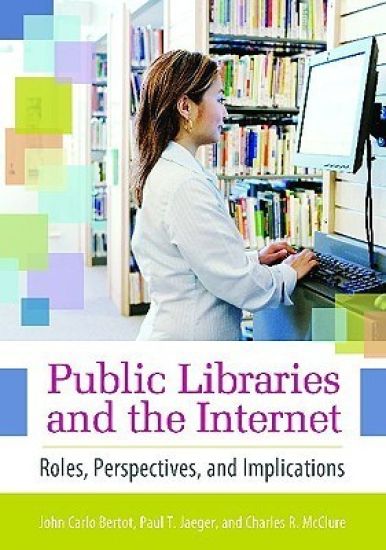
Public Libraries and the Internet

Public Libraries and the Internet

John Carlo Bertot Ph.D.; Charles R. McClure; Paul T. Jaeger

Libraries Unlimited Inc
2010
nidottu
This book is a timely and detailed exploration of the impact and issues of the Internet in public libraries and their implications for society, policy, and professional practice. Public Libraries and the Internet: Roles, Perspectives, and Implications explores the impact of the Internet and the expansion of the networked environment on U. S. public libraries through more than a dozen essays written by leading scholars and administrators. Notwithstanding the far-reaching changes wrought by the Internet, this is the first attempt to provide a comprehensive exploration of the subject over time and across areas of practice. This wide-ranging volume, edited by the authors of several national studies tracking the use and involvement of public libraries with the Internet since 1994, offers both description and assessment. It discusses the ways in which the roles and services of public libraries have changed as a result of the Internet and offers a perspective on the meaning and impact of these changes. Perhaps most critically, it also suggests possible futures and opportunities as public libraries continue to evolve in this networked environment.
Information Worlds

Information Worlds

Paul T. Jaeger; Gary Burnett

Routledge
2010
sidottu
The authors present a multi-level theory of "Information Worlds" to investigate the ways in which information creates the social worlds of people. Building upon the foundational works of Library and Information Studies (LIS) scholar and theorist Elfreda Chatman and philosopher Jurgen Habermas, as well as from theory and research from a wide range of other fields, the theory of information worlds can serve as a theoretical driver both in LIS studies and across other disciplines that study information issues, enriching and expanding our understanding of the multi-layered role of information in society. Testing their theory through application to a variety of real-world issues, Burnett and Jaeger tackle the topics of libraries and information provision, the value assigned to information by differing social groups, information access and exchange, international information policies, the role of information in democracy, and technological change. Information Worlds provides a framework for empirical investigations into the fascinating and very real social dimensions of information.
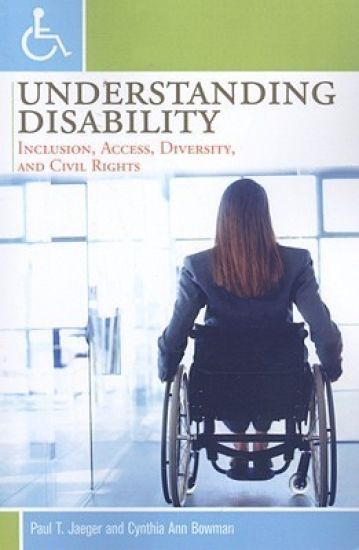
Understanding Disability

Understanding Disability

Paul T. Jaeger; Cynthia Ann Bowman

Praeger Publishers Inc
2005
nidottu
Disability is rarely considered a social issue. Scholars tend to discuss it in the abstract; medical personnel view it as a health issue; and legal concerns for the disabled focus on how to advocate or protect organizations against demands for accommodation. As a result, disabled individuals are seen as bits and pieces of everyone's constituency but their own. The writers of this work, both having long personal experiences with disabilities, offer a holistic understanding of the lives of disabled individuals from representations in the media to issues of civil rights. Written to educate and inform readers about the social roles of disability, this accessible and informative work addresses: social classifications of disability; social reactions to disability; legal rights and classifications of persons with disabilities; issues of accessibility to information and communication technologies; representations of disability in a range of media, including literature, painting, film, televsion and advertising; and major issues shaping the comtemporary social roles of persons with disabilities. By examining the social roles of disability in the past and present from a range of perspectives and disciplines, this book reveals a portrait of the social place, limitations, and rights of persons with disabilities.
Disability Matters

Disability Matters

Paul T. Jaeger; Cynthia Ann Bowman

Praeger Publishers Inc
2002
sidottu
Authored by a legal specialist and an education professor, this study is targeted to everyone involved in the education of students with disabilities and provides a full examinatiaon of the legal issues. Each chapter blends classroom vignettes and teachable moments with relevant legal rights and responsibilities of all school personnel. Disability rights laws are an essential part of every classroom, not just special education classrooms. Laws providing rights and protections to students and teachers with disabilities will be limited in utility unless all teachers understand the laws and the roles of the laws in the classroom. As the number of lawsuits in education is on the rise, Teachers must learn about the numerous legal issues possible in order to protect themselves against becoming involved in court cases. Teacher preparation programs must prepare all teachers to deal with these issues and to be aware of legal requirements for an equal education. A legal mandate for an individual education plan, a less restrictive environment, and a free appropriate public education for students with disabilities are topics that all general education teachers must know and understand. This text is geared to all general education majors at all levels and in every content area, as well as administrators, teachers, parents of students with disabilities, and those involved in legal research.