Kirjailija
Paul Tyson
Kirjat ja teokset yhdessä paikassa: 16 kirjaa, julkaisuja vuosilta 2013–2026, suosituimpiin kuuluu Gender Theory Is Wrong. Vertaile teosten hintoja ja tarkista saatavuus suomalaisista kirjakaupoista.
16 kirjaa
Kirjojen julkaisuvuodet: 2013–2026.

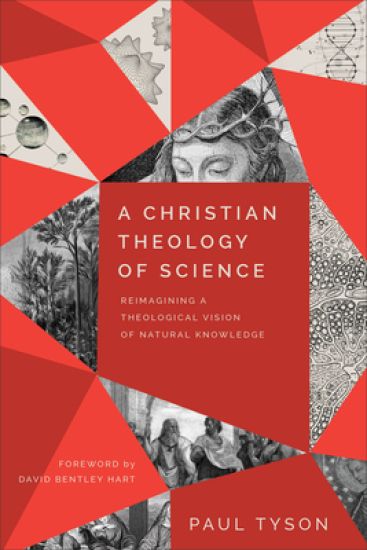
A Christian Theology of Science – Reimagining a Theological Vision of Natural Knowledge
Paul Tyson; David Hart
BAKER PUBLISHING GROUP
2022
nidottu
An author on the cutting edge of today's theology and science discussions argues that creedal Christianity has much to contribute to the ongoing conversation. This book contains an intellectual history of theology's engagement with science during the modern period, critiques current approaches, and makes a constructive proposal for how a Christian theological vision of natural knowledge can be better pursued. The author explains that it is good both for religion and for science when Christians treat theology as their first truth discourse. Foreword by David Bentley Hart.
Theology and Climate Change examines Progressive Dominion Theology (PDT) as a primary cultural driver of anthropogenic climate change. PDT is a distinctive and Western form of Christian theology out of which the modern scientific revolution and technological modernity arises. Basic attitudes to nature, to instrumental power over nature, and to an understanding of humanity’s relationship with nature are a function of the deep theological preconditions of Western modernity. Much of what we like about Western modernity is indebted to PDT at the same time that this tacit cultural theology is propelling us towards climate disaster. This text argues that the urgent need to change the fundamental operational assumptions of our way of life is now very hard for us to do, because secular modernity is now largely unaware of its tacit theological commitments. Modern consumer society, including the global economy that supports this way of life, could not have the operational signatures it currently has without its distinctive theological origin and its ongoing submerged theological assumptions. Some forms of Christian theology are now acutely aware of this dynamic and are determined to change the modern life-world, from first assumptions up, in order to avert climate disaster. At the same time that other forms of Christian theology – aligned with pragmatic fossil fuel interests – advance climate change skepticism and overtly uphold PDT. Theology is, in fact, crucially integral with the politics of climate change, but this is not often understood in anything more than simplistic and polemically expedient ways in environmental and policy contexts. This text aims to dis-imbed climate change politics from polarized and unfruitful slinging-matches between conservatives and progressives of all or no religious commitments. This fascinating volume is a must read for those with an interest in environmental policy concerns and in culturally embedded first-order belief commitments.

Theology and Climate Change examines Progressive Dominion Theology (PDT) as a primary cultural driver of anthropogenic climate change. PDT is a distinctive and Western form of Christian theology out of which the modern scientific revolution and technological modernity arises. Basic attitudes to nature, to instrumental power over nature, and to an understanding of humanity’s relationship with nature are a function of the deep theological preconditions of Western modernity. Much of what we like about Western modernity is indebted to PDT at the same time that this tacit cultural theology is propelling us towards climate disaster. This text argues that the urgent need to change the fundamental operational assumptions of our way of life is now very hard for us to do, because secular modernity is now largely unaware of its tacit theological commitments. Modern consumer society, including the global economy that supports this way of life, could not have the operational signatures it currently has without its distinctive theological origin and its ongoing submerged theological assumptions. Some forms of Christian theology are now acutely aware of this dynamic and are determined to change the modern life-world, from first assumptions up, in order to avert climate disaster. At the same time that other forms of Christian theology – aligned with pragmatic fossil fuel interests – advance climate change skepticism and overtly uphold PDT. Theology is, in fact, crucially integral with the politics of climate change, but this is not often understood in anything more than simplistic and polemically expedient ways in environmental and policy contexts. This text aims to dis-imbed climate change politics from polarized and unfruitful slinging-matches between conservatives and progressives of all or no religious commitments. This fascinating volume is a must read for those with an interest in environmental policy concerns and in culturally embedded first-order belief commitments.

Kierkegaard developed a distinctive type of sociology in the 1840s--a theological sociology. Looking at society through the lens of analysis categories such as worship, sin, and faith, Kierkegaard developed a profoundly insightful way of understanding how, for example, the modern mass media works. He gets right inside the urban world of Golden Age Denmark, and its religion, and analyses ""the present age"" of consumption, comfort, competition, distraction, and image-construction with astonishing depth. To Kierkegaard worship centers all individuals and all societies; hence his sociology is doxological. This book argues that we also live in the present age Kierkegaard described, and our way of life can be understood much better through Kierkegaard's lens than through the methodologically materialist categories of classical sociology. As social theory itself has moved beyond classical sociology, the social sciences are increasingly open to post-methodologically-atheist approaches to understanding what it means to be human beings living in social contexts. The time is right to recover the theological resources of Christian faith in understanding the social world we live in. The time has come to pick up where Kierkegaard left off, and to start working towards a prophetic doxological sociology for our times. ""Everyone supposedly knows that Kierkegaard was an 'individualist' who had little understanding or appreciation of society. This book completely undermines that myth by showing us how much Kierkegaard has to contribute to social theory. The author also thereby helps us see that theology cannot only learn from sociology but has much to contribute to social theory in turn."" --C. Stephen Evans, University Professor of Philosophy and Humanities, Baylor University ""Tyson's book reveals Kierkegaard at his most prophetic in the senses of being both subversive--confronting how we have come to think of ourselves and society--and eerily prescient and timely. Tyson argues that Kierkegaard's theological sociology arising in the tinderbox of 1840s can be seen as a basic alternative to Marx's contemporary, deeply secular, and epoch-making understanding of society. As such it provides an alternate vision of society in the wake of Marx and secular modern understandings of human society."" --Christopher Ben Simpson, Lincoln Christian University ""Kierkegaard does not only analyze individuals. In this book, the author first shows that Kierkegaard also has a profound understanding of the modern, liberal society. Then he applies this insight on our contemporary challenges in a highly meaningful way. This book boldly and creatively addresses the relation between theology and sociology and explores how we are impacted by our cultural and religious environment."" --Knut Alfsvag, VID Specialized University Paul Tyson is a Senior Research Fellow with the Institute for Advanced Studies in the Humanities at the University of Queensland, Australia. He also lectures in philosophy at the Millis Institute. His research is presently focused on the theology of science.