Kirjailija
Paul Valéry
Kirjat ja teokset yhdessä paikassa: 121 kirjaa, julkaisuja vuosilta 1966–2026, suosituimpiin kuuluu Stendhal. Vertaile teosten hintoja ja tarkista saatavuus suomalaisista kirjakaupoista.
Nimi esiintyy myös muodoissa: Paul Valery
121 kirjaa
Kirjojen julkaisuvuodet: 1966–2026.
Paul Valéry (1891 1945) oli ranskalainen runoilija, epäilijä, analyytikko ja älynpalvoja. Hän kuului ns. Mallarmén runopiiriin mutta lähti siitä pian omille teilleen. Hänen tuotantonsa käsittää myös oudon romaanin, esseitä ja aforismeja. Muutama Valéryn aforismi on tätä ennen ilmestynyt V. A. Koskenniemen toimittamassa, suositussa kokoelmassa Vaeltava viisaus. Käsillä on nyt ensimmäinen laaja ja itsenäinen suomennosvalikoima Valéryn aforistiikasta. Vaikka Valéry moninkertaisena Nobel-ehdokkaana, Ranskan akatemian jäsenenä ja Ranskan kirjallisena lähettiläänä oli melkoinen kirjallisuuden auktoriteetti ajassaan, aforismit näyttävät hänestä toisen puolen: intohimoisen epäilijän, jolle mikään ei ollut varmaa, oli kysymys sitten arjen ihmisyydestä, politiikasta, sanataiteesta, filosofiasta tai tieteistä. Monessa asiassa hän voi hyvinkin olla aikaansa edellä
Valery's essays on Leonardo, Poe, Mallarme, and with these the "Teste Cycle," were that part of his work most central to his thought. The extensive selection included from his Notebooks is evidence of his enduring interest in these figures. The essays are, in fact, the only work with marginal glosses, Valery's notations showing how he went back, amending and amplifying his original ideas. Originally published in 1972. The Princeton Legacy Library uses the latest print-on-demand technology to again make available previously out-of-print books from the distinguished backlist of Princeton University Press. These editions preserve the original texts of these important books while presenting them in durable paperback and hardcover editions. The goal of the Princeton Legacy Library is to vastly increase access to the rich scholarly heritage found in the thousands of books published by Princeton University Press since its founding in 1905.
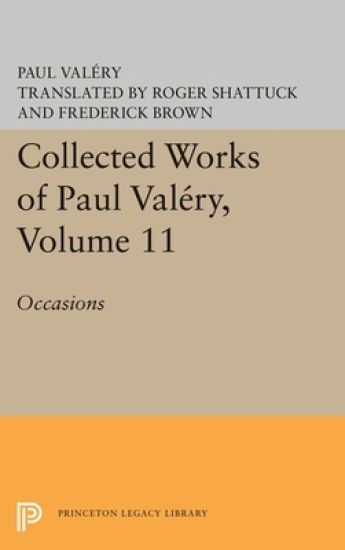
This collection of Valery's occasional pieces--speeches, interviews, articles--shows him very much as the public figure, the first in demand when an "occasion" needed a prominent person. Included are his speech before the French Academy on his reception into that body; his address welcoming Marshal Petain to membership in the French Academy; a witty and appealing commencement address to the young ladies of a private school; memorial addresses honoring Emile Verhaeren and Henri Bremond; an article on the "Future of Literature," and an incisive piece on the eponymous heroine of Racine's Phedre. Because Valery spoke on many current educational and social problems in France, Occasions will be of considerable interest to students of modern European history as well as to those concerned with French literature and drama. Originally published in 1970. The Princeton Legacy Library uses the latest print-on-demand technology to again make available previously out-of-print books from the distinguished backlist of Princeton University Press. These editions preserve the original texts of these important books while presenting them in durable paperback and hardcover editions. The goal of the Princeton Legacy Library is to vastly increase access to the rich scholarly heritage found in the thousands of books published by Princeton University Press since its founding in 1905.
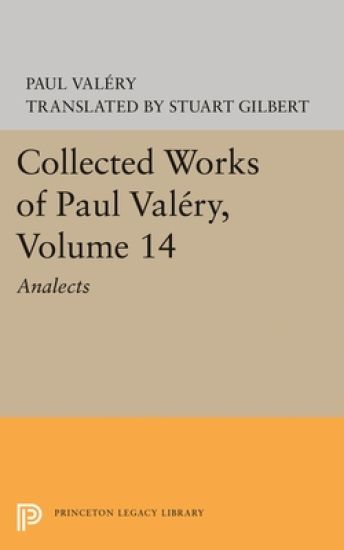
Grouped together in this book are several smaller volumes and plaquettes in which Valery had published selections of his shorter prose writings: aphorisms, moral reflections, poetic observations, flashes of wit or fancy, even jokes--a variety of remarks and impressions, many of them first recorded in his Notebooks. Originally published in 1970. The Princeton Legacy Library uses the latest print-on-demand technology to again make available previously out-of-print books from the distinguished backlist of Princeton University Press. These editions preserve the original texts of these important books while presenting them in durable paperback and hardcover editions. The goal of the Princeton Legacy Library is to vastly increase access to the rich scholarly heritage found in the thousands of books published by Princeton University Press since its founding in 1905.
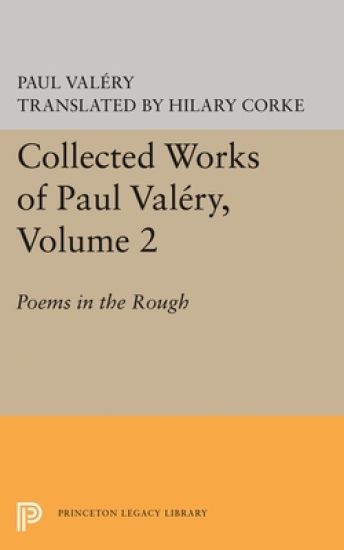
Includes some of Valery's finest strokes of imagination, Broken Stories; some of his wittiest observations, Mixtures, Poems in the Rough; and even two of his great poems, Parables and The Angel--all written in the form of prose. Originally published in 1970. The Princeton Legacy Library uses the latest print-on-demand technology to again make available previously out-of-print books from the distinguished backlist of Princeton University Press. These editions preserve the original texts of these important books while presenting them in durable paperback and hardcover editions. The goal of the Princeton Legacy Library is to vastly increase access to the rich scholarly heritage found in the thousands of books published by Princeton University Press since its founding in 1905.
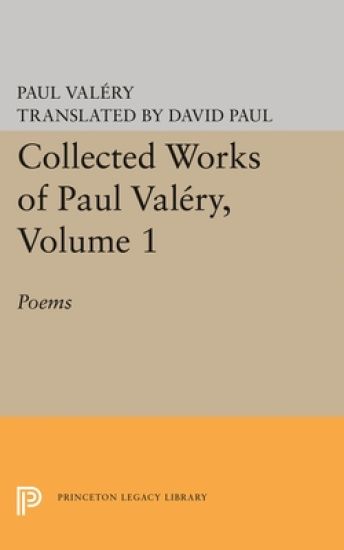
Collected Works of Paul Valery, Volume 1
Paul Valéry
Princeton University Press
2015
pokkari
Halvin toimitettuna 89,90 €
Poems ranging from "La Jeune Parque" and "Le Cimetiere marin" to occasional and light verse written as letters to friends, dedications in books, and inscriptions on ladies' fans demonstrate the wide scope of Valery's lyric preoccupation. The bilingual edition, with David Paul's English translations facing the French texts, includes the autobiographical "Recollection," quoted below, and excerpts on poetry, selected and translated from Valery's notebooks by James Lawler. Paul Valery turned to the discipline of poetry during the First World War, to escape from the "commotion of a world gone mad." "I fashioned myself a poetry," he wrote, "that had no other law than to establish for me a way of living with myself, for a part of my days." Originally published in 1971. The Princeton Legacy Library uses the latest print-on-demand technology to again make available previously out-of-print books from the distinguished backlist of Princeton University Press. These editions preserve the original texts of these important books while presenting them in durable paperback and hardcover editions. The goal of the Princeton Legacy Library is to vastly increase access to the rich scholarly heritage found in the thousands of books published by Princeton University Press since its founding in 1905.
A selection of writings that portray the inner life of the artist. Included are several short autobiographical pieces in which Valery talks about his early childhood, his adolescence, his military experience, his travels, his poetry, and his acquaintances. The volume contains selections from the Valery-Gide and Valery-Fourment correspondence and two additional pieces, "The Avenues of the Mind," a magazine interview with Valery printed in 1927, and Pierre Feline's "Memories of Paul Valery." Originally published in 1975. The Princeton Legacy Library uses the latest print-on-demand technology to again make available previously out-of-print books from the distinguished backlist of Princeton University Press. These editions preserve the original texts of these important books while presenting them in durable paperback and hardcover editions. The goal of the Princeton Legacy Library is to vastly increase access to the rich scholarly heritage found in the thousands of books published by Princeton University Press since its founding in 1905.
All of the major meditations on the theory and practice of poetry by one of the greatest poets of our time--and perhaps the one who has most scrupulously analyzed his art--are included in The Art of Poetry. Originally published in 1985. The Princeton Legacy Library uses the latest print-on-demand technology to again make available previously out-of-print books from the distinguished backlist of Princeton University Press. These editions preserve the original texts of these important books while presenting them in durable paperback and hardcover editions. The goal of the Princeton Legacy Library is to vastly increase access to the rich scholarly heritage found in the thousands of books published by Princeton University Press since its founding in 1905.
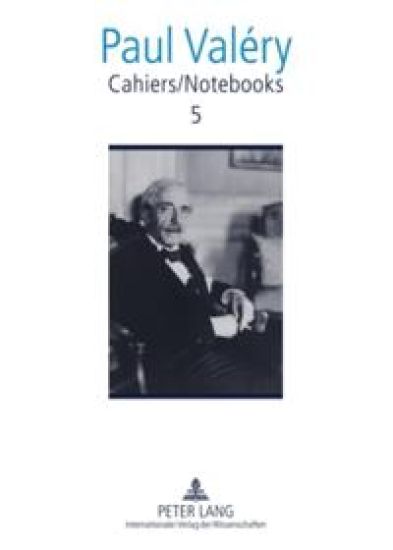
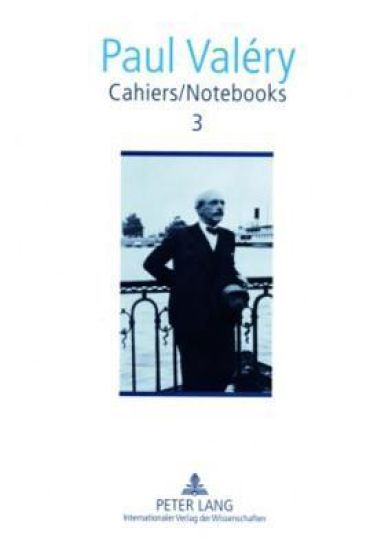
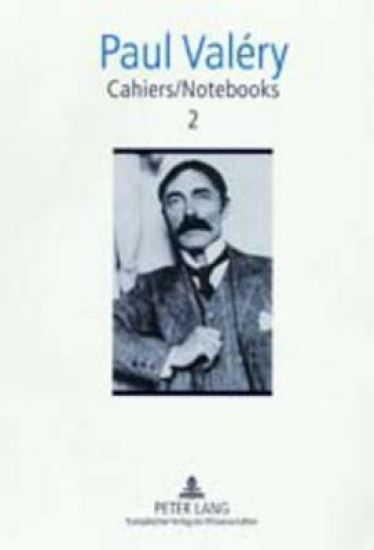
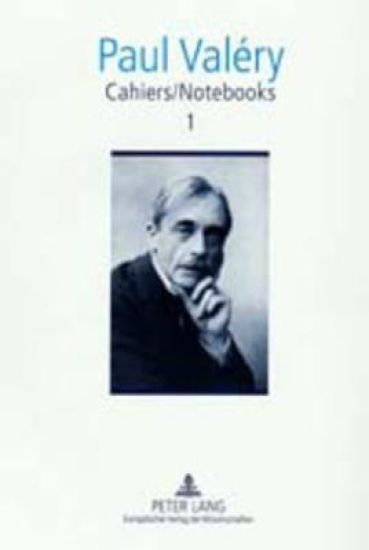
The Cahiers/Notebooks of Paul Valéry are a unique form of writing. They reveal Valéry as one of the most radical and creative minds of the twentieth century, encompassing a wide range of investigation into all spheres of human activity. His work explores the arts, the sciences, philosophy, history and politics, investigating linguistic, psychological and social issues, all linked to the central questions, relentlessly posed: ‘what is the human mind and how does it work?’, ‘what is the potential of thought and what are its limits?’ But we encounter here too, Valéry the writer: exploratory, fragmentary texts undermine the boundaries between analysis and creativity, between theory and practice. Neither journal nor diary, eluding the traditional genres of writing, the Notebooks offer lyrical passages, writing of extreme beauty, prose poems of extraordinary descriptive power alongside theoretical considerations of poetics, ironic aphorisms and the most abstract kind of analysis. The concerns and the insights that occupied Valéry’s inner voyages over more than 50 years remain as relevant as ever for the contemporary reader: for the Self that is his principal subject is at once singular and universal.
The "Cahiers/Notebooks" of Paul Valery are a unique form of writing. They reveal Valery as one of the most radical and creative minds of the twentieth century, encompassing a wide range of investigation into all spheres of human activity. His work explores the arts, the sciences, philosophy, history and politics, investigating linguistic, psychological and social issues, all linked to the central questions, relentlessly posed: what is the human mind and how does it work?, what is the potential of thought and what are its limits? But we encounter here too, Valery the writer: exploratory, fragmentary texts undermine the boundaries between analysis and creativity, between theory and practice. Neither journal nor diary, eluding the traditional genres of writing, the Notebooks offer lyrical passages, writing of extreme beauty, prose poems of extraordinary descriptive power alongside theoretical considerations of poetics, ironic aphorisms and the most abstract kind of analysis. The concerns and the insights that occupied Valery's inner voyages over more than 50 years remain as relevant as ever for the contemporary reader: for the Self that is his principal subject is at once singular and universal."
The" Cahiers/Notebooks" of Paul Valery are a unique form of writing. They reveal Valery as one of the most radical and creative minds of the twentieth century, encompassing a wide range of investigation into all spheres of human activity. His work explores the arts, the sciences, philosophy, history and politics, investigating linguistic, psychological and social issues, all linked to the central questions, relentlessly posed: 'what is the human mind and how does it work', 'what is the potential of thought and what are its limits' But we encounter here too, Valery the writer: exploratory, fragmentary texts undermine the boundaries between analysis and creativity, between theory and practice. Neither journal nor diary, eluding the traditional genres of writing, the" Notebooks" offer lyrical passages, writing of extreme beauty, prose poems of extraordinary descriptive power alongside theoretical considerations of poetics, ironic aphorisms and the most abstract kind of analysis. The concerns and the insights that occupied Valery's inner voyages over more than 50 years remain as relevant as ever for the contemporary reader: for the Self that is his principal subject is at once singular and universal."
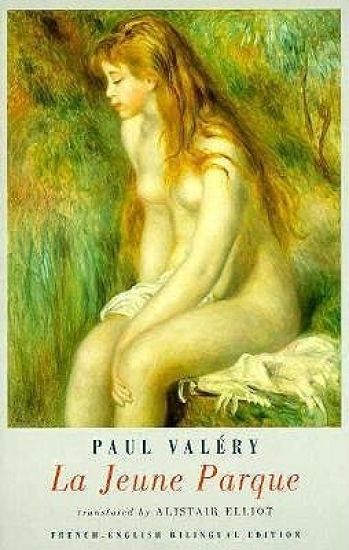
Paul Valery (1871-1945) was a poet and essayist, and along with Verlaine and Mallarme is regarded as one of the most important Symbolist writers, and an influence on poets from Eliot to Ashbery. He had a quiet life by many standards, but in one respect it was exemplary, even legendary; he made an early reputation in little magazines, decided to stop writing verse when still only 20, kept his silence for 20 years, then began again; and his first book of verse, published when he was 45, was his masterpiece La Jeune Parque.'A poem should not mean, but be,' said Archibald MacLeish. La Jeune Parque ('the goddess of Fate as a young woman') certainly exists: she's beautiful and makes great gestures. And as for what she means, there's a substantial amount of argument about that, so La Jeune Parque is a poem by either definition. It's a classic, by general agreement, written to the full 17th-century recipe for alexandrine couplets, and it's modern, with every word pulling its weight in more than one direction. Alistair Elliot's translation with notes is aimed at making this rewarding but difficult long poem accessible enough for bafflement to turn into admiration. He attempts to clarify its small puzzles and also trace the overall narrative line of Paul Valery's poem: it does have a story (what should a young woman do?) and does struggle towards a resolution. He also provides an introduction which deals with the interesting circumstances of the poem's four-year composition (1913-17), which resulted in Valery's instantly becoming a famous poet at the age of 45, after having written no poetry for 20 years.
The Outlook for Intelligence
Paul Valery; Denise Folliot; Jackson (TRN) Mathews
Princeton University Press
1989
pokkari
The description for this book, The Outlook for Intelligence: (With a preface by Francois Valery), will be forthcoming.
Monsieur Teste
Paul Valery; Jackson (TRN) Mathews; Bollingen Foundation Collection (Library of Congress)
Princeton University Press
1989
pokkari
Although not autobiographical in any usual sense, Valery's novel is profoundly personal. Monsieur Teste reflects Valery's preoccupation with the phenomenon of a mind detached from sensibility, yet he is also an ordinary fictional character. This volume includes "Snapshots of Monsieur Teste," excerpts from Valery's Cahiers.
Valery's dialogues are considered his most important works of imagination in prose. The volume brings together for the first time all the formal dialogues, including Eupalinos and six other pieces.
All of Valery's major meditations on the theory and practice of poetry are included in this volume. T. S. Eliot writes in his introduction that Valery "invented, and was to impose on his age . . . a new conception of the poet." In Valery's own words, the poet is characterized as a "cool scientist, almost an algebraist, in the service of a subtle dreamer." Valery focuses his attention on the deliberate formal work that transforms the dream into the poem, in his own poems, as well as in analyses of La Fontaine, Victor Hugo, Baudelaire, the Symbolists, Mallarme, Rimbaud, and others.
It begins with the poetry (French and English en face), including such masterpieces as "Le Cimetiere Marin" and portions of "La Jeune Parque"; then ranges through Valéry's work in fields as various as architecture, logic, the dance, literature, philosophy, and painting. It concludes with excerpts from his creative writings such as Monsieur Teste and the drama Mon Faust. The list of translators for this volume is distinguished. Among them are Lionel Abel, Léonie Adams, Malcolm Cowly, James Kirkup, C. Day Lewis, Jackson Mathews, Louise Varese, and Vernon Watkins.
Paul Valery, an Anthology
Paul Valery; Jackson (EDT) Mathews
Princeton University Press
1977
pokkari
James R. Lawler's elegant introduction deals with Valery's concerns and his influence, and also with critical interpretations of his work. The volume begins with "The Evening with Monsieur Teste" (1896), from the famous "anti-novel" Monsieur Teste, for whose translation Jackson Mathews received the National Book Award in 1974. It includes such notable essays as the "Introduction to the Method of Leonardo da Vinci," "The Crisis of Mind," and "Poetry and Abstract Thought." The importance of Valery's prose poetry has only recently been recognized, and a selection is presented here. There are also ten of his best-known poems in verse, among them "La Jeune Parque" and "Le Cimetiere Marin," with the French texts facing the English translations by David Paul. The anthology closes with two dialogues, one dating from the twenties, the other from 1943; which demonstrate the play of ideas--the intellectual vigor and grace--that are characteristic of Valery's work as a whole.