
Kirjailija
Paul Verlaine
Kirjat ja teokset yhdessä paikassa: 161 kirjaa, julkaisuja vuosilta 1952–2026, suosituimpiin kuuluu Arthur Rimbaud: Oeuvres complètes. Vertaile teosten hintoja ja tarkista saatavuus suomalaisista kirjakaupoista.
161 kirjaa
Kirjojen julkaisuvuodet: 1952–2026.
Plac sous le signe de l'astrologie, ce premier recueil de Verlaine est vou Saturne. Cette plan te, synonyme de malheur et de maladie, ne fut pas choisie par hasard: lorsque le livre para t en 1866 chez Lemerre, le po te est en proie une s rie de drames personnels. Dans la tradition de la po sie associ e l'humeur m lancolique, Verlaine exprime les sentiments ambivalents qui le taraudent, et de sa plume virtuose et musicale merge une oeuvre profond ment belle et sinc re.

Poems Saturnian by French poet Paul Verlaine (1844-1896) is the first book of poetry that the "Prince of Poets" wrote. This is the book that launched his career. First published in 1866 under the title of Po mes Saturniens, the influences are clearly Romantic and Parnassian: Charles Baudelaire, Victor Hugo, Leconte de Lisle principally, but also Th ophile Gautier, Catulle Mend s, Th odore Banville, and Albert Glatigny even. The poetry speaks for itself. Memory, memory, what do you want from me? In the fall, thrushes fluttered through the atonal air, And the sun was shooting a monotonous arrowThrough the yellowing woods where the bise blared. We were alone, and we were walking while dreaming, Our hair and our thoughts to the wind, she and I. When, turning her face to me, she said, suddenly, "What was your finest day?" in a voice golden and lively. Her sweet and sonorous voice, with its angelic timber. A discreet smile of mine gave her the answer, andDevotedly, I kissed her pale white hand.- Ah the first flowers, how sweetly scented they are And what a charming sound the first "yes" makesWhen it exits the lips and mouth of the beloved
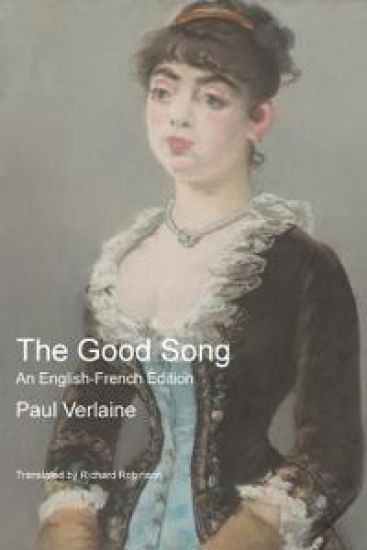
The Good Song (originally La Bonne Chanson) was the third book of poetry written by French poet Paul Verlaine (1844-1896). Originally published in 1870, The Good Songʼs theme is love. More particularly its theme is love for, and anticipation of marriage with, his future child-wife, Mathilde Maut de Fleurville. It includes all the concomitant feelings one might expect from the poet: love, joy, elation, doubt, fear, nuptial desire or passion, to name only a few. Their romance took place with the Franco-Prussian War in the background. Having appeared during the war, it was according to Victor Hugo "a flower in a shell." It represented, according to Edmond Lepelletier, a "transformation," a "change in poetic matter" and "a transition piece... the passage from objective, descriptive, plastic, externalized poetry to personal expression, to a confession of the soul, to the notation of battles of the heart or excitations of the brain." Included with this translation, in the appendix, is an extant excerpt of chapter VII, "Marriage - The Good Song (1869-1871)" from Edmond Lepelletierʼs "official" biography of Paul Verlaine: Paul Verlaine: His Life, His Work.
Sagesse. Images en couleurs de Maurice Denis, gravées sur bois par Beltrand
Paul Verlaine
Hachette Livre Bnf
2022
pokkari
F tes Galantes & Songs Without Words are the 2nd and 4th books of poetry by French poet and author Paul Verlaine. F tes Galantes (F tes Galantes in French) was originally published in 1869. A common theme running through these poems is the scenes, characters, and props of French comedy, semi-civilized pastorals, and commedia dellʼarte, - figures like Harlequin, Colombine, Pierrot, Leandre, Innamorati, etc., against natural backdrops and Watteau-like dreamy landscapes, with all the appurtenances that one might expect: mandolins, lutes, masques, moonlight, prettily clad women, moss-covered benches... - interfused with the sentiments, melancholy, amorous longings, joys and regrets of the poet. Songs Without Words (Romances sans paroles in French) was originally published in 1874. The common theme in these poems is the amorous and sentimental love lost, found, and lost again between the poet and his childhood female cousin, or his child wife, or his new-found friend and fellow poet Arthur Rimbaud against a backdrop of the Ardennes, the Belgian countryside, Brussels, and London. It includes perhaps Verlaineʼs most famous poem: "Il pleure dans mon coeur..."
Paul Verlaine, ses portraits
Frédéric-Auguste Cazals; Félicien Rops; H -A Cornuty; Paul Verlaine; Joris-Karl Huysmans; Ernest Delahaye
Hachette Livre Bnf
2022
pokkari

PAUL VERLAINEAUTUMN SONG: SELECTED POEMSTranslated by Arthur SymonsEdited by Andrew JaryWith the French text and an English translation. Paul Verlaine is one of the great lyrical French poets. This selection of poems includes work from Paul Verlaine's collections such as Sagesse, Aquarelles, Romances Sans Paroles, Jadis, Poems Saturniens and Fetes Galantes. Paul Verlaine (1844-1896) is one of the great 19th century French poets, part of the group that included Charles Baudelaire, Lautr amont, G rard de Nerval and of course Arthur Rimbaud. Many of Verlaine's most significant poems are collected in this book, and Verlaine emerges as a highly accomplished artist, with a lyrical rhyming style that's wholly his own (and it sounds particularly beautiful in French - Verlaine is tricky to translate). Arthur Symons was one of the important early translators of Verlaine into English. This edition includes the French text opposite the English translations, two introductions to the poetry of Paul Verlaine (by Symons and Jary), illustrations, and a bibliography. 164pp. www.crmoon.com
The first things that come to minds and lips, when thinking about Paul Verlaineʼs poetry, are music and nuance. It is through his heightened employment simultaneously and regularly of those two attributes, of those two mesmerizing attributes of his often absinthe-like poetry, that Paul Verlaine, the poet, really shines, - brightly, not incandescently, but fluorescently, like the greenish-blue polestar on a winterʼs night. But the poetry found in Songs for Her (1891) and Odes in Her Honor (1893) is somewhat contrary to the commonly held ideas of what Paul Verlaineʼs poetry is or "should be," in terms of nuance; it is just as musically virtuosic or experimental as his earlier poetry was, which we all know and love. Because these are poems of mostly physical love, but also emotional love, between a middle-aged man and a woman (two women actually, just not trois) - there is arguably little need for, and little use of, nuance. They are paeans to physical love. Paul Verlaine didnʼt set out to be Petrarch in these two books of poetry. And neither Philom ne, the tantalizing tart at least twenty years his junior, the "her" in Odes in Her Honor; nor Eug nie, his practical and good-hearted if not somewhat ugly and thick-necked bed partner, the "her" in Songs for Her, - neither of them, those two muses, are like Laura.
Biblio-Sonnets, Poèmes Inédits
Paul Verlaine; Richard Ranft; Adrien Bertrand; Pierre Dauze
Hachette Livre - BNF
2020
pokkari
Romances sans paroles de Paul Verlaine (fiche de lecture et analyse complète de l'oeuvre)
Paul Verlaine
Comprendre La Litterature
2020
pokkari