Kirjojen hintavertailu – 12 859 818 kirjaa ja 27 kauppaa

Kirjailija

Paul Warmington

Kirjat ja teokset yhdessä paikassa: 6 kirjaa, julkaisuja vuosilta 2009–2024, suosituimpiin kuuluu Improving Inter-professional Collaborations. Vertaile teosten hintoja ja tarkista saatavuus suomalaisista kirjakaupoista.

6 kirjaa

Kirjojen julkaisuvuodet: 2009–2024.

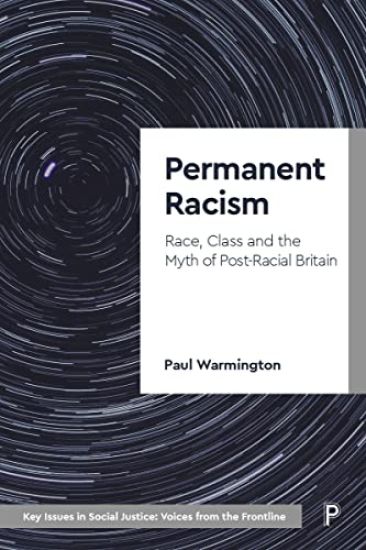
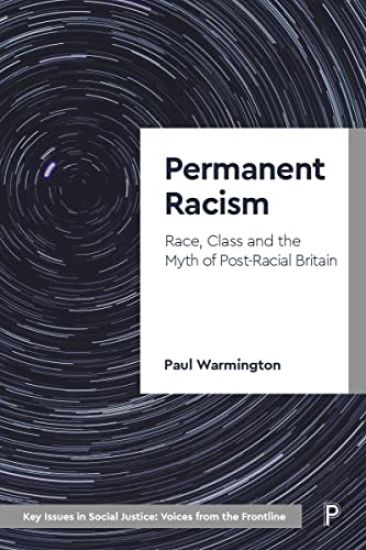
Permanent Racism

Permanent Racism

Paul Warmington

Bristol University Press
2024
sidottu
Racism has no place in our society, we are told. In fact, its role is crucial but today public debate on race in Britain is constrained by a facile postracialism. Its features are colourblind narratives, an ‘anti-antiracist’ discourse and erasure of Black working class identities. This book examines and challenges the marginalisation of critical race analysis in debates on social justice. It reconceptualises Critical Race Theory from a British standpoint, foregrounding the concept of ‘permanent racism’ and its importance in understanding race as a fully social relationship. Highlighting the need to decolonise public debate and antiracism itself, the book provides an essential resource for academics, students and activists who wish to decolonise public debates on racism, social class, education and social policy.
Permanent Racism

Permanent Racism

Paul Warmington

Bristol University Press
2024
nidottu
Racism has no place in our society, we are told. In fact, its role is crucial but today public debate on race in Britain is constrained by a facile postracialism. Its features are colourblind narratives, an ‘anti-antiracist’ discourse and erasure of Black working class identities. This book examines and challenges the marginalisation of critical race analysis in debates on social justice. It reconceptualises Critical Race Theory from a British standpoint, foregrounding the concept of ‘permanent racism’ and its importance in understanding race as a fully social relationship. Highlighting the need to decolonise public debate and antiracism itself, the book provides an essential resource for academics, students and activists who wish to decolonise public debates on racism, social class, education and social policy.
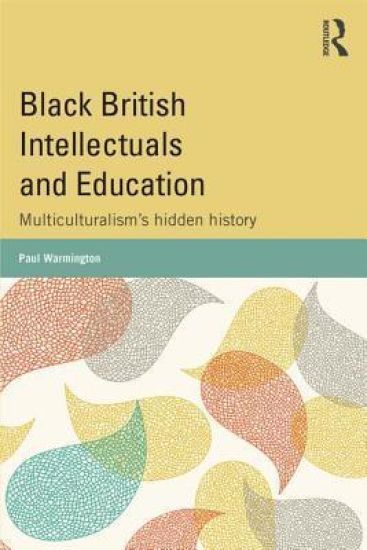
Black British Intellectuals and Education
Ask any moderately interested Briton to name a black intellectual and chances are the response will be an American name: Malcolm X or Barack Obama, Toni Morrison or Cornel West. Yet Britain has its own robust black intellectual traditions and its own master teachers, among them C. L. R. James, Claudia Jones, Ambalavaner Sivanandan, Stuart Hall and Paul Gilroy. However, while in the USA black public intellectuals are an embedded, if often embattled, feature of national life, black British thinkers remain routinely marginalized. Black British Intellectuals and Education counters this neglect by exploring histories of race, education and social justice through the work of black British public intellectuals: academics, educators and campaigners. The book provides a critical history of diverse currents in black British intellectual production, from the eighteenth century, through post-war migration and into the ‘post-multicultural’ present, focusing on the sometimes hidden impacts of black thinkers on education and social justice. Firstly, it argues that black British thinkers have helped fundamentally to shape educational policy, practice and philosophy, particularly in the post-war period. Secondly, it suggests that education has been one of the key spaces in which the mass consciousness of being black and British has emerged, and a key site in which black British intellectual positions have been defined and differentiated. Chapters explore:• the early development of black British intellectual life, from the slave narratives to the anti-colonial movements of the early twentieth century• how African-Caribbean and Asian communities began to organize against racial inequalities in schooling in the post-Windrush era of the 1950s and 60s• how, from out of these grassroots struggles, black intellectuals and activists of the 1970s, 80s and 90s developed radical critiques of education, youth and structural racism • the influence of multiculturalism, black cultural studies and black feminism on education• current developments in black British educational work, including ‘post-racial’ approaches, Critical Race Theory and black social conservatism. Black British Intellectuals and Education will be of key relevance to undergraduates, postgraduates and academics engaged in research on race, ethnicity, education, social justice and cultural studies.

Black British Intellectuals and Education
Ask any moderately interested Briton to name a black intellectual and chances are the response will be an American name: Malcolm X or Barack Obama, Toni Morrison or Cornel West. Yet Britain has its own robust black intellectual traditions and its own master teachers, among them C. L. R. James, Claudia Jones, Ambalavaner Sivanandan, Stuart Hall and Paul Gilroy. However, while in the USA black public intellectuals are an embedded, if often embattled, feature of national life, black British thinkers remain routinely marginalized. Black British Intellectuals and Education counters this neglect by exploring histories of race, education and social justice through the work of black British public intellectuals: academics, educators and campaigners. The book provides a critical history of diverse currents in black British intellectual production, from the eighteenth century, through post-war migration and into the ‘post-multicultural’ present, focusing on the sometimes hidden impacts of black thinkers on education and social justice. Firstly, it argues that black British thinkers have helped fundamentally to shape educational policy, practice and philosophy, particularly in the post-war period. Secondly, it suggests that education has been one of the key spaces in which the mass consciousness of being black and British has emerged, and a key site in which black British intellectual positions have been defined and differentiated. Chapters explore:• the early development of black British intellectual life, from the slave narratives to the anti-colonial movements of the early twentieth century• how African-Caribbean and Asian communities began to organize against racial inequalities in schooling in the post-Windrush era of the 1950s and 60s• how, from out of these grassroots struggles, black intellectuals and activists of the 1970s, 80s and 90s developed radical critiques of education, youth and structural racism • the influence of multiculturalism, black cultural studies and black feminism on education• current developments in black British educational work, including ‘post-racial’ approaches, Critical Race Theory and black social conservatism. Black British Intellectuals and Education will be of key relevance to undergraduates, postgraduates and academics engaged in research on race, ethnicity, education, social justice and cultural studies.
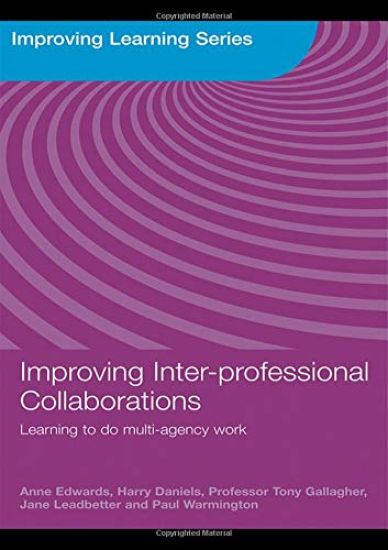
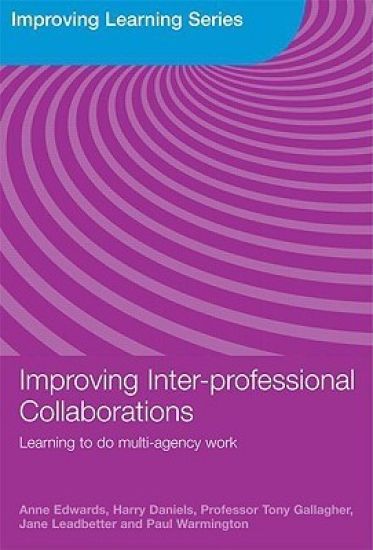
Improving Inter-professional Collaborations

Improving Inter-professional Collaborations

Anne Edwards; Harry Daniels; Tony Gallagher; Jane Leadbetter; Paul Warmington

Routledge
2009
sidottu
** Shortlisted for the NASEN Special Educational Needs Academic Book Award 2009 **Inter-professional collaborations are invaluable relationships which can prevent the social exclusion of children and young people and are now a common feature of welfare policies worldwide. Drawing on a four year study of the skills and understanding required of practitioners in order to establish the most effective interagency collaborations, this comprehensive text Gives examples from practitioners developing inter-professional practices allow readers to reflect on their relevance for their own work Emphasises what needs to be learnt for responsive inter-professional work and how that learning can be promoted Examines how professional and organisational learning are intertwined Suggests how organisations can provide conditions to support the enhanced forms of professional practices revealed in the study Reveals the professional motives driving the practices as well as how they are founded and sustainedFull of ideas to help shape collaborative inter-professional practice this book shows that specialist expertise is distributed across local networks. The reader is encouraged to develop the capacity to recognise the expertise of others and to negotiate theor work with others. This book is essential reading for practitioners in education and educational psychology or social work, and offers crucial insights for local strategists and those involved in professional development work. The book also has a great deal to offer researchers working in the area of cultural historical activity theory (CHAT). The four year study was framed by CHAT and offers a well-worked example of how CHAT can be used to reveal sense-making in new practices and the organizational implications of enhanced professional decision-making. As well as being important contributors to the developing CHAT field, the five authors have worked in the area of social exclusion and professional learning for several years and have brought inter-disciplinary strengths to this account of inter-professional work.
Improving Inter-professional Collaborations

Improving Inter-professional Collaborations

Anne Edwards; Harry Daniels; Tony Gallagher; Jane Leadbetter; Paul Warmington

Routledge
2009
nidottu
** Shortlisted for the NASEN Special Educational Needs Academic Book Award 2009 **Inter-professional collaborations are invaluable relationships which can prevent the social exclusion of children and young people and are now a common feature of welfare policies worldwide. Drawing on a four year study of the skills and understanding required of practitioners in order to establish the most effective interagency collaborations, this comprehensive text Gives examples from practitioners developing inter-professional practices allow readers to reflect on their relevance for their own work Emphasises what needs to be learnt for responsive inter-professional work and how that learning can be promoted Examines how professional and organisational learning are intertwined Suggests how organisations can provide conditions to support the enhanced forms of professional practices revealed in the study Reveals the professional motives driving the practices as well as how they are founded and sustainedFull of ideas to help shape collaborative inter-professional practice this book shows that specialist expertise is distributed across local networks. The reader is encouraged to develop the capacity to recognise the expertise of others and to negotiate theor work with others. This book is essential reading for practitioners in education and educational psychology or social work, and offers crucial insights for local strategists and those involved in professional development work. The book also has a great deal to offer researchers working in the area of cultural historical activity theory (CHAT). The four year study was framed by CHAT and offers a well-worked example of how CHAT can be used to reveal sense-making in new practices and the organizational implications of enhanced professional decision-making. As well as being important contributors to the developing CHAT field, the five authors have worked in the area of social exclusion and professional learning for several years and have brought inter-disciplinary strengths to this account of inter-professional work.