
Kirjailija
Paul Warwick
Kirjat ja teokset yhdessä paikassa: 5 kirjaa, julkaisuja vuosilta 1995–2019, suosituimpiin kuuluu Global Learning and Education. Vertaile teosten hintoja ja tarkista saatavuus suomalaisista kirjakaupoista.
5 kirjaa
Kirjojen julkaisuvuodet: 1995–2019.
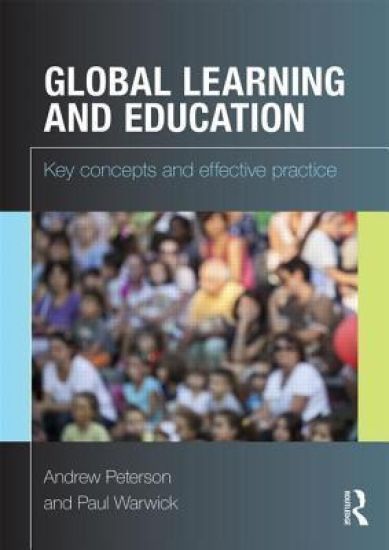
What is globalisation? How are its effects felt by different people across the world? How can we help young people flourish in a world characterised by globalisation? Conflict, poverty, breaches of human rights, and environmental sustainability are everyday issues for global citizens today, old and young. Global Learning and Education presents a detailed and challenging introduction to a central concern facing education systems and curricula around the world: How young people understand and experience globalisation and how meaningful global learning can be developed. Encouraging a critical and reflective approach in order to advance understanding of a range of theoretical and practical factors, it considers the meaning and definitions of globalisation, global citizenship and global education. Global Learning and Education explores key issues including interconnectedness and interdependency, cultural diversity, social justice and sustainable development. It considers how global learning should and can imbue all aspects of education, within curriculum subjects, through project based learning, and through extra-curricular activities that help students participate and engage in global issues. It argues the importance of the mission and ethos of a school itself, of shaping global learning for different educational contexts, and of ensuring teaching and learning meets the needs of individual learners. Global Learning and Education is a comprehensive, thought-provoking - sometimes contentious - introduction for educationalists concerned with what globalisation means for our young people. Illustrated throughout with case studies that seek to inspire creativity and hope, and including questions and suggested reading for further investigation, it is essential reading for all those involved in the teaching and learning of young people, as well as those studying this vital topic on Education Studies and Masters level courses.
What is globalisation? How are its effects felt by different people across the world? How can we help young people flourish in a world characterised by globalisation? Conflict, poverty, breaches of human rights, and environmental sustainability are everyday issues for global citizens today, old and young. Global Learning and Education presents a detailed and challenging introduction to a central concern facing education systems and curricula around the world: How young people understand and experience globalisation and how meaningful global learning can be developed. Encouraging a critical and reflective approach in order to advance understanding of a range of theoretical and practical factors, it considers the meaning and definitions of globalisation, global citizenship and global education. Global Learning and Education explores key issues including interconnectedness and interdependency, cultural diversity, social justice and sustainable development. It considers how global learning should and can imbue all aspects of education, within curriculum subjects, through project based learning, and through extra-curricular activities that help students participate and engage in global issues. It argues the importance of the mission and ethos of a school itself, of shaping global learning for different educational contexts, and of ensuring teaching and learning meets the needs of individual learners. Global Learning and Education is a comprehensive, thought-provoking - sometimes contentious - introduction for educationalists concerned with what globalisation means for our young people. Illustrated throughout with case studies that seek to inspire creativity and hope, and including questions and suggested reading for further investigation, it is essential reading for all those involved in the teaching and learning of young people, as well as those studying this vital topic on Education Studies and Masters level courses.
Government Survival in Parliamentary Democracies
Paul Warwick
Cambridge University Press
2007
pokkari
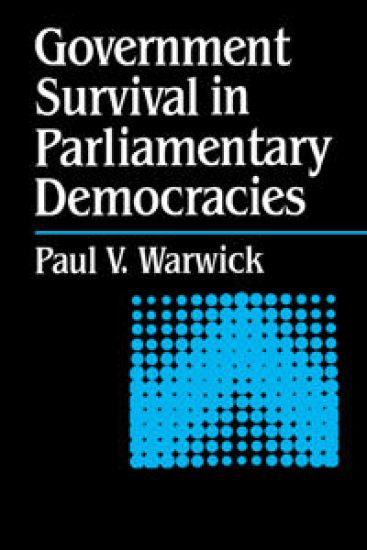
This book describes the results of a quantitative investigation into one of the central questions of political science: what determines how long governments survive in parliamentary democracies? Government survival is important because it constitutes an essential component of the overall functioning of parliamentary democracies; it is also closely associated with the introduction to the discipline of event history analysis, a highly promising statistical methodology. The investigation utilizes this methodology on what is undoubtedly the most comprehensive data set yet assembled on governments, comprising hundreds of variables measured for governments in sixteen West European parliamentary democracies over the entire post-war period to 1989. The results fundamentally challenge the central thread of theorizing on government survival and point to an alternative conceptualization of the relationship among governments, parties and voters.
Government Survival in Parliamentary Democracies
Paul Warwick
Cambridge University Press
1995
sidottu
This book describes the results of a quantitative investigation into one of the central questions of political science: what determines how long governments survive in parliamentary democracies? Government survival is important because it constitutes an essential component of the overall functioning of parliamentary democracies; it is also closely associated with the introduction to the discipline of event history analysis, a highly promising statistical methodology. The investigation utilises this methodology on what is undoubtedly the most comprehensive data set yet assembled on governments, comprising hundreds of variables measured for governments in sixteen West European parliamentary democracies over the entire postwar period to 1989. The results fundamentally challenge the central thread of current theorising on government survival and point to an alternative conceptualisation of the relationship among governments, parties, and voters.