Kirjailija
Paula Brown
Kirjat ja teokset yhdessä paikassa: 11 kirjaa, julkaisuja vuosilta 1978–2019, suosituimpiin kuuluu My Pastor, My Molester, My Lover. Vertaile teosten hintoja ja tarkista saatavuus suomalaisista kirjakaupoista.
11 kirjaa
Kirjojen julkaisuvuodet: 1978–2019.
Peoples of the Niger-Benue Confluence (The Nupe. The Igbira. The Igala. The Idioma-speaking Peoples)
Daryll Forde; Paula Brown; Robert Armstrong
Routledge
2019
nidottu
Routledge is proud to be re-issuing this landmark series in association with the International African Institute. The series, published between 1950 and 1977, brings together a wealth of previously un-co-ordinated material on the ethnic groupings and social conditions of African peoples. Concise, critical and (for its time) accurate, the Ethnographic Survey contains sections as follows: Physical Environment Linguistic Data Demography History & Traditions of Origin Nomenclature Grouping Cultural Features: Religion, Witchcraft, Birth, Initiation, Burial Social & Political Organization: Kinship, Marriage, Inheritance, Slavery, Land Tenure, Warfare & Justice Economy & Trade Domestic ArchitectureEach of the 50 volumes will be available to buy individually, and these are organized into regional sub-groups: East Central Africa, North-Eastern Africa, Southern Africa, West Central Africa, Western Africa, and Central Africa Belgian Congo. The volumes are supplemented with maps, available to view on routledge.com or available as a pdf from the publishers.

Published with assistance from BePublished.org in December 2018, Paula Brown's literary debut (MY PASTOR, MY MOLESTER, MY LOVER) is a gripping work of non-fiction that uncovers dark secrets and provides pathways to breakthroughs. The author penned this work in hopes it would help those in similar situations find healing." In order for me to receive God's beauty, I had to surrender the nastiness of my past. It wasn't easy to recognize the beauty. The ashes of my brokenness were scattered so high. When I learned to totally trust God, He began to shape and mold my life. My faith grew and it gave me a brand new identity. Without a doubt, I know who I am and for that, I'll keep giving him my ashes," Paula reveals. "My truth is that my body was molested and my mind was raped. At the age of 13 I should have been enjoying my life as an adolescent, hanging out and enjoying my friends. Instead, I was taken advantage of by a man of the cloth, a man of power, a man that I trusted and looked up to in my church. The Devil had strategically positioned him to harm me. The devil had convinced me that the things that happened to me occurred because of something I had done. As though I was to blame. He planted the seeds in my mind that I should have done better, I should have been different. The truth is, Kilgore should have done better. I was an innocent child. I now understand that my past does not define who God created me to be." Available as an ebook for $9.95, MY PASTOR, MY MOLESTER, MY LOVER by Paula Brown may also be purchased worldwide as a paperback for $19.95 from your favorite book retailer.
Peoples of the Niger-Benue Confluence (The Nupe. The Igbira. The Igala. The Idioma-speaking Peoples)
Daryll Forde; Paula Brown; Robert Armstrong
Routledge
2017
sidottu
Routledge is proud to be re-issuing this landmark series in association with the International African Institute. The series, published between 1950 and 1977, brings together a wealth of previously un-co-ordinated material on the ethnic groupings and social conditions of African peoples. Concise, critical and (for its time) accurate, the Ethnographic Survey contains sections as follows: Physical Environment Linguistic Data Demography History & Traditions of Origin Nomenclature Grouping Cultural Features: Religion, Witchcraft, Birth, Initiation, Burial Social & Political Organization: Kinship, Marriage, Inheritance, Slavery, Land Tenure, Warfare & Justice Economy & Trade Domestic ArchitectureEach of the 50 volumes will be available to buy individually, and these are organized into regional sub-groups: East Central Africa, North-Eastern Africa, Southern Africa, West Central Africa, Western Africa, and Central Africa Belgian Congo. The volumes are supplemented with maps, available to view on routledge.com or available as a pdf from the publishers.


In 1933 an Australian expedition discovered in the New Guinea Highlands a people who had for thousands of years been living isolated from the civilized world, the Chimbu. Never before was the westernization of an isolated people so thoroughly examined. This volume illustrates, contrary to widely held preconceptions about the nature of primitive societies, that the Chimbu have always been an adaptable people, whose concern for the present and for change has surpassed their attachment to tradition and the past. Originally published in 1973.
In 1933 an Australian expedition discovered in the New Guinea Highlands a people who had for thousands of years been living isolated from the civilized world, the Chimbu. Never before was the westernization of an isolated people so thoroughly examined. This volume illustrates, contrary to widely held preconceptions about the nature of primitive societies, that the Chimbu have always been an adaptable people, whose concern for the present and for change has surpassed their attachment to tradition and the past. Originally published in 1973.
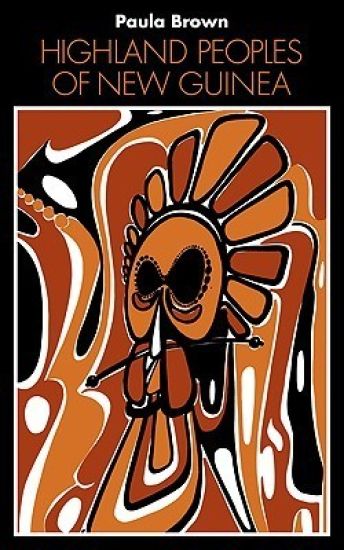
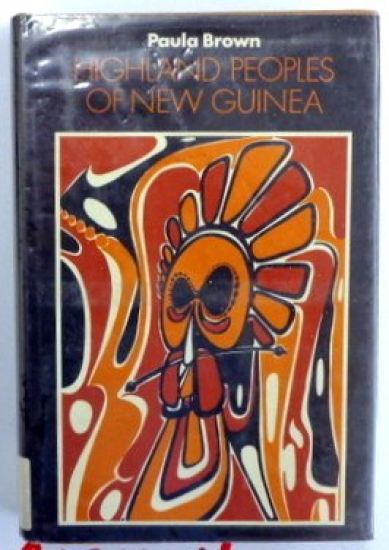
Fifty years ago the New Guinea highlands were isolated and unknown to outsiders. As the highland peoples of New Guinea are among the last large groups to be brought into the world community, they are of major interest to ecologists, social anthropologists and cultural historians. This study synthesises previous anthropological research on the New Guinea highland peoples and cultures and demonstrates the interrelations of ecological adaptation, population and society. In describing, analysing and comparing the technology, culture and community life of peoples of the highland and the highland fringe, Professor Brown shows the special character of these societies, which have developed in isolation. In addition to examining the unique regional development of the New Guinea highland peoples, this book, a study in ecological and social anthropology, brings together theses two analytical fields and demonstrates their interrelationships.