
Kirjojen hintavertailu – 12 903 725 kirjaa ja 27 kauppaa

Kirjailija

Paula Castro

Kirjat ja teokset yhdessä paikassa: 2 kirjaa, julkaisuja vuosilta 2014–2022, suosituimpiin kuuluu Climate Change Mitigation in Developing Countries. Vertaile teosten hintoja ja tarkista saatavuus suomalaisista kirjakaupoista.

2 kirjaa

Kirjojen julkaisuvuodet: 2014–2022.

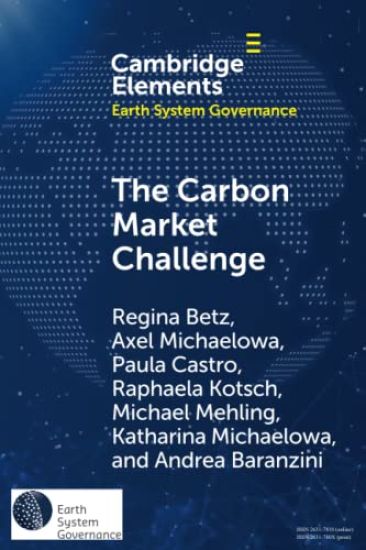
The Carbon Market Challenge

The Carbon Market Challenge

Regina Betz; Axel Michaelowa; Paula Castro; Raphaela Kotsch; Michael Mehling; Katharina Michaelowa; Andrea Baranzini

Cambridge University Press
2022
pokkari
Carbon markets – both emission trading systems and baseline and credit systems – are an increasingly common policy instrument being introduced to address climate change mitigation. However, their design is crucial to ensure that they deliver cost-effective emission reductions while maintaining environmental integrity. This Element puts together a comprehensive, principle-based overview of the risks and abuses to environmental integrity and cost effectiveness that have emerged for carbon markets at all jurisdictional levels around the world, provides concrete examples, and offers effective policy and governance solutions to overcome such risks. This title is also available as Open Access on Cambridge Core.
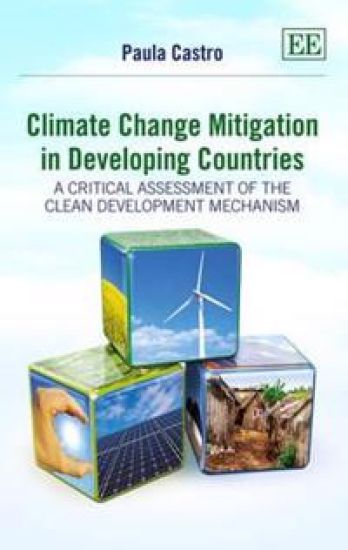
Climate Change Mitigation in Developing Countries

Climate Change Mitigation in Developing Countries

Paula Castro

Edward Elgar Publishing Ltd
2014
sidottu
In this groundbreaking book, Paula Castro presents the first systematic categorization of positive and negative incentives generated by the Clean Development Mechanism (CDM) for climate change mitigation in the Global South. To reduce the cost of meeting their greenhouse gas emission reduction commitments under the Kyoto Protocol, industrialized countries may rely on the CDM, a market instrument that allows them to count emission reductions from projects in developing countries as their own. Presented in four core empirical chapters, the book critically reviews whether and how the CDM creates incentives or disincentives for developing country action towards reducing greenhouse gas emissions, and draws lessons for the future international climate change regime. Recommendations and discussion on the reform of the CDM invoke debate on the future of this policy in developing countries, which is vital material for both policymakers and international institutions introducing similar instruments. Students and researchers working on topics related to environmental politics, climate policy, environmental economics and environmental science will also find this resource invaluable.