Kirjojen hintavertailu – 12 903 725 kirjaa ja 27 kauppaa

Kirjailija

Pauline Wakeham

Kirjat ja teokset yhdessä paikassa: 6 kirjaa, julkaisuja vuosilta 2008–2026, suosituimpiin kuuluu Indigenous Reparations and Settler Colonial Reckoning. Vertaile teosten hintoja ja tarkista saatavuus suomalaisista kirjakaupoista.

6 kirjaa

Kirjojen julkaisuvuodet: 2008–2026.

Reconciling Canada

Reconciling Canada

Jennifer Henderson; Pauline Wakeham

University of Toronto Press
2013
sidottu
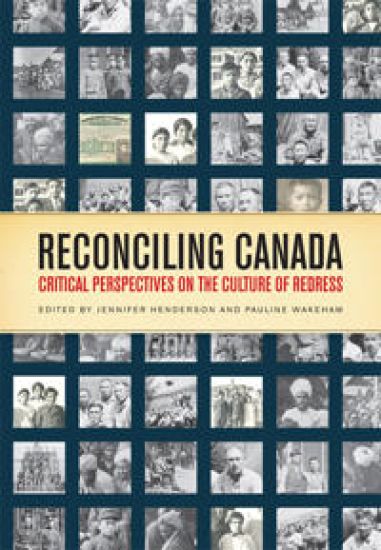
Truth and reconciliation commissions and official governmental apologies continue to surface worldwide as mechanisms for coming to terms with human rights violations and social atrocities. As the first scholarly collection to explore the intersections and differences between a range of redress cases that have emerged in Canada in recent decades, Reconciling Canada provides readers with the contexts for understanding the phenomenon of reconciliation as it has played out in this multicultural settler state. In this volume, leading scholars in the humanities and social sciences relate contemporary political and social efforts to redress wrongs to the fraught history of government relations with Aboriginal and diasporic populations. The contributors offer ground-breaking perspectives on Canada’s ‘culture of redress,’ broaching questions of law and constitutional change, political coalitions, commemoration, testimony, and literatures of injury and its aftermath. Also assembled together for the first time is a collection of primary documents – including government reports, parliamentary debates, and redress movement statements – prefaced with contextual information. Reconciling Canada provides a vital and immensely relevant illumination of the dynamics of reconciliation, apology, and redress in contemporary Canada.
Reconciling Canada

Reconciling Canada

Jennifer Henderson; Pauline Wakeham

University of Toronto Press
2013
pokkari
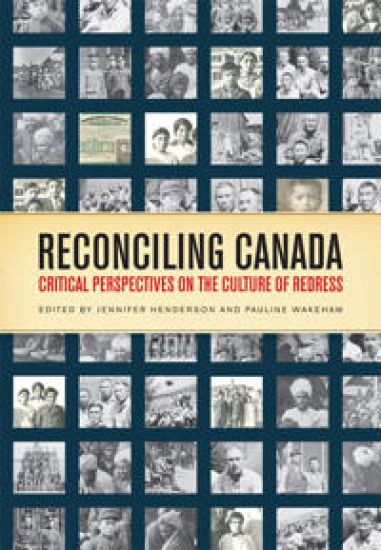
Truth and reconciliation commissions and official governmental apologies continue to surface worldwide as mechanisms for coming to terms with human rights violations and social atrocities. As the first scholarly collection to explore the intersections and differences between a range of redress cases that have emerged in Canada in recent decades, Reconciling Canada provides readers with the contexts for understanding the phenomenon of reconciliation as it has played out in this multicultural settler state. In this volume, leading scholars in the humanities and social sciences relate contemporary political and social efforts to redress wrongs to the fraught history of government relations with Aboriginal and diasporic populations. The contributors offer ground-breaking perspectives on Canada’s ‘culture of redress,’ broaching questions of law and constitutional change, political coalitions, commemoration, testimony, and literatures of injury and its aftermath. Also assembled together for the first time is a collection of primary documents – including government reports, parliamentary debates, and redress movement statements – prefaced with contextual information. Reconciling Canada provides a vital and immensely relevant illumination of the dynamics of reconciliation, apology, and redress in contemporary Canada.
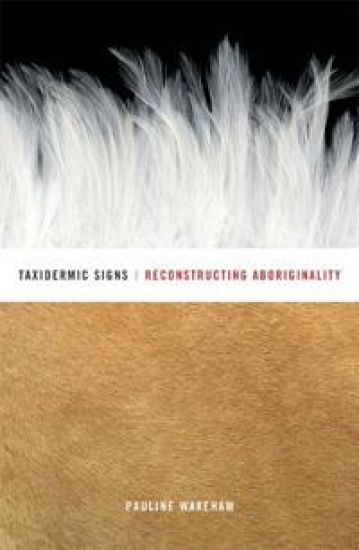
Taxidermic Signs

Taxidermic Signs

Pauline Wakeham

University of Minnesota Press
2008
sidottu
Taxidermy-the preservation, stuffing, and mounting of animal skins for lifelike display-has been traced back over four centuries to imperial Europe. In the intervening centuries it has remained inextricably linked to the politics of colonial conquest, materializing Western fantasies of mastery over the natural world and control of unruly, “wild” bodies. In Taxidermic Signs, Pauline Wakeham decodes the practice of taxidermy as it was performed in North America from the late nineteenth century to the present, revealing its connection to ecological and racial discourses integral to the maintenance of colonial power. Moving beyond the literal practice of stuffing skins, Wakeham theorizes taxidermy as a sign system that conflates “animality” and “aboriginality” within colonial narratives of extinction. Through a series of provocative case studies, Wakeham demonstrates how the semiotics of taxidermy travels across diverse cultural texts. From the display of animal specimens and aboriginal artifacts in the Banff Park Museum, to the ethnographic films of Edward S. Curtis and Marius Barbeau, to the fetishization of aboriginal remains in the Kennewick Man and Kwäday Dän Ts’inchi repatriation cases, Wakeham argues that taxidermy’s sign system reinvents mythologies of disappearing wildlife and vanishing Indians while simultaneously valorizing the power of Western technologies to memorialize these figures. Seeking to destabilize the hierarchies of anthropocentric white supremacy, Wakeham presents an analysis of taxidermy as both a material practice and a symbolic system foundational to colonial authority in North America and still vital to the maintenance of power asymmetries today. Pauline Wakeham is assistant professor of English at the University of Western Ontario.

Taxidermic Signs

Taxidermic Signs

Pauline Wakeham

University of Minnesota Press
2008
nidottu
Taxidermy-the preservation, stuffing, and mounting of animal skins for lifelike display-has been traced back over four centuries to imperial Europe. In the intervening centuries it has remained inextricably linked to the politics of colonial conquest, materializing Western fantasies of mastery over the natural world and control of unruly, “wild” bodies. In Taxidermic Signs, Pauline Wakeham decodes the practice of taxidermy as it was performed in North America from the late nineteenth century to the present, revealing its connection to ecological and racial discourses integral to the maintenance of colonial power. Moving beyond the literal practice of stuffing skins, Wakeham theorizes taxidermy as a sign system that conflates “animality” and “aboriginality” within colonial narratives of extinction. Through a series of provocative case studies, Wakeham demonstrates how the semiotics of taxidermy travels across diverse cultural texts. From the display of animal specimens and aboriginal artifacts in the Banff Park Museum, to the ethnographic films of Edward S. Curtis and Marius Barbeau, to the fetishization of aboriginal remains in the Kennewick Man and Kwäday Dän Ts’inchi repatriation cases, Wakeham argues that taxidermy’s sign system reinvents mythologies of disappearing wildlife and vanishing Indians while simultaneously valorizing the power of Western technologies to memorialize these figures. Seeking to destabilize the hierarchies of anthropocentric white supremacy, Wakeham presents an analysis of taxidermy as both a material practice and a symbolic system foundational to colonial authority in North America and still vital to the maintenance of power asymmetries today. Pauline Wakeham is assistant professor of English at the University of Western Ontario.