Kirjojen hintavertailu – 12 859 828 kirjaa ja 27 kauppaa

Kirjailija

Pearson

Kirjat ja teokset yhdessä paikassa: 128 kirjaa, julkaisuja vuosilta 1995–2026, suosituimpiin kuuluu NorthStar R/W and L/S 1-4 Instructor Access Digital - Instant Access. Vertaile teosten hintoja ja tarkista saatavuus suomalaisista kirjakaupoista.

Nimi esiintyy myös muodoissa: . . Pearson

128 kirjaa

Kirjojen julkaisuvuodet: 1995–2026.

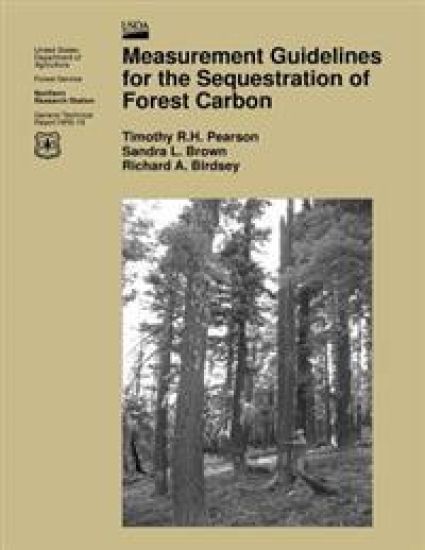
Measurement Guidelines for the Sequestration of Forest Carbon

Measurement Guidelines for the Sequestration of Forest Carbon

Pearson

Createspace Independent Publishing Platform
2015
nidottu
Measurement guidelines for forest carbon sequestration were developed to support reporting by public and private entities to greenhouse gas registries. Although developed primarily for reporting about forestry "activities"-the categories of actions comprising forestry-rather than "projects", which are specifi c carbon management undertakings, the guidelines are based on experience with methods for the latter and thus are broadly useful for carbon estimation. The national greenhouse gas registry, known as 1605(b) in reference to the original authorizing language contained in the Energy Policy Act of 1992, accepts reports by entities about their forestry activities as a bundle (Birdsey 2006). Other greenhouse gas registries, such as that maintained by the state of California, accept reports about specific forestry projects.
Big Fun 1 Student Book with CD-ROM

Big Fun 1 Student Book with CD-ROM

PEARSON

Pearson Education (US)
2014
muu
Big Fun is a three-level pre-primary course for children ages 3-5. Big Fun teaches young children English — in the same way they learn their native language — by making sure they listen, imitate, repeat, and begin to speak on their own. Starting with basic vocabulary and target language, children learn English in the context of eight
Die Fronica

Die Fronica

Pearson

Cambridge University Press
2010
pokkari
Karl Pearson (1857–1936) was a polymath thinker well known for founding the discipline of mathematical statistics, as well as for being a controversial proponent of eugenics. First published in 1887, and presented here in its original German form, this volume relates to the legends surrounding Saint Veronica, the pious Jerusalem woman who reputedly offered her veil to Jesus as he walked to Golgotha, and then found an image of his face impressed upon the veil after he had wiped his brow with it. The text is well presented, with numerous illustrative examples, and will be of value to anyone with an interest in the story of Veronica and Christian symbolism in general.
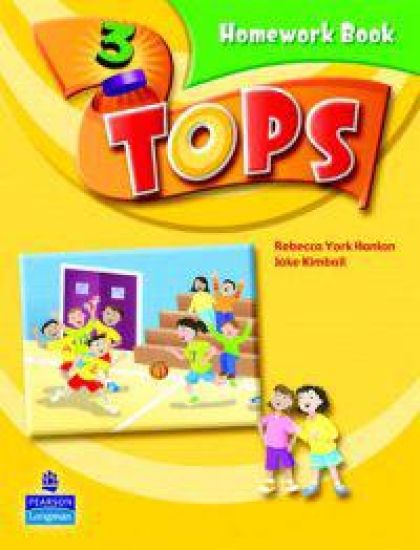
Tops Homeowork Book, Level 3

Tops Homeowork Book, Level 3

PEARSON

PEARSON EDUCATION LIMITED
2008
pokkari
The Tops Homework Book gives: • extra practice to reinforce language teaching. This six-level course provides a student-friendly grammar focus and lots of practice. Creative lessons present thematically related vocabulary, a values curriculum, songs, games and ready-to-use assessment.
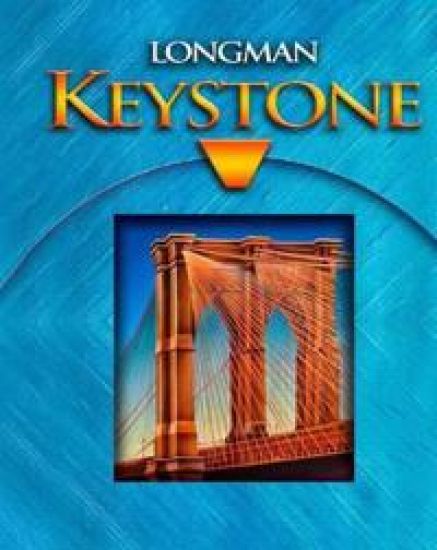
KEYSTONE F                     STUDENT BOOK         158259

KEYSTONE F STUDENT BOOK 158259

PEARSON

Pearson Education (US)
2007
sidottu
Longman Keystone is a multi-level program designed for English learners and struggling readers whose academic achievement is two or more years below grade level. Through explicit, intensive, and focused instruction that accelerates students’ language acquisition, reading comprehension, vocabulary, and oral and written communication skills, students will quickly begin achieving academic success and be better prepared to transition to mainstream coursework across the curriculum. Longman Keystone blends rigorous, research-based reading and language skills instruction together with a balance of content-area readings and age-appropriate, high-interest literature. In addition, this series incorporates the focused and purposeful instructional principles of Understanding by Design, which allow students to demonstrate their understanding and mastery of skills through multiple formal and informal assessment opportunities. Through this process, students will be equipped with the key transferable academic skills necessary for lifelong success. For more information about Longman Keystone, including sample units and correlations, please visit http://www.longmanschool.com.

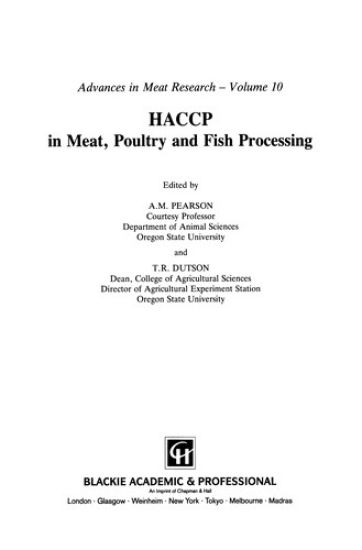
Hazard Anal Crit Cntrl Point Haccp

Hazard Anal Crit Cntrl Point Haccp

Pearson

Aspen Publishers
1995
sidottu
1 The origin and concept of HACCP.- 1.1 Introduction.- 1.2 Development of the HACCP concept.- 1.2.1 HACCP - A new approach.- 1.2.2 HACCP - A preventative system.- 1.3 Acceptance of HACCP by the food industry.- 1.3.1 Establishment of HACCP by other companies.- 1.3.2 Role of various agencies.- 1.4 Summary.- References.- 2 The HACCP system and how it fits into FSIS programs.- 2.1 Introduction.- 2.1.1 FSIS background.- 2.1.2 Industrial responsibility and HACCP.- 2.1.3 FSIS and HACCP.- 2.2 HACCP study.- 2.2.1 Background.- 2.2.2 Consultations and public hearings.- 2.2.3 Workshops.- 2.3 Critical control points for various models.- 2.3.1 Refrigerated foods (cooked and assembled) critical control points.- 2.3.2 Raw beef pattie critical control points.- 2.3.3 Whole young chickens critical control points.- 2.3.4 Cooked sausage critical control points.- 2.3.5 Pork slaughter market hogs critical control points.- 2.4 In-plant testing of HACCP models.- 2.4.1 Background.- 2.4.2 Plant specific plan.- 2.4.3 Inspection during phases II and III.- 2.4.4 Phase II: Implementation.- 2.4.5 Phase III: Operational.- 2.5 Evaluation.- 2.5.1 Background.- 2.5.2 Limitations.- 2.5.3 HACCP model checklist.- 2.5.4 National profiles.- 2.5.5 Quantitative plant data.- 2.5.6 Qualitative plant data.- 2.5.7 Inspector and plant personnel survey.- 2.5.8 Workshop evaluation.- 2.5.9 Training.- 2.5.10 In-plant changes.- 2.6 Current HACCP issues.- 2.6.1 Voluntary/mandatory.- 2.6.2 Review of HACCP plans.- 2.6.3 Transition period.- 2.6.4 Plan approval.- 2.6.5 Critical limits.- 2.6.6 Generic models.- 2.6.7 Training.- 2.6.8 Plan failure.- 2.6.9 Safety/economic.- 2.6.10 Other quality systems.- 2.6.11 Scientific validity.- 2.7 Quadrilateral discussions on food safety.- 2.7.1 Introduction.- 2.7.2 HACCP working group.- 2.7.3 HACCP working group report.- 2.8 Summary.- References.- 3 Implementation of HACCP program on farms and ranches.- 3.1 Introduction.- 3.2 Livestock quality assurance programs.- 3.3 Implementing HACCP on livestock units.- 3.3.1 Initiating on-farm HACCP preventive medicine programs.- 3.3.2 Hazard identification.- 3.3.3 Flow diagrams.- 3.4 Conclusion.- References.- 4 Implementation of the HACCP program by meat and poultry slaughterers.- 4.1 Introduction.- 4.2 Purpose of HACCP.- 4.2.1 Selection of team members.- 4.2.2 Training of HACCP team.- 4.3 Development of the HACCP program.- 4.3.1 Selection of the HACCP team coordinator.- 4.3.2 Development of the master HACCP program.- 4.4 Implementation of the HACCP program.- 4.4.1 Support of management.- 4.4.2 Fitting HACCP plan into operations.- 4.4.3 Focusing attention on hazards.- 4.4.4 Product specific HACCP programs.- 4.5 Summary.- References.- 5 The use of HACCP for producing and distributing processed meat and poultry products.- 5.1 Introduction.- 5.2 Reasons for using HACCP.- 5.3 Developing HACCP plans.- 5.4 Hazard analysis and risk assessment.- 5.4.1 Product recalls.- 5.4.2 Epidemiological data.- 5.4.3 Chemical hazards.- 5.4.4 Physical hazards.- 5.4.5 Biological hazards.- 5.5 Critical control points and critical limits.- 5.5.1 Formulating.- 5.5.2 Cooking.- 5.5.3 Cooling.- 5.5.4 Holding.- 5.5.5 Packaging.- 5.5.6 Preventing recontamination.- 5.5.7 Storing and distributing.- 5.6 Monitoring.- 5.7 Corrective action.- 5.8 Record keeping.- 5.9 Verification.- 5.10 Should HACCP be mandatory?.- 5.11 Summary.- References.- Addendum - Guideline for writing operating instructions/HACCP plans for processed meat and poultry products.- A.1 Headings.- A.2 Critical Control Point (CCP).- A.3 Control Point (CP).- 6 Implementation of the HACCP program by the fresh and processed seafood industry.- 6.1 Introduction.- 6.2 Significance of the seafood industry.- 6.2.1 Resources.- 6.2.2 Fishery habitats.- 6.2.3 US imports of fishery products.- 6.2.4 US exports of fishery products.- 6.2.5 Challenges facing the US seafood industry.- 6.2.6 Food safety in the US fishery system.- 6.3 HACCP in the seafood industry.- 6.3.1 Background.- 6.3.2 Bene...