
Kirjojen hintavertailu – 12 903 725 kirjaa ja 27 kauppaa

Kirjailija

Pedram Ghamisi

Kirjat ja teokset yhdessä paikassa: 2 kirjaa, julkaisuja vuodelta 2015, suosituimpiin kuuluu Spectral-Spatial Classification of Hyperspectral Remote Sensing Images. Vertaile teosten hintoja ja tarkista saatavuus suomalaisista kirjakaupoista.

2 kirjaa

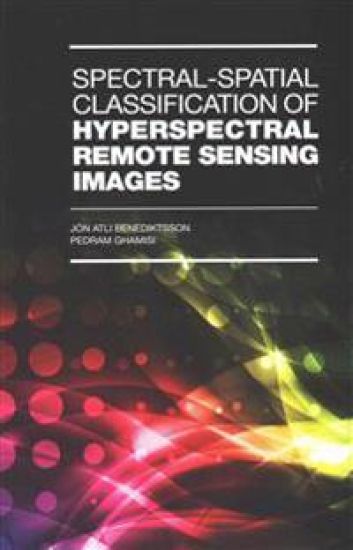
Spectral-Spatial Classification of Hyperspectral Remote Sensing Images

Spectral-Spatial Classification of Hyperspectral Remote Sensing Images

Jon Atli Benediktsson; Pedram Ghamisi

Artech House Publishers
2015
sidottu
This comprehensive new resource presents recent developments in the classification of hyperspectral images using both spectral and spatial information, including advanced statistical approaches and methods. The inclusion of spatial information to traditional approaches for hyperspectral classification has been one of the most active and relevant innovative lines of research in remote sensing during recent years. This book gives insight into several important challenges when performing hyperspectral image classification related to the imbalance between high dimensionality and limited availability of training samples, or the presence of mixed pixels in the data. This book also shows the reader how to integrate spatial and spectral information in order to take advantage of the benefits that both sources of information provide.
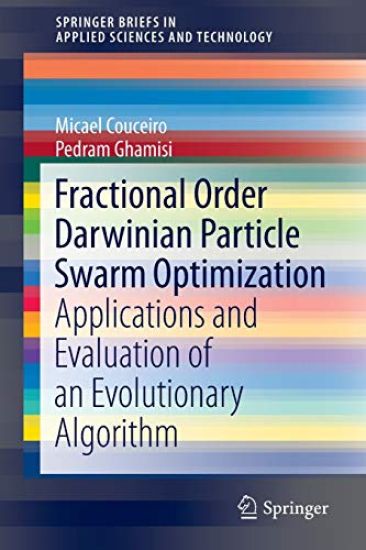
Fractional Order Darwinian Particle Swarm Optimization

Fractional Order Darwinian Particle Swarm Optimization

Micael Couceiro; Pedram Ghamisi

Springer International Publishing AG
2015
nidottu
This book examines the bottom-up applicability of swarm intelligence to solving multiple problems, such as curve fitting, image segmentation, and swarm robotics. It compares the capabilities of some of the better-known bio-inspired optimization approaches, especially Particle Swarm Optimization (PSO), Darwinian Particle Swarm Optimization (DPSO) and the recently proposed Fractional Order Darwinian Particle Swarm Optimization (FODPSO), and comprehensively discusses their advantages and disadvantages. Further, it demonstrates the superiority and key advantages of using the FODPSO algorithm, such as its ability to provide an improved convergence towards a solution, while avoiding sub-optimality. This book offers a valuable resource for researchers in the fields of robotics, sports science, pattern recognition and machine learning, as well as for students of electrical engineering and computer science.