Kirjojen hintavertailu – 12 903 725 kirjaa ja 27 kauppaa

Kirjailija

Peg Boyers

Kirjat ja teokset yhdessä paikassa: 7 kirjaa, julkaisuja vuosilta 2002–2021, suosituimpiin kuuluu Liberties Journal of Culture and Politics. Vertaile teosten hintoja ja tarkista saatavuus suomalaisista kirjakaupoista.

7 kirjaa

Kirjojen julkaisuvuodet: 2002–2021.

Liberties Journal of Culture and Politics

Liberties Journal of Culture and Politics

Elliot Ackerman; Durs Grünbein; Thomas Chatterton Williams; Anita Shapira; Adam Zagajewski; Sally Satel; R.B. Kitaj; Matthew Stephenson; Helen Vendler; David Haziza; A.E. Stallings; Paul Berman; Clara Collier; Michael Kimmage; Peg Boyers

Liberties Journal Foundation
2021
pokkari
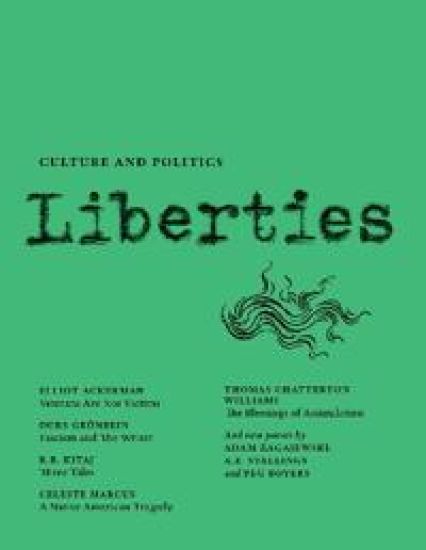
“A Meteor of Intelligent Substance” “Something was Missing in our Culture, and Here It Is” Liberties – A Journal of Culture and Politics features new essays and poetry from some of the world's best writers and artists to inspire and impact the intellectual and creative lifeblood of our current culture and today's politics. This summer issue of Liberties includes: Elliot Ackerman on Veterans Are Not Victims; Durs Grünbein on Fascism and the Writer; R. B. Kitaj’s Three Tales; Thomas Chatterton Williams on The Blessings of Assimilation; Anita Shapira on The Fall of Israel’s House of Labor; Sally Satel on Woke Medicine; Matthew Stephenson On Corruption’s Honey and Poison; Helen Vender on Wallace Stevens; David Haziza on Illusions of Immunity; Paul Berman on the Library of America; Clara Collier’s nostalgia for strong women in film; Michael Kimmage on American Inquisitions; Leon Wieseltier (editor) on the high price of Stoicism; Celeste Marcus (managing editor) on a Native American Tragedy; and new poetry from Adam Zagajewski, A. E. Stallings, and Peg Boyers.
Family Lexicon

Family Lexicon

Jenny McPhee; Natalia Ginzburg; Peg Boyers

NYRB Classics
2017
nidottu

Halvin toimitettuna 19,70 €

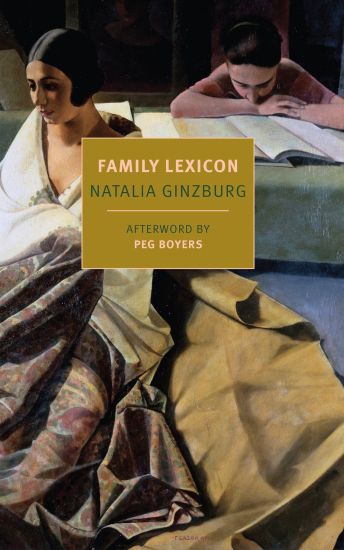
A masterpiece of European literature that blends family memoir and fiction An Italian family, sizable, with its routines and rituals, crazes, pet phrases, and stories, doubtful, comical, indispensable, comes to life in the pages of Natalia Ginzburg's Family Lexicon. Giuseppe Levi, the father, is a scientist, consumed by his work and a mania for hiking--when he isn't provoked into angry remonstration by someone misspeaking or misbehaving or wearing the wrong thing. Giuseppe is Jewish, married to Lidia, a Catholic, though neither is religious; they live in the industrial city of Turin where, as the years pass, their children find ways of their own to medicine, marriage, literature, politics. It is all very ordinary, except that the background to the story is Mussolini's Italy in its steady downward descent to race law and world war. The Levis are, among other things, unshakeable anti-fascists. That will complicate their lives. Family Lexicon is about a family and language--and about storytelling not only as a form of survival but also as an instrument of deception and domination. The book takes the shape of a novel, yet everything is true. "Every time that I have found myself inventing something in accordance with my old habits as a novelist, I have felt impelled at once to destroy it]," Ginzburg tells us at the start. "The places, events, and people are all real."
To Forget Venice

To Forget Venice

Peg Boyers

University of Chicago Press
2014
nidottu
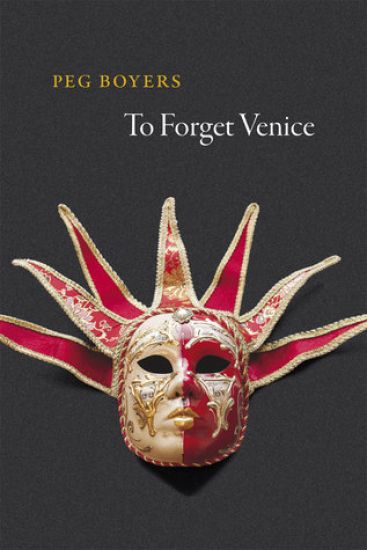
Rialto Invisible in this cheap night scene of the familiar bridge the lives - the lies - we lived on both sides of the canal, invisible the water's stench at low tide, the rotting debris beneath the picture-perfect surface, invisible the adjacent market still smelling of fish and ammonia, its slime of scales adorning the ground, invisible, too, in this souvenir print, the inevitable rat crouched under the pilaster, his throat quivering benignly in the moonlight, the silvery glow a local specialty: filth disguised as ornament. To Forget Venice is the improbable challenge and the title of Peg Boyers's newest collection of poems. The site of several unforgettable years of her adolescence, the place she has returned to more frequently than any other, the city of Venice is both adored and reviled by the speakers in this varied and unconventionally polyphonic work. The voices we hear in these poems belong not only to characters like the mother of Tadzio (think Death in Venice), or the companion of Vladimir Ilych Lenin, or the Victorian prophet John Ruskin and his wife, Effie, but also to wall moss, and sand, and - most especially - an authorial speaker who in 1965, at age thirteen, landed in Venice and never quite recovered from the formative experiences that shaped her there. Ranging over several stages of a life that features adolescent heartbreak and betrayal, marriage and children, friendship and loss, the book insistently addresses the author's desire to get to the bottom of her obsession with a place that has imprinted itself so profoundly on her consciousness.
Honey with Tobacco

Honey with Tobacco

Peg Boyers

University of Chicago Press
2007
sidottu
"Pieta" - This time the migraine came with a vision bathed in night sweat: I was sitting on the Eames chair, your man's body on my lap, legs and arms white as casein draped over mine, spilling onto the cassock, new sores on your legs, dried blood on your feet and hands, from your chalk mouth the words forgive me, from mine, the impossible no. "Hard Bread", Peg Boyers' debut poetry collection, with verse spoken in the imagined voice of the Italian writer Natalia Ginzburg, was widely praised for its inspired ventriloquism and its brilliant lyricism. In "Honey with Tobacco", Boyers' own intensely personal voice emerges in three strikingly distinctive variants. The first part of the book is the most explicitly autobiographical, bringing together poems that explore the poet's Cuban American experience and a childhood marked by travel, the tropics, and varieties of disenchantment. The middle sequence of poems concerns a mother, a father, and a son, a postmodern holy family whose ordeals are evoked in a terse, terrifying narrative. In familiar tableaux drawn from the Bible that have inspired great works of art - the "Annunciation", the "Pieta", and "Judgment Day" - Boyers explores what it means in contemporary America to be "blessed among women" and whether and how art can contain grief. The final section of the book confronts age, desire, and regret in a series of personal poems that plumb baser human instincts and the speakers' determination to dwell in darkness, when necessary, without abandoning the sacred.
Honey with Tobacco

Honey with Tobacco

Peg Boyers

University of Chicago Press
2007
nidottu
"Pieta" - This time the migraine came with a vision bathed in night sweat: I was sitting on the Eames chair, your man's body on my lap, legs and arms white as casein draped over mine, spilling onto the cassock, new sores on your legs, dried blood on your feet and hands, from your chalk mouth the words forgive me, from mine, the impossible no. "Hard Bread", Peg Boyers' debut poetry collection, with verse spoken in the imagined voice of the Italian writer Natalia Ginzburg, was widely praised for its inspired ventriloquism and its brilliant lyricism. In "Honey with Tobacco", Boyers' own intensely personal voice emerges in three strikingly distinctive variants. The first part of the book is the most explicitly autobiographical, bringing together poems that explore the poet's Cuban American experience and a childhood marked by travel, the tropics, and varieties of disenchantment. The middle sequence of poems concerns a mother, a father, and a son, a postmodern holy family whose ordeals are evoked in a terse, terrifying narrative. In familiar tableaux drawn from the Bible that have inspired great works of art - the "Annunciation", the "Pieta", and "Judgment Day" - Boyers explores what it means in contemporary America to be "blessed among women" and whether and how art can contain grief. The final section of the book confronts age, desire, and regret in a series of personal poems that plumb baser human instincts and the speakers' determination to dwell in darkness, when necessary, without abandoning the sacred.
Hard Bread

Hard Bread

Peg Boyers

University of Chicago Press
2002
sidottu
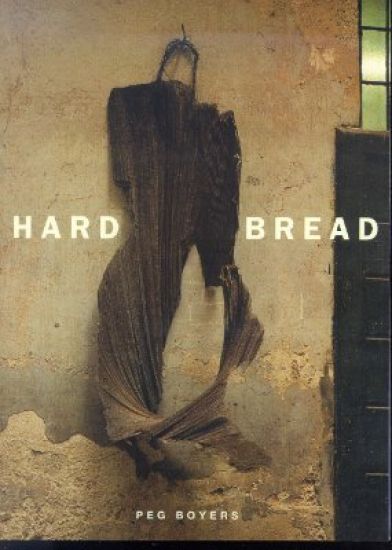
The poems in Peg Boyers's Hard Bread are "spoken" in the imagined voice of the Italian writer, Natalia Ginzburg (1916-1991). While much of the book is based on Ginzburg's life - her upbringing in Turin; her brief marriage to the resistance activist, Leone Ginzburg; her experience of Fascism and war; her work as novelist, playwright, editor, and newspaper columnist; her embattled friendships with writers like Primo Levi, Pier Paolo Pasolini, Ernest Hemingway, and Cesare Pavese - much is invented. The result is a book by turns melancholy and acerbic, mournful and satiric, contemplative and combative.
Hard Bread

Hard Bread

Peg Boyers

University of Chicago Press
2002
nidottu
The poems in Peg Boyers's Hard Bread are "spoken" in the imagined voice of the Italian writer, Natalia Ginzburg (1916-1991). While much of the book is based on Ginzburg's life - her upbringing in Turin; her brief marriage to the resistance activist, Leone Ginzburg; her experience of Fascism and war; her work as novelist, playwright, editor, and newspaper columnist; her embattled friendships with writers like Primo Levi, Pier Paolo Pasolini, Ernest Hemingway, and Cesare Pavese - much is invented. The result is a book by turns melancholy and acerbic, mournful and satiric, contemplative and combative.