Kirjojen hintavertailu – 12 903 725 kirjaa ja 27 kauppaa

Kirjailija

Penny Sparke

Kirjat ja teokset yhdessä paikassa: 10 kirjaa, julkaisuja vuosilta 2008–2025, suosituimpiin kuuluu The Modern Interior. Vertaile teosten hintoja ja tarkista saatavuus suomalaisista kirjakaupoista.

10 kirjaa

Kirjojen julkaisuvuodet: 2008–2025.

An Introduction to Design and Culture

An Introduction to Design and Culture

Penny Sparke

TAYLOR FRANCIS LTD
2025
nidottu
An Introduction to Design and Culture provides a comprehensive guide to the changing relationships between design and culture from 1900 to the present day with an emphasis on five main themes:• Design and consumption• Design and technology• The design profession• Design theory• Design and identities. This fifth edition extends the traditional definition of design to embrace its more recent manifestations, which include service design, user-interface design, co-design, and sustainable design. It also discusses the relationship between design and the new media and the effect of globalisation and transnationalism on design. Most importantly, it looks at its contents through a new lens which acknowledges the post-industrial, post-colonial, postmodern, (and, arguably, post-design) climate of the twenty-first century and the challenges that it poses. Taking a broadly chronological approach, Professor Sparke employs historical methods to show how these themes developed through the twentieth century and into the twenty-first century and played a role within modernism, postmodernism and beyond. Over a hundred illustrations are used throughout to demonstrate the breadth of design, and examples – among them design in Modern China, the work of Apple Computers Ltd., and design thinking – are used to elaborate key ideas. The new edition remains essential reading for undergraduate and postgraduate students of design studies, cultural studies and visual arts.

An Introduction to Design and Culture

An Introduction to Design and Culture

Penny Sparke

TAYLOR FRANCIS LTD
2025
sidottu
An Introduction to Design and Culture provides a comprehensive guide to the changing relationships between design and culture from 1900 to the present day with an emphasis on five main themes:• Design and consumption• Design and technology• The design profession• Design theory• Design and identities. This fifth edition extends the traditional definition of design to embrace its more recent manifestations, which include service design, user-interface design, co-design, and sustainable design. It also discusses the relationship between design and the new media and the effect of globalisation and transnationalism on design. Most importantly, it looks at its contents through a new lens which acknowledges the post-industrial, post-colonial, postmodern, (and, arguably, post-design) climate of the twenty-first century and the challenges that it poses. Taking a broadly chronological approach, Professor Sparke employs historical methods to show how these themes developed through the twentieth century and into the twenty-first century and played a role within modernism, postmodernism and beyond. Over a hundred illustrations are used throughout to demonstrate the breadth of design, and examples – among them design in Modern China, the work of Apple Computers Ltd., and design thinking – are used to elaborate key ideas. The new edition remains essential reading for undergraduate and postgraduate students of design studies, cultural studies and visual arts.

100 Designs for a Modern World

100 Designs for a Modern World

George R. Kravis; Penny Sparke

RIZZOLI INTERNATIONAL PUBLICATIONS
2023
sidottu
The first book on the impressive collection of George R. Kravis II, founder of the Kravis Design Center--one of the leading collectors of modern industrial design in North America. A must-have for lovers of modern design, this is a perfect follow-up to Vintage Industrial and an accessible, but authoritative introduction to this field. An exquisitely curated selection of 100 pieces from the Kravis Design Center's industrial design collection, this book features works by some of the most important figures in the history of design: Peter Behrens, Russel Wright, Charles and Ray Eames, George Nelson, Alexander Girard, Ettore Sottsass, and Yves Behar.
Nature Inside

Nature Inside

Penny Sparke

Yale University Press
2021
sidottu
The story of how plants and flowers have shaped interior design for over 200 years From ferns in 19th-century British parlors to contemporary “living walls” in commercial spaces, plants and flowers have long been incorporated into the design of public and private spaces. Spanning two centuries, Nature Inside explores the history and popularity of indoor plants, revealing the close relationship between architecture, interior design, and nature. Studying the international modern interior through the lens of plants in the human environment, author Penny Sparke attributes a degree of the interest in indoor plants to urbanization, and, more recently, the climate crisis, which serve as ongoing reminders that people must maintain a connection to, and respect for, the natural world. While architectural and interior design styles have evolved alongside the popularity of various plant species, the human need to bring nature indoors has remained constant.
An Introduction to Design and Culture
An Introduction to Design and Culture provides a comprehensive guide to the changing relationships between design and culture from 1900 to the present day with an emphasis on five main themes:Design and consumptionDesign and technologyThe design professionDesign theoryDesign and identities. This fourth edition extends the traditional definition of design as covering product design, furniture design, interior design, fashion design and graphic design to embrace its more recent manifestations, which include service design, user-interface design, co-design, and sustainable design, among others. It also discusses the relationship between design and the new media and the effect of globalisation on design. Taking a broadly chronological approach, Professor Sparke employs historical methods to show how these themes developed through the twentieth century and into the twenty-first century and played a role within modernism, postmodernism and beyond. Over a hundred illustrations are used throughout to demonstrate the breadth of design and examples – among them design in Modern China, the work of Apple Computers Ltd., and design thinking – are used to elaborate key ideas. The new edition remains essential reading for undergraduate and postgraduate students of design studies, cultural studies and visual arts.

An Introduction to Design and Culture
An Introduction to Design and Culture provides a comprehensive guide to the changing relationships between design and culture from 1900 to the present day with an emphasis on five main themes:Design and consumptionDesign and technologyThe design professionDesign theoryDesign and identities. This fourth edition extends the traditional definition of design as covering product design, furniture design, interior design, fashion design and graphic design to embrace its more recent manifestations, which include service design, user-interface design, co-design, and sustainable design, among others. It also discusses the relationship between design and the new media and the effect of globalisation on design. Taking a broadly chronological approach, Professor Sparke employs historical methods to show how these themes developed through the twentieth century and into the twenty-first century and played a role within modernism, postmodernism and beyond. Over a hundred illustrations are used throughout to demonstrate the breadth of design and examples – among them design in Modern China, the work of Apple Computers Ltd., and design thinking – are used to elaborate key ideas. The new edition remains essential reading for undergraduate and postgraduate students of design studies, cultural studies and visual arts.

Industrial Design in the Modern Age

Industrial Design in the Modern Age

George R. Kravis II; Penny Sparke

Rizzoli International Publications
2018
sidottu
Destined to become a new classic in the design genre, this major work summarizes an enormous topic the creation of everyday objects for mass production and consumption from 1900 to the present and shows how these products have become both symbols of the modern age and harbingers of our future. It covers the work of the heroes of modern and post-modern design, from the early pioneers Dreyfuss, Bel Geddes, and Eames to the leaders in the field today, including Starck, Newson, and Ive. More than 200 objects from the Kravis Design Center s collection are highlighted as important exemplars of industrial design. A wide range of media is represented, including furniture, metalwork, ceramics, and plastics. New research by contributing scholars has uncovered illuminating details about each object that help tell a more complete story of design in the past 100 years. Among the more than 400 photographs, which include a wealth of historical images and ephemera, are those of the objects taken especially for this book and seen as never before, in vibrant colour and precise detail. This concise new history introduces a whole new audience to the topic in a style that is at once educational and accessible.
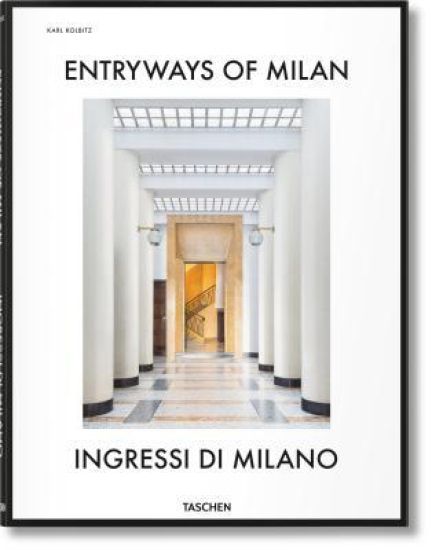
Entryways of Milan. Ingressi di Milano

Entryways of Milan. Ingressi di Milano

Brian Kish; Daniel Sherer; Fabrizio Ballabio; Grazia Signori; Lisa Hockemeyer; Penny Sparke

Taschen GmbH
2017
sidottu

Halvin toimitettuna 51,90 €

First impressions count, especially in Milano. In this unprecedented photographic journey, editor Karl Kolbitz opens the door to 144 of the city’s most sumptuous entrance halls, captivating in their diversity and splendor. These vibrant Milanese entryways, until now hidden away behind often restrained façades, are revealed as dazzling examples of Italian modernism, mediating public and private space with vivid configurations of color and form, from floors of juxtaposed stones to murals of minimalist geometry. The collection spans buildings from 1920 to 1970 and showcases the work of some of the city’s most illustrious architects and designers, including Giovanni Muzio, Gio Ponti, Piero Portaluppi, and Luigi Caccia Dominioni, as well as non-pedigreed architecture of equal impact and interest. The photographs for the publication were exclusively shot by Delfino Sisto Legnani, Paola Pansini, and Matthew Billings, each evoking the entryways with individual sensibility and a stylistic interplay of detail shots—such as stones, door handles, and handrails—with larger architectural views. The images are accompanied by concise contributions from Penny Sparke, Fabrizio Ballabio, Lisa Hockemeyer, Daniel Sherer, Brian Kish, and Grazia Signori, together bringing a wealth of architecture, design, and natural stone expertise to guide the reader through the applied materials and fittings as well as the art-historical and social implications of each of the ingressi. As much an architectural city guide as an aesthetic study, the book provides the exact address and an annotated Milan map for all featured entryways, as well as the architect name and date of construction. In the well-documented realm of 20th-century Italian design, Kolbitz has stepped over the threshold and delivered a brand new area of inquiry in Milanese modernism. With the rigor of its multifaceted research, poised photography, and breadth of its featured hallways, this is an invigorating new reference work and an inside look at the city’s design DNA across high to low architecture.
Design och postmodernitet : en introduktion
Bok nummer nio i vår nya serie med introduktioner till estetiska ämnen är Penny Sparkes grundläggande bok om de senaste decenniernas design. I den här boken om designens utveckling från efterkrigstiden fram till 2000-talet skriver Penny Sparke om förskjutningen mot en konsumtionskultur där bilden, imagen, varumärket blir lika väsentlig som designerns enskilda objekt och där skapandet och kommunicerandet av identitet blir centralt. Konsumtion har blivit en meningsskapande aktivitet som utgör ett betydande inslag i vår samtid. I denna kultur beskriver Sparke design som en nödvändig ingrediens, en brygga mellan produktion och konsumtion. Detta medför att flera av designens uttryck, som mode, grafisk form och inredning, finns rikligt representerade i den här boken. Till konsumtionskulturperspektivet lägger Sparke ytterligare ett - materiell kultur, ett begrepp som utvecklats ur arkeologi och antropologi - som hon hela tiden återkommer till. Avslutningsvis finns en litteraturlista för vidareläsning, ett person- och sakregister samt en omfattande presentation av designer och centrala designbegrepp. Den engelska texten utgör andra delen av Penny Sparkes bok »An introduction to design and culture [1900 to the present]«, ett nyskrivet tillägg inför nyutgåvan 2006. Introduktionen till den svenska upplagan är skriven av Christina Zetterlund, som disputerade 2003 med avhandlingen »Design i informationsåldern. Om strategisk design, historia och praktik«, Raster Förlag. Penny Sparke är rektor och professor i designhistoria vid institutionen för konst, design och musik vid Kingston University. Hon har bl.a. givit ut »As long as it's Pink. The sexual politics of taste«, »A Century of Design: Design Pioneers of the Twentieth Century« och »A Century of Car Design« (sv. Bilen - en designhistoria 1900-2001). Innehåll: Att konsumera postmodernism -Drömmen om moderniteten -Konsumtionskultur och postmodernism Teknologi och design: en ny allians -Överflödets material -Teknologi och livsstil Designkultur -Internationella formgivare -Nya designer Postmodernism och design -Den moderna designens kris -Postmodern design Att omdefiniera identiteter -Att omdefiniera nationalstaten -Att omdefiniera livsstilarTips: Vi har även publicerat den viktiga essän »Postmodernitet, postmodernism och kvinnlig smak« av Penny Sparke. Den ingår i Kairos 8, volym 2, »Design och konst - texter om gränser och överskridanden« och publicerades ursprungligen i boken »As long as it's Pink. The sexual politics of taste.« Utgivna titlar i introduktionsserien: Design - en introduktion av John Heskett. Design för hållbar utveckling - en introduktion av Ann Thorpe. Design och postmodernitet - en introduktion av Penny Sparke. Designhistoria - en introduktion av Susann Vihma. Film och andra rörliga bilder - en introduktion, red. Anu Koivunen. Fotografi - en introduktion av Steve Edwards. Konstteori - en introduktion av Cynthia Freeland. Konstvetenskap - en introduktion av Dana Arnold. Mode - en introduktion. En tvärvetenskaplig betraktelse, red. Dirk Gindt & Louise Wallenberg. Svensk designhistoria av Lasse Brunnström. Kommande introduktionsböcker 2011: Swedish Design History av Lasse Brunnström.
The Modern Interior

The Modern Interior

Penny Sparke

Reaktion Books
2008
nidottu

Halvin toimitettuna 31,80 €

Through the impact of shops like Habitat and IKEA, and of the countless glossy magazines, books and catalogues that focus on the concept of ‘interior design’, we have all become familiar with the idea of our homes and public interiors containing items of modern furniture and decor. Yet design historian and critic Penny Sparke shows that, unlike designed buildings and artefacts, the fixed idea of the ‘modern interior’ has only ever been an abstract and idealized concept, promoted through exhibitions, retail contexts and the mass media, and that it rarely exists in an absolute form. The Modern Interior provides a persuasive account of the forces, conflicts and debates that have underpinned the emergence of something we now effortlessly refer to as the 'modern interior'. Offering fascinating and eloquent insights into the work of international designers including C. R. Mackintosh, Adolf Loos, Josef Frank, Frank Lloyd Wright, Marcel Breuer, Lilly Reich, Mies van der Rohe, Le Corbusier, Philippe Starck, and Charles and Ray Eames, Sparke focuses on the realities as well as concepts of the modern interior, whether in the hands of professional decorators and designers, or in those of its amateur inhabitants. By doing so, she deftly unravels the shift from Victorian to modern style, and demonstrates that the easy transition to the modern interior so frequently portrayed is little more than a mythology. The Modern Interior is essential reading for all students of modern design, architecture and culture, as well as anyone interested in why the interior spaces we inhabit look the way they do.