Kirjojen hintavertailu – 12 903 725 kirjaa ja 27 kauppaa
Kirjailija
Pentti A. Leppänen
Kirjat ja teokset yhdessä paikassa: 4 kirjaa, julkaisuja vuosilta 1997–2012, suosituimpiin kuuluu Wireless Communications. Vertaile teosten hintoja ja tarkista saatavuus suomalaisista kirjakaupoista.
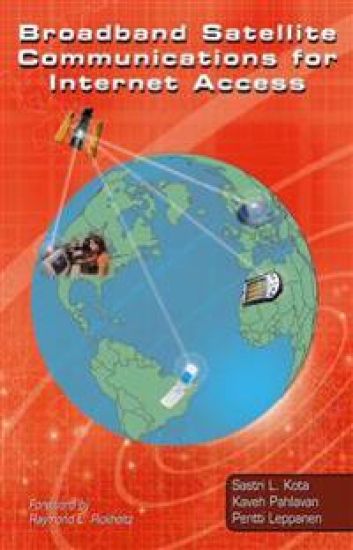
Broadband Satellite Communications for Internet Access is a systems engineering methodology for satellite communication networks. It discusses the implementation of Internet applications that involve network design issues usually addressed in standard organizations. Various protocols for IP- and ATM-based networks are examined and a comparative performance evaluation of different alternatives is described. This methodology can be applied to similar evaluations over any other transport medium.
In Time Division Multiple Access (TDMA), within a given time frame a particular user is allowed to transmit within a given time slot. This technique is used in most of the second-generation digital mobile communication systems. In Europe the system is known as GSM, in USA as DAMPS and in Japan as MPT. In Code Division Multiple Access (CDMA) every user is using a distinct code so that it can occupy the same frequency bandwidth at the same time with other users and still can be separated on the basis of low correlation between the codes. These systems like IS-95 in the USA are also developed and standardized within the second generation of the mobile communication systems. CDMA systems within a cellular network can provide higher capacity and for this reason they become more and more attractive. At this moment it seems that both TDMA and CDMA remain viable candidates for application in future systems. Wireless Communications: TDMA versus CDMA provides enough information for correct understanding of the arguments in favour of one or other multiple access technique. The final decision about which of the two techniques should be employed will depend not only on technical arguments but also on the amount of new investments needed and compatibility with previous systems and their infrastructures. Wireless Communications: TDMA versus CDMA comprises a collection of specially written contributions from the most prominent specialists in wireless communications in the world today and presents the major, up to date, issues in this field. The material is grouped into four chapters: Communication theory, covering coding and modulation, Wireless communications, Antenna & Propagation and Advanced Systems & Technology. The book describes clearly the issues and presents the information in such a way that informed decisions about third generation wireless systems can be taken. It is essential reading for all researchers,engineers and managers working in the field of Wireless Communications.
Broadband Satellite Communications for Internet Access is a systems engineering methodology for satellite communication networks. It discusses the implementation of Internet applications that involve network design issues usually addressed in standard organizations. Various protocols for IP- and ATM-based networks are examined and a comparative performance evaluation of different alternatives is described. This methodology can be applied to similar evaluations over any other transport medium.
In Time Division Multiple Access (TDMA), within a given time frame a particular user is allowed to transmit within a given time slot. This technique is used in most of the second-generation digital mobile communication systems. In Europe the system is known as GSM, in USA as DAMPS and in Japan as MPT. In Code Division Multiple Access (CDMA) every user is using a distinct code so that it can occupy the same frequency bandwidth at the same time with other users and still can be separated on the basis of low correlation between the codes. These systems like IS-95 in the USA are also developed and standardized within the second generation of the mobile communication systems. CDMA systems within a cellular network can provide higher capacity and for this reason they become more and more attractive. At this moment it seems that both TDMA and CDMA remain viable candidates for application in future systems. Wireless Communications: TDMA versus CDMA provides enough information for correct understanding of the arguments in favour of one or other multiple access technique. The final decision about which of the two techniques should be employed will depend not only on technical arguments but also on the amount of new investments needed and compatibility with previous systems and their infrastructures. Wireless Communications: TDMA versus CDMA comprises a collection of specially written contributions from the most prominent specialists in wireless communications in the world today and presents the major, up to date, issues in this field. The material is grouped into four chapters: Communication theory, covering coding and modulation, Wireless communications, Antenna & Propagation and Advanced Systems & Technology. The book describes clearly the issues and presents the information in such a way that informed decisions about third generation wireless systems can be taken. It is essential reading for all researchers,engineers and managers working in the field of Wireless Communications.