Kirjojen hintavertailu – 12 903 725 kirjaa ja 27 kauppaa

Kirjailija

Pernille Rieker

Kirjat ja teokset yhdessä paikassa: 7 kirjaa, julkaisuja vuosilta 2005–2023, suosituimpiin kuuluu French Foreign Policy in a Changing World. Vertaile teosten hintoja ja tarkista saatavuus suomalaisista kirjakaupoista.

7 kirjaa

Kirjojen julkaisuvuodet: 2005–2023.

European Actorness in a Shifting Geopolitical Order

European Actorness in a Shifting Geopolitical Order

Pernille Rieker; Mathilde T. E. Giske

Springer International Publishing AG
2023
sidottu
This is an open access book. With the unprovoked Russian invasion of Ukraine, European security has been put on high alert. The implications of the Russian military invasion are many and difficult to grasp in full. However, the need for greater European strategic autonomy appears increasingly evident. The book argues that strategic autonomy may be reached—also in the short run—if differentiated integration is seen as an asset rather than a challenge. While the EU (together with NATO) remains the core in such a system, there is a multitude sub-regional integration processes that need to be taken into account to get the full idea of how European strategic autonomy can be achieved.
French Foreign Policy in a Changing World

French Foreign Policy in a Changing World

Pernille Rieker

Springer International Publishing AG
2018
nidottu
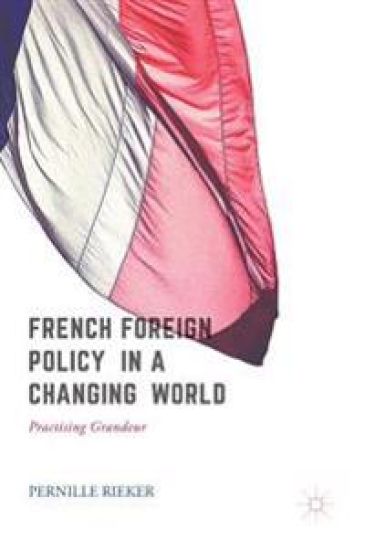
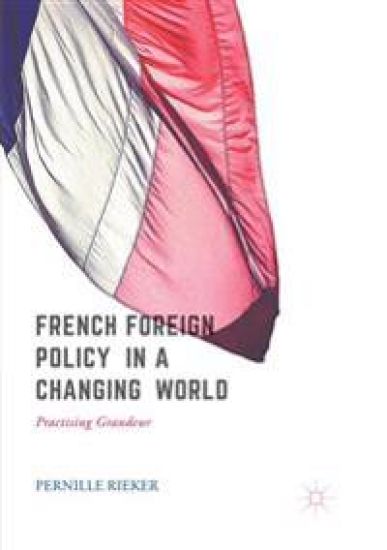
This book investigates how modern French foreign policy is practiced. France finds its traditional power status challenged by internal as well as external developments. Internally, it faces societal challenges related to unemployment, integration, social exclusion, Islamist terrorism and the rise of populism. Externally, its status is challenged by global and regional developments – including the financial crises, competition from emerging states, EU enlargement and a more powerful Germany. While the French recognise that they no longer have great-power economic or military power capacities, the conviction of the universal value of French civilization and culture remains strong. As this book argues, for France to be able to punch above its weight in international politics, it must effectively promote the value of ‘French universalism’ and culture. This study investigates how this is reflected in modern French foreign policy by examining foreign policy practices towards selected regions/countries and in relation to external and internal security. Written by a senior researcher specializing in French and EU foreign and security policy, this book will be an invaluable resource for practitioners of foreign policy and students of French politics, international relations and European studies.
French Foreign Policy in a Changing World

French Foreign Policy in a Changing World

Pernille Rieker

Springer International Publishing AG
2017
sidottu
This book investigates how modern French foreign policy is practiced. France finds its traditional power status challenged by internal as well as external developments. Internally, it faces societal challenges related to unemployment, integration, social exclusion, Islamist terrorism and the rise of populism. Externally, its status is challenged by global and regional developments – including the financial crises, competition from emerging states, EU enlargement and a more powerful Germany. While the French recognise that they no longer have great-power economic or military power capacities, the conviction of the universal value of French civilization and culture remains strong. As this book argues, for France to be able to punch above its weight in international politics, it must effectively promote the value of ‘French universalism’ and culture. This study investigates how this is reflected in modern French foreign policy by examining foreign policy practices towards selected regions/countries and in relation to external and internal security. Written by a senior researcher specializing in French and EU foreign and security policy, this book will be an invaluable resource for practitioners of foreign policy and students of French politics, international relations and European studies.
Dialogue and Conflict Resolution

Dialogue and Conflict Resolution

Pernille Rieker; Henrik Thune

Routledge
2017
nidottu
Dialogue is typically hailed as a progressive force fostering mutual understanding and resolving conflicts. Can it really carry such a burden? Does dialogue really resolve conflicts? In this unique volume international experts critically assess the political role of dialogue, addressing its potential and limitations. Bringing fascinating insights to bear they examine the theoretical underpinnings and conceptual boundaries of dialogue as a tool for conflict resolution. Major recent crises such as the Russo-Georgian war in 2008, the conflict between Western powers and Gaddafi’s Libya, arguments over Iran’s nuclear programme, religious tensions in Egypt after the Arab Spring, the Afghan case, the Sudanese experience and the recent Russo-Ukraine conflict are all considered and the conflict resolution attempts discussed. Using these cases the contributors explore in depth the nature of the dialogue between the actors, the extent to which it worked and what determined its impact.
Dialogue and Conflict Resolution

Dialogue and Conflict Resolution

Pernille Rieker; Henrik Thune

Routledge
2015
sidottu
Dialogue is typically hailed as a progressive force fostering mutual understanding and resolving conflicts. Can it really carry such a burden? Does dialogue really resolve conflicts? In this unique volume international experts critically assess the political role of dialogue, addressing its potential and limitations. Bringing fascinating insights to bear they examine the theoretical underpinnings and conceptual boundaries of dialogue as a tool for conflict resolution. Major recent crises such as the Russo-Georgian war in 2008, the conflict between Western powers and Gaddafi’s Libya, arguments over Iran’s nuclear programme, religious tensions in Egypt after the Arab Spring, the Afghan case, the Sudanese experience and the recent Russo-Ukraine conflict are all considered and the conflict resolution attempts discussed. Using these cases the contributors explore in depth the nature of the dialogue between the actors, the extent to which it worked and what determined its impact.
Europeanization of National Security Identity
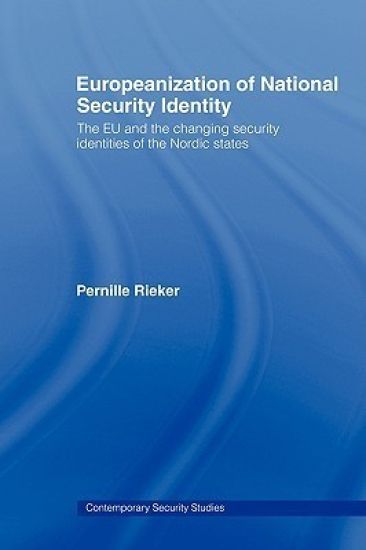
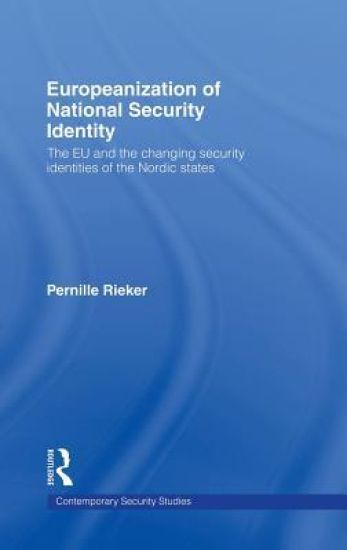
This new book tackles two key questions: 1) How is the EU functioning as a security actor? 2) How and to what extent is the EU affecting national security identities? Focusing on the four largest Nordic states (Denmark, Finland, Norway and Sweden), this incisive study analyzes how and to what extent the EU affects national security identities. It shows how the EU has developed into a special kind of security actor that, due to its level of political integration, has an important influence on national security approaches and identities. This new analysis applies a fresh combination of integration theory, security studies and studies of Europeanization. The main argument in this book is that, rather than adapting to the changing conditions created by the end of the Cold War, the Nordic states changed their security approaches in response to the European integration process. It shows how different phases in the post Cold War European integration process have influenced the national security approaches of Sweden, Finland, Denmark and Norway. While all four security approaches seem to have been Europeanized, the speed and the character of these changes seem to vary due to a combination of differing ties to the EU and differing security policy traditions. This new book will be of great interest to all students of European Defence, national security and of security studies in general.
Europeanization of National Security Identity
This new book tackles two key questions: 1) How is the EU functioning as a security actor? 2) How and to what extent is the EU affecting national security identities? Focusing on the four largest Nordic states (Denmark, Finland, Norway and Sweden), this incisive study analyzes how and to what extent the EU affects national security identities. It shows how the EU has developed into a special kind of security actor that, due to its level of political integration, has an important influence on national security approaches and identities. This new analysis applies a fresh combination of integration theory, security studies and studies of Europeanization. The main argument in this book is that, rather than adapting to the changing conditions created by the end of the Cold War, the Nordic states changed their security approaches in response to the European integration process. It shows how different phases in the post Cold War European integration process have influenced the national security approaches of Sweden, Finland, Denmark and Norway. While all four security approaches seem to have been Europeanized, the speed and the character of these changes seem to vary due to a combination of differing ties to the EU and differing security policy traditions. This new book will be of great interest to all students of European Defence, national security and of security studies in general.