Kirjojen hintavertailu – 12 903 724 kirjaa ja 27 kauppaa

Kirjailija

Petar Jandric

Kirjat ja teokset yhdessä paikassa: 5 kirjaa, julkaisuja vuosilta 2017–2023, suosituimpiin kuuluu Postdigital Dialogues on Critical Pedagogy, Liberation Theology and Information Technology. Vertaile teosten hintoja ja tarkista saatavuus suomalaisista kirjakaupoista.

5 kirjaa

Kirjojen julkaisuvuodet: 2017–2023.

The Methodology and Philosophy of Collective Writing

The Methodology and Philosophy of Collective Writing

Michael A. Peters; Tina Besley; Marek Tesar; Liz Jackson; Petar Jandric; Sonja Arndt; Sean Sturm

TAYLOR FRANCIS LTD
2023
nidottu
This multi-authored collection covers the methodology and philosophy of collective writing. It is based on a series of articles written by the authors in Educational Philosophy and Theory, Open Review of Educational Research and Knowledge Cultures to explore the concept of collective writing. This tenth volume in the Editor's Choice series provides insights into the philosophy of academic writing and peer review, peer production, collective intelligence, knowledge socialism, openness, open science and intellectual commons. This collection represents the development of the philosophy, methodology and philosophy of collective writing developed in the last few years by members of the Editors’ Collective (EC), who also edit, review and contribute to Educational Philosophy and Theory (EPAT), as well as to PESA Agora, edited by Tina Besley, and Access, edited by Nina Hood, two PESA ‘journals’ recently developed by EC members. This book develops the philosophy, methodology and pedagogy of collective writing as a new mode of academic writing as an alternative to the normal academic article. The philosophy of collective writing draws on a new mode of academic publishing that emphasises the metaphysics of peer production and open review along with the main characteristics of openness, collaboration, co-creation and co-social innovation, peer review and collegiality that have become a praxis for the self-reflection emphasising the subjectivity of writing, sometimes called self-writing. This collection, under the EPAT series Editor’s Choice, draws on a group of members of the Editors’ Collective,who constitute a network of editors, reviewers and authors who established the organisation to further the aims of innovation in academic writing and publishing. It provides discussion and examples of the philosophy, methodology and pedagogy of collective writing. Split into three sections: Introduction, Openness and Projects, this volume offers an introduction to the philosophy and methodology of collective writing. It will be of interest to scholars in philosophy of education and those interested in the process of collective writing.
The Methodology and Philosophy of Collective Writing

The Methodology and Philosophy of Collective Writing

Michael A. Peters; Tina Besley; Marek Tesar; Liz Jackson; Petar Jandric; Sonja Arndt; Sean Sturm

Routledge
2021
sidottu
This multi-authored collection covers the methodology and philosophy of collective writing. It is based on a series of articles written by the authors in Educational Philosophy and Theory, Open Review of Educational Research and Knowledge Cultures to explore the concept of collective writing. This tenth volume in the Editor's Choice series provides insights into the philosophy of academic writing and peer review, peer production, collective intelligence, knowledge socialism, openness, open science and intellectual commons. This collection represents the development of the philosophy, methodology and philosophy of collective writing developed in the last few years by members of the Editors’ Collective (EC), who also edit, review and contribute to Educational Philosophy and Theory (EPAT), as well as to PESA Agora, edited by Tina Besley, and Access, edited by Nina Hood, two PESA ‘journals’ recently developed by EC members. This book develops the philosophy, methodology and pedagogy of collective writing as a new mode of academic writing as an alternative to the normal academic article. The philosophy of collective writing draws on a new mode of academic publishing that emphasises the metaphysics of peer production and open review along with the main characteristics of openness, collaboration, co-creation and co-social innovation, peer review and collegiality that have become a praxis for the self-reflection emphasising the subjectivity of writing, sometimes called self-writing. This collection, under the EPAT series Editor’s Choice, draws on a group of members of the Editors’ Collective,who constitute a network of editors, reviewers and authors who established the organisation to further the aims of innovation in academic writing and publishing. It provides discussion and examples of the philosophy, methodology and pedagogy of collective writing. Split into three sections: Introduction, Openness and Projects, this volume offers an introduction to the philosophy and methodology of collective writing. It will be of interest to scholars in philosophy of education and those interested in the process of collective writing.
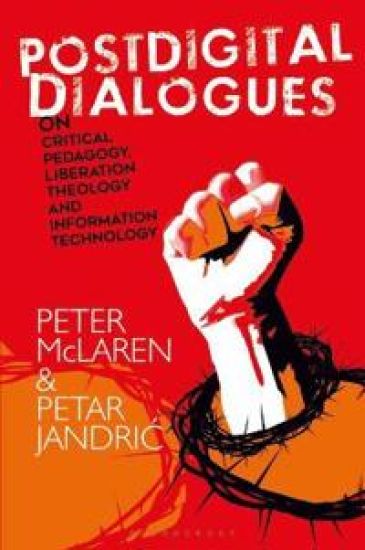
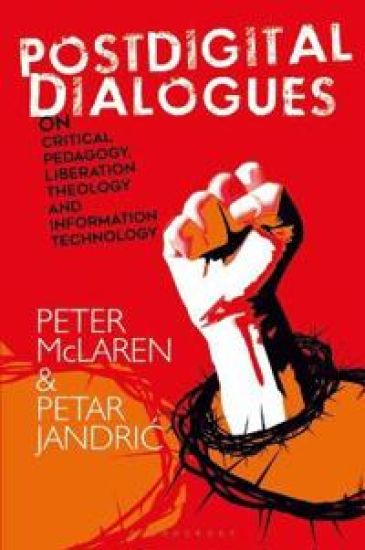
Postdigital Dialogues on Critical Pedagogy, Liberation Theology and Information Technology
Postdigital Dialogues on Critical Pedagogy, Liberation Theology and Information Technology presents a series of dialogues between Peter McLaren, a founding figure of critical pedagogy, and Petar Jandric, a transdisciplinary scholar working at the intersections between critical pedagogy and information technology. The authors debate the postdigital condition, its wide social impacts, and its relationship to critical pedagogy and liberation theology, as part of a transdisciplinary effort to develop a new postdigital revolutionary consciousness in the service of humanity. Throughout the dialogues we see how McLaren's thinking on critical pedagogy and liberation theology have developed since the publication of Pedagogy of Insurrection, and how these developments play out in Jandric’s theory of the postdigital condition. The book includes a foreword by Peter Hudis and an afterword by Michael A. Peters.
Postdigital Dialogues on Critical Pedagogy, Liberation Theology and Information Technology
Postdigital Dialogues on Critical Pedagogy, Liberation Theology and Information Technology presents a series of dialogues between Peter McLaren, a founding figure of critical pedagogy, and Petar Jandric, a transdisciplinary scholar working at the intersections between critical pedagogy and information technology. The authors debate the postdigital condition, its wide social impacts, and its relationship to critical pedagogy and liberation theology, as part of a transdisciplinary effort to develop a new postdigital revolutionary consciousness in the service of humanity. Throughout the dialogues we see how McLaren's thinking on critical pedagogy and liberation theology have developed since the publication of Pedagogy of Insurrection, and how these developments play out in Jandric’s theory of the postdigital condition. The book includes a foreword by Peter Hudis and an afterword by Michael A. Peters.
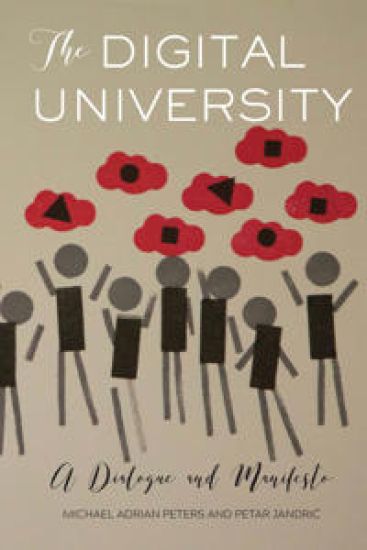
The Digital University

The Digital University

Michael Adrian Peters; Petar Jandric

Peter Lang Publishing Inc
2017
sidottu
The Digital University: A Dialogue and Manifesto focuses on teaching, learning, and research in the age of the digital reason and their relationships to the so-called knowledge economy. The first part of the book, ‘The University in the Epoch of Digital Reason,’ presents the authors’ insights into the nature of the contemporary university. The second part, ‘Collective Intelligence and the Co-creation of Social Goods,’ explores various collective ways of knowledge creation, dissemination, and education. The final part, ‘Digital Teaching, Digital Learning and Digital Science,’ presents an ongoing series of one-to one dialogues between Michael Adrian Peters and Petar Jandric about philosophy of education in the age of digital reason, relationships between learning, creative col(labor)ation, and knowledge cultures, digital reading, digital self, digital being, radical openness, creative labour, and the co-production of symbolic goods. Situated in, against, and beyond the current state of affairs, the book ends with the Digital University Manifesto, which explores what is to be done in and for a better future of the digital university.