Kirjojen hintavertailu – 12 903 735 kirjaa ja 27 kauppaa

Kirjailija

Pete Sigal

Kirjat ja teokset yhdessä paikassa: 4 kirjaa, julkaisuja vuosilta 2000–2011, suosituimpiin kuuluu The Flower and the Scorpion. Vertaile teosten hintoja ja tarkista saatavuus suomalaisista kirjakaupoista.

4 kirjaa

Kirjojen julkaisuvuodet: 2000–2011.

The Flower and the Scorpion

The Flower and the Scorpion

Pete Sigal

Duke University Press
2011
pokkari
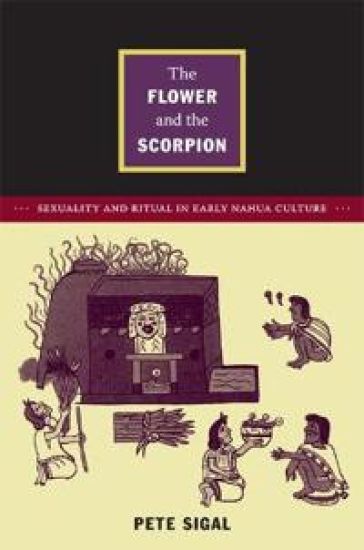
Prior to the Spanish conquest, the Nahua indigenous peoples of central Mexico did not have a notion of “sex” or “sexuality” equivalent to the sexual categories developed by colonial society or those promoted by modern Western peoples. In this innovative ethnohistory, Pete Sigal seeks to shed new light on Nahua concepts of the sexual without relying on the modern Western concept of sexuality. Along with clerical documents and other Spanish sources, he interprets the many texts produced by the Nahua. While colonial clerics worked to impose Catholic beliefs-particularly those equating sexuality and sin-on the indigenous people they encountered, the process of cultural assimilation was slower and less consistent than scholars have assumed. Sigal argues that modern researchers of sexuality have exaggerated the power of the Catholic sacrament of confession to change the ways that individuals understood themselves and their behaviors. At least until the mid-seventeenth century, when increased contact with the Spanish began to significantly change Nahua culture and society, indigenous peoples, particularly commoners, related their sexual lives and imaginations not just to concepts of sin and redemption but also to pleasure, seduction, and rituals of fertility and warfare.

The Flower and the Scorpion

The Flower and the Scorpion

Pete Sigal

Duke University Press
2011
sidottu
Prior to the Spanish conquest, the Nahua indigenous peoples of central Mexico did not have a notion of “sex” or “sexuality” equivalent to the sexual categories developed by colonial society or those promoted by modern Western peoples. In this innovative ethnohistory, Pete Sigal seeks to shed new light on Nahua concepts of the sexual without relying on the modern Western concept of sexuality. Along with clerical documents and other Spanish sources, he interprets the many texts produced by the Nahua. While colonial clerics worked to impose Catholic beliefs-particularly those equating sexuality and sin-on the indigenous people they encountered, the process of cultural assimilation was slower and less consistent than scholars have assumed. Sigal argues that modern researchers of sexuality have exaggerated the power of the Catholic sacrament of confession to change the ways that individuals understood themselves and their behaviors. At least until the mid-seventeenth century, when increased contact with the Spanish began to significantly change Nahua culture and society, indigenous peoples, particularly commoners, related their sexual lives and imaginations not just to concepts of sin and redemption but also to pleasure, seduction, and rituals of fertility and warfare.
Sexual Encounters/Sexual Collisions

Sexual Encounters/Sexual Collisions

John F. Chuchiak; Pete Sigal

Duke University Press
2007
pokkari
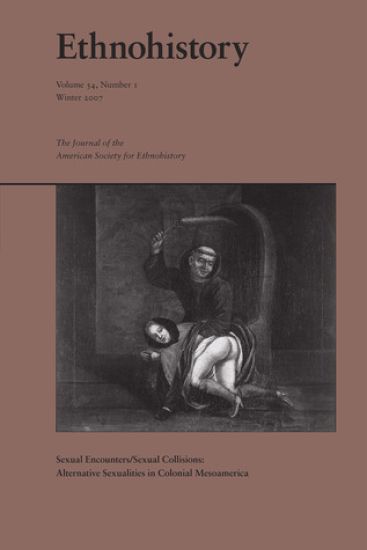
This special issue of Ethnohistory explores the relationships among sexuality, power, and desire in colonial Mesoamerica. Investigating conflicts over sexuality, the essays illustrate the importance of sexual behaviors and desires in negotiating identities and complex power relations in the Mesoamerican world. Taken together, they make a compelling argument that an understanding of the role of sexuality is as essential to the study of Latin America as is knowledge about political economy, social organization, ethnicity, and gender. One contributor considers a criminal case in seventeenth-century Mexico that demonstrates that the negotiation of homosexual identity was much more complex than the model of domination and submission often believed to structure Latin American male homosexual relationships. Another contributor examines how priests in Mayan communities attempted to use the confessional and confessional manuals to promote their own notions of sexual desire and ownership of indigenous women, only to have their efforts turned against them, with Mayan women using the texts to assert strategic dominance over the priests. Yet another essay, focusing on the treatment of a hermaphrodite in late colonial Guatemala, examines how the hermaphrodite’s traits undermined or called into question Enlightenment-era ideas about sex and gender. Contributors. John F. Chuchiak IV, Martha Few, Kimberly Gauderman, Laura A. Lewis, Caterina Pizzigoni, Pete Sigal, Zeb Tortorici, Neil L. Whitehead
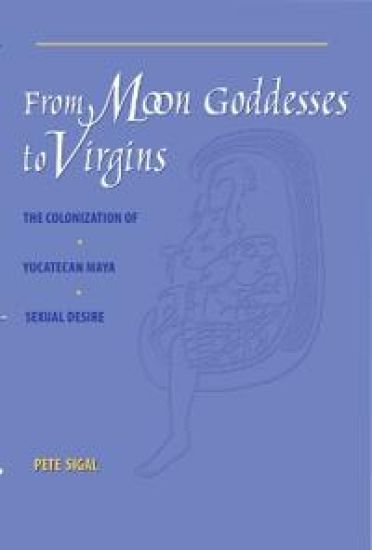
From Moon Goddesses to Virgins

From Moon Goddesses to Virgins

Pete Sigal

University of Texas Press
2000
pokkari
For the preconquest Maya, sexuality was a part of ritual discourse and performance, and all sex acts were understood in terms of their power to create, maintain, and destroy society. As postconquest Maya adapted to life under colonial rule, they neither fully abandoned these views nor completely adopted the formulation of sexuality prescribed by Spanish Catholicism. Instead, they evolved hybridized notions of sexual desire, represented in the figure of the Virgin Mary as a sexual goddess, whose sex acts embodied both creative and destructive components. This highly innovative book decodes the process through which this colonization of Yucatan Maya sexual desire occurred. Pete Sigal frames the discussion around a series of texts, including the Books of Chilam Balam and the Ritual of the Bacabs, that were written by seventeenth and eighteenth century Maya nobles to elucidate the history, religion, and philosophy of the Yucatecan Maya communities. Drawing on the insights of philology, discourse analysis, and deconstruction, he analyzes the sexual fantasies, fears, and desires that are presented, often unintentionally, in the "margins" of these texts and shows how they illuminate issues of colonialism, power, ritual, and gender.