Kirjojen hintavertailu – 12 859 828 kirjaa ja 27 kauppaa

Kirjailija

Peter B. Meyer

Kirjat ja teokset yhdessä paikassa: 4 kirjaa, julkaisuja vuosilta 1995–2025, suosituimpiin kuuluu Contaminated Land. Vertaile teosten hintoja ja tarkista saatavuus suomalaisista kirjakaupoista.

4 kirjaa

Kirjojen julkaisuvuodet: 1995–2025.

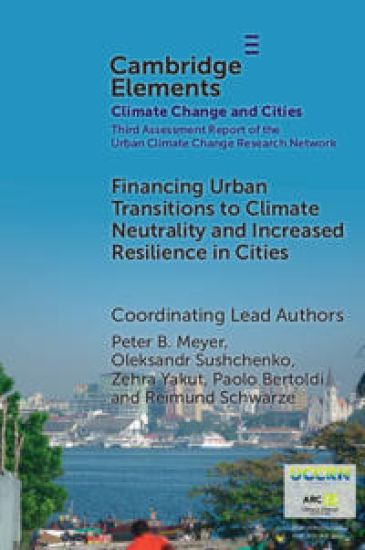
Financing Urban Transitions to Climate Neutrality and Increased Resilience in Cities

Financing Urban Transitions to Climate Neutrality and Increased Resilience in Cities

Peter B. Meyer; Oleksandr Sushchenko; Zehra Yakut; Paolo Bertoldi; Reimund Schwarze; Benjamin Leffel; Pedro Ninô de Carvalho; Ahmad Garba Khaleel; Joyce Coffee; Jesse M. Keenan

Cambridge University Press
2025
pokkari
While global financial capital is abundant, it flows into corporate investments and real estate rather than climate change actions in cities. Political will and public pressure are crucial to redirecting funds. Studies of economic impacts underestimate the costs of climate disasters, especially in cities, so they undermine political commitments while understating potential climate-related returns. The shift of corporate approaches towards incorporating environmental, social, and governance (ESG) impacts offers promise for private-sector climate investments but are recently contested. Institutional barriers remain at all levels, particularly in African cities. Since the Global North controls the world's financial markets, new means of increasing funding for the Global South are needed, especially for adaptation. Innovative financial instruments and targeted use of environmental insurance tools can upgrade underdeveloped markets and align urban climate finance with ESG frameworks. These approaches, however, require climate impact data collection, programs to improve cities' and countries' creditworthiness, and trainings. This title is also available as open access on Cambridge Core.
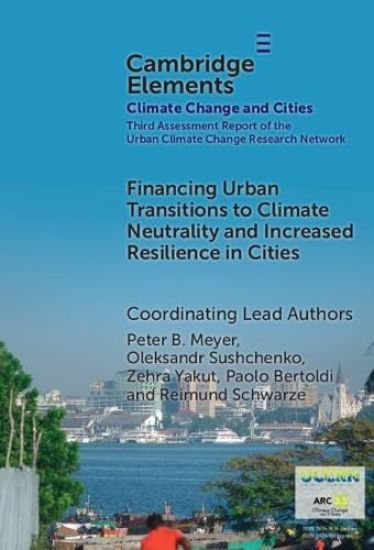
Financing Urban Transitions to Climate Neutrality and Increased Resilience in Cities

Financing Urban Transitions to Climate Neutrality and Increased Resilience in Cities

Peter B. Meyer; Oleksandr Sushchenko; Zehra Yakut; Paolo Bertoldi; Reimund Schwarze; Benjamin Leffel; Pedro Ninô de Carvalho; Ahmad Garba Khaleel; Joyce Coffee; Jesse M. Keenan

Cambridge University Press
2025
sidottu
While global financial capital is abundant, it flows into corporate investments and real estate rather than climate change actions in cities. Political will and public pressure are crucial to redirecting funds. Studies of economic impacts underestimate the costs of climate disasters, especially in cities, so they undermine political commitments while understating potential climate-related returns. The shift of corporate approaches towards incorporating environmental, social, and governance (ESG) impacts offers promise for private-sector climate investments but are recently contested. Institutional barriers remain at all levels, particularly in African cities. Since the Global North controls the world's financial markets, new means of increasing funding for the Global South are needed, especially for adaptation. Innovative financial instruments and targeted use of environmental insurance tools can upgrade underdeveloped markets and align urban climate finance with ESG frameworks. These approaches, however, require climate impact data collection, programs to improve cities' and countries' creditworthiness, and trainings. This title is also available as open access on Cambridge Core.

DE GROTE ONTWAKING - Niets is wat het lijkt! (DEEL 1): Een verhelderend overzicht over wat mis is in onze samenleving - Hoe de bevolking mondiaal tot
Een leerzaam overzicht over wat mis is in onze samenleving. De ONTWAKING is precies dat Auteur Peter B. Meyer maakt het bescheiden duidelijk dat, tenzij wij als verantwoordelijke volwassenen nu geen actie ondernemen, de impact op onszelf, onze kinderen en toekomstige generaties onomkeerbaar zal zijn en niets minder dan rampzalig. Welke impact? Het antwoord is onheilspellend verreikend, waaronder sociaaleconomische, educatieve, culturele en ecologische aspecten. Wat de boodschap van Peter hard maakt, is dat dit niet alleen maar theoretiseren is, maar bestaat uit harde feiten die worden ondersteund door statistieken en verwijzingen naar alternatieve vakliteratuur, websites, tijdschriften en rapporten. Bijvoorbeeld: het gezin is het fundament en de hoeksteen van de structuur van onze civilisatie. Geen ander instituut in de afgelopen zestig jaar is zo grondig verwaarloosd als het 'nest' waarin onze kinderen worden geboren, verzorgd en opgeleid. Bedenk, dat de Geheime Regering opzettelijk de gezinsstructuur vernietigt en de drugscultuur gebruikt voor eigen gewin, om geheime operaties te financieren zoals o.a. terroristische aanslagen. Aangezien eenoudergezinnen steeds meer de norm worden, welke impact heeft deze trend dan op kinderen? Het antwoord is angstaanjagend, nog meer als de economie erbij wordt betrokken. Dit boek behandelt diverse afzonderlijke onderwerpen zoals sociale aspecten, het op schuld gebaseerd monetair systeem, geopolitieke veranderingen, financi le manipulatie en een verscheidenheid aan andere economische domeinen, de verzorgingsstaat met haar 'van de wieg tot het graf' subsidieprogramma's en de opzettelijk gemanipuleerde markten zijn doelbewust de oorzaak van de wereldomspannende economische crisis, dat alom leidt tot het faillissement van overheden in de ge ndustrialiseerde wereld. Het publiek moet duidelijk worden uitgelegd dat hun overheid frauduleus is, leugens en bedrog verspreidt. Dat dringend bestuursverandering vereist is, de noodzaak van een 'zelfhulp' economie en vrije markt van vraag en aanbod - waarbij persoonlijk initiatief, zeggenschap, en zorg de hoofdingredi nten zijn om het bestaande systeem te vervangen. Mensen moeten begrijpen dat oorlogen tientallen jaren van tevoren worden gepland en worden georkestreerd om de vernietiging van naties te bereiken, ontvolking, demoralisatie en natuurlijk macht en winst te behalen voor de 1% superrijken. Om diezelfde reden zijn nu alle naties van de wereld biljoenen verschuldigd aan de private Centrale Banken, als gevolg van het geld dat ze voor de kosten van papier en inkt hebben gedrukt en uitgeleend tegen rente. Zodoende is een onzichtbare dictatuur gevestigd, met behulp van geavanceerde methoden van sociale en mentale controle. Dit is tevens ook de ware betekenis van de 'Oorlog tegen Terroristen'. Het is niet gericht op 'moslimterroristen'. Het is gericht op jou en mij. Ze cre ren hongersnood, oorlogen, geruchten over oorlog, terwijl wij mensen niet langer de vrijheid hebben die we ooit hebben bezeten. De eerste stap naar wereldwijde verbetering is het afschaffen van alle centrale banken, met het niet-gesteunde monetaire systeem, de centrale planning en het fractioneel reservebankieren. Dan zal het leven op aarde zoals tot op heden wordt ervaren snel veel beter worden. In dit boek analyseert de auteur niet alleen het scenario, somber als het is, maar stelt gelukkig ook de remedie voor.
Contaminated Land

Contaminated Land

Peter B. Meyer; Richard H. Williams; Kristen R. Yount

Edward Elgar Publishing Ltd
1995
sidottu
Contaminated land policy is a key concern of governments and policy makers across the globe, yet discussion has traditionally focused on the particular experience of the United States. This major new book develops a framework for assessing laws and regulations regarding contaminated land and polluted properties, their clean up and reuse, and the assignment of costs and responsibilities for reclamation. In Contaminated Land, the authors, a European and two Americans, lay out a framework for cross- national comparisons of policy contexts as well as ways of examining the outcomes of different approaches to contaminated land and systematically compare approaches to this issue in both the EU and US. The use of this framework leads to a reassessment of specific policies, such as the polluter pays principle, which may be more successful in the EU than it has been in the US, and subsidiarity which, while problematic in Europe, may hold promise in a US application. Specific issues discussed include the nature and extent of the contaminated land problem, legal implications, regulation in the US, the 1980 Comprehensive Environmental Liability, Compensation and Reclamation Act, European experience and EU environmental policy, integrated comparative analysis and some lessons for the future. Contaminated Land offers valuable insights on policy responses to the problem of badly polluted land from the perspectives of planning, economics and sociology. In particular, this volume offers frameworks for comparison of different national settings to help determine the preferred and most promising approaches to contaminated land in any social, economic and legal policy context.