Kirjojen hintavertailu – 12 859 818 kirjaa ja 27 kauppaa

Kirjailija

Peter Barth

Kirjat ja teokset yhdessä paikassa: 6 kirjaa, julkaisuja vuosilta 1995–2024, suosituimpiin kuuluu Rappiotaide. Vertaile teosten hintoja ja tarkista saatavuus suomalaisista kirjakaupoista.

6 kirjaa

Kirjojen julkaisuvuodet: 1995–2024.

Rappiotaide

Rappiotaide

Peter Barth; Taina Lammassaari; Vexi Salmi; Katri Wanner-Salmi; Seppo Zetterberg

HÄMEENLINNAN TAIDEMUSEO
2017
sidottu
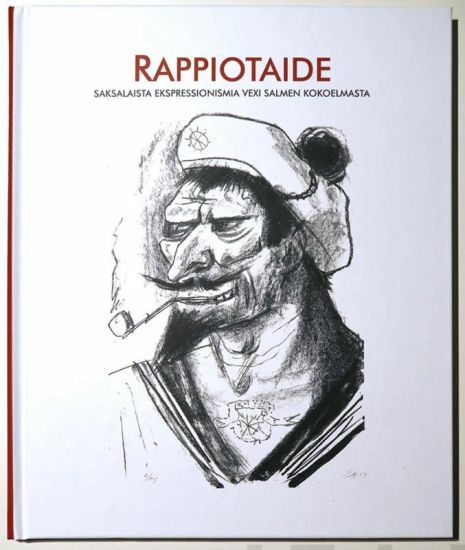
Rappiotaide - saksalaista ekspressionismia Vexi Salmen kokoelmasta -kirja esittelee maassamme harvinaisen grafiikkakokoelman. Sanoittaja, kirjailija ja taidekeräilijä Vexi Salmi on puolisonsa Katri Wanner-Salmen kanssa syventynyt saksalaiseen sotienväliseen ekspressionismiin usean vuosikymmenen ajan. Salmen kokoelman taiteilijat ovat kahden sodan sukupolvea. He kokivat ensimmäisen maailmansodan kauhut, näkivät nälkää ja haavoittuivat fyysisesti ja henkisesti. Natsi-Saksassa näiltä taiteilijoilta kiellettiin opetustyö, heidän teoksensa julistettiin rappiotaiteeksi, poistettiin museoista ja usein myös tuhottiin. Moni ekspressionistista tyylisuuntaa edustanut taiteilija lähti maanpakoon, tuli karkotetuksi tai joutui kuulusteluihin ja keskitysleireille. Saksalainen ekspressionistinen taide kehittyi jo ennen ensimmäistä maailmansotaa ja sen kukoistusaikaa oli 1920-luku. Maalausten ja grafiikan voimakas ilmaisu, vahvat värit ja primitiiviset ääriviivat sekä raju aihepiiri erottavat sen muusta ajan eurooppalaisesta taiteesta. Kirja kertoo Vexi Salmen intohimoisesta paneutumisesta saksalaiseen ekspressionismiin ja luo syventävän katsauksen aikakauden taiteeseen, poliittisiin käänteisiin ja taiteilijakohtaloihin. Kirjoittajina ovat Vexi Salmen ja Katri Wanner-Salmen lisäksi Dr. Peter Barth sekä FT Seppo Zetterberg.

Sound and Fury

Sound and Fury

Peter Barth

THE BOOK GUILD LTD
2022
nidottu
Despite the often-unimaginable horrors of war, bonds of family and friendship can hold us together… Peter Barth was born in Hamburg during the Second World War. Sound and Fury explores war-time memorabilia, tape-recorded conversations, photographs and letters, to uncover amazing stories about his three closest families during the war. All three families lived close by in Hamburg. Towards the end of July 1943, the RAF bombed the city, creating an enormous firestorm and killing 45,000 people. The families survived and were scattered around Europe. His father and cousin were sent to the siege of Leningrad, both returned severely wounded. The Koschel family moved to Krakow. When the Red Army moved west, they had to flee. They came close to being caught in the RAF firestorm of Dresden. Meanwhile the Barths were refugees in a pretty village close to Bergen-Belsen, the horror of which only emerged when it was liberated by the Allies. Just north of there, the Cap Arcona (with Uncle Adam on board) was anchored in the Bay of Lübeck with two other ships, after rescuing thousands of refugees and wounded soldiers. The SS took command and packed the ships with thousands of concentration camp victims. The day before the German forces surrendered, RAF planes bombed and sank them. No one knows why.
Logic-Based 0–1 Constraint Programming

Logic-Based 0–1 Constraint Programming

Peter Barth

Springer-Verlag New York Inc.
2011
nidottu
A logic view of 0-1 integer programming problems, providing new insights into the structure of problems that can lead the researcher to more effective solution techniques depending on the problem class. Operations research techniques are integrated into a logic programming environment. The first monographic treatment that begins to unify these two methodological approaches. Logic-based methods for modelling and solving combinatorial problems have recently started to play a significant role in both theory and practice. The application of logic to combinatorial problems has a dual aspect. On one hand, constraint logic programming allows one to declaratively model combinatorial problems over an appropriate constraint domain, the problems then being solved by a corresponding constraint solver. Besides being a high-level declarative interface to the constraint solver, the logic programming language allows one also to implement those subproblems that cannot be naturally expressed with constraints. On the other hand, logic-based methods can be used as a constraint solving technique within a constraint solver for combinatorial problems modelled as 0-1 integer programs.
Microanatomy and Function of the Spleen

Microanatomy and Function of the Spleen

Birte Steiniger; Peter Barth

Springer-Verlag Berlin and Heidelberg GmbH Co. K
1999
nidottu
5 Function of Splenic Compartments . . . . . . . . . . . . . . . 45 5. 1 Splenic White Pulp Compartments during Primary T Cell-Dependent Antibody Responses against Protein Antigens . . . . . . . . . . . . . . . . . . . . . . . . . 46 5. 1. 1 Priming of CD4+ Helper T Cells by Dendritic Cells in the PALS . . . . . . . . . . . . . . . . . . . . 46 Summary . . . . . . . . . . . . . . . . . . . . . . . . . . . . . . . . . . . . . . 49 5. 1. 1. 1 5. 1. 2 Interaction of Primed CD4+ T Cells with Antigen-Specific B Cells in the PALS and Formation of Extrafollicular Foci . . . . . . . . . . . . . . . . . . . . . . . . . . . 49 5. 1. 2. 1 Summary . . . . . . . . . . . . . . . . . . . . . . . . . . . . . . . . . . . . . . 50 5. 1. 3 Formation of Germinal Centres . . . . . . . . . . . . . . . . . . . 50 5. 1. 3. 1 Summary . . . . . . . . . . . . . . . . . . . . . . . . . . . . . . . . . . . . . . 55 5. 1. 4 Localisation of Memory B Cells in the Marginal Zone . . . . . . . . . . . . . . . . . . . . . . . . . . . . 55 5. 1. 4. 1 Summary . . . . . . . . . . . . . . . . . . . . . . . . . . . . . . . . . . . . . . 57 5. 2 Function of the Marginal Zone during Primary Antibody Responses against T Cell-Independent Type 2 Antigens . . . . . . . . 57 5. 2. 1 Summary . . . . . . . . . . . . . . . . . . . . . . . . . . . . . . . . . . . . . . 59 Function of the Red Pulp . . . . . . . . . . . . . . . . . . . . . . . . . 59 5. 3 5. 3. 1 Summary . . . . . . . . . . . . . . . . . . . . . . . . . . . . . . . . . . . . . . 61 5. 4 Role of the Spleen in CD8+ Cytotoxic T Cell Responses . . . . . . . . . . . . . . . 61 5. 4. 1 Summary . . . . . . . . . . . . . . . . . . . . . . . . . . . . . . . . . . . . . . 62 The Spleen, Natural Killer Cells 5. 5 and Gamma/Delta T Cells . . . . . . . . . . . . . . .. . . . . . . . . 62 5. 5. 1 Summary . . . . . . . . . . . . . . . . . . . . . . . . . . . . . . . . . . . . . . 63 6 Recirculation of Lymphocytes Through the Spleen . . 65 6. 1 Summary . . . . . . . . . . . . . . . . . . . . . . . . . . . . . . . . . . . . . . 67 7 The Role of Cytokines and Chemokines in the Development of Splenic Compartments . . . . . . 69 7. 1 Summary . . . . . . . . . . . . . . . . . . . . . . . . . . . . . . . . . . . . . . 72 8 Unsolved Problems of Human Splenic Structure and Function . . . . . . . . . . . . . . . . . . . . . . . . . . . . . . . . . . . 73 VI 8. 1 Arterial Blood Supply to the Splenic Follicles and to the Perifollicular Zone. . . . . . . . . . . . . . . . . 73 . . . . 8. 1. 1 Summary . . . . . . . . . . . . . . . . . . . . . . . . . . . . . . . . . . . . . . 74 8.
Logic-Based 0–1 Constraint Programming
A logic view of 0-1 integer programming problems, providing new insights into the structure of problems that can lead the researcher to more effective solution techniques depending on the problem class. Operations research techniques are integrated into a logic programming environment. The first monographic treatment that begins to unify these two methodological approaches. Logic-based methods for modelling and solving combinatorial problems have recently started to play a significant role in both theory and practice. The application of logic to combinatorial problems has a dual aspect. On one hand, constraint logic programming allows one to declaratively model combinatorial problems over an appropriate constraint domain, the problems then being solved by a corresponding constraint solver. Besides being a high-level declarative interface to the constraint solver, the logic programming language allows one also to implement those subproblems that cannot be naturally expressed with constraints. On the other hand, logic-based methods can be used as a constraint solving technique within a constraint solver for combinatorial problems modelled as 0-1 integer programs.