Kirjojen hintavertailu – 12 903 725 kirjaa ja 27 kauppaa

Kirjailija

Peter Benson Miller

Kirjat ja teokset yhdessä paikassa: 5 kirjaa, julkaisuja vuosilta 2014–2026, suosituimpiin kuuluu American Artists in Postwar Rome. Vertaile teosten hintoja ja tarkista saatavuus suomalaisista kirjakaupoista.

5 kirjaa

Kirjojen julkaisuvuodet: 2014–2026.

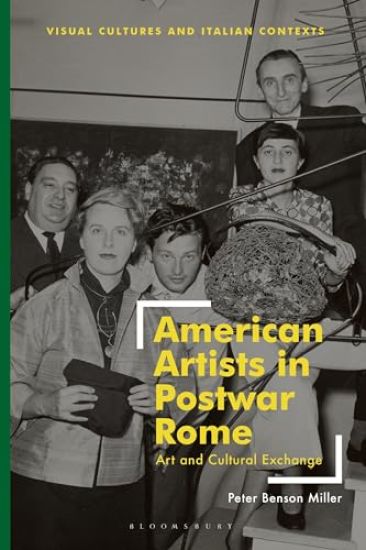
American Artists in Postwar Rome

American Artists in Postwar Rome

Peter Benson Miller

BLOOMSBURY PUBLISHING PLC
2026
nidottu
Drawing on unpublished archival sources, this book reconstitutes the experiences of a wide range of American artists, critics, and writers working in Rome in a charged environment of “Cold War cosmopolitanism.” After the Second World War, American artists flocked to Rome in record numbers, even as the United States shored up Italy as a bulwark against the spread of Communism. While the market for modern art in Rome was less vigorous as those in Paris and New York, numerous galleries, artist-run spaces, and other institutions acted as important catalysts, making Rome an international artistic hub. The city attracted now canonical figures Lee Bontecou, Philip Guston, Robert Rauschenberg, Paul Thek, and Cy Twombly, along with less well-known artists, such as Eugene Berman, Gene Charlton, Carlyle Brown, Peter Chinni, William Congdon, Claire Falkenstein, Marcia Hafif, John Heliker, James Leong, Beverly Pepper, and Laura Ziegler, among many others. Rather than focusing on institutions and diplomatic relationships, the book centres the experience of artists, and also addresses Rome’s gay subculture and the role of female artists during the period, eschewing traditional narratives of the male “cultural ambassador.” Through case-study based investigation, Peter Benson Miller explores the reciprocal relationships between American modernist artists and Italian artists in postwar Rome, and reveals how these artists perceived Rome as less constrained by the demands of a national school, and as an alternative to New York. This congenial creative atmosphere yielded “new pictorial forms” developed in tandem with or absorbed from like-minded Italian artists, engaging the city and its multiple layers of history, from antiquity to the profound trauma inflicted by the recent conflict. The book also establishes the entangled social networks, galleries, exhibitions, and institutions sustaining their work and providing entrée into local artistic circles. Focusing on a series of specific exchanges, this study contributes to our understanding American modernism in an international context.
American Artists in Postwar Rome

American Artists in Postwar Rome

Peter Benson Miller

BLOOMSBURY PUBLISHING PLC
2025
sidottu
Drawing on unpublished archival sources, this book reconstitutes the experiences of a wide range of American artists, critics, and writers working in Rome in a charged environment of “Cold War cosmopolitanism.” After the Second World War, American artists flocked to Rome in record numbers, even as the United States shored up Italy as a bulwark against the spread of Communism. While the market for modern art in Rome was less vigorous as those in Paris and New York, numerous galleries, artist-run spaces, and other institutions acted as important catalysts, making Rome an international artistic hub. The city attracted now canonical figures Lee Bontecou, Philip Guston, Robert Rauschenberg, Paul Thek, and Cy Twombly, along with less well-known artists, such as Eugene Berman, Gene Charlton, Carlyle Brown, Peter Chinni, William Congdon, Claire Falkenstein, Marcia Hafif, John Heliker, James Leong, Beverly Pepper, and Laura Ziegler, among many others. Rather than focusing on institutions and diplomatic relationships, the book centres the experience of artists, and also addresses Rome’s gay subculture and the role of female artists during the period, eschewing traditional narratives of the male “cultural ambassador.” Through case-study based investigation, Peter Benson Miller explores the reciprocal relationships between American modernist artists and Italian artists in postwar Rome, and reveals how these artists perceived Rome as less constrained by the demands of a national school, and as an alternative to New York. This congenial creative atmosphere yielded “new pictorial forms” developed in tandem with or absorbed from like-minded Italian artists, engaging the city and its multiple layers of history, from antiquity to the profound trauma inflicted by the recent conflict. The book also establishes the entangled social networks, galleries, exhibitions, and institutions sustaining their work and providing entrée into local artistic circles. Focusing on a series of specific exchanges, this study contributes to our understanding American modernism in an international context.
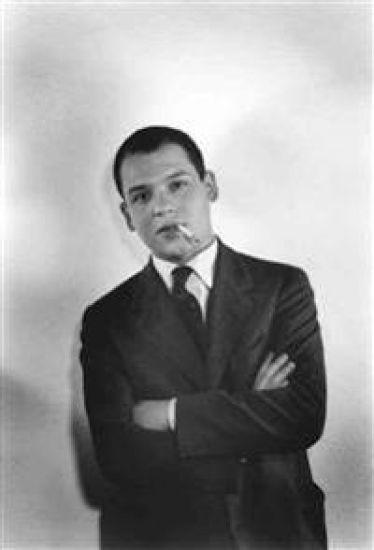
Piero Manzoni

Piero Manzoni

Flaminio Gualdoni; Peter Benson Miller

Rizzoli International Publications
2019
nidottu
Immediately upon his death in 1963 at the age of thirty, Piero Manzoni s reputation as a provocateur and wild child preceded him, with his most subversive work, Artist s Shit, 1961, elevating him to cult status. But what actually came before, and lay behind those thirty grams of pure artistic output? Flaminio Gualdoni sets out to explore exactly that in this biography that traces the guiding themes of Manzoni s works, lending order to a jumble of hitherto fragmented materials and setting aside any apocryphal hypotheses.
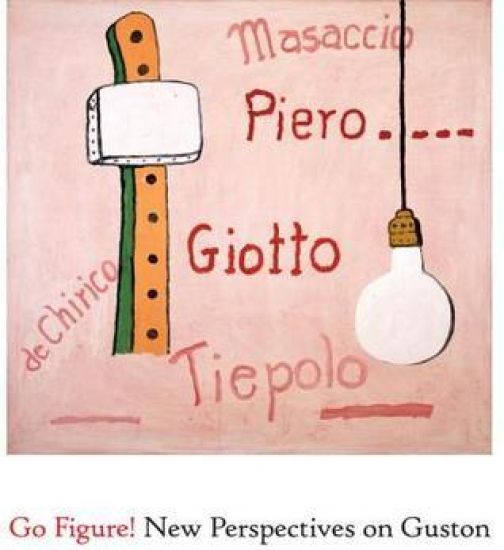
Go Figure! New Perspectives On Guston

Go Figure! New Perspectives On Guston

Peter Benson Miller; Robert Storr

The New York Review of Books, Inc
2015
sidottu
In the past few decades, several major exhibitions and scholarly publications have revisited the distinguished career of American painter Philip Guston (1913-1980), a fellow at the American Academy in Rome in 1949 and a resident there in 1960 and again in 1971. Once known as "Abstract Expressionism's odd-man out," a respected, but often misunderstood, member of the New York School, Guston is now celebrated for his magisterial paintings of the late 1960s and 1970s. Combining painterly virtuosity and narrative power, they cast a long shadow over the current landscape of contemporary art. In light of both a profusion of recent scholarship and the lasting currency of Guston's vision among artists working today, the time appears right to take stock of his career. To that end, the American Acaedmy in Rome organized a two-day conference with an international roster of critics and art historians to discuss the significance and critical fortunes of Guston's work, paying special attention to his life-long attentiveness to Italian art and culture. Emerging out of that symposium are the texts in "Go Figure " They reflect a wide variety of perspectives, including reflections from leading specialists and several of Guston's longtime friends and collaborators, as well as those by younger scholars, who have paved new ground in recent studies of Guston's work. A conversation between Robert Storr and the artist Chuck Close, hosted by the Phillips Collection in 2011, yields further insights. This volume opens new avenues of inquiry complicating the conventional narrative about Guston's purportedly dramatic shift from abstraction to figuration unveiled at the Marlborough show in 1970. More than one hundred years after his birth, Guston continues to fascinate and challenge artists and scholars alike, perhaps more than ever before. Contributors include David Anfam, Dore Ashton, Bill Berkson, Chuck Close, Kosme de BaraNano, Barbara Drudi, Susan Behrends Frank, David Kaufmann, David Lewis, Ara H. Merjian, Achille Bonito Oliva, Christoph Schreier, and Robert Slifkin. The book includes 53 color and black and white images.