Kirjojen hintavertailu – 12 859 819 kirjaa ja 27 kauppaa
Kirjailija
Peter Caddick-Adams
Kirjat ja teokset yhdessä paikassa: 12 kirjaa, julkaisuja vuosilta 2014–2025, suosituimpiin kuuluu Monty Y Rommel. Vertaile teosten hintoja ja tarkista saatavuus suomalaisista kirjakaupoista.
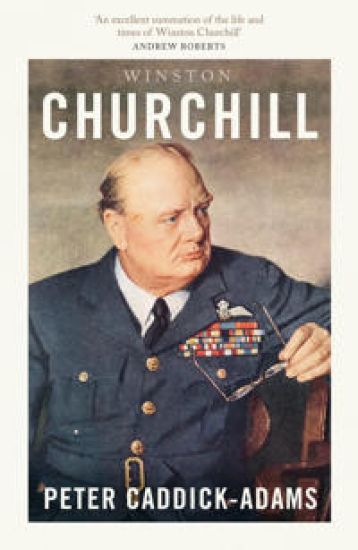
‘An excellent summation of the life and times of Winston Churchill’ Andrew Roberts 'Caddick-Adams understands the two world wars, and his subject's role in them, superbly' Simon Heffer, New Statesman 'A witty and enjoyable political biography of Winston Churchill ... Brilliantly done' The Past In Winston Churchill, veteran historian Peter Caddick-Adams gives us an overview of Churchill’s life, from his early days as a soldier and part-time journalist through to the Second World War and beyond. Caddick-Adams argues that the recipe for Churchill’s success during his wartime premiership of 1940-45 can be found in the First World War. The nation, and its leaders, had undergone a ‘dress rehearsal’ in 1914-18: conscription, rationing, convoys, air raids, mass production, women’s uniformed services, coalitions and war cabinets had all happened before, and Churchill had been there when they did. This experience, combined with Churchill’s extraordinary abilities (along with some foibles), were what enabled Britain to survive. READER REVIEWS ‘A fantastic brief biography of Churchill, incredibly well written, researched and presented’‘An excellent introduction to Churchill's life’‘Caddick-Adams presents a rich and insightful portrait of one of history’s most iconic figures, making this a must-read for anyone interested in Churchill’s legacy’‘Nimbly covers the extent of his remarkable life, providing marvellous detail’
‘An excellent summation of the life and times of Winston Churchill’ Andrew Roberts 'Caddick-Adams understands the two world wars, and his subject's role in them, superbly' Simon Heffer, New Statesman 'A witty and enjoyable political biography of Winston Churchill ... Brilliantly done' The Past In Winston Churchill, veteran historian Peter Caddick-Adams gives us an overview of Churchill’s life, from his early days as a soldier and part-time journalist through to the Second World War and beyond. Caddick-Adams argues that the recipe for Churchill’s success during his wartime premiership of 1940-45 can be found in the First World War. The nation, and its leaders, had undergone a ‘dress rehearsal’ in 1914-18: conscription, rationing, convoys, air raids, mass production, women’s uniformed services, coalitions and war cabinets had all happened before, and Churchill had been there when they did. This experience, combined with Churchill’s extraordinary abilities (along with some foibles), were what enabled Britain to survive. READER REVIEWS ‘A fantastic brief biography of Churchill, incredibly well written, researched and presented’‘An excellent introduction to Churchill's life’‘Caddick-Adams presents a rich and insightful portrait of one of history’s most iconic figures, making this a must-read for anyone interested in Churchill’s legacy’‘Nimbly covers the extent of his remarkable life, providing marvellous detail’
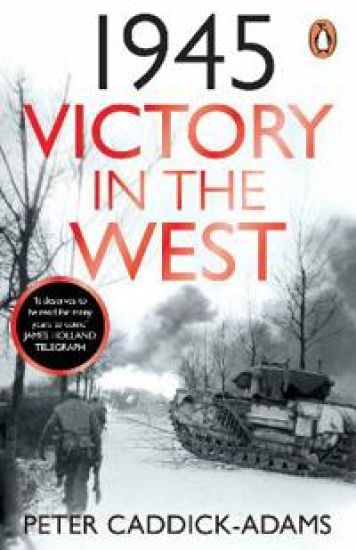
'Magisterial . . . [a] fine, balanced and superb account. It deserves to be read for many years to come.' TELEGRAPHMarch 1945. Allied troops are poised to cross the Rhine and sweep on into Germany. Victory is at last within their grasp. But if they believe this victory can be easily won, they face swift disillusionment. The final I00 days of the Second World War will prove to be bitterly and bloodily fought, village by village, town by town. This is the extraordinary and gripping story of those final I00 days._________________________________________________'Superbly written and full of wisdom and deep understanding, this will stand as a defining work on these darkest months of the conflict.' JAMES HOLLAND'This is the most vivid and detailed narrative of the subject that we are likely to see.' MILITARY HISTORY MAGAZINE'An impressive work. Lively, informative and comprehensively researched.' CAROLINE MOOREHEAD, SPECTATOR'An important contribution to military history. A great read and powerful reminder of how the Second World War in Europe was definitely not over until the final surrender.' BBC HISTORY MAGAZINE
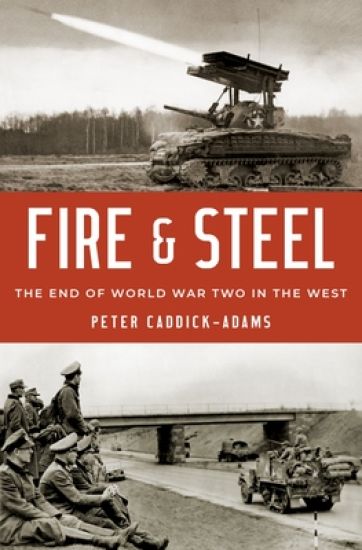
The final volume in one of the most acclaimed works of military history of this generation. Here is Peter Caddick-Adams' third volume in his trilogy about the final year of the Western front in World War Two. Fire & Steel covers the war's final 100 days-beginning in late January 1945 and continuing until May 8th, 1945, when the German high command surrendered unconditionally to all Allied forces. Caddick-Adams' previous two volumes in the acclaimed series-Sand & Steel, which covers the invasion of Normandy in June 1944, and Snow & Steel, the definitive study of the Battle of the Bulge, the German's final offensive in the war-have set the stage for this concluding volume. In these final months of World War Two, all of Germany is ablaze, from daily bombing runs launched from just across its borders and incessant artillery fire from the east. In the west, the Allied progress was inexorable, with Eisenhower's seven armies taking on Germany's seven armies, town by town, bridge by bridge. With his customary narrative verve and utter mastery of the material, Caddick-Adams does these climactic final months full justice, from the capture of the Ludendorff Railway Bridge at Remagen, to the liberation of the Bergen-Belsen concentration camp, to the taking of Munich on Hitler's birthday, April 20th, and through to VE Day. Fire & Steel ends with the return of prisoners, demobilization of servicemen, and the beginning of the occupation of Germany. A triumphant concluding volume to one of the most distinguished works of military history of this generation.
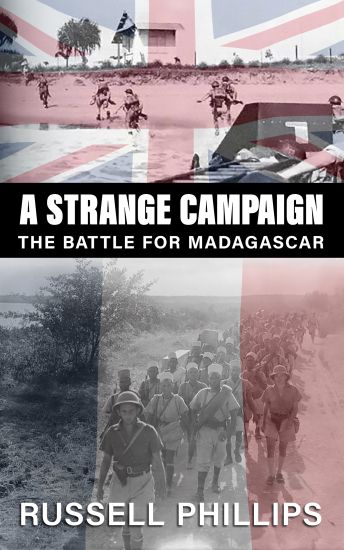
Madagascar provided the stunning backdrop for one of the strangest conflicts of the Second World War - when Britain went head to head against one of its closest allies. When British forces landed on the island in 1942, the enemy they faced wasn't German, Japanese or even Italian, this time the opposing forces were French. Concerned that Japan might use Madagascar as a strategic base to disrupt the supply line to India, Britain was keen to take control of the island. However, the Vichy forces were keen to defend the French colony and prevent it becoming part of the British Empire. A Strange Campaign: The Battle for Madagascar gives a detailed account of this fascinating but little-known period of military history. Even at the time, the conflict was a controversial one, pitting two colonial empires against each other. However, it was also ground-breaking as it was the first time Allied forces had staged a major amphibious invasion. The lessons learned on the shores of Madagascar would prove to be invaluable two years later during the D-day landings in Normandy. Military historian Russell Phillips examines the tactics used in the battle for Madagascar which included secret agents, dummy paratroopers and attempted bribery. But just how did the British finally break down months of resistance by the French? And how did a tug-of-war over an island in the middle of the Indian ocean influence the rest of the Second World War?
Madagascar provided the stunning backdrop for one of the strangest conflicts of the Second World War - when Britain went head to head against one of its closest allies. When British forces landed on the island in 1942, the enemy they faced wasn't German, Japanese or even Italian, this time the opposing forces were French. Concerned that Japan might use Madagascar as a strategic base to disrupt the supply line to India, Britain was keen to take control of the island. However, the Vichy forces were keen to defend the French colony and prevent it becoming part of the British Empire. A Strange Campaign: The Battle for Madagascar gives a detailed account of this fascinating but little-known period of military history. Even at the time, the conflict was a controversial one, pitting two colonial empires against each other. However, it was also ground-breaking as it was the first time Allied forces had staged a major amphibious invasion. The lessons learned on the shores of Madagascar would prove to be invaluable two years later during the D-day landings in Normandy. Military historian Russell Phillips examines the tactics used in the battle for Madagascar which included secret agents, dummy paratroopers and attempted bribery. But just how did the British finally break down months of resistance by the French? And how did a tug-of-war over an island in the middle of the Indian ocean influence the rest of the Second World War?
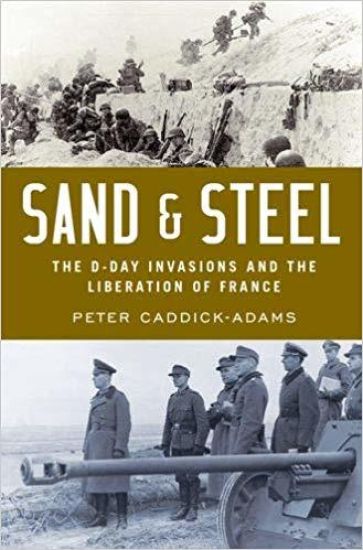
Peter Caddick-Adams's account of the Allied invasion of France in June 1944 matches the monumental achievement of his book on the Battle of the Bulge, Snow and Steel, which Richard Overy has called the "standard history of this climactic confrontation in the West." Sand and Steel gives us D-Day, arguably the greatest and most consequential military operation of modern times, beginning with the years of painstaking and costly preparation, through to the pitched battles fought along France's northern coast, from Omaha Beach to the Falaise and the push east to Strasbourg. In addition to covering the build-up to the invasion, including the elaborate and lavish campaigns to deceive Germans as to where and when the invasion would take place, Caddick-Adams gives a full and detailed account of the German preparations: the formidable Atlantikwall and Field Marshal Erwin Rommel's plans to make Europe impregnable-plans not completed by June 6. Sand and Steel reveals precisely what lay in wait for the Allies. But the heart of the book is Caddick-Adams' narratives of the five beaches where the terrible drama played out--Utah, Omaha, Gold, Juno, and Sword, and the attempt by American, British, and Canadian soldiers to gain a foothold in Europe. The Allied invasion of Europe involved mind-boggling logistics, including orchestrating the largest flotilla of ships ever assembled. Its strategic and psychological demands stretched the Allies to their limits, testing the strengths of the bonds of Anglo-American leadership. Drawing on first-hand battlefield research, personal testimony and interviews, and a commanding grasp of all the archives and literature, Caddick-Adams's gripping book, published on the 75th anniversary of the events, does Operations Overlord and Neptune full justice.
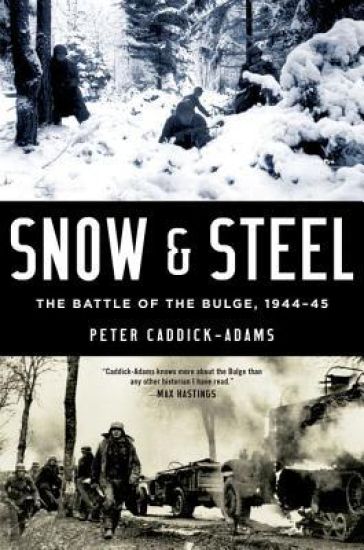
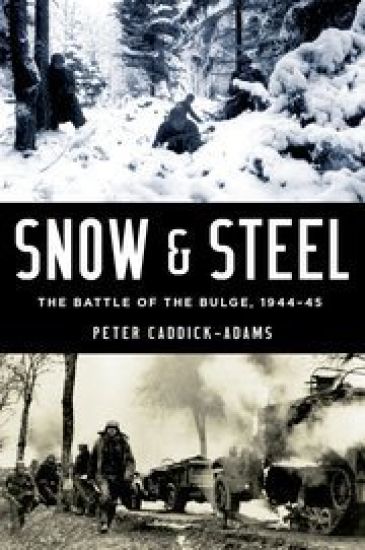
Between December 16, 1944 and January 15, 1945, American forces found themselves entrenched in the heavily forested Ardennes region of Belgium, France, and Luxembourg defending against an advancing German army amid freezing temperatures, deep snow, and dense fog. Operation Herbstnebel--Autumn Mist--was a massive German counter-offensive that stunned the Allies in its scope and intensity. In the end, the 40-day long Battle of the Bulge, as it has come to be called, was the bloodiest battle fought by U. S. forces in World War II, and indeed the largest land battle in American history. Before effectively halting the German advance, some 89,000 of the 610,000 American servicemen committed to the campaign had become casualties, including 19,000 killed. The engagement saw the taking of thousands of Americans as prisoners of war, some of whom were massacred by the SS--but it also witnessed the storied stand by U. S. forces at Bastogne as German forces besieged the region and culminated in a decisive if costly American victory. Ordered and directed by Hitler himself--against the advice of his generals--the Ardennes offensive was the last major German offensive on the Western Front. In the wake of the defeat, many experienced German units were left severely depleted of men and equipment. Its last reserve squandered, these irreplaceable losses would hasten the end of the war. In Snow and Steel, Peter Caddick-Adams draws on interviews with over 100 participants of the campaign, as well as archival material from both German and US sources, to offer an engagingly written and thorough reassessment of the historic battle. Exploring the failings of intelligence that were rife on both sides, the effects of weather, and the influence of terrain on the battle's outcome, Caddick-Adams deftly details the differences in weaponry and doctrine between the US and German forces, while offering new insights into the origins of the battle; the characters of those involved on both the American and German sides, from the general staff to the foot soldiers; the preparedness of troops; and the decisions and tactics that precipitated the German retreat and the American victory. Re-examining the SS and German infantry units in the Bulge, he shows that far from being deadly military units, they were nearly all under-strength, short on equipment, and poorly trained; kept in the dark about the attack until the last minute, they fought in total ignorance of their opponents or the terrain. Ultimately, Caddick-Adams concludes that the German assault was doomed to failure from the start. Aided by an intimate knowledge of the battlefield itself and over twenty years of personal battlefield experience, Caddick-Adams has produced the most compelling and complete account of the Bulge yet written.
Between December 16, 1944 and January 15, 1945, American forces found themselves entrenched in the heavily forested Ardennes region of Belgium, France, and Luxembourg defending against an advancing German army amid freezing temperatures, deep snow, and dense fog. Operation Herbstnebel--Autumn Mist--was a massive German counter-offensive that stunned the Allies in its scope and intensity. In the end, the 40-day long Battle of the Bulge, as it has come to be called, was the bloodiest battle fought by U. S. forces in World War II, and indeed the largest land battle in American history. Before effectively halting the German advance, some 89,000 of the 610,000 American servicemen committed to the campaign had become casualties, including 19,000 killed. The engagement saw the taking of thousands of Americans as prisoners of war, some of whom were massacred by the SS--but it also witnessed the storied stand by U. S. forces at Bastogne as German forces besieged the region and culminated in a decisive if costly American victory. Ordered and directed by Hitler himself--against the advice of his generals--the Ardennes offensive was the last major German offensive on the Western Front. In the wake of the defeat, many experienced German units were left severely depleted of men and equipment. Its last reserve squandered, these irreplaceable losses would hasten the end of the war. In Snow and Steel, Peter Caddick-Adams draws on interviews with over 100 participants of the campaign, as well as archival material from both German and US sources, to offer an engagingly written and thorough reassessment of the historic battle. Exploring the failings of intelligence that were rife on both sides, the effects of weather, and the influence of terrain on the battle's outcome, Caddick-Adams deftly details the differences in weaponry and doctrine between the US and German forces, while offering new insights into the origins of the battle; the characters of those involved on both the American and German sides, from the general staff to the foot soldiers; the preparedness of troops; and the decisions and tactics that precipitated the German retreat and the American victory. Re-examining the SS and German infantry units in the Bulge, he shows that far from being deadly military units, they were nearly all under-strength, short on equipment, and poorly trained; kept in the dark about the attack until the last minute, they fought in total ignorance of their opponents or the terrain. Ultimately, Caddick-Adams concludes that the German assault was doomed to failure from the start. Aided by an intimate knowledge of the battlefield itself and over twenty years of personal battlefield experience, Caddick-Adams has produced the most compelling and complete account of the Bulge yet written.