Kirjailija
Peter Calvert
Kirjat ja teokset yhdessä paikassa: 22 kirjaa, julkaisuja vuosilta 1990–2026, suosituimpiin kuuluu The Concept of Class. Vertaile teosten hintoja ja tarkista saatavuus suomalaisista kirjakaupoista.
22 kirjaa
Kirjojen julkaisuvuodet: 1990–2026.
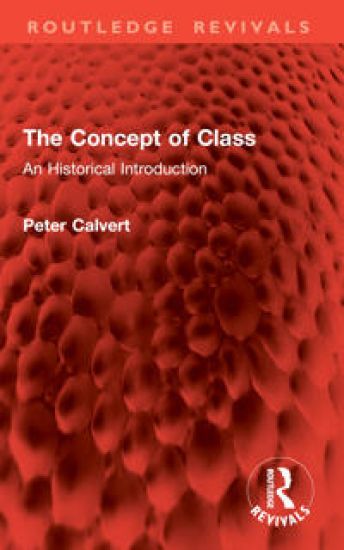
Originally published in 1982, The Concept of Class provides a concise and stimulating guide to the historical development of the concept of ‘class’ and the different ways in which it has been applied in social and political theory. The author begins by determining where and how the word acquired its political sense, and after a short re-examination of its classical background, moves on to consider Marx’s reformulation of the concept and his proposals for making it a fundamental term in the study of society. He traces the different strands of Marxist and non-Marxist use of the term right up to the twentieth century, considers the confusion of ideas that had resulted at the time, and analyses the utility of ‘class’ in assessing the nature of contemporary socialist states and post-industrial capitalist societies. In conclusion, Dr Calvert suggests that class is an ‘essentially contested concept’ – that is, a concept on which agreement is by its nature impossible. Today it can be read in its historical context.

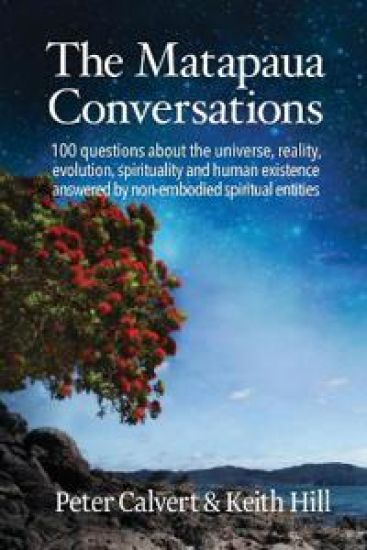
"Spiritual impulses have arisen in humanity's breast and mind for thousands of years. Once it was sufficient to respond to the heart-felt love emanating from the spiritual domain in visions, during sleep and via dreams. Now, however, a more dynamic understanding is required, derived empirically from the observations of mystics. The question is, who will help us in our task to promote spiritual empiricism? It will take a new type of person, a mystic who is both scientifically and spiritually trained, who is capable of avoiding the worst excesses of the illusions human beings are naturally prey to, to initiate a new informed and rational debate regarding humanity's spiritual nature." - The Mentors Peter Calvert is one of those empirically oriented mystics. Whether directly perceiving auras, or having visions that penetrate deep into the spiritual realm, he brings a sensibility honed by working in the sciences to process his subtle perceptions. Like the ancient mystics who helped found the world's religions, he also speaks to non-embodied identities. Yet these are not the gods of ancient times, but human beings who have completed their cycles of reincarnation and now, adopting the role of insightful mentors, use contemporary scientific and cultural concepts to share their views on the interconnected spiritual and physical realms.
Originally published in 1982, The Concept of Class provides a concise and stimulating guide to the historical development of the concept of ‘class’ and the different ways in which it has been applied in social and political theory. The author begins by determining where and how the word acquired its political sense, and after a short re-examination of its classical background, moves on to consider Marx’s reformulation of the concept and his proposals for making it a fundamental term in the study of society. He traces the different strands of Marxist and non-Marxist use of the term right up to the twentieth century, considers the confusion of ideas that had resulted at the time, and analyses the utility of ‘class’ in assessing the nature of contemporary socialist states and post-industrial capitalist societies. In conclusion, Dr Calvert suggests that class is an ‘essentially contested concept’ – that is, a concept on which agreement is by its nature impossible. Today it can be read in its historical context.

Traditionally, acquiring wisdom has involved becoming wise in the ways of the world and developing deep insight into what drives human existence. Notable among the wise in the Western tradition are Solomon, in whose name Jewish wisdom literature was composed, and Pythagoras, whose enquiries led him to invent the word philosophy, a composite of two Greek words, philo (love) and sophia (wisdom). Pythagorean philosophy has two major themes: that number, not divine power, structures the world, and that we reincarnate repeatedly with the goal of acquiring wisdom. On Acquiring Wisdom is a philosophic work in the Pythagorean sense, written to accord with our contemporary outlook. The discussions include using current terminology to redefine how we acquire wisdom, examining our purpose in reincarnating, weighing how our search for ecstasy, intimacy, serenity and balance are impeded and fostered, and the role of moral judgement in evaluating life choices. Models, some utilising number, show how progress may be identified and measured. Comment is also offered on post-death choices and the reluctance of some to disconnect themselves from their most recent life. This is a book for those who are looking for a deep dive into what propels their existence. It is a thought-provoking work that combines metaphysical insights with pragmatic observations. The insights are sourced from a collective of human beings who have completed their incarnational cycles and are sharing their thoughts on humanity's spiritual dimension.
We live in the midst of a vast universe. Currently, our sciences enable us to perceive less than 5% of it. The rest is designated dark energy and dark matter. This means 95% of the universe effectively remains a mystery. In "The Kosmic Web" human beings who have completed their cycles of incarnation offer intriguing insights into the mystery of all existence. Drawing on the ideas and vocabulary of current scientific and evolutionary thinking, they present fascinating yet often challenging observations on how the spiritual, biological, energetic, material and metaphysical aspects of reality interlace to form and sustain the extended kosmos. Ideas explored include: The origin of our universe as part of a multiverse The multiverse as an experiment in evolving consciousnessThe interlaced energetic layers that underpin all that existsThe origins and developmental nature of human identityThe ways spiritual identities co-associate with biological speciesThe purpose and process of reincarnationThe aura's developmental and communicative functionsThe concept of spiritual space and humanity s place in itThe ultimate intention and meaning of human existenceFor those seeking to understand the what, how and why of their lives, "The Kosmic Web" provides thrilling new concepts for understanding humanity's position in the multi-layered web of life. From the book]: "What if you could access trans-human explanations of reality? Human beings need to break free of the constant flow of their everyday impressions, feelings and thoughts in order to perceive what lies beyond the everyday, whereas we, as non-embodied identities, automatically have an overview of human existence that extends far beyond what any human can perceive. In asserting this, we make no claim for God-like knowledge. We are just another form of spiritual identity, the same type as you but at a different phase of our growth cycle. Our role is currently that of informant and guide. In this book we focus on two specific aspects of pertinent information. These are the nature of reality, and the source and purpose of human identity."
This book examines Guatemala's history and the principal aspects of the country's faction-tom society. It explains the problems—and their consistently violent manifestations—that have attended the course of the country's social, economic, and political development.
Guatemala has long been a field for struggle between other powers, and today, racked by civil war, it avoids the full glare of international attention only because most of the Central American region is beset by similar problems. Despite a continued belief in the reconstitution of a unified Central American state arid a long-running claim to Belize, Guatemala has played a passive rather than an active role in international politics. The influence of international economic interests explains to a large degree why Guatemala has not been more active in the international arena. In this book, Professor Calvert examines Guatemala's history and the principal aspects of the country's faction-tom society and seeks to explain the problems—and their consistently violent manifestations—that have attended the course of the country's social, economic, and political development.
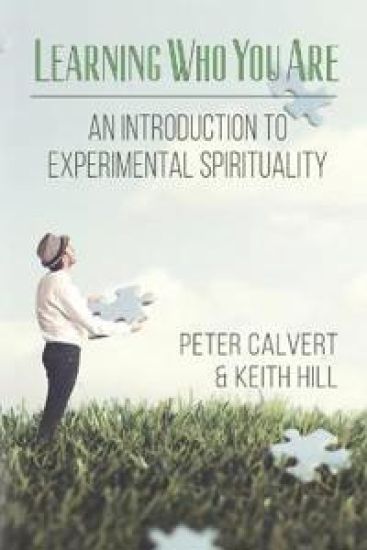
Learning Who You Are offers a contemporary take on the age-old questions of who we are and why we are here. The book builds on current scientific knowledge to show how the physical and spiritual realms are interlinked. It does this by presenting a number of innovative models and conceptual frameworks that mesh with twenty-first century understanding. The book also discusses the process of validating these models and concepts empirically, through observation, and explains how meditation may be used to expand vision within and beyond the everyday self. Throughout, the emphasis is on practical processes, focused on the here and now, yet which have the potential to open a doorway into the beyond. All this is explored using an open-ended, experimental approach that challenges the rigid dichotomies of the past, such as the mundane many vs the enlightened few, and the profane human vs the sacred divine. Historically, the notion of divinity has erected a barrier between humanity and the spiritual realm, which signals that whatever happens in the spiritual dimension is distant and so must remain an unfathomable mystery. Learning Who You Are alternatively, and controversially, asserts that the spiritual domain is not divine; individual human spirits, enlightened or otherwise, are not special; and the spiritual is neither distant nor unfathomable. The absence of divinity means no Divine Being is pushing or pulling any of us during the course of our lives. So understanding the fundamental nature of our existence doesn't depend on divine decree or sacred revelation. We are already spiritual, hence appreciating the spiritual bases of our existence may be achieved straightforwardly--should we wish to do so, and be willing to make the effort required to discern them. Learning Who You Are offers the spiritually inquisitive and adventurous a unique, contemporary perspective on what it is to be human, and what may be achieved while living on this often perplexing planet.
People of the Earth
Peter Calvert; Richard Bentley; Carolyn Longden; Trisha Wren
Attar Books
2019
pokkari
When Peter Calvert gathered a small group of meditators and set them the task of opening their minds to whoever arrived, he didn't anticipate the astonishing encounters that would result. Two situation rapidly emerged. The first was that the meditators discovered a small percentage of people become confused after death. Lost in a transitional zone, they need guidance to move on to the next phase of their existence. This book offers a selection from the many rescues the meditators performed. The second situation was profoundly troubling. In a series of vexed visits, nature spirits pleaded with the meditators to share an urgent message with humanity regarding the dire state of the planet's ecosystems, which have reached a point of crisis. Spirits have long been viewed as meddling or dangerous. People of the Earth shows this assumption is incorrect. The book offers a new perspective on spirits, indicating their diversity, their differing functions and perspectives, and suggests how they may be categorised. Through a sequence of intriguing dialogues between the meditators and visiting non-embodied beings, People of the Earth provides sobering insights to those who seek to understand what is required of us spiritually to sustain the health of the planet's ecosystems.
In a world seemingly surfing a wave of unprecedented affluence, it is sobering to be reminded that only thirty out of nearly two hundred countries can really be classified as advanced industrialized countries. Eighty per cent of the world's population lives in the developing world. This popular, concise introduction scrutinises the developing world, its varied political institutions and the key social, economic and environmental issues at the heart of contemporary debates. Wide-ranging and clearly written, Politics and Society in the Developing World begins by providing a brisk survey of the major theoretical and methodological interpretations of the social impact of development. It then details the factors which determine the parameters of the developing world before moving on to examine its infrastructure and the crises currently facing it. The book also covers the social and economic contexts of developing societies, the international arena and its impact on the developing world, state-building and the tension between dictatorship and democratization. The book focuses on four policy areas: aid, trade, tourism and the environment.
This book aims to present an analysis of the role of revolution in international politics. Concerning itself with the time frame from the French Revolution up to the fall of the Iron Curtain, this book covers the study of revolution itself, the importance of globalisation, interdependence and non-state actors and the change in the nature of international politics theory.
The purpose of this book is to give an accurate and scholarly assessment of a major international crisis, and to contribute to public understanding of the decisions and processes that brought about the crisis. Calvert deals with the nature and history of the Falkland Islands, the grounds for the competing claims, the political background and events in both Argentina and Britain that led up to the crisis, and the unfolding events of the crisis itself, in its political, diplomatic and military aspects. He concludes with a substantial assessment of the impact of the crisis on international politics.
This text explores the nature and possibility of revolution and civil strife in the context of international politics. "Terrorism, Civil War, and Revolution" analyzes the role of revolution and civil strife in the present day world. Expanding on the 2nd edition of Calvert's "Revolution and International Politics", this new work reflects the drastic changes that have taken place in the world order since 2001. With an increased focus on terrorism and civil war, the book looks into such key issues as the use of force by the state in the international system, challenges to states, wars of national liberation, counterinsurgency, and more. Written in a clear and accessible manner by a respected expert in the field, the book features the most recent examples of events, such as the insurgency in Sri Lanka, the rise of Al-Qaeda, and the wars in Afghanistan and Iraq. This approach will help situate revolutions in the larger context of political violence and will appeal to anyone interested in comparative politics, international relations, and revolutions.
In a world seemingly surfing a wave of unprecedented affluence, it is sobering to be reminded that only thirty out of nearly two hundred countries can really be classified as advanced industrialized countries. Eighty per cent of the world's population lives in the developing world. This popular, concise introduction scrutinises the developing world, its varied political institutions and the key social, economic and environmental issues at the heart of contemporary debates. Wide-ranging and clearly written, Politics and Society in the Developing World begins by providing a brisk survey of the major theoretical and methodological interpretations of the social impact of development. It then details the factors which determine the parameters of the developing world before moving on to examine its infrastructure and the crises currently facing it. The book also covers the social and economic contexts of developing societies, the international arena and its impact on the developing world, state-building and the tension between dictatorship and democratization. The book focuses on four policy areas: aid, trade, tourism and the environment.
South, the North and the Environment
Peter Calvert; Susan Calvert
Continuum International Publishing Group Ltd.
1999
nidottu
This work aims to give an overview of the environmental politics of the Third World in each of the key problem areas, using examples systematically drawn from five continents. The conclusion reviews the overall situation and examines both optimistic and pessimistic scenarios for the future.