
Kirjailija
Peter Cane
Kirjat ja teokset yhdessä paikassa: 19 kirjaa, julkaisuja vuosilta 1991–2027, suosituimpiin kuuluu The Distorting Lens of Convergent Constitutional Theory. Vertaile teosten hintoja ja tarkista saatavuus suomalaisista kirjakaupoista.
19 kirjaa
Kirjojen julkaisuvuodet: 1991–2027.
The Distorting Lens of Convergent Constitutional Theory
Peter Cane
Bloomsbury Publishing PLC
2026
Sidottu
This book challenges the near-universal acceptance of a US-style, Western constitutional paradigm as the best basis for comparative constitutional studies. It does so on three main grounds: anachronism, ‘othering’ and cultural specificity. Main pillars of ‘convergent constitutional theory’ are rooted in the revolutionary, late-eighteenth century – a lost world; constitutional arrangements that deviate from the paradigm are often branded as ‘outliers’ or even as not constitutional at all; and the foundations of the paradigm in liberal democracy give no space for other forms of constitutionalism. Whatever the attractions of convergent theory as a normative ideal of good government, for the purposes of understanding, analysing and explaining constitutional systems it is far from ideal. This book discusses and questions: convergent theory’s weddedness to writing as the technology of constitution-making; its image of a constitution as fundamental law; its idea that a constitution expresses the ‘sovereignty of the people’; its use of tripartite separation of powers as the basic principle of institutional design; its relative neglect of administrative law; its association of ‘rights’ with judicially enforceable bills of rights; and its obsession with a vaguely specified concept of ‘democracy’. It makes suggestions for alternative, preferable methods of understanding, analysing and explaining constitutions, and governmental and constitutional systems.
The Distorting Lens of Convergent Constitutional Theory
Peter Cane
BLOOMSBURY PUBLISHING PLC
2025
sidottu
Halvin toimitettuna 130,40 €
This book challenges the near-universal acceptance of a US-style, Western constitutional paradigm as the best basis for comparative constitutional studies. It does so on three main grounds: anachronism, ‘othering’ and cultural specificity. Main pillars of ‘convergent constitutional theory’ are rooted in the revolutionary, late-eighteenth century – a lost world; constitutional arrangements that deviate from the paradigm are often branded as ‘outliers’ or even as not constitutional at all; and the foundations of the paradigm in liberal democracy give no space for other forms of constitutionalism. Whatever the attractions of convergent theory as a normative ideal of good government, for the purposes of understanding, analysing and explaining constitutional systems it is far from ideal. This book discusses and questions: convergent theory’s weddedness to writing as the technology of constitution-making; its image of a constitution as fundamental law; its idea that a constitution expresses the ‘sovereignty of the people’; its use of tripartite separation of powers as the basic principle of institutional design; its relative neglect of administrative law; its association of ‘rights’ with judicially enforceable bills of rights; and its obsession with a vaguely specified concept of ‘democracy’. It makes suggestions for alternative, preferable methods of understanding, analysing and explaining constitutions, and governmental and constitutional systems.
Atiyah's Accidents, Compensation and the Law
Peter Cane; James Goudkamp
Cambridge University Press
2018
pokkari
Now in its ninth edition, Atiyah's Accidents, Compensation and the Law explores the recent and continuous developments in personal injury law by applying social context to the relevant legal principles. Those principles remain in need of radical reform. Updates to the text include discussion of the major changes to the way compensation is calculated and claimed, evolving funding arrangements for personal injury litigation, and dramatic shifts in the claims management industry. Suitable for both undergraduate and postgraduate students taking courses in tort law, this new edition balances theory, practice and context. It draws on new legislation, research and case law to offer the reader thought-provoking examples and analysis.
Cases for Principles of Administrative Law
Peter Cane; Leighton McDonald; Kristen Rundle
OUP Australia and New Zealand
2018
nidottu
Many administrative law principles are abstract and difficult to apply. The readings in this collection are longer than extracts in a typical cases and material volume. This will help students develop legal reasoning skills and gain a better understanding of how the principles of administrative law are applied and elaborated in specific and factual contexts. To promote these objectives, most of the selected cases and materials are accompanied by reading questions designed to focus students on the essentials of each case and to stimulate further thought.
This book offers nine key ideas about tort law that will help the reader to understand its various social functions and evaluate its effectiveness in performing those functions. The book focuses, in particular, on how tort law can guide people’s behaviour, and the political and social environments within which it operates. It also provides the reader with a wealth of detail about the ideas and values that underlie tort ‘doctrine’—tort law’s rules and principles, and the way those rules and principles operate in practice. The book is an accessible introduction to tort law that will provide students, scholars and practitioners alike with a fresh and engaging view of the subject.‘In this masterful and engaging survey, Peter Cane provides an array of illuminating perspectives on the law of torts, laying bare its nature, structure and functions, as well as its legal, social and political context.’Andrew Robertson, Professor of Law, Melbourne Law School
This wide-ranging comparative account of the legal regimes for controlling administrative power in England, the USA and Australia argues that differences and similarities between control regimes may be partly explained by the constitutional structures of the systems of government in which they are embedded. It applies social-scientific and historical methods to the comparative study of law and legal systems in a novel and innovative way, and combines accounts of long-term and large-scale patterns of power distribution with detailed analysis of features of administrative law and the administrative justice systems of three jurisdictions. It also proposes a new method of analysing systems of government based on two different models of the distribution of public power (diffusion and concentration), a model which proves more illuminating than traditional separation-of-powers analysis.
Controlling Administrative Power
Peter Cane
Cambridge University Press
2016
pokkari
Halvin toimitettuna 60,30 €
This wide-ranging comparative account of the legal regimes for controlling administrative power in England, the USA and Australia argues that differences and similarities between control regimes may be partly explained by the constitutional structures of the systems of government in which they are embedded. It applies social-scientific and historical methods to the comparative study of law and legal systems in a novel and innovative way, and combines accounts of long-term and large-scale patterns of power distribution with detailed analysis of features of administrative law and the administrative justice systems of three jurisdictions. It also proposes a new method of analysing systems of government based on two different models of the distribution of public power (diffusion and concentration), a model which proves more illuminating than traditional separation-of-powers analysis.
Administrative Law provides a sophisticated but highly accessible account of a complex area of law of great contemporary relevance and increasing importance. Written in a clear and flowing style, the text has been radically reorganized and extensively rewritten to present administrative law as a framework for public administration. After an exploration of the nature, province, and sources of administrative law as well as the concept of administrative justice, the book briefly discusses the institutional framework of public administration. The second part of the book deals with the normative framework of public administration, starting with a general discussion of administrative tasks and functions and then examining in some detail norms relating to administrative procedure and openness, decision-makers' reasoning processes and the substance of administrative decisions. The next topic is the private law framework provided by the law of tort, contract, and restitution. The third part of the book provides an account of institutions and mechanisms of accountability by which the framework of public administration is policed and enforced: judicial review and appeals by courts and tribunals, bureaucratic and parliamentary oversight, and investigations by ombudsmen. This part ends by considering how these various mechanisms fit into the administrative justice system. The final part of the book explores the functions of administrative law and its impact on administration.
Administrative Law provides a sophisticated but highly accessible account of a complex area of law of great contemporary relevance and increasing importance. Written in a clear and flowing style, the text has been radically reorganized and extensively rewritten to present administrative law as a framework for public administration. After an exploration of the nature, province, and sources of administrative law as well as the concept of administrative justice, the book briefly discusses the institutional framework of public administration. The second part of the book deals with the normative framework of public administration, starting with a general discussion of administrative tasks and functions and then examining in some detail norms relating to administrative procedure and openness, decision-makers' reasoning processes and the substance of administrative decisions. The next topic is the private law framework provided by the law of tort, contract, and restitution. The third part of the book provides an account of institutions and mechanisms of accountability by which the framework of public administration is policed and enforced: judicial review and appeals by courts and tribunals, bureaucratic and parliamentary oversight, and investigations by ombudsmen. This part ends by considering how these various mechanisms fit into the administrative justice system. The final part of the book explores the functions of administrative law and its impact on administration.
One of the most significant constitutional developments of the past century has been the creation and proliferation of O'administrative tribunals' the main function of which is to adjudicate disputes between citizens and the state by reviewing decisions of government agencies - a task also performed by courts in 'judicial review' proceedings and appeals. Tribunals in aggregate adjudicate many more such disputes than courts, but have received relatively little scholarly attention. This book compares tribunals in Australia, the UK and the US. It offers an account of the concept of 'administrative adjudication', and traces its historical development from the earliest periods of the common law to the twenty-first century. There are chapters dealing with the design of tribunals and tribunal systems and with what tribunals do, what they are for and how they interact with their users. The book ends with a discussion of the place of tribunals in the 'administrative justice system' and speculation about possible future developments. Administrative Tribunals and Adjudication fills a significant gap in the literature and will be of great value to public lawyers and others interested in government accountability.
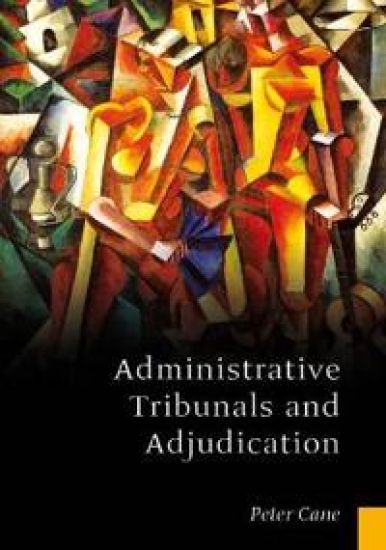
Among the many constitutional developments of the past century or so, one of the most significant has been the creation and proliferation of institutions that perform functions similar to those performed by courts but which are considered to be, and in some ways are, different and distinct from courts as traditionally conceived. In much of the common law world, such institutions are called 'administrative tribunals'. Their main function is to adjudicate disputes between citizens and the state by reviewing decisions of government agencies - a function also performed by courts in 'judicial review' proceedings and appeals. Although tribunals in aggregate adjudicate many more such disputes than courts, tribunals and their role as dispensers of 'administrative justice' receive relatively little scholarly attention. This wide-ranging book-length treatment of the subject compares tribunals in three major jurisdictions: Australia the UK and the US. It analyses and offers an account of the concept of 'administrative adjudication', and traces its historical development from the earliest periods of the common law to the twenty-first century. There are chapters dealing with the design of tribunals and tribunal systems and with what tribunals do, what they are for and how they interact with their users. The book ends with a discussion of the place of tribunals in the 'administrative justice system' and speculation about possible future developments. Administrative Tribunals and Adjudication fills a significant gap in the literature and will be of great value to public lawyers and others interested in government accountability.

Humanlandscapes is a special fusion of talent by physician and photographer P. Miller and poet Peter Crane, producing a lyrical and unabashed tribute to the human body, beauty, the feminine, and the natural world. The core of the book is comprised of images of the body in many different Southwestern settings as well as in the studio, and in both color and black-and-white. The oversized book allows the images to be presented elegantly and each to be paired with a poem specifically written for it, setting the tone and expanding the mood. ""Humanlandscapes"" is divided into four sections, each addressing a different aspect of the human experience. The images come from an awareness of the human body to the spiritual and natural forces surrounding it. What is the character of the feminine, and what does it mean to be human? The images and poetry lead us through a journey of discovery to celebrate both the physical and spiritual parts of the self. This unique book brings together rich images and text in a tapestry of visual and emotional rewards.
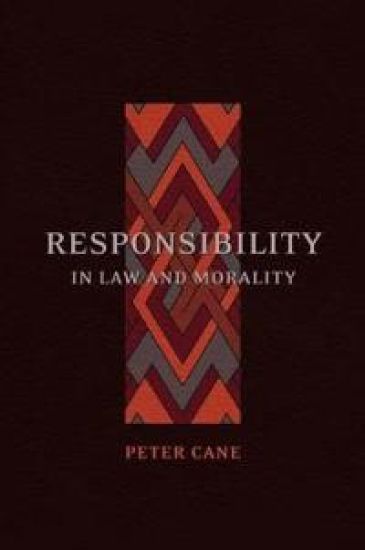
Responsibility in Law and Morality
Peter Cane
Hart Publishing
2003
nidottu
Halvin toimitettuna 62,40 €
Lawyers who write about responsibility tend to focus on criminal law at the expense of civil and public law; while philosophers tend to treat responsibility as a moral concept,and either ignore the law or consider legal responsibility to be a more or less distorted reflection of its moral counterpart. This book aims to counteract both of these biases. By adopting a comparative institutional approach to the relationship between law and morality, it challenges the common view that morality stands to law as critical standard to conventional practice. It shows how law and morality interact symbiotically, and how careful study of legal concepts of responsibility can add significantly to our understanding of responsibility more generally. At the heart of this book lie two questions: what does it mean to say we are responsible? And, what are our responsibilities? Its aim is not to answer these questions but to challenge some traditional approaches to answering them and more importantly, to suggest fruitful alternative approaches that take law seriously.
Lawyers who write about responsibility tend to focus on criminal law at the expense of civil and public law; while philosophers tend to treat responsibility as a moral concept,and either ignore the law or consider legal responsibility to be a more or less distorted reflection of its moral counterpart. This book aims to counteract both of these biases. By adopting a comparative institutional approach to the relationship between law and morality, it challenges the common view that morality stands to law as critical standard to conventional practice. It shows how law and morality interact symbiotically, and how careful study of legal concepts of responsibility can add significantly to our understanding of responsibility more generally. Central to this project is a distinction between two paradigms of responsibility -- the criminal law paradigm and the civil law paradigm. Whereas theoretical discussions of responsibility tend focus on conduct and agency, taking account of civil law reveals the importance of outcomes and the interests of victims and society to ideas of responsibility. The book examines from a distinctively legal point of view central philosophical questions about responsibility such as its relationship with culpability (challenging the common view that moral responsibility requires fault), causation and personality. It explores the relevance of sanctions and problems of proof and enforcement to ideas of responsibility, as well as the relationship between responsibility and distributive justice, and the role of concepts of responsibility in public law. At the heart of this book lie two questions: what does it mean to say we are responsible? and, what are our responsibilities? Its aim is not to answer these questions but to challenge some traditional approaches to answering them and more importantly, to suggest fruitful alternative approaches that take law seriously.
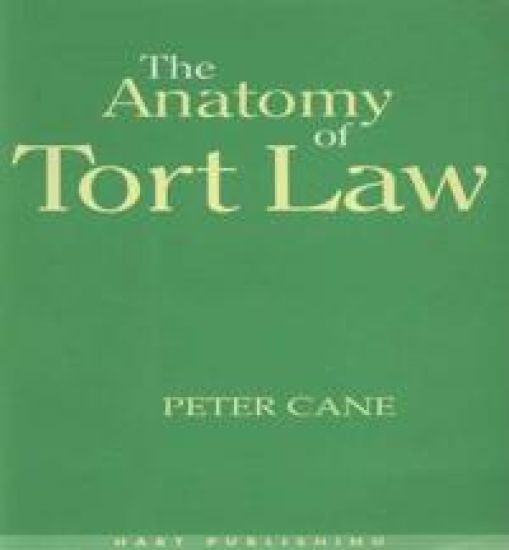
Written to be accessible to all readers with a basic knowledge of tort law, this book adopts an approach which is both easily comprehended, yet also innovative and illuminating. It sets out a new and theoretically stimulating analysis of the law of tort, in which the subject is reconceived as a system of ethical rules and principles of personal responsibility. As such it can be viewed as a series of relationships between protected interests, sanctioned conduct and sanctions. These are the "building blocks" of tort law. Beyond affording a means of comprehending the fragmentary nature of tort law, the book, equally importantly, seeks to develop understanding of its relationship with other areas of the law of obligations. It also permits clearer understanding of the relationship between common law and statutory torts and throws fresh light on the links between tort law and its functions.
Written to be accessible to all readers with a basic knowledge of tort law, this book adopts an approach which is both easily comprehended, yet also innovative and illuminating. It sets out a new and theoretically stimulating analysis of the law of tort, in which the subject is reconceived as a system of ethical rules and principles of personal responsibility. As such it can be viewed as a series of relationships between protected interests, sanctioned conduct and sanctions. These are the "building blocks" of tort law. Beyond affording a means of comprehending the fragmentary nature of tort law, the book, equally importantly, seeks to develop understanding of its relationship with other areas of the law of obligations. It also permits clearer understanding of the relationship between common law and statutory torts and throws fresh light on the links between tort law and its functions.
This study examines the ways in which the law of tort provides protection against injury to financial assets such as money, property, and contracts. In the past twenty-five years or so there has been much debate and litigation concerned with the extent to which the law of tort should be involved in compensating for economic loss caused by negligent conduct. Many believe that the primary role of tort law is to provide a system of compensation for death and personal injury and that it has, at most, only a marginal part to play in protecting economic interests. This book is an attempt to examine the whole of tort law in terms of the protection of financial assets and of people's interest in creating and preserving wealth. It discusses the concepts and principles which tort law utilizes to this end, and the relationship between tort law and other legal techniques of providing such protection. It focuses primarily on the kinds of financial interests the law of tort protects and on the sort of protection it provides. This approach allows a fresh examination of functions of tort law and of the justifications, both social and doctrinal, for the imposition of tort liability so far as it is concerned with the protection of wealth.