Kirjojen hintavertailu – 12 859 829 kirjaa ja 27 kauppaa
Kirjailija
Peter Duignan
Kirjat ja teokset yhdessä paikassa: 10 kirjaa, julkaisuja vuosilta 1977–2024, suosituimpiin kuuluu The United States and the African Slave Trade. Vertaile teosten hintoja ja tarkista saatavuus suomalaisista kirjakaupoista.
This work is not intended to be a history of the slave trade, but rather to show that the slave trade was an important economic and cultural factor in the formative days of the U. S.
Hispanic peoples are the fastest growing minority in the United States, yet the literature on Hispanics as a group is very sparse. This is the first large-scale survey to cover the history, politics, and culture of all major Hispanic groups (including Cubans, Mexicans, Puerto Ricans, and Chicanos) in the United States. The authors begin by examining the Spanish legacy of the Southwest, the beginnings of large-scale Mexican immigration into the borderlands after the turn of the century, socioeconomic changes brought about by World War I, and changes in the demographic composition of the nation as a result of later immigration. They next discuss in detail the national debate over immigration, asking, for example, whether immigrants compete for jobs and social services, whether the Immigration and Naturalization Service is capable of handling the flow of immigrants, and whether employer sanctions are just. They also describe the immigrants themselves—their educational levels, occupational backgrounds, and experiences in adapting to life in the United States—stressing the difference between the various groups in these areas. Finally, Drs. Gann and Duignan look at Hispanic culture, including politics, education, sports, and social problems. This pioneering study argues that immigration is a positive experience for both the newcomers and the local communities into which they settle.
Originally published in 1981, this book took a position which was unpopular within the academic establishment at the time of its publication. It argued that the extraordinary social and economic changes that came over South Africa in the 20th Century gave the country great stability. The authors believed that change would come from within the ruling white oligarchy rather than from Liberation Movements and that the greatest solvent of apartheid was to be found in the working of a free market economy. The book provided novel data for sociological, political and strategic reassessment of South Africa. The approach was unusual in that the book represented neither a conventional defence of apartheid nor one of the customary attacks on South Africa.
Originally published in 1981, this book took a position which was unpopular within the academic establishment at the time of its publication. It argued that the extraordinary social and economic changes that came over South Africa in the 20th Century gave the country great stability. The authors believed that change would come from within the ruling white oligarchy rather than from Liberation Movements and that the greatest solvent of apartheid was to be found in the working of a free market economy. The book provided novel data for sociological, political and strategic reassessment of South Africa. The approach was unusual in that the book represented neither a conventional defence of apartheid nor one of the customary attacks on South Africa.
Hispanic peoples are the fastest growing minority in the United States, yet the literature on Hispanics as a group is very sparse. This is the first large-scale survey to cover the history, politics, and culture of all major Hispanic groups (including Cubans, Mexicans, Puerto Ricans, and Chicanos) in the United States. The authors begin by examining the Spanish legacy of the Southwest, the beginnings of large-scale Mexican immigration into the borderlands after the turn of the century, socioeconomic changes brought about by World War I, and changes in the demographic composition of the nation as a result of later immigration. They next discuss in detail the national debate over immigration, asking, for example, whether immigrants compete for jobs and social services, whether the Immigration and Naturalization Service is capable of handling the flow of immigrants, and whether employer sanctions are just. They also describe the immigrants themselves—their educational levels, occupational backgrounds, and experiences in adapting to life in the United States—stressing the difference between the various groups in these areas. Finally, Drs. Gann and Duignan look at Hispanic culture, including politics, education, sports, and social problems. This pioneering study argues that immigration is a positive experience for both the newcomers and the local communities into which they settle.
This book examines the development of European states from the late 1950s up to the present. It opens in 1958, the year when the European Economic Community became operative, marking the start of a new focus on questions surrounding the drive for European integration.
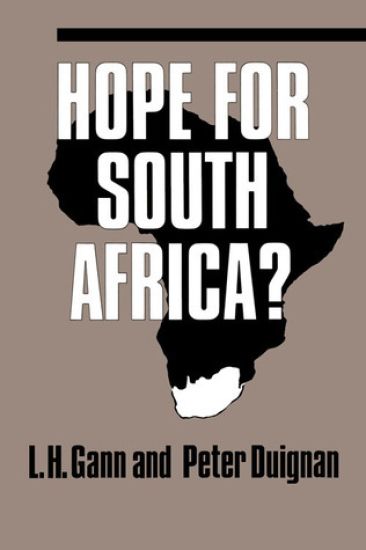
Is there a path of peaceful evolutionary change for South Africa? Gann and Duignan have long thought so. The shooting at Sharpeville in 1960 focused worldwide attention on South Africa's politics; since then South Africa and its future have been regarded in the West as a continuing morality play, with whites standing staunchly against blacks and wrong pitted against right. South Africa in this view is a powder keg ready to explode-a land where the clock stands forever at five minutes to midnight. Dissenting from this view, L. H. Gann and Peter Duignan have consistently argued that the ruling Afrikaner establishment would, in and of itself, initiate far-reaching political, economic, and social changes without a breakdown in the economy. The authors' controversial views have been remarkably accurate. In this book the authors consider the recent reforms initiated by President F. W. de Klerk and the willingness of Pretoria to negotiate with the African Congress and leaders such as Nelson Mandela. They examine the country's power structure (armed forces, police, arms industry), economy, politics and the ways in which these various branches of government and the private sector interact. If apartheid is dissolved and a peaceful political system allowed to evolve, they envision a prosperous South Africa built on the principles of a free market economy and parliamentary compromise. This prosperity will become the engine of development for the whole of southern Africa.
From the early seventeenth century, North America and Africa have maintained many contacts. This volume traces these reciprocal relationships over four centuries. The authors show how American pioneers - missionaries, traders, prospectors, miners, educators, soldiers of fortune, manufacturers, financiers, engineers, scientists, and others - have helped shape modern Africa. They provide a valuable corrective to traditional colonial historiography that has tended to emphasize only the role of the colonial centers in developing Africa. In addition, the writers point to the equally important impact made by Africa on the United States through trade and immigration, enforced and voluntary, and thtough the influence of Africans on the arts, agriculture, and many other facets of American life.
The essays in The United States in the 1980s, written by a group of renowned and widely respected specialists, are a major contribution to a balanced discussion of the choices that lie ahead. The authors analyze the central issues, describe the policy options open to the country, and recommend specific courses of action to deal with or mitigate the problems confronting the United Statest—in recognition of the fact that the major problems of the new decade ""are interrelated, that no problem can be resolved in isolation, and that different perspectives can contribute to a clearer and more balanced understanding of the problems that are often viewed as separate from one another."" The United States in 1980s will not provide comfort or reassurance for pessimists or optimists. On the contrary, by stressing that there are realistic limits to America's ability to solve all problemst—domestic and internationalt—the essays offer guidance for sensible solutions and identify the solid base of strength upon which the United States can build in the new decade.
The first book in a planned series dealing with the social structure of the European colonial services in Africa, this volume examines Germany's military and administrative personnel in the colonies of German East Africa, South-West Africa, Cameroun, and Togo: their performance on the scene, their educational and class background, their ideology, their continuing ties with the homeland, and their subsequent careers. Although the African colonies played a negligible part in German trade and foreign investment, they were profoundly affected by thirty years of German rule. Brutal and overbearing though many German administrators were, they had substantial achievements to their credit. Among other things, they introduced European technology, medicine, and education in their colonies, and they laid the groundwork for today's states by establishing firm geographic boundaries and building an infrastructure of ports, roads, and railways.